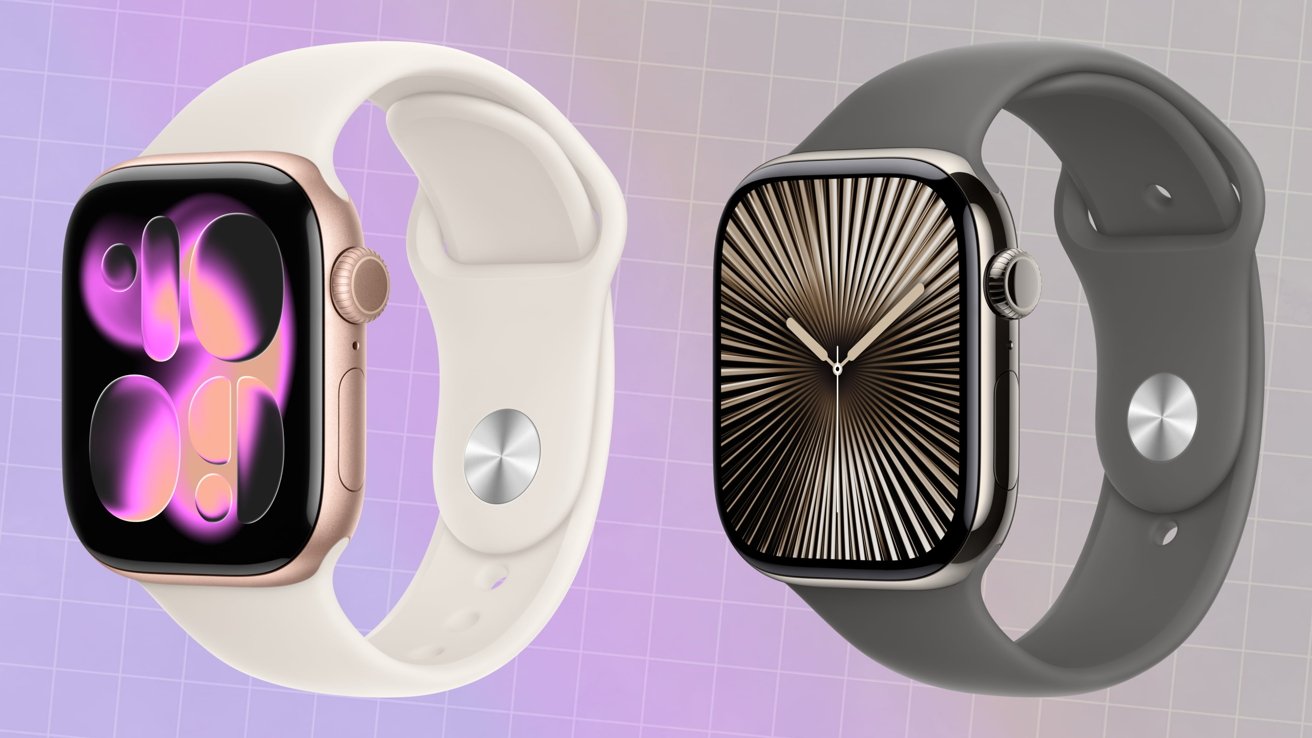
The Apple Watch Series 11 adds more battery life but not much more to the wearable. Here's how it compares against the astoundingly similar Apple Watch Series 10.
Tuesday saw Apple introduce a number of hardware updates, including one bringing the Apple Watch to Series 11. The new model is the best Apple Watch, alongside the Apple Watch SE 3 and new Apple Watch Ultra 3.
For 2025, the updates in the Apple Watch Series 11 chiefly consist of some feature updates rather than major hardware changes. Revisions that could help make users live even longer.
This is how the specifications of the Apple Watch Series 11 are similar to or differ from those of the preceding Apple Watch Series 10.
Apple Watch Series 11 vs Apple Watch Series 10 - Specifications
| Specifications | Apple Watch Series 11 | Apple Watch Series 10 |
|---|---|---|
| Price (starting) | $399 | $399 |
| Sizes | 42mm, 46mm | 42mm, 46mm |
| Display | Retina LTPO3 wide-angle OLED display Up to 2,000 nits | Retina LTPO3 wide-angle OLED display Up to 2,000 nits |
| Case Materials | Aluminum Titanium | Aluminum Titanium |
| Processor | S10 SiP | S10 SiP |
| Health Sensors | Third-generation optical heart sensor, Electrical heart sensor, Temperature sensor | Third-generation optical heart sensor, Electrical heart sensor, Temperature sensor |
| Water Resistance | 50 meters | 50 meters |
| Battery Life | Up to 24 hours (38 in Low Power Mode) | Up to 18 hours (36 in Low Power Mode) |
| Recharging | Wireless | Wireless |
| Connectivity | LTE 5G Wi-Fi 4 Bluetooth 5.3, GPS/GNSS Ultra Wideband | LTE Wi-Fi 4 Bluetooth 5.3, GPS/GNSS Ultra Wideband |
| Other Sensing | Emergency SOS Fall Detection Crash Detection Always-on altimeter Ambient light sensor Gyroscope Compass Depth Gauge Water temperature sensor | Emergency SOS Fall Detection Crash Detection Always-on altimeter Ambient light sensor Gyroscope Compass Depth Gauge Water temperature sensor |
| Colors (Aluminum) | Jet Black Space Gray Rose Gold Silver | Jet Black Rose Gold Silver |
Apple Watch Series 11 vs Apple Watch Series 10 - Case sizes, materials, and weight
Apple has a tendency to reuse the same design for its products, with small tweaks made each year between larger changes. For the Apple Watch, this is something that has been the case for a few years now.
The Apple Watch Series 10 styling of a rounded square casing with a rounded-edge display was borrowing heavily from the design of the Apple Watch Series 9. The Apple Watch Series 11 pulls the same trick, with no real externally discernible changes.
That includes the use of a side button and Digital Crown in the same positions, with no real changes to this interface at all.
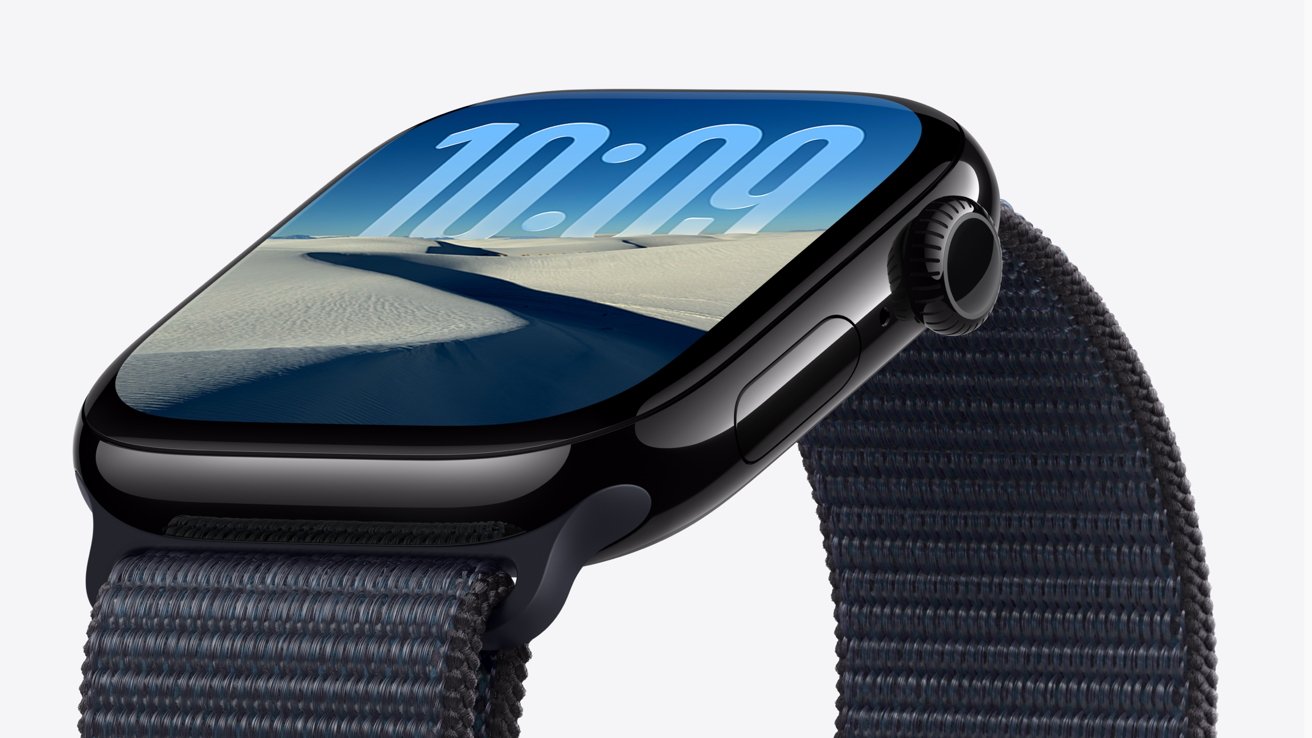
Apple Watch Series 11 vs Apple Watch Series 10: The new model looks identical to the previous one.
The materials are also the same, with Apple using aluminum and titanium in both varieties. There are also two sizes available, with the 42mm and 46mm sizes identical across the board.
When it comes to actual measurements, the 42mm model is 42mm by 36mm by 9.7mm in both generations. So too is the larger 46mm by 39mm by 9.7mm version.
While size hasn't changed, what has is weight. This time around, the Apple Watch Series 11 is ever so slightly heavier across all variants.
Apple Watch Series 11
The standard aluminum GPS models weigh 30 grams and 36.4 grams for the Apple Watch Series 10, but the Series 11 equivalents are 30.3 grams and 37.8 grams, depending on the size.
It's also the same when it comes to the titanium models. The Series 10 versions are 34.4 grams for the 42mm model and 41.7 grams for the 46mm.
On the Series 11 side, these sizes respectively weigh 34.6 grams and 43.1 grams.
It isn't quite clear why the weight difference is so much larger beyond proportionality for the bigger models. Even so, it's a very minor change that most people won't really detect on their wrist.
When it comes to the design, both are still deemed to be "Swimproof" by Apple, with a water resistance to a depth of 50 meters (164 feet) as standard.
Apple Watch Series 11 vs Apple Watch Series 10 - Display
The Apple Watch Series 10 saw an update on its release, moving to an Always-On Retina LTPO3 OLED display. The screen introduced a wide-angle OLED panel for better viewing angles.
This is the same screen used in the Apple Watch Series 11.
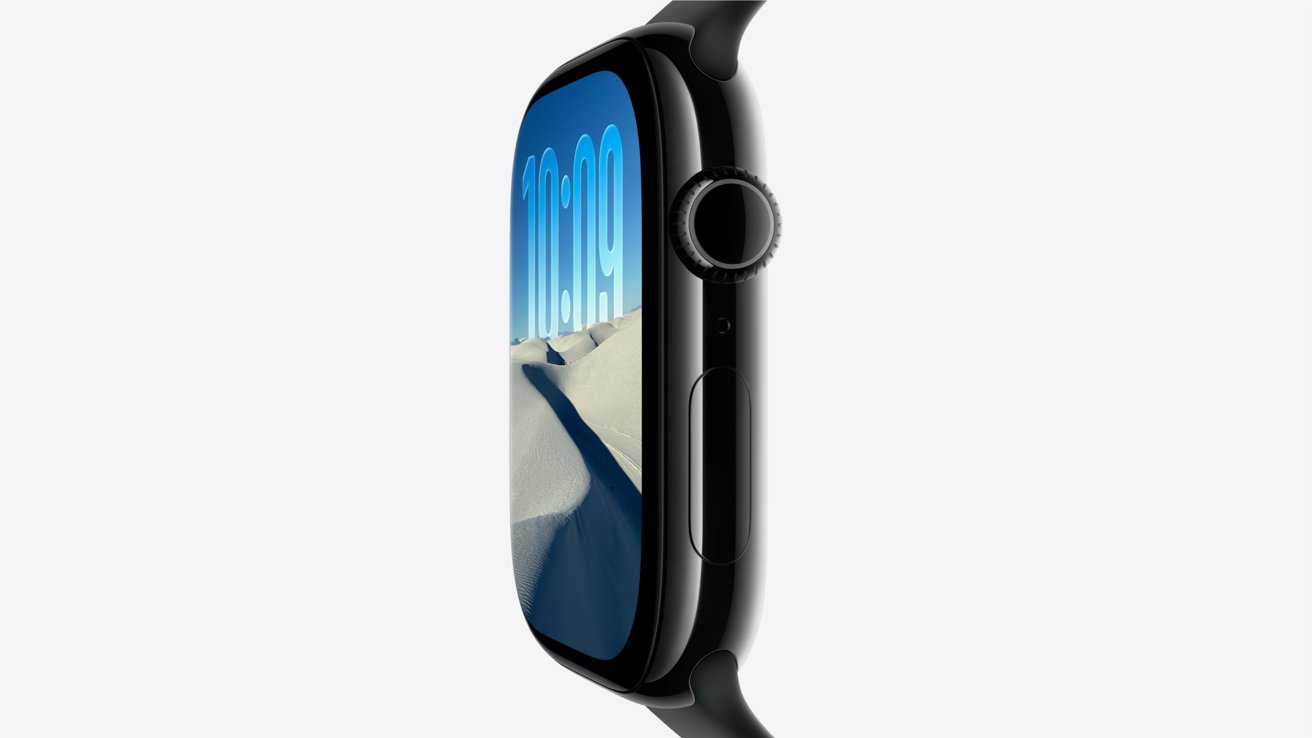
Apple Watch Series 11 vs Apple Watch Series 10: The screen viewing angles are impressive.
This includes the edge-to-edge display being protected by Ion-X glass in the aluminum version. However, this time the new glass cover in the Apple Watch Series 11 is more durable thanks to a ceramic coating to harden the surface and double its scratch resistance.
The titanium models continue to use a sapphire front crystal.
Other display specifications are identical, such as the 374 by 446 resolution of the 42mm models and 416 by 496 for the 46mm versions. Brightness is also high with a maximum of 2,000 nits and a minimum of 1 nit.
Apple Watch Series 11 vs Apple Watch Series 10 - Processor
The Apple Watch Series 10 saw the chip upgraded to the S10 SiP, a 64-bit dual-core chip with a four-core Neural Engine. Apple decided that the Apple Watch Series 11 should use the same chip.
That also extends to the use of the W3 wireless chip with second-generation Ultra Wideband and 64GB of storage.
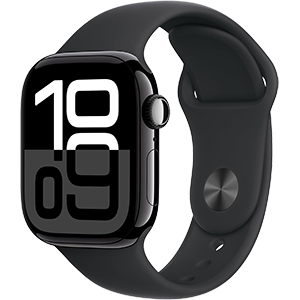
Apple Watch Series 10
Sticking to using the same chip isn't a dealbreaker for the Apple Watch. Unlike an iPhone or iPad, users aren't expecting to need high levels of processing for onboard apps running on their wrist.
However, Apple Watch chip changes can often be beneficial in various ways, including allowing new features to be introduced or for improvements to things like battery life.
While the chip is unchanged, evidently, Apple has found new things it can do with the same level of performance.
Apple Watch Series 11 vs Apple Watch Series 10 - Health and fitness
The Apple Watch Series 10 offered a lot to consumers, starting with the use of the third-generation optical heart sensor on the rear. Add in the temperature sensor, compass, altimeter, electrical heart sensor, and accelerometers, and you have a lot of data points available for monitoring.
The core is heart rate monitoring, with the ECG app, Blood Oxygen app, wrist temperature tracking, sleep apnea notifications, mindfulness, and cycle tracking all present and accounted for.
Fitness tracking for workouts keeps monitoring your performance, while Mindfulness helps you relax between sessions.
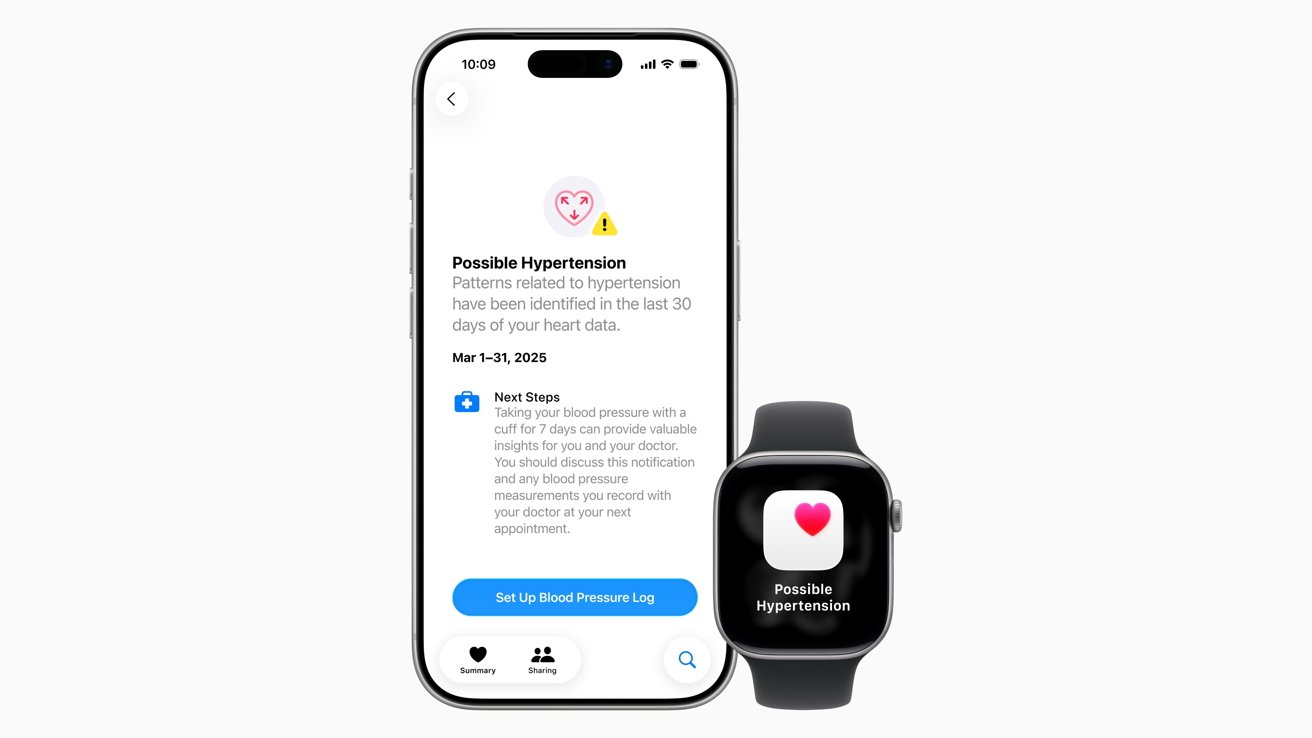
Apple Watch Series 11 vs Apple Watch Series 10: Hypertension detection could help save lives.
For the Series 10 specifically, Apple added sleep apnea detection to detect moments when a user stops breathing during sleep. A depth gauge was also introduced so users knew when they were up to 6 meters (19.6 feet) underwater, while the water temperature sensor confirmed you were in a freezing river.
With the Apple Watch Series 11, Apple is bringing in hypertension notifications, which can alert the user to chronic high blood pressure. Detecting this is helpful as it is the leading modifiable risk factor when it comes to heart attacks, strokes, and kidney disease.
This takes the form of the Apple Watch reviewing data over 30-day periods and notifying users if something is detected. They are then referred to medical professionals for further assistance.
The Sleep Score will also help by monitoring how the user sleeps, encouraging them to improve their nightly rest over time.
However, these are not Apple Watch Series 11-specific features, as they form part of the watchOS 26 changes. The Series 10 and some earlier models will be able to use these same features.
Under the same stroke, Apple is updating the workout experience so Apple Watch Series 11 comes with Workout Buddy. An Apple Intelligence feature, it analyzes workout data and fitness history to provide personalized motivation during workouts.
The Workout app is also being made easier to customize workouts under watchOS 26, complete with custom workouts, Pacer, Race Route, and Workout Views.
Again, these are features that are more watchOS-based, not hardware-specific.
Apple Watch Series 11 vs Apple Watch Series 10 - Battery and Connectivity
One of the big issues with the Apple Watch is its battery life. While it purportedly works during the day and can monitor sleep, it doesn't help that it doesn't last long enough to do everything.
This is less of a problem for the Apple Watch Series 11, as Apple has bumped the battery life to a maximum of 24 hours, versus 18 hours in the Series 10. Low Power Mode also gets a bit of an improvement, growing from 36 hours to 38 hours.
Getting battery power into the Apple Watch hasn't changed chargers, but the speed of charging has improved a bit for brief recharging sessions.
While the claim of fast charging to 80% within 15 minutes hasn't changed, Apple does promote the quicker charging capabilities for daily use. A 15-minute charge will apparently provide enough power for up to 8 hours of "normal use," while five minutes will let you use the Apple Watch Series 11 for sleep tracking for eight hours.
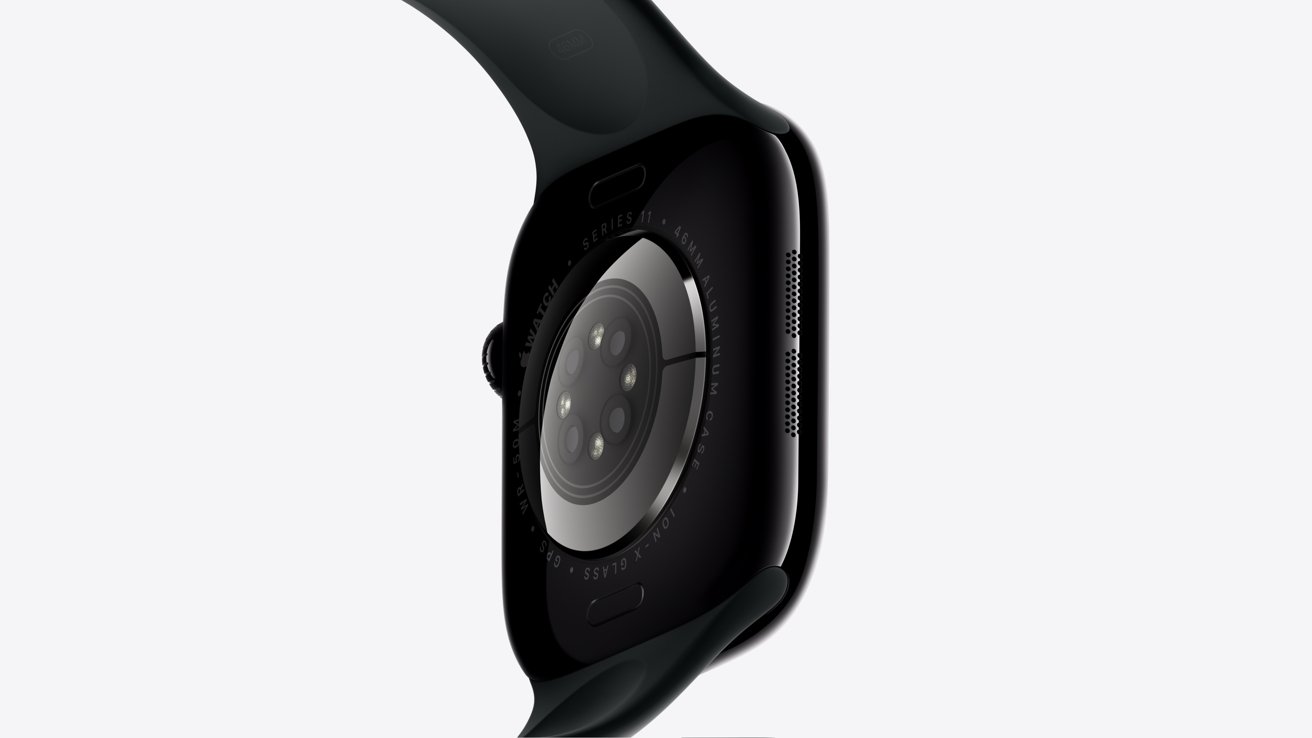
Apple Watch Series 11 vs Apple Watch Series 10: Battery life has improved to 24 hours.
This is a big improvement and a reframing of how users could recharge the Apple Watch. Now, there's an incentive to give the Apple Watch a brief charge if needed before sleep, and to charge it after waking up and dealing with the day.
Both generations have Wi-Fi and cellular options, but the Apple Watch Series 11 bumps the LTE support up to 5G and LTE. This is more a case of supporting the sub-6GHz 5G network infrastructure rather than mmWave.
Apple continues to include support for Wi-Fi 4 instead of newer versions. This seems odd, but it's not really a problem since you don't really need high-speed connectivity on your wrist.
Similarly, Bluetooth 5.3 is also unchanged between generations.
Apple Watch Series 11 vs Apple Watch Series 10 - Price
The Apple Watch Series 10 launched at $399 for the 42mm aluminum model, $429 for the 46mm model. The GPS + Cellular versions were more expensive at $499 and $529, respectively.
The titanium counterparts cost $699 and $749, depending on the size.
The Apple Watch Series 11 also starts at $399 for the 42mm base model, $429 for the 46mm. Cellular aluminum versions are also $499 and $529, while the titanium models are $699 and $749.
Color-wise, the Apple Watch Series 10 in aluminum was sold in Jet Black, Rose Gold, and Silver colorways. The Series 11 adds in Space Gray to the mix.
The titanium models of Series 10 were available in Slate, Gold, and Natural variants, which are continued with the Series 11.
Apple Watch Series 11 vs Apple Watch Series 10 - Which to buy
Apple is often accused of rereleasing the same product every year, because it likes to keep designs the same. While this is often said tongue in cheek, it's actually close to true for the Apple Watch Series 11.
It's a model that is the same physical dimensions as the previous version, the same appearance, and even uses the same S10 chip.
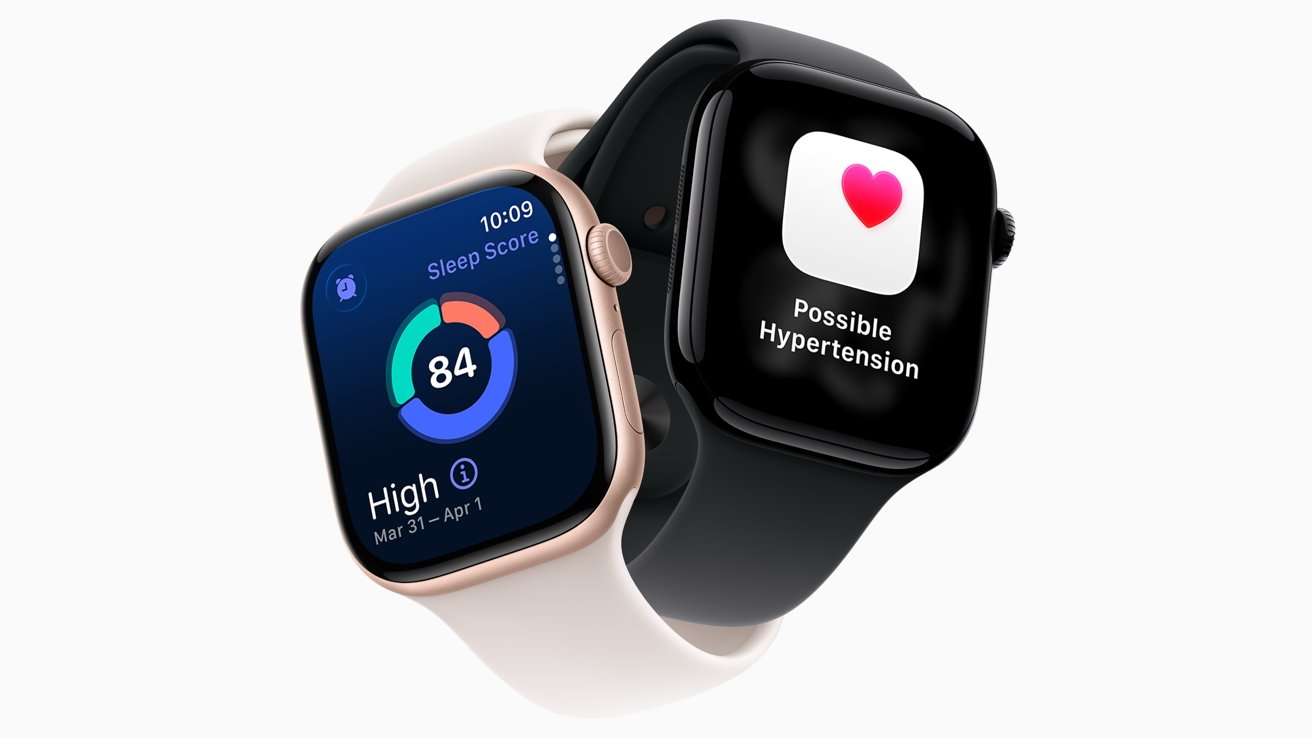
Apple Watch Series 11 vs Apple Watch Series 10: Better, but not by much.
Ignoring the software-based changes that will also come to the Series 10, the Series 11 doesn't provide much real hardware change.
Extra battery life is a good move, especially with a push to make users actually track their sleep. A hardier exterior is also something that users can get behind.
But other than that, it's actually quite a minimal update overall.
In this instance, people upgrading from a much older model will be fine buying an Apple Watch Series 11 or a second-hand Apple Watch Series 10. The Series 11 is preferable, as it is the current-gen model after all.
For existing Apple Watch Series 10 owners, there's no real incentive to upgrade at all. Instead, the main benefits are coming to their wrist in watchOS 26.
Where to buy the Apple Watch Series 11, plus deals on the Series 10
You can order the Apple Watch Series 11 today on Amazon, with retail prices starting at $399.
Closeout deals are also in effect at Amazon on the last-gen Series 10, with a roundup of the best Apple Watch deals at your fingertips in our Apple Watch Price Guide.