On the latest episode of the HomeKit Insider Podcast, Infineon engineer Steve Hanna joins to talk about the latest update to Matter.
Steve Hanna
Our guest host on the episode is Steve Hanna. Steve, who holds the position of Distinguished Engineer at Infineon, focuses on security with the CSA.
He has been working with Matter since its inception and has a long history of information security. With additional security improvements coming in the new version of Matter, he's in an excellent position to talk about the update.
In the news
There was a lot of news this week for smart home users, including from the Apple camp. A barrage of new leaks emerged regarding many upcoming Apple devices.
We saw that the new Apple TV 4K is likely getting an A17 Pro chip on the inside. This would be enough to support Apple Intelligence and even ray tracing on games.
Other rumors point to Apple releasing a countertop robot in 2027. This would build on Apple's DockKit that enables face-tracking robotics.
Then Bloomberg reported Apple is expanding its work on smart home cameras. Not only does it plan to launch a video doorbell, but an entire line of smart home cameras to take on Amazon-owned Ring.
Finally in the Apple news, it appears more HomeKit references are being depreciated. In recent beta updates, Apple has removed more references to "HomeKit" and replaced them with Apple Home in a continuation of its years-long effort.
Outside of Apple-specific news, HueBlog showcased a leak of upcoming Signify products. That includes the long-awaited updated bridge.
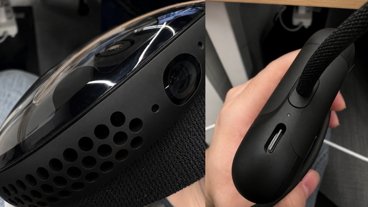
The Hue Bridge Pro is set to be released soon with a move to USB-C and a new black design. It also referenced a new, unannounced feature called MotionAware that allows you to turn Hue bulbs into motion sensors.
We also get a look at the upcoming Hue Secure Doorbell with 2K video, two new Festiva string lights, an outdoor light strip with gradient support, and an updated E27 bulb with lower power consumption.
Lastly, BlueAir released its Pet Pro air purifier. While still no Apple Home, it is designed specifically for pet-filled households and can double as a cat bed.
Links from the HomeKit Insider podcast
Interview with Steve Hanna
Here is the entirety of our discussion, lightly edited for readability. Listen to the podcast for the full, unabridged interview.
Andrew O'Hara
Today we're talking about the Matter 1.4.2 update, security in Matter, and what to expect in the future.
Let's start with the update. Matter 1.4.2 is the second minor update this year, and CSA has confirmed that Matter 1.5 is still planned for release by the end of the year. In 1.4.2, one of the biggest changes is Wi-Fi-only commissioning.
This will help reduce costs for smart home devices, since manufacturers no longer need to include a Bluetooth radio just for setup. Matter is IP-based anyway, so devices now rely entirely on Wi-Fi, Thread, or Ethernet.
Steve, I guess you've been involved since the early "Project CHIP" days, right?
Steve Hanna
Yes. I got involved as soon as it was announced. I pushed my company to participate from day one, and at those first meetings, I was already focused on making sure security was a priority.
Andrew
That brings us to the other updates in 1.4.2. Beyond Wi-Fi commissioning, we're seeing improved scene management, standardized robotic vacuum behaviors, and enhanced certification requirements.
But security is the big one. Can you explain?
Steve
Security is central to Matter. When we launched 1.0, we introduced ten major security features that hadn't been widely available before. In 1.4.2, we're tightening them even further.
Take device attestation, for example. Every Matter device carries a cryptographic certificate from the manufacturer, which proves it's authentic. That prevents counterfeit devices from being added to your home.
But we realized attackers could potentially clone devices by extracting those certificates. So, in 1.4.2, manufacturers can now revoke compromised certificates.
If you try to add a cloned device, you'll get a warning that it's untrustworthy.
Andrew
That's a great safeguard. But what if someone already added a cloned device before it was revoked?
Steve
In that case, your ecosystem could flag it retroactively, warning you that the device is no longer secure. It's about keeping consumers informed and protected.
Andrew
That's a big step forward. Early in the smart home days, we saw plenty of insecure devices slipping through. How does CSA prevent that now?
Steve
We address security at multiple levels. First, dozens of engineers across companies work together to secure the protocol itself. We constantly look for vulnerabilities, patch them, and roll out updates. Beyond that, manufacturers handle product-level security.
A front door lock, for instance, needs stronger tamper resistance than a light bulb inside your house. We let manufacturers determine what's appropriate for each product type.
Andrew
Fair enough. Let's talk about smart locks. Many people assume they're unbreakable, but in reality, it's often easier to just kick down a door than hack a lock.
Still, I'm really excited for the next wave of locks using ultra-wideband with Aliro for automatic unlocking. How's that progressing?
Steve
Progress is good, though I can't make announcements. Matter already includes hooks for Aliro support, so when those standards are finalized, devices will be able to integrate with Matter seamlessly.
Andrew
Okay, let's shift gears. With each new version of Matter, how can consumers know if their devices are running the latest release?
Steve
That's tricky. Not every product implements every feature in a given release. A robot vacuum might use the new cleaning commands but not Wi-Fi commissioning, for example.
Simply labeling a device "Matter 1.4.2" could mislead consumers into thinking it supports everything. We're still figuring out how best to communicate that.
Andrew
That makes sense. On the ecosystem side, it's even more confusing. Apple Home has supported some device categories inconsistently, which makes it hard for consumers to know what works.
Ideally, every product would just support everything.
Steve
Agreed. Ultimately, Matter should become the obvious, universal standard.
Andrew
So looking ahead — can you tease anything for Matter 1.5?
Steve
Cameras are one feature we've been discussing, along with other new device types. The CSA follows a "train model": the release leaves the station on schedule, and whichever features are ready make it onboard.
Ready means fully specified, coded, tested, and certified. If something isn't ready, it waits for the next train.
Andrew
I'm personally hoping for cameras — and at higher resolutions. 1080p is outdated when so many cameras already support 2K or 4K. Hopefully Matter pushes that forward.
Steve
I agree. 1080p won't cut it in 2025. But remember, even once Matter supports it, companies will roll it out at their own pace.
Andrew
My hope is that Matter 1.5 launches this fall, followed by Apple adopting it in the spring with its rumored smart home display and HomeOS, plus robust camera support.
That way, even Apple's new cameras could work across ecosystems while still offering premium features through iCloud.
Steve
That's a compelling vision. Maybe you should pitch it directly to Tim Cook.
Andrew
Don't worry — Tim listens every week. He's already heard me!
Steve, thanks so much for breaking down the security side of Matter 1.4.2. Security isn't always the flashiest topic, but it's critical. Understanding how features like certificate revocation work shows how Matter is building a stronger foundation for the smart home.
Those interested in sponsoring the show can reach out to us at [email protected]
Keep up with everything Apple in the weekly AppleInsider Podcast. Just say, "Hey, Siri," to your HomePod mini and ask it, and our latest HomeKit Insider episode too. If you want an ad-free main AppleInsider Podcast experience, you can support the AppleInsider podcast by subscribing for $5 per month through Apple's Podcasts app, or via Patreon if you prefer any other podcast player.