Apple's thinnest-ever iPhone 17 Air could have a truly 'awe dropping' design. But will buyers be willing to compromise on cameras and battery life to get it?
It's no secret that Apple announces new iPhones every September, and 2025 is no different. The rumor mill has four new iPhones on the horizon; iPhone 17, iPhone 17 Pro, and iPhone 17 Pro Max, alongside the all-new iPhone 17 Air.
Those rumors point to some design changes that have the potential to make the iPhone 17 Air truly "awe dropping." And with Apple set to hold an event on September 9, the cat will be out of the bag soon enough.
So, what will an iPhone 17 Air have to offer, and should you buy one? Here's what's rumored right now based on over a year of rumors.
When will the iPhone 17 Air be announced and ship?
Let's get the easy one out of the way early. Apple is extremely likely to announce the iPhone 17 Air on September 9, with preorders kicking off on September 12.
If we're right, that means the new iPhones will officially go on sale the following week — pencil in September 19 for the big day.
iPhone 17 Air design & display
All of the 2025 iPhones are set to get a redesign and will look very different from the outgoing iPhone 16 series.
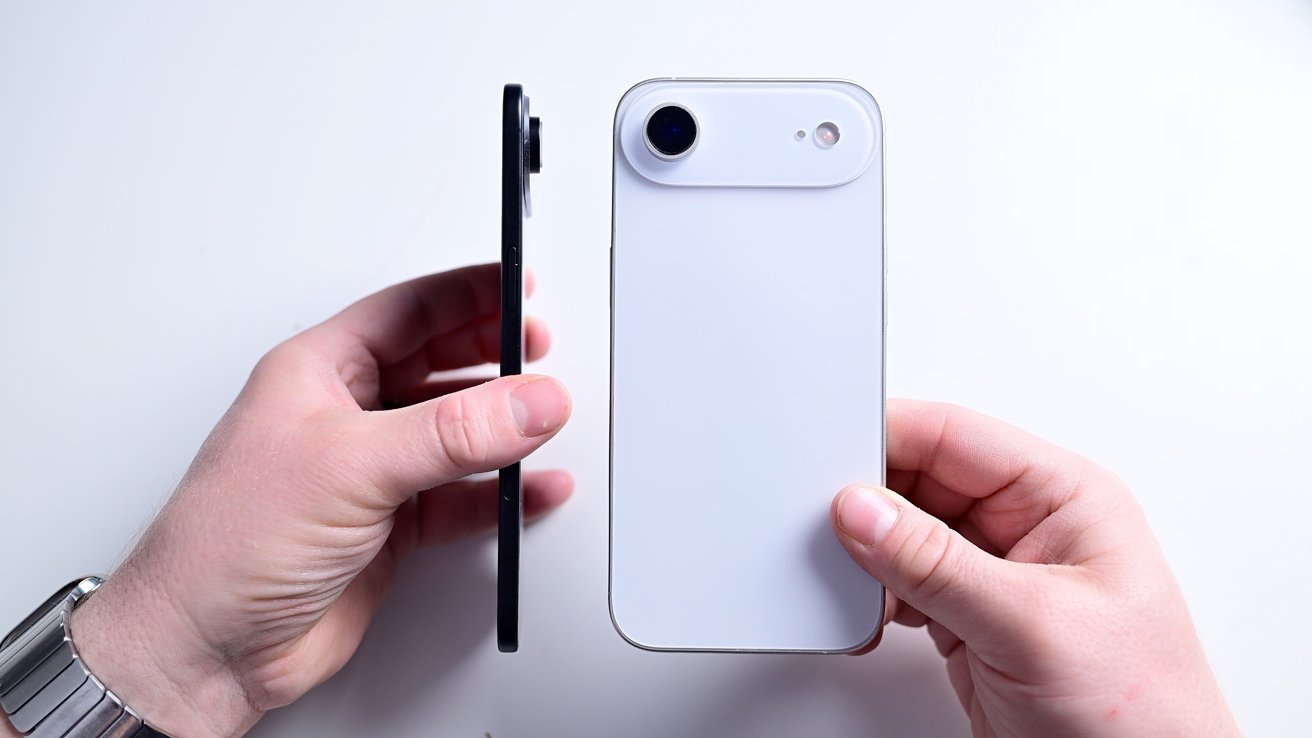
Apple is expected to announce four new iPhones
The iPhone 17 Air might be the most striking of the new designs. That's going to start with an incredible 5.5mm thickness. That's at the thinnest point, while the camera bump will add some extra girth, as is the norm.
If that figure sounds small, that's because it very much is. Not only will this be the thinnest iPhone ever, but it will be among the thinnest phones ever to boot.
In terms of display, the iPhone 17 Air is expected to sport a smaller one than might be expected — possibly to avoid it bending ala the iPhone 6 Plus "bendgate" debacle"bendgate" debacle.
That means that buyers can expect a 6.6-inch display, so slightly smaller than the iPhone 16 Plus. Thankfully, it will still be OLED with support for a 120Hz ProMotion refresh rate, and Always-On functionality is also likely.
Thankfully, it's been suggested that the smaller display and incredibly thin design will result in a super-lightweight phone. It's called Air, after all.
To put the rumors into figures, rumors have the iPhone 17 Air tipping the scales at just 145 grams. Fans of the defunct iPhone mini models will note that 145 grams is only slightly heavier than those models — iPhone 13 mini weighs 1141 grams, iPhone SE 2 weighs 148 grams.
iPhone 17 Air camera
For many, the biggest reason they buy a new iPhone is to upgrade to a new camera. In the case of the iPhone 17 Air, its thinness will likely work against it.
Unlike the best iPhones, the iPhone 17 Air is expected to have a single 48-megapixel camera. That means it will likely be a wide-angle shooter.
Most people likely won't miss the telephoto or ultrawide cameras. But the lack of spatial photo and spatial camera support is bad news for Apple Vision Pro owners, unfortunately — you need two cameras for that.
iPhone 17 Air chip, battery, and charging
Rumors so far have Apple set to give the iPhone 17 Air an A19 or A19 Pro chip, but it's unclear which. New vapor chamber heatsinks are likely to be employed to help keep either chip cool, given the device's diminutive dimensions.
That chip is set to be joined by 12GB of RAM just like the iPhone 17 Pro models, suggesting this will be a performance handset. If an A19 Pro chip is used, this could be quite the beast
One downside of the smaller chassis is the lack of internal space that goes with it. The most obvious issue there is the lack of space for an important component: the battery.
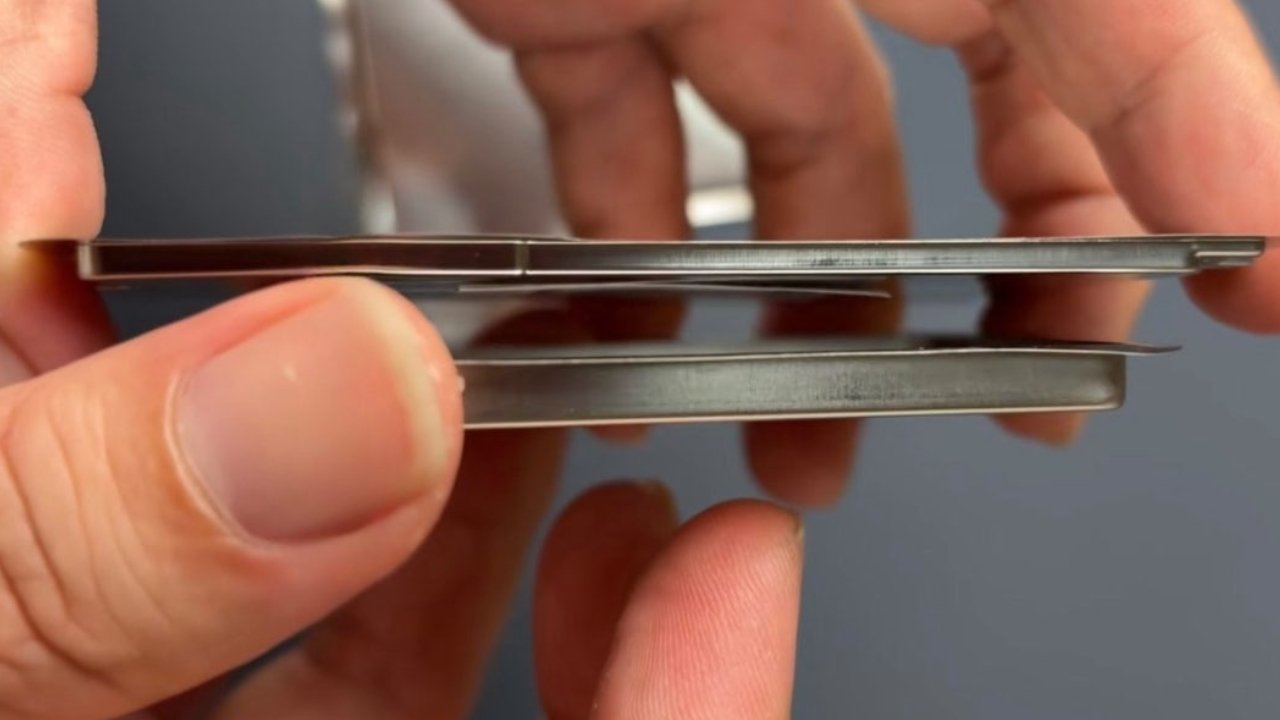
Top: iPhone 17 Air battery. Bottom: iPhone 17 Pro battery — image credit; yeux1122
Rumors claim that Apple is well aware of the limitations the iPhone 17 Air will deal with. To that end, it's been working on optimizations and a battery that can squeeze more power into a smaller space.
Despite that, it's been suggested that the battery could be around the 2,800mAh mark. That's small and compares terribly to the 4674mAh battery found in the iPhone 16 Plus.
Apple is rumored to be so concerned about the iPhone 17 Air's battery that it's launching a new MagSafe Battery Pack. A new battery case has been tipped, but as-yet not confirmed.
The smaller battery means charging more often. If the rumors are correct, the Qi 2.2 standard will be supported with up to 25W charging capabilities — assuming you have a compatible charger.
In terms of wired charging, it's likely we will see similar speeds to the current models of around 25W. That will vary depending on the cable and USB-C charger used.
However, analyst Jeff Pu has claimed that a 35W speed bump is in the offing.
iPhone 17 Air wireless connectivity
Apple is expected to borrow the C1 modem from the iPhone 16e, which is bad news for 5G speedfreaks. It won't support mmWave 5G connectivity, although the impact of that is debatable.
One early rumor proposed that Apple won't include a SIM card tray in the iPhone 17 Air, simply because it won't physically fit. Instead, it would require the use of an eSIM.
Another rumor closer to the event indicates Apple is now requiring employees in stores in the EU to undergo eSIM training. If true, it would be a strong indicator of the loss of the SIM tray for the model for a continent that still uses one in its iPhones.
On the Wi-Fi front, it's thought that the entire iPhone 17 lineup will include a new Apple-designed Wi-Fi 7 chip. You'll need a compatible Wi-Fi 7 system to make the most of it, but backward compatibility will be supported.
iPhone 17 Air pricing
If the iPhone 17 Air is really going to replace the iPhone 17 Plus, it's going to be aimed at the mid-range buyer. That means cheaper than the iPhone 17 Pro but more costly than the iPhone 17.
With that in mind, we expect the iPhone 17 Air to cost anywhere between $899 and $999 for the entry-level 128GB model. Buyers will be able to pay more for additional storage, of course.