If you're a tabloid reporter, don't bother with your own iPhone troubleshooting steps, and instead invent a global conspiracy that Apple is destroying society.
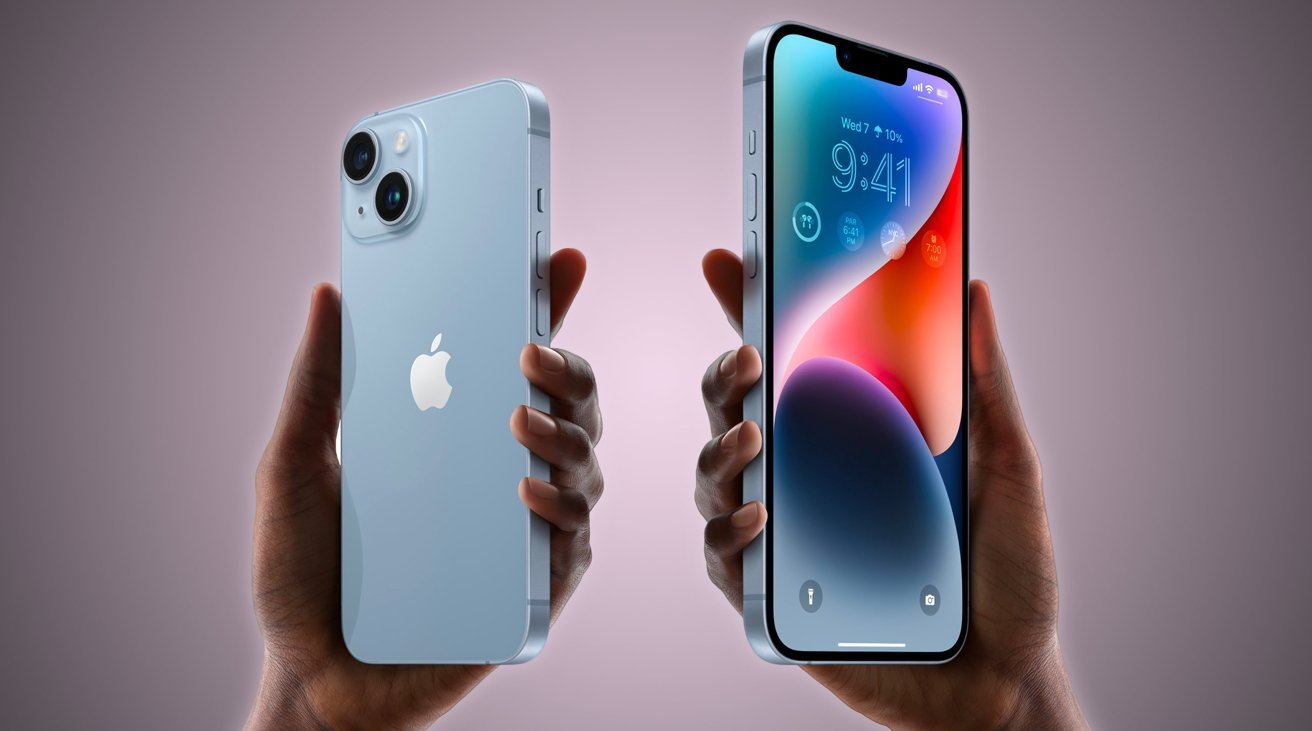
Maybe this is why Apple wants to move to solid-state buttons on the iPhone, instead of the current mechanical ones. Because they can get stuck, apparently, and this is an actual thing, with an Apple support document and everything.
However, according to the Daily Mail — a tabloid known for hyperbole — there's more to this.
Much more.
Cameron Carpenter, Deputy News Editor of Daily Mail Australia, bravely struggled by with three stuck iPhone buttons before going to an Apple Store. He tells them the buttons don't work, and presumably they try them too — but then it's a little unclear what happened next.
Carpenter says he was quoted a repair cost of $700 — which is an advanced swap price. It's not out of bounds, and clearly Carpenter didn't have AppleCare, but we digress.
Instead of the advanced swap, it appears an Apple Store employee talked him into buying a new iPhone.
"All I wanted was freedom, so I walked out, new phone in hand," said Carpenter.
Cue cataclysmic thunder and lightning, though. Because as soon as the data was copied over to his new iPhone, "my old phone's buttons suddenly sprang back to life and started working perfectly," he says.
"It made me wonder if my iPhone was ever truly broken," he continued.
It was just dumb before. Here's where it gets ridiculous.
He claims that it those buttons not working may have been the iPhone "just pretending until I bought a new one."
Of course. Apple sold millions of whatever model iPhone this was, and decided to make sure only Carpenter's broke. Although, you'd think with Apple's resources the iPhone should surely have been able to keep up its pretense until he'd traded it in.
It's not your mistake, it's a global conspiracy
It would be wrong to suggest that there something going on here like a persecution, or tabloid clickbait, but it's hard not use the word ego. Carpenter never considers that he could have done anything differently, let alone that he perhaps should have done, he just straight to blaming people.
There's actually a point to doing that too, as Apple Sydney staff don't appear to have been on the ball. The iPhone's buttons worked after the phone had been erased, which is something you'd hope Carpenter would have tried — and would have assumed Apple would have before the upsell too.
But instead of acknowledging problem or even-handedly blaming Apple's lack of staff training, which we'd be on board with, he instead zoomed on to this all meaning Apple is destroying society with its planned obsolescence. Which it isn't, never has been, and never will be.
Planned obsolescence would where a manufacturer uses, say, low quality components that will fail in a short time with the intention of it failing, and a replacement needing to be ordered. A vinyl record is a perfect example of that, and the music industry knows it, and was counting on it. They complained when CDs were invented, because it cut back on replacements needed when a record or cassette wore out.
What it is not, is when the latest operating system update deliberately excludes a slightly older device. And it has nothing to do with Carpenter's issue.
In fact, Apple is so much against this kind of planned obsolescence that it's even a problem for the company. It's long been noted that iPad users hold on to their devices much, much longer than other tablets, and now it's the same with the Mac.
Then with the iPhone, Apple famously supports older models for much longer than Google does with Android. This is something Apple does for every user, with every device — you don't even have to sign up to its AppleCare plan.
AppleCare+ vs AppleCare One - AppleCare One is a new multi-device coverage plan
This is not something where users have to choose to do something, or even to particularly notice that their devices last a long time. It is, though, something that Carpenter could have looked into before assuming the worst.
Although he did also write something about how "my grandparent's generation fixed things, but for us millennials, that knowledge was lost."
That is the closest to a dot of self-awareness in this whole report, as it may not be just Apple wrecking society, it could be more. But it's definitely Apple according to Carpenter, and anyway, it's their generation who is suffering the most.
Carpenter does make yet a further leap into the Twilight Zone by concluding that Apple tricking him into buying a new iPhone makes the company complicit in the use of children to mine rare earth minerals.
"As I paid for the new phone," wrote Carpenter, "I couldn't stop thinking about the seven-year-olds in the Congo digging cobalt out of toxic mud just so I could tap for coffee with Apple Pay."
The answer for Carpenter is clear, assuming that he's fine with not doing basic troubleshooting. Don't buy an iPhone, then.
We're certain that an Android device made by manufacturer who doesn't care as much about the supply chain will work just fine.
That is, assuming you ignore the lesser lifespans of the device, and a support chain for them that doesn't really exist.