
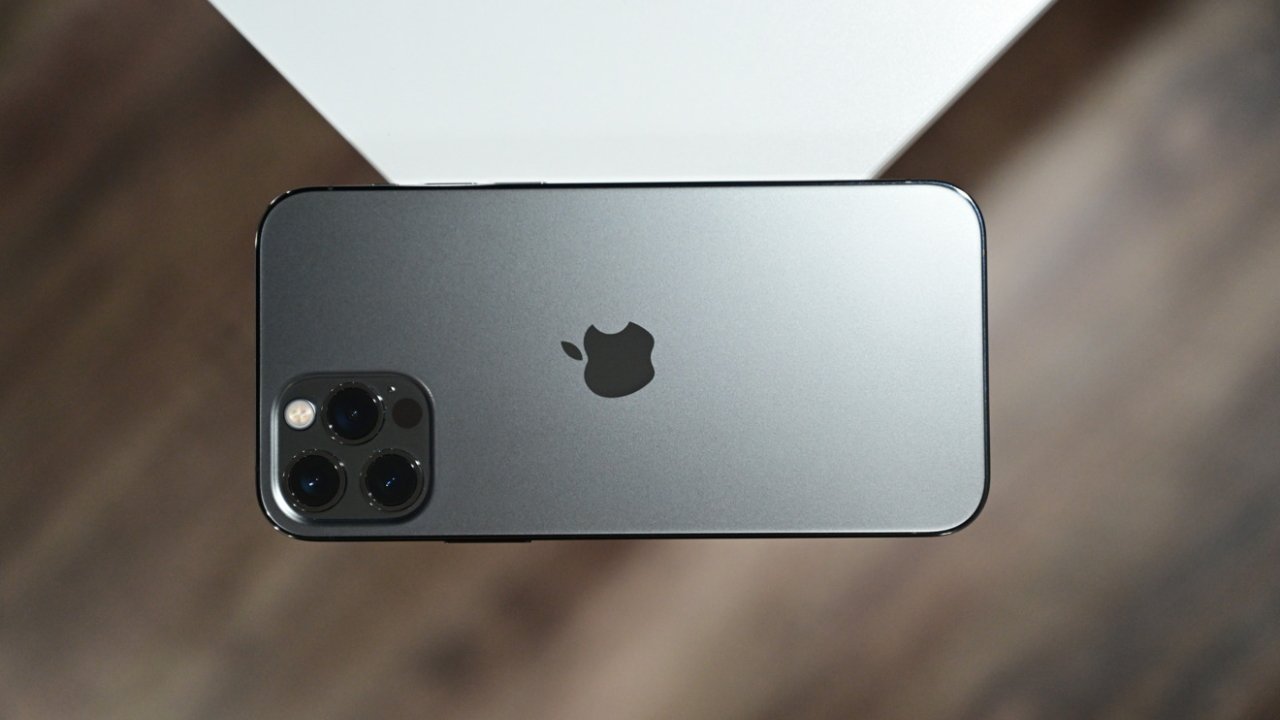
The French government used questionable methods of testing to declare the iPhone 12 modem exposed the user to radio frequency emissions above the legal limit. Now the European Union is demanding it too.
We can't say we were expecting to have a headline about the iPhone 12 in September 2025.
Governments are often criticized for being glacial in their movements, and occasionally doing stuff that seems pretty useless for most people. On Monday, the European Commission made a decision affecting the iPhone 12's modem.
Two years after the French government forced Apple into releasing a software patch reducing the power of the iPhone 12's modem, the EU is demanding that Apple widen the patch's deployment. Under claims that the iPhone 12 doesn't meet health standards, Apple is rolling out the patch across EU countries within weeks, reports BGNES.
It's a decision that is based entirely on flawed testing methodology, and a radical departure from international testing standards..
Electromagnetic emissions
In September 2023, France's radiation watchdog, Agence Nationale des Frequences (ANFR) revealed the results of RF tests for the iPhone 12. The agency determined at the time that the model had exceeded the country's Specific Absorption Rate (SAR) for RF exposure.
SAR refers to the rate the human body absorbs RF energy, and the heat it generates. At the time, the ANFR claimed there was an absorption rate of 5.74 watts per kilogram for on-contact exposure, while the EU limit was 4 watts.
However, at the time, ANFR also added that the testing at five centimeters (2 inches) between the broadcasting element and testing tissue was within 2 watts per kilogram, complying with international regulations.
The ANFR didn't reveal all aspects of its testing at the time, which raised questions about how it was performed.
The actual effects of the RF signals on a person are negligible at best. The World Health Organization has repeatedly said that there is "no convincing scientific evidence" that the weak RF signals from base stations and wireless networks cause "adverse health effects."
And, France is saying that the iPhone 12 exceeded legal limits. Legal limits are at least an order of magnitude lower than what's expected to have any health effects, and in the case of RF, the legal limit is at least three orders of magnitude lower.
Even so, the change forced Apple into issuing a patch, or face a sales ban.
Five years later
On August 19, 2025, the European Union issued a decision over France's actions and results. Under Directive 2014/53/EU, it is required that any corrective action taken to affect non-compliant radio equipment is made throughout the EU, not just France.
In effect, the EU requires that same software patch affecting the iPhone 12 in France to also affect the model in other EU countries.
While the EU deliberated on the matter, Ireland stepped in to object, claiming an investigation using Apple test documents in compliance with international testing standards confirmed the RF emissions were within requirements. This was ignored by the EU.
Furthermore, Apple insisted that France's testing stopped the tester from pressing volume buttons manually, and didn't use materials simulating a human head, preventing a "Body Detect" function from triggering.
Without bothering to do further testing actually in compliance with international regulation and standards, the European Commission decided that the iPhone 12 wasn't compliant, and the ANFR was justified.
In a statement, Apple said it still doesn't agree with the ANFR's approach to the test, but it still wishes to "respect the decision of the European Commission."
A house's wiring, especially "knob and tube" wiring, commonly found in homes in France, exposes users to more RF on a continuous basis, than what France discovered momentarily from the iPhone 12 with their flawed testing. So does a toaster in use.
Regardless, for Apple, rolling out a patch for a five-year-old smartphone is a small price to pay to avoid further regulatory complaints. Especially for a device many people will have moved on from to newer models.