
Apple's stock price comeback in late 2025 following the iPhone 17 launch shows how quickly panic can turn into profit when strategy and timing line up.
After facing early turbulence from tariffs, AI skepticism, and broader economic concerns, Apple's stock has rebounded. As of mid-day September 22, 2025, shares trade around $255. And, the stock is withing striking distance of the 52-week high of $260.09.
Apple stock closed on September 22 at $256.08.
The rebound reflects a shift in sentiment from caution to confidence among investors. It also highlights Apple's ability to blend strategy, psychology, and resilience when confronted with external threats.
In early 2025, Apple became entangled in a renewed U.S.-China trade conflict that reshaped investor views. Washington implemented a 10% tariff on imports, Beijing responded with countermeasures, and supply chain concerns mounted.
With many iPhone models still built in China, the escalation looked significant for Apple's margins. Shares declined from late-2024 highs before slowly recovering during the summer months.
Apple responded by accelerating diversification, shifting more production to India and Vietnam for future stability. The company has plans for India to produce most iPhones sold in the United States by 2026.
Apple also renewed commitments to U.S. manufacturing, which helped reduce political risks and ease market concerns. Investors interpreted these actions as evidence that the tariff situation was manageable.
AI anxiety and Apple's longer game
While addressing supply chain issues, Apple also faced doubts about its artificial intelligence strategy. Rivals promoted cloud-based breakthroughs, while Apple emphasized on-device performance and strict privacy.
Apple framed its approach as deliberate rather than reactive, focusing on integration across hardware and software. That positioning gained credibility once quarterly reports confirmed strong revenue in iPhone and Services.
Updates such as the iPhone 16 and the Apple Intelligence platform showed incremental progress. Although less flashy, these additions reinforced the company's focus on ecosystem depth.
Services revenue reached $26.6 billion in the March quarter, a new record that highlighted growing subscription strength. Hardware remains the showcase, but services increasingly provide the stable floor for Apple's valuation.
Macroeconomics and resilience
The broader economic environment also helped improve conditions for Apple and its peers. Inflation cooled, central banks signaled rate cuts, and technology stocks benefited from renewed optimism.
Consumer demand contributed to momentum, with Apple outperforming flat global smartphone sales in key markets. The iPhone 16 ranked as the world's best-selling model during the first half of 2025.
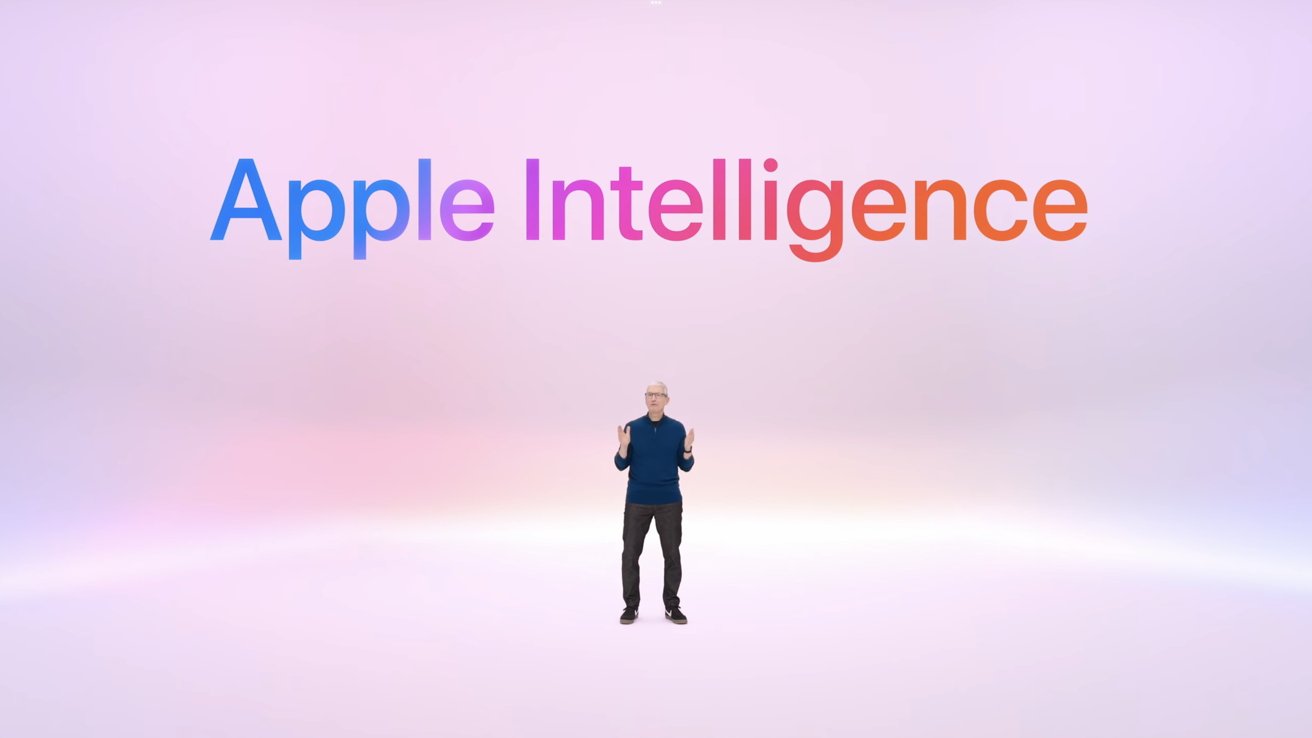
Apple's AI strategy is more convincing than it was in 2024
Strength in services reinforced the foundation, giving the stock a buffer against volatility in hardware cycles. Investors began to see Apple's AI narrative as complementary to growth rather than a drag on valuation.
Risks and the road ahead
Even with progress, Apple still faces risks that could challenge its recovery story. China remains a vulnerable link in the supply chain, with potential flare-ups threatening production.
Apple's AI approach is more credible than before, but its scope remains narrower than cloud-heavy competitors. Execution will determine whether privacy-first features can translate into visible consumer benefits.
The Vision Pro, priced at $3,499, represents another challenge as a long-term bet on spatial computing. Reviewers praised the device, but analysts doubt whether it will impact near-term revenue in a significant way.
Regulators present further complications, especially in Europe where fines and investigations continue. Possible changes to App Store rules could affect one of Apple's most profitable businesses.
Apple's balancing act
Apple's rebound in 2025 illustrates how strategy and resilience can stabilize market confidence. Tariff shocks were offset by supply chain diversification, and AI doubts were softened with ecosystem integration.
The difference between recovering and leading is substantial, and investors remain focused on the next wave. Apple must show that its hardware, services, and AI can generate innovation rather than just preserve stability.
Investors have returned to buying, with shares sitting near their annual highs once again. The future will be judged on execution, diversification, and bold moves that prove Apple is still shaping technology.