Apple has weakly attempted to combat "scratchgate" by claiming some of the scratches seen on in-store iPhone 17 models are really the MagSafe retail stands wearing onto the iPhone itself.
The launch of the iPhone 17 range and the iPhone Air has led to what is being referred to as "scratchgate." The phenomenon of the coating of the new aluminum-bodied models being easily scratched through seemingly normal storage and use.
While originally complaints led by social media users and people discovering it on in-store models, it has reached fever pitch thanks to YouTube "durability tests."
Apple has now tried to temper some of the outcry by talking about one specific instance. Apple claims that in-store iPhones aren't being scratched on the MagSafe adapters.
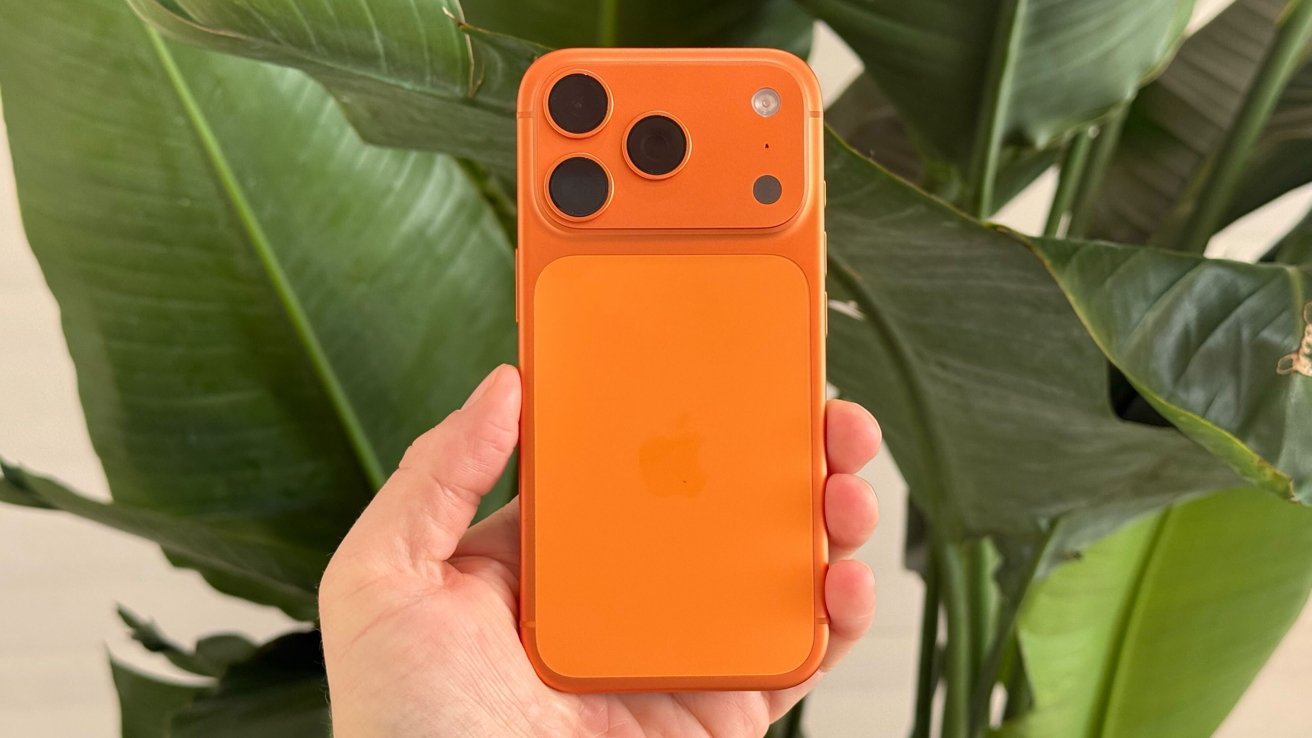
Apple told 9to5Mac that the imperfections around the MagSafe cutout weren't scratches on the iPhones themselves. Instead, the company insists that it's "material transfer" from the stand onto the iPhone, and that it can be removed with a wipe-down.
It's a situation that apparently doesn't just apply to the iPhone 17 range. Other models in stores have allegedly suffered the same fate.
Apple says that it is going to make some changes to fix the problem. This will most likely involve replacing worn stands with new ones.
Plateau-no-no
Apple also attempted to address another scratch-related issue, which was raised by YouTuber JerryRigEverything. In a video, the camera bump known as the "plateau" was able to have its raised edges scratched with a coin.
The iFixit teardown of the iPhone 17 Pro on Tuesday also discussed this issue, finding out from an expert that there was a "spalling" problem at play. By layering the anodization layer on top of another anodized layer instead of the aluminum body, it made the layers more easily come away instead of deforming the layer.
In its defense, Apple characterizes the camera plateau edges as being similar to the edges of other Apple products that uses anodized aluminum. The edges are durable enough to pass Apple's famously rigorous product testing, but the company insists that consumers would still see scratches like this from normal wear and tear.
Caution in claims
The scratches seen by the many YouTube "smash-for-views videos are typically excessive by design, and aren't typical user behavior. Not everyone has a Mohs hardness testing kit, or know how to use is properly.
Buyers of an expensive smartphone aren't necessarily going to want to take a key to the side of their devices either.
When it comes to the in-store MagSafe stand claim, this is plausible — but there's enough external evidence to be skeptical though. The iPhone in an Apple Store is going to be handled and prodded by many people every day, so the effect of day-to-day wear is amplified.
That said, if what Apple says about being material transfers from the stands is true, this may be a sign for the in-store iPhone units to be cleaned more thoroughly to avoid future complaints.
At the same time, we all know that scratches are almost certainly an inevitability for such highly-use devices as time progresses. Users can protect their hardware as best they can with cases and screen shielding, but wear and tear is almost impossible to avoid.