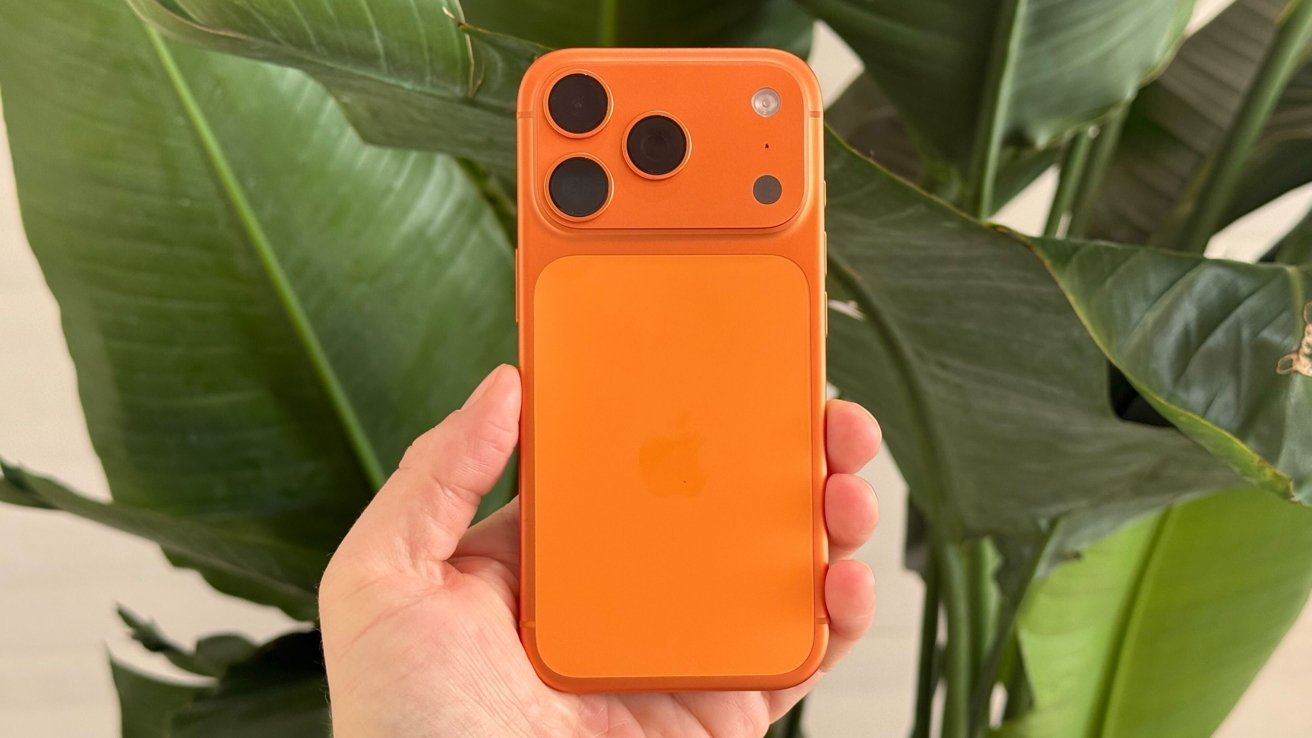
You've probably seen the recent reports of Cosmic Orange iPhone 17 Pro handsets turning pink and the blame being pointed at owners and cleaning. It's not that simple.
Cosmic Orange iPhones are stunners, and polarizing. For some, though, as we reported over the weekend, it doesn't seem to stay that way for everybody.
Reports of Cosmic Orange iPhones gradually turning pink have been popping up for a week or so now. One in particular caught our eye, with Reddit user "DakAttack316" sharing photos of their once-orange iPhone 17 Pro Max.
The photos show a phone that looks more like an Iron-Man collab than a premium device. And the fingers were soon pointed in one direction — oxidization.
But what caused it, and why?
Apple is pretty quiet about it and point to their knowledge base article about how to properly — and improperly — clean an iPhone. But the real issue might have occurred long before these iPhones were ever used, let alone cleaned.
Cosmic Orange, an origin story
Before we get into what could be going wrong with Apple's orange iPhone, we first have to look at how it was made that color in the first place. Unsurprisingly, it's a complicated process.
First, Apple switched from the iPhone 16 Pro's titanium construction, choosing to use aluminum instead. That makes the phone lighter while also making it better at conducting heat — something iPhones haven't always been great at.
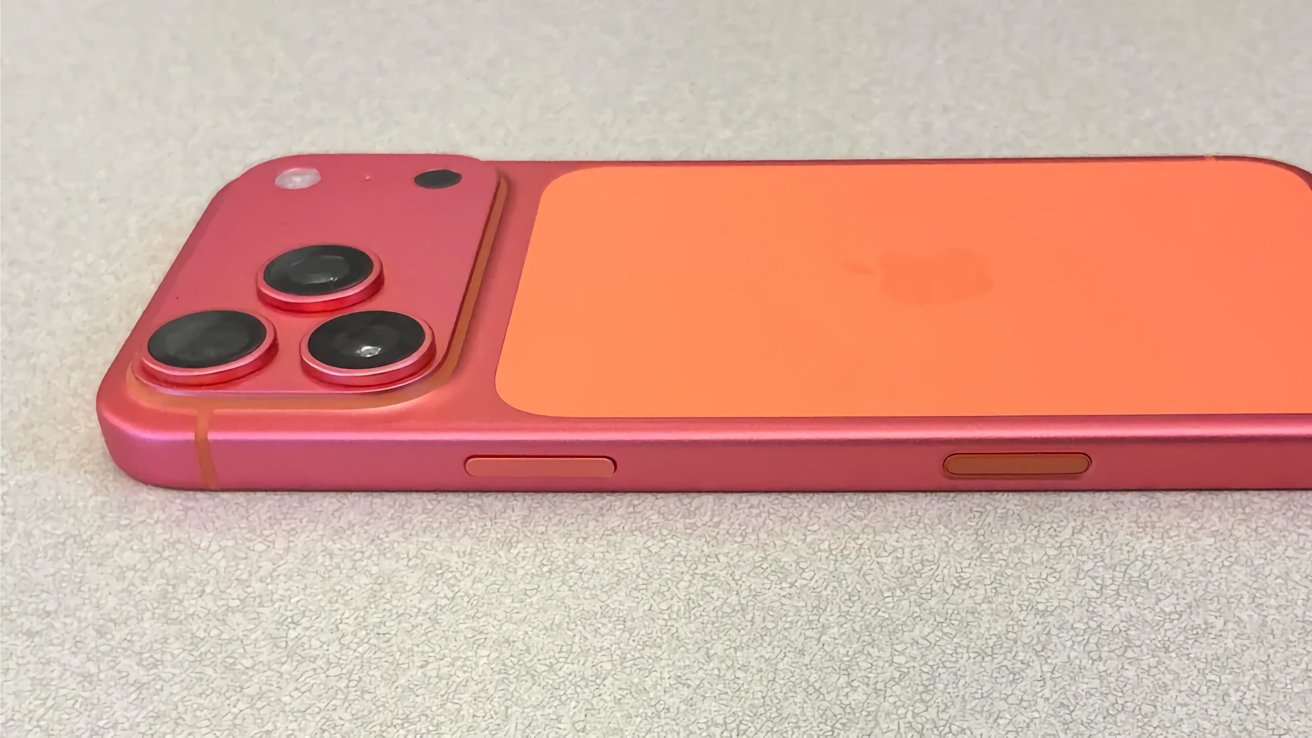
An allegedly discolored iPhone 17 Pro, shifting from Cosmic Orange to pink - Image Credit: DakAttack316/Reddit
But you can't just paint aluminum traditionally, and expect it to stay painted, so Apple had to go a different route. It had to use an aluminum anodization process instead.
Bear with me, here. I had to learn this too. And, I had to talk to Mike Wuerthele about it, who in parallel with his master's degree in physical chemistry has a bachelor's in material science.
He knows how this works, and has carefully edited the below for simplicity and accuracy.
That process starts with cleaning, using a mild non-corrosive solution to remove machining residuals, grease, and any fingerprints. It's vital that the aluminum is clean before moving onto the next step: etching.
The etching process removes any surface defects as well as an oxide layer that forms naturally. The process normally uses an alkaline bath or spray to leave the metal with a smooth, and even finish.
Next, we move onto anodizing which sees the part submerged in an electrolytic bath and connected to an anode. A current drives oxygen ions to the metal's surface, forming a porous aluminum oxide layer.
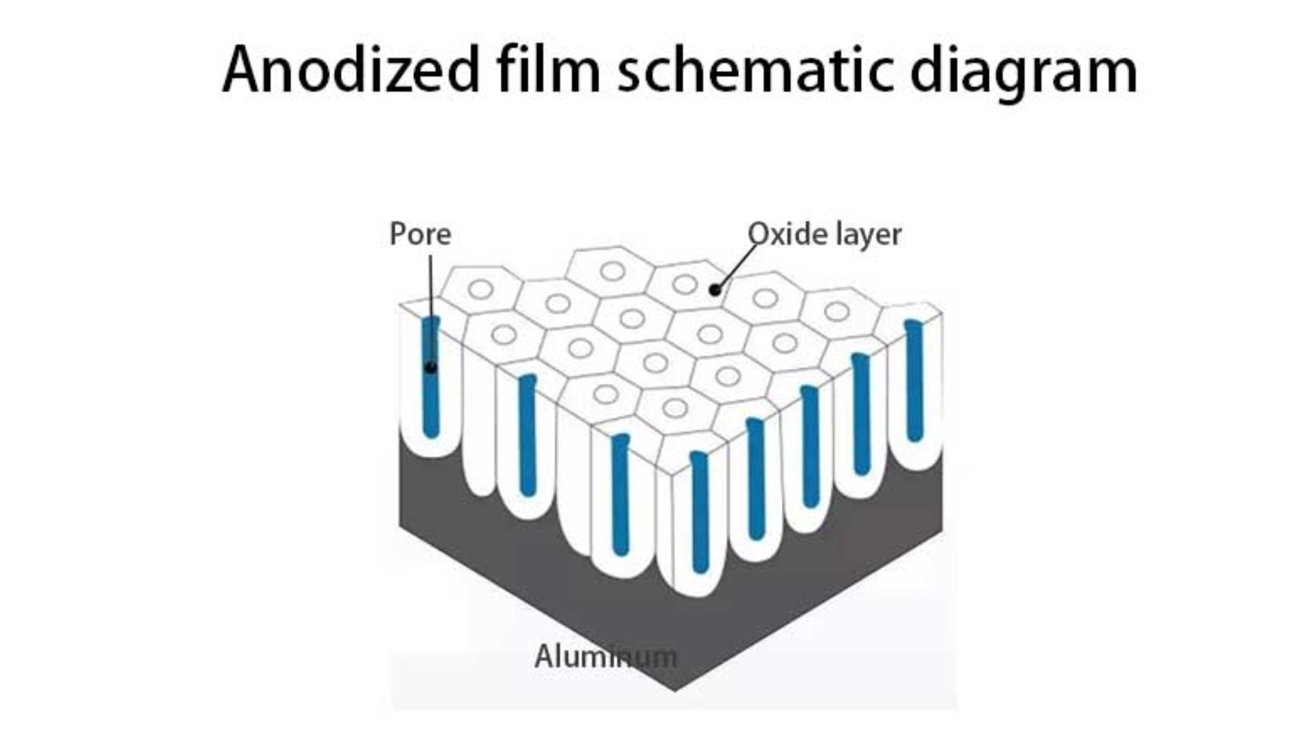
The different components of the anodization process - Image credit: Henan Worthwill Industry Co.,Ltd
That porous layer is vital to the process. It's how Apple applies the Cosmic Orange color.
At this stage, the aluminum surface has a porous oxide structure. It's like a sponge, making it perfect for absorbing the coloring used to create the orange we see at the end of the process.
Now, we have an aluminum part, essentially dyed orange. But the final part is key — the aluminum needs to be sealed.
The sealing process is a chemical and physical process, which is far, far beyond the scope of the article here. In doing so, the aluminum closes its sponge-like surface, keeping the color in and everything else, out.
And it could well be where things are going awry for a small portion of the iPhone 17 Pro lineup.
Sealed with a kiss. Or not.
Sealing the finished metal chassis of the iPhone 17 Pro is vital to ensuring the finish's longevity. Poor sealing leaves that porous surface wide open to anything and everything life can throw at it.
Worse, because the porous aluminum oxide structure is great at absorbing things, anything that it comes into contact with can affect it. Whether that's in the air, on your hands, or in your pants pocket.
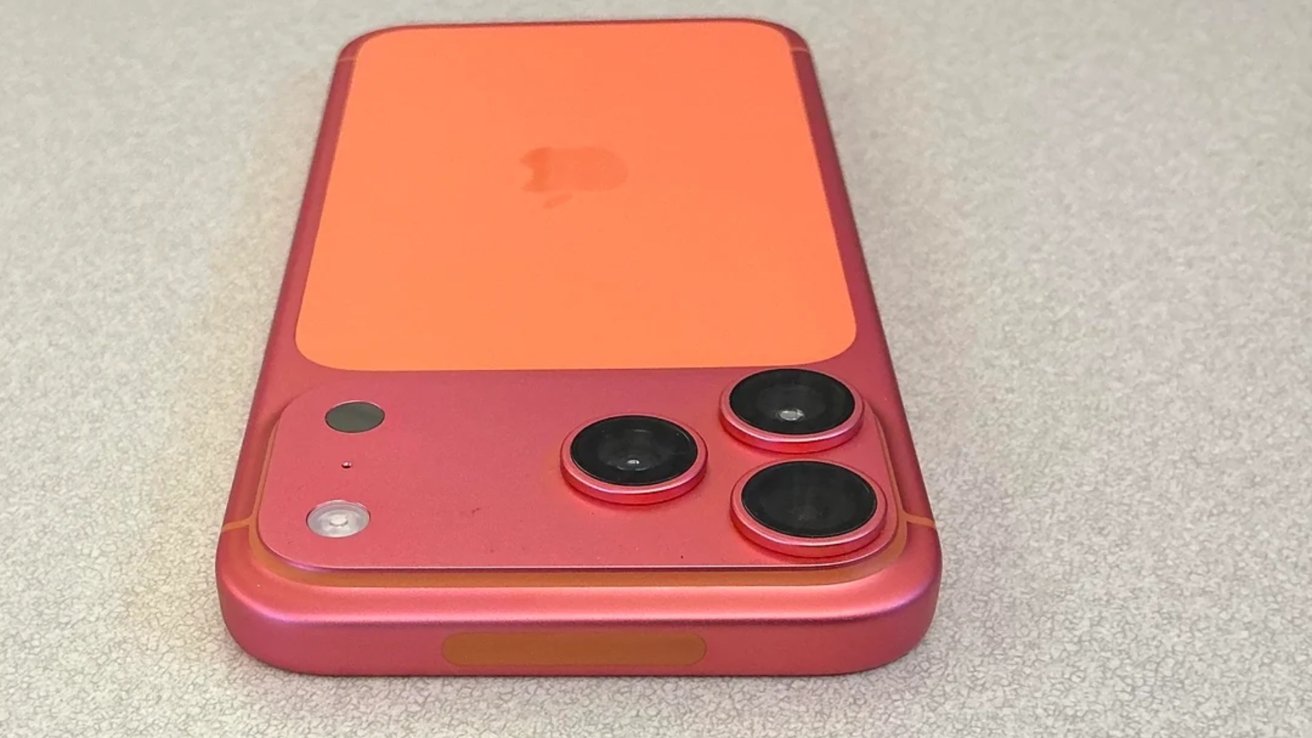
The two-tone iPhone Apple will never make - Image Credit: DakAttack316/Reddit
Any liquid, like water or grease, can get into the pores and cause the color to change or fade. Further, it weakens the corrosion protection that would normally further protect the iPhone's finish.
There are a few ways that a poor seal can be applied during the anodization process. An improperly composed sealant solution can lead to patchy and uneven colors., for example.
Chemical contamination during the sealing process can leave pores unsealed, causing discoloration.
Simply failing to seal the metal at all would allow oils and more to be absorbed. And yes, anything used to clean an iPhone is included, even if it isn't an oxidizer like hydrogen peroxide.
And then there's the sun. An unsealed anodized surface will bleach with even a short period of sun exposure, and this is aggravated somewhat by the color of the phone and how light absorption and refraction works.
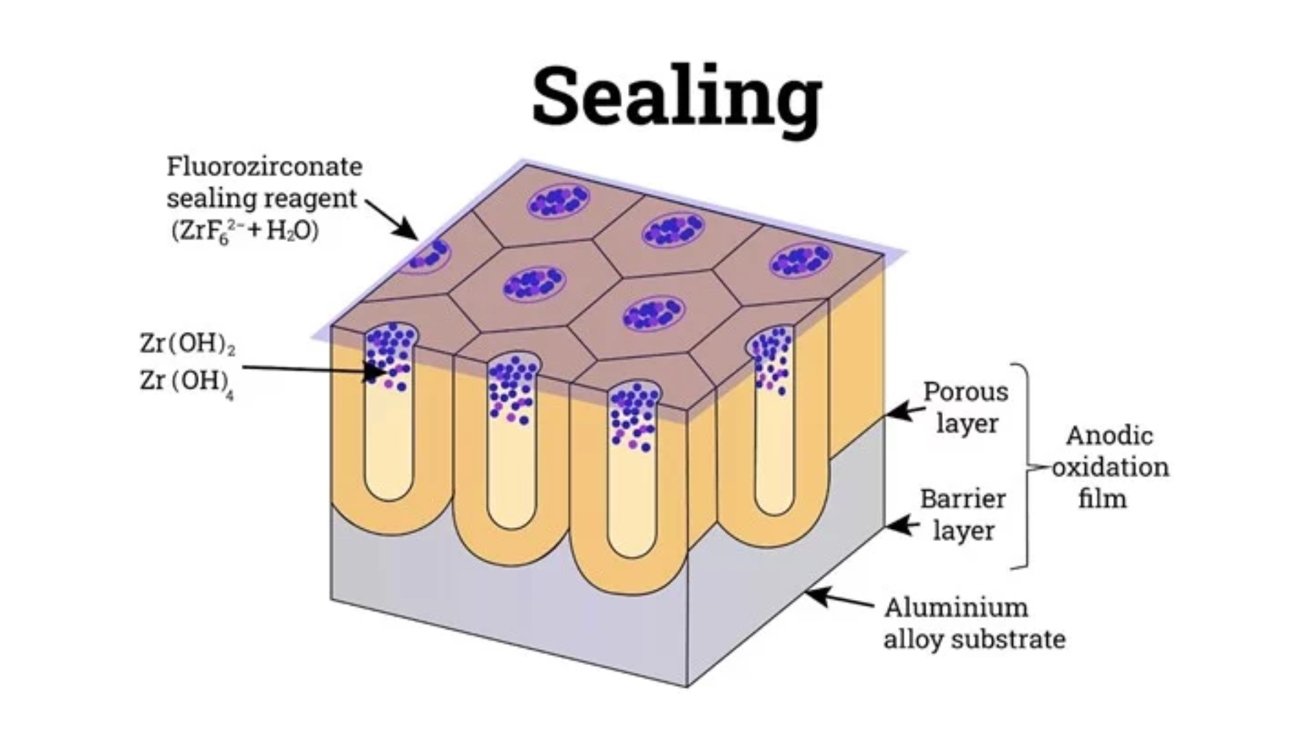
How the sealant protects the colored dye - Image credit: Wayken Rapid Manufacturing
A failed or poor sealing can lead to corrosion, wear, and aesthetic degradation. And that sounds very much like what we've seen with some Cosmic Orange iPhones.
If an iPhone manufacturer's sealing process is compromised, even a little, there isn't a great deal owners can do to prevent discoloration. It's just a matter of time.
Cupertino, we (might) have a problem
The pictures we've seen are too uniform in their color change to suggest that this is merely a bleaching situation. Bleach or hydrogen peroxide application would have to be very precise, meticulously wiped and spread around, and then removed.
We don't think it's likely that Apple's theory about cleaning it wrong is the likely root cause of the problem. This is why we, and other materials engineers we've spoken to over the week, think it's a sealing issue and sun exposure forcing the uniformity of the color change.
Still, at this point it's important to note that Apple hasn't yet publicly commented on the situation beyond pointing to the cleaning dos and don'ts.
We do know that Apple is aware of the situation. People impacted by the issue say they've been able to get their iPhone replaced under warranty.
We also know that Apple is investigating the issue to get to the bottom of what's happening, and how widespread it might be.
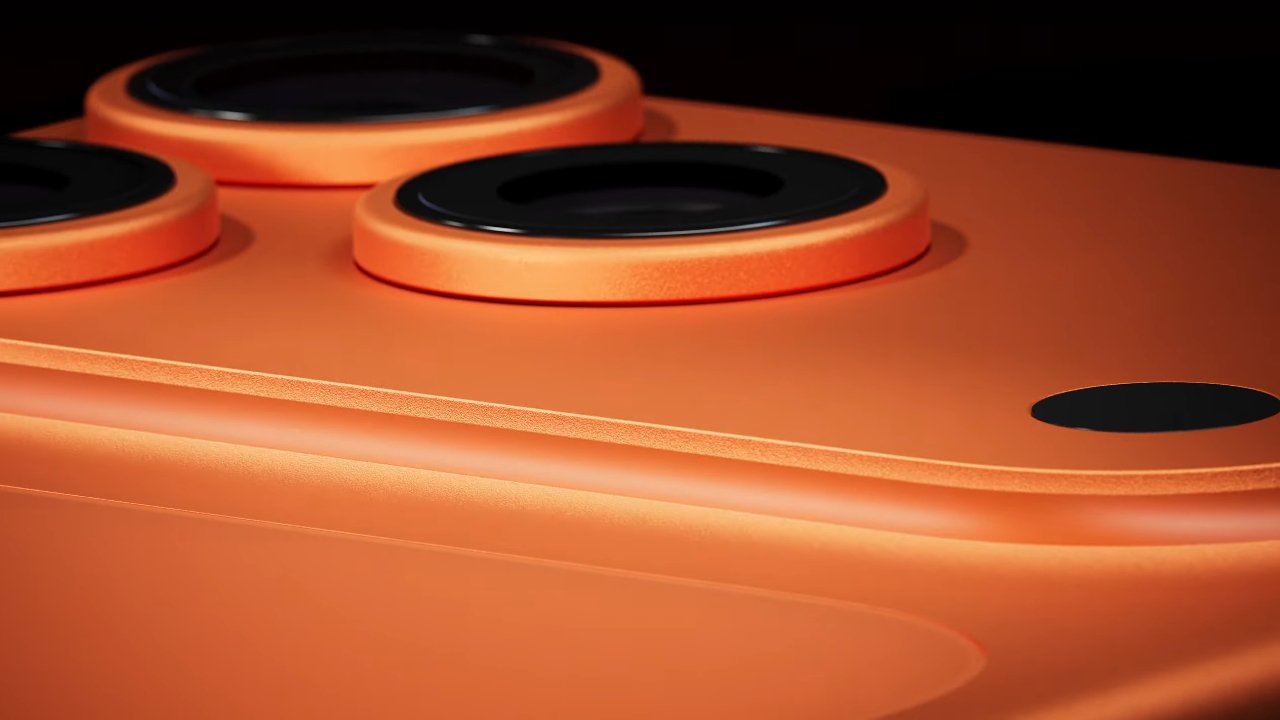
Cosmic Orange, the way Apple intended — image credit: Apple
AppleInsider has been told by multiple sources inside Apple's service chain that discolored iPhones are being "captured" and returned to its engineering team for assessment. But what happens next is unclear, and will depend on the root cause.
We know that the issue only affects some iPhones, otherwise it would be much more widespread than the handful of reports we've seen to date.
That gives us confidence in saying that yes, you should buy a Cosmic Orange iPhone 17 Pro or Pro Max if you want one. It's unlikely that you will have any issues.
Thankfully, if you do, it looks like Apple will swap your pink iPhone for an orange one.
To clean or not to clean
Using hydrogen peroxide to clean your iPhone is a terrible idea, and Apple specifically warns against it. But you could clean your iPhone using Apple-approved methods and still find that it isn't as orange as it once was.
If I was to hazard a guess, I'd say that Apple will discover that a small number of its iPhones were not correctly sealed during the anodization process. Those devices will be captured by service, replaced by Apple, and shipped back to Cupertino, never to be seen again by anyone other than engineers.
In the mean time, Apple and its manufacturing partners will address whatever caused the sealing process to fail and then correct it.
Fast forward a couple of months and all will be forgotten. Unless you happen to be one of the unlucky few who had to return a faulty iPhones in the interim, of course.
I quite like the pink look, anyway. Maybe we could have a pink iPhone 18 Pro in 2026, Apple?