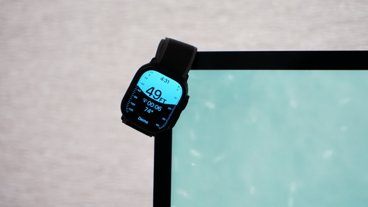
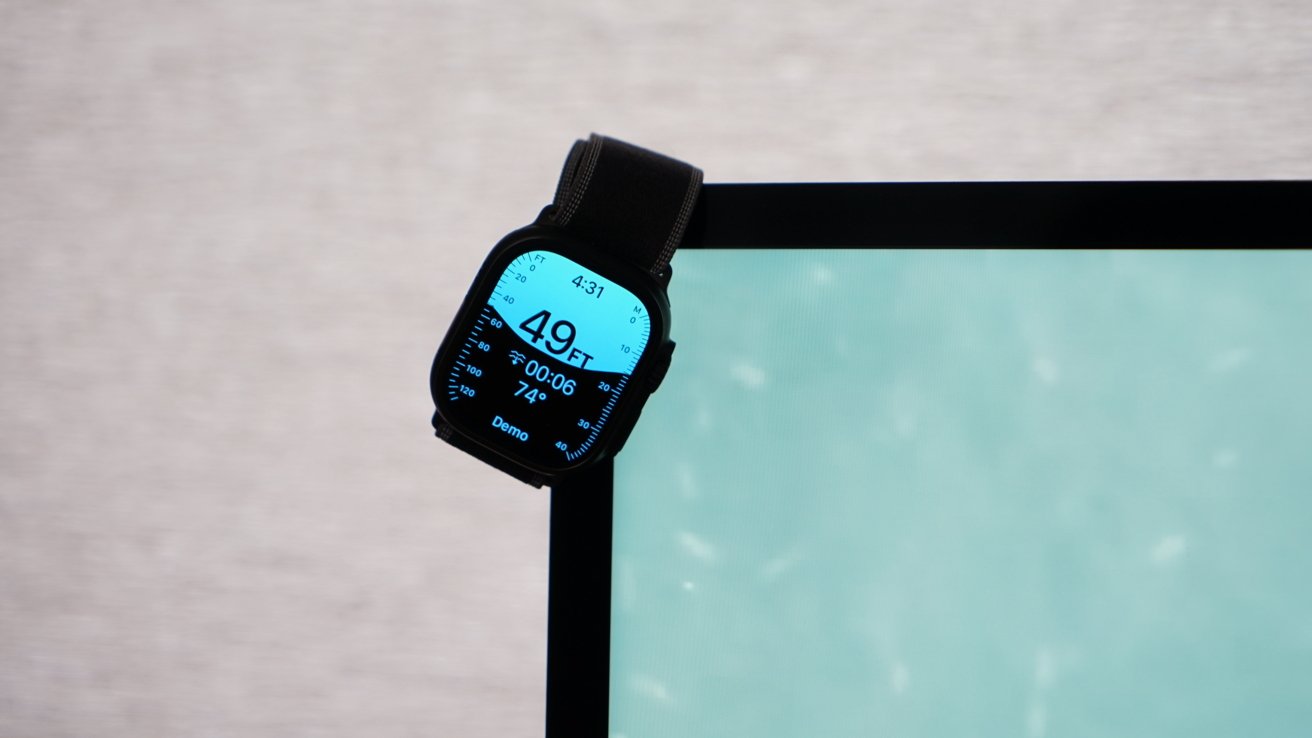
A future Apple Watch battery could last even longer in the future. That is, assuming Apple adopts display partner LG's new screen technology.
Apple actively works with its supply chain partners to improve the components used in its products. With the display being an extremely important part, it comes as no surprise that Apple has considered what the next big screen tech switch should be.
Industry sources cited by The Elec on Tuesday claim that LG Display is developing and validating high-mobility oxide (HMO) thin-film transistor (TFT) backplane technology.
HMO is considered to be the follow-up display tech to low-temperature polycrystalline oxide (LTPO) TFT. LTPO is extensively used by Apple and is the current technology employed in its OLED displays.
The first inkling of Apple's intentions surfaced in November 2025, via a report from TheElec.
LG Display has now reportedly deployed equipment to its Gen-6 production line for development and verification purposes. It is expected LG Display will ship panels using the technology starting in 2027.
The initial use of HMO displays is smart watches, with the Apple Watch expected to use it. Following Apple's established pattern for rolling out display technology, the Apple Watch will be the testbed, then later arrive on the iPhone.
However, LG Display won't be the only supplier. As Apple prefers to spread the risk between multiple sources, both LG Display and Samsung Display are expected to work on the iPhone display versions.
What is HMO?
HMO is a backplane technology that is used to handle circuits in a display. It works on the TFT, a semiconductor layer that manages the flow of electricity across the panel to each pixel.
The new technology takes advantage of the way that oxide TFTs consume low amounts of power. The intention is to make it use less power than an LTPO-derived display, cutting energy usage.
However, oxide TFTs have issues with electron mobility, referring to how fast an electron shifts through a material. HMO gets around this problem by allowing electrons to pass through at the same speed as LTPO displays.
The upshot is that it is capable of fast electrical signal switching at the same level as current LTPO displays, while saving power.
The tech is also aided by being cheaper to manufacture. LG Display is capable of using sputtering, which is a thin-film deposition technique that is already used with oxide processes.
The use of this technique means it can be easily adapted on existing production lines, cutting down the implementation costs.
It also avoids the use of a complex laser crystallization and ion implantation system, which is needed to produce LTPO panels. This simplifies manufacturing the panels even further.
For consumers, the ultimate result will be a display that is even more power-saving than before. There's also the potential to use an even higher resolution than present displays with the technology. .