
Apple has announced more projects for New Zealand and Australia that aim to match users' iPhone charging needs with clean energy.
Following on from its October 2025 announcements of energy initiatives in China and the European Union, Apple is now highlighting its similar efforts across Australia and New Zealand.
"By 2030, we want our users to know that all the energy it takes to charge their iPhone or power their Mac is matched with clean electricity," said Lisa Jackson, Apple's vice president of Environment, Policy and Social Initiatives, in a statement. "We're proud to do our part to support Australia's transition to a cleaner grid and drive positive impacts for communities and nature — all while moving closer to our ambitious goal to be carbon neutral across our entire footprint."
Back in 2020, Apple made this commitment of having a 100% carbon neutral footprint by 2030. It's been criticized for greenwashing, and recently had to stop saying that the Apple Watch Ultra 3 is carbon neutral.
It does power all of its data centers on 100% clean energy, and has told AppleInsider that this continues with all new data center projects. But there is still the issue that with Apple Intelligence, users' devices are consuming more energy.
Nonetheless, Apple is expanding its environmental and energy initiatives across the world.
Australia initiatives
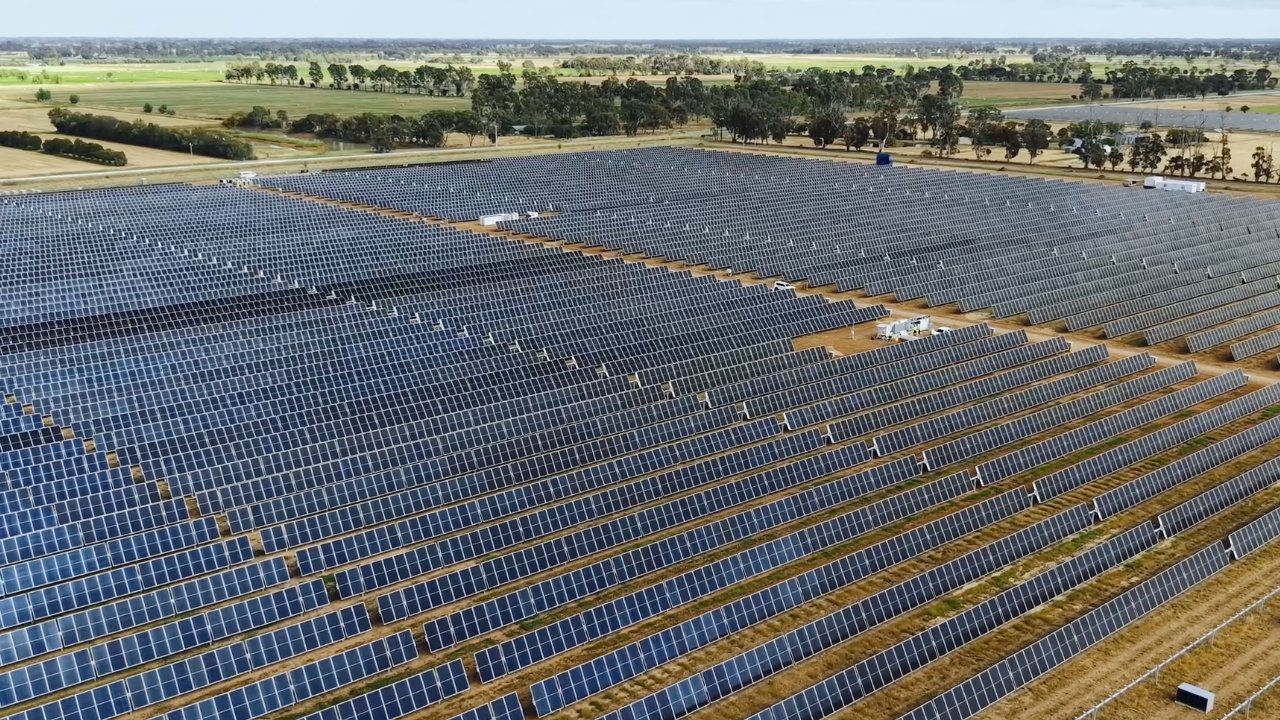
Apple has announced a plan to extend its current renewable energy capacity in Australia, starting with a new solar project. This new facility under construction in Lancaster, Victoria, will contribute to over one million megawatt-hours of energy being generated annually by 2030.
This latest facility is an 80MW solar project being made under a long-term agreement with European Energy. It's expected to be operational during 2026.
It will also be contributing to a goal of matching all of the energy Apple's users consume for charging and using their devices. The intention is that this will be matched by clean energy within the next five years.
The company's existing efforts in Australia include a project in Queensland, which Apple now says is producing a macadamia orchard. What was once 1,700 hectares of degraded sugarcane farmland now has over 800,000 trees.
It's intended to re-introduce native species and also improve soil quality in an area that was once heavily farmed. There is also to be a 100 hectare restoration area "which works to reconnect youth with the landscape."
New Zealand
Apple has also announced that its Restore Fund initiative will be investing in a new project in New Zealand. This is the same initiative that has already seen Apple investing in California's redwood forests and Brazil's rainforests.
For New Zealand, Apple is partnering with Climate Asset Management to restore 8,600 hectares of forestland. The land is across four sites in the Central North Island, and one in the South Isalnd.
The aim is to "improve biodiversity, increase carbon sequestration and generate financial return through the sustainable management of working redwood forests." At the same time, the project will conserve 3,000 hectares of native forestland, meeting the standards of the Forest Stewardship Council.