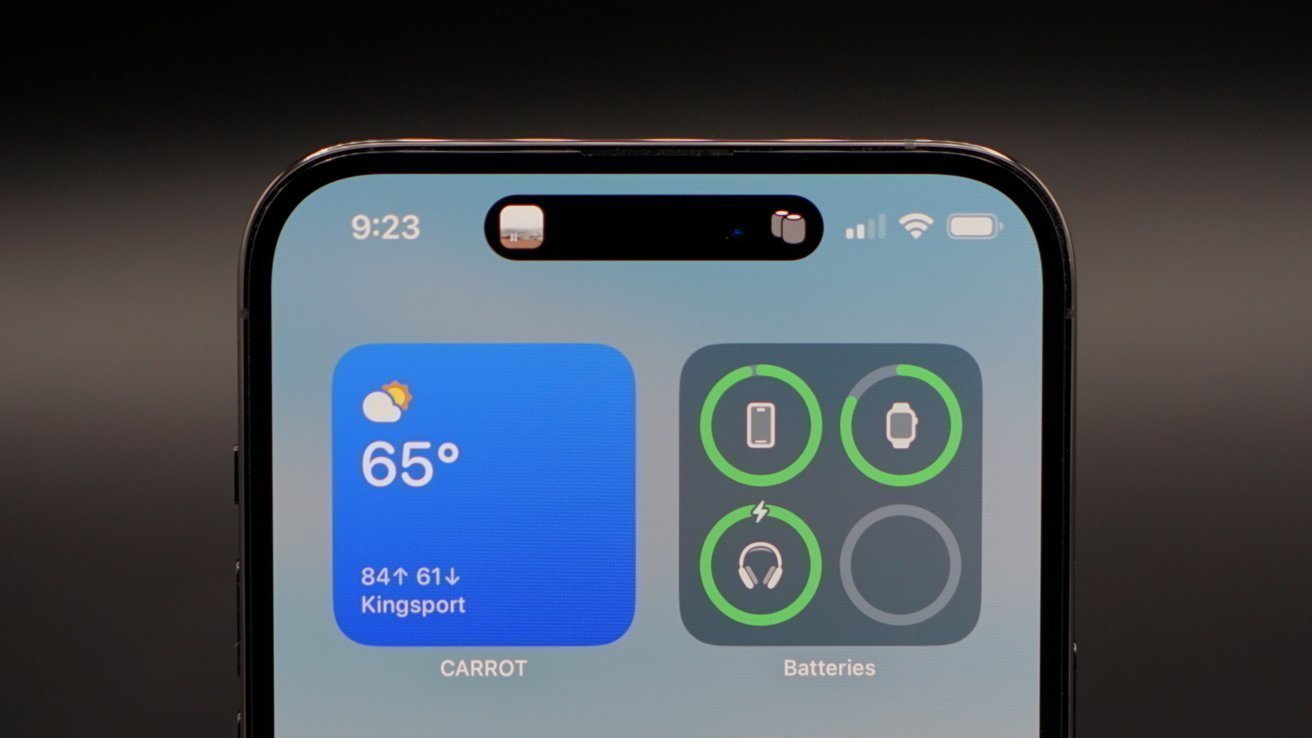
The latest rumor concerning the iPhone screen says that that Dynamic Island will finally disappear in the iPhone 20 Pro as Apple introduces an under-display camera and Face ID sensor.
There has been a continual back and forth of rumors concerning Apple moving its front-facing selfie camera underneath the iPhone display. Recently, leaker Digital Chat Station claimed that Apple was not going to do this, and instead would have a small hole-punch style design.
Now the same leaker is back saying that Apple will get the camera under the display — but in 2027. Writing on the Chinese social media site Weibo, he or she said (in translation) that "the under-screen front-facing plan of Apple's straight board machine is in 2027."
Once more, machine translation issues make this claim even less specific than it appears. It's not clear what a "straight board machine" could be, for instance.
But the leaker does also go on to say that it's hoped there will be under-display cameras for Android phones at the same time. Yet there already are such Android phones, so it's probable that the leaker means ones of the same quality Apple will be aiming to use.
For up to now, under-display cameras have tended to be significantly poorer quality compared to regular cameras housed in a notch or hole-punch.
Currently Apple requires this interruption to the display in order for camera components to have a clear line of sight. That both enables Face ID unlocking or authentication, and better quality selfie phots or videos.
Still, as late as September 2025, it was still being rumored that the iPhone 18 Pro might gain such under-display Face ID and camera.
In May 2025, the usually credible Ross Young of Counterpoint Research, and formerly Display Supply Chain Consultants, backed up under-displauy rumors. He expected that such a display would happen in 2026, but specifically for Face ID, not for a selfie camera.
In comparison to Young, leaker Digital Chat Station has just a fair track record. Other leakers who've predicted under-display lenses, such as Instant Digital, are generally less reliable, though they have had their successes.