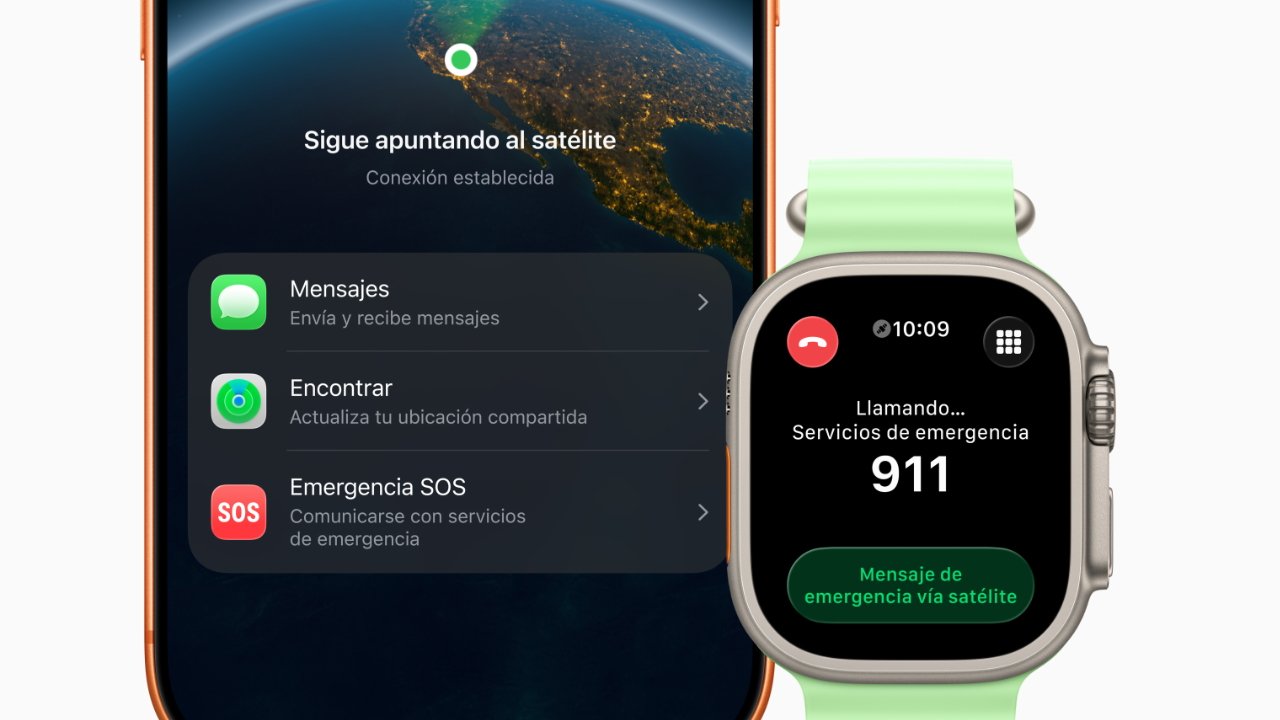
Apple has rolled out its Emergency SOS via Satellite to Mexico, for users of the iPhone 14 or later, and the Apple Watch Ultra 3.
Apple launched its emergency satellite system back in 2022, initially for the US and Canada only. By December 2022, it was available in Europe, and by 2023, it was rolling out across Australia and New Zealand.
It's the feature that means iPhone users can contact emergency services when they need to, and regular cell calls or Wi-Fi are not available.
Now Apple has announced that the feature has launched in Mexico. It's available immediately, on the iPhone 14 or later models, plus the Apple Watch Ultra 3.
"In a country as geographically diverse as Mexico, there are remote regions where traditional mobile coverage may be limited," Juan Antonio Surez Snchez, head of the country's National Information Center in Mexico City. "Emergency SOS via satellite on iPhone and Apple Watch Ultra 3 offers a new and powerful way for people to contact public emergency services when other media are not available.
"This technology can help emergency services locate and care for people in critical situations, when every second counts, and, with it, help the population when it is most needed," continues the statement. "We are pleased to have worked with Apple to bring this important innovation to Mexico, and we are excited about the positive impact it will have on public safety across the country."
How it works in practice
If stranded or otherwise in danger where there is no signal for calls or regular iMessages, the user of an iPhone 14 or later can contact a satellite. A short message is relayed to the local emergency services via staff at a network of ground stations funded by Apple.
For this latest country rollout, Apple has once more stated that the service will be free for two years from activation of the device. However, it has consistently extended that time, and as yet does not charge any users for the feature.
This is possibly because Apple doesn't want to become subject to the regulations that it would if it were deemed to be a carrier.
But Apple has been expanding the service to include roadside assistance, and is reportedly looking to develop its use much further.
Although Tim Cook reportedly turned down an offer from Elon Musk in 2020 to provide fuller satellite features via his Starlink company.