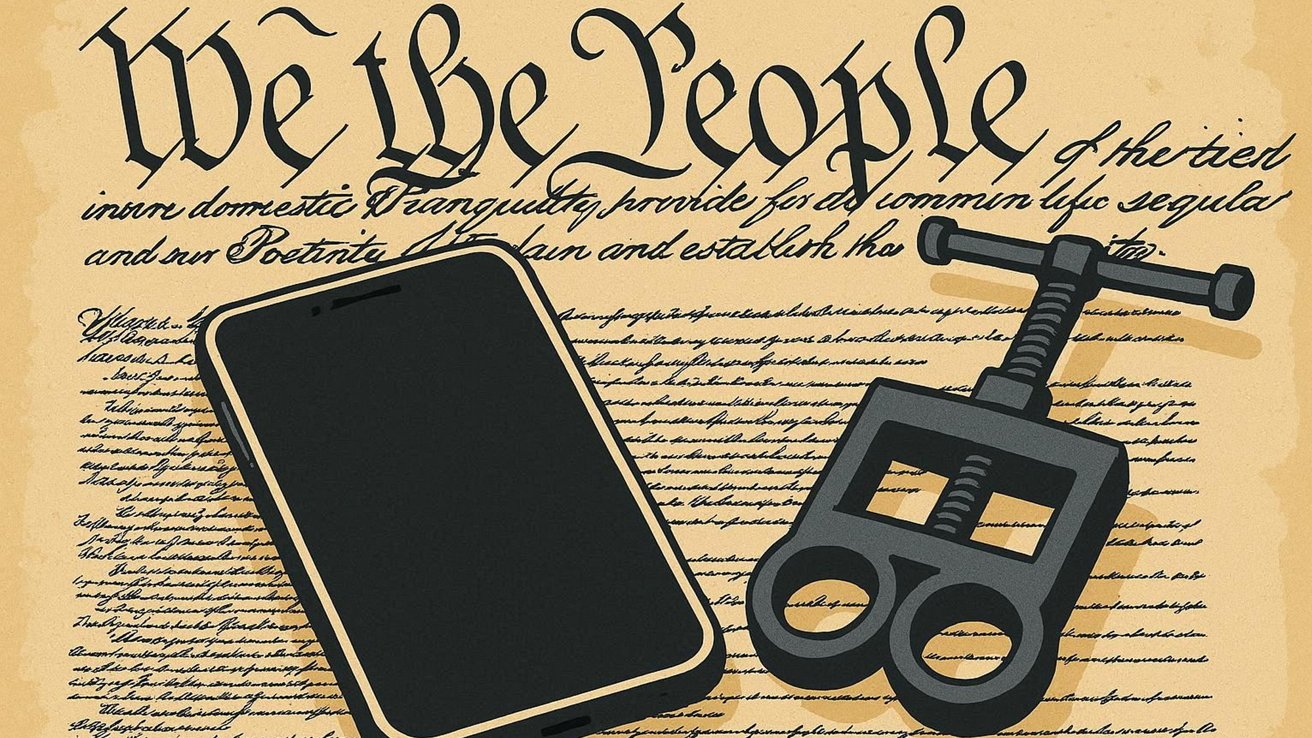
Apple's choice to remove an app at the government's behest shows that the App Store is too private to be public, and too public to be private.
I describe myself as AppleInsider's resident "First Amendment rights psychopath." I've always been this way; you can chalk it up to getting put through the American school system in the early 2000s.
However, as such, I've also had to become pretty well-versed in where that rule applies — because it's not always immediately obvious. Especially when you start dealing with "invisible" spaces, like the internet.
When I saw that the ACLU was arguing that Apple's ecosystem may facilitate government abuse, I was interested in its logic. The entire saga is centered around Apple's controversial choice to remove ICEBlock, an app that allowed users to mark ICE sightings on a map.
The article is definitely worth a read. I think that Daniel Kahn Gillmor, the author, makes a lot of compelling points.
But it is worth knowing why we're in this pickle in the first place. And to get there, we'll have to take a quick trip back to December 15, 1791.
Public versus private versus personal spaces
I'm going to assume many of you already know the difference between public, private, and personal property. That being said, I'd like to provide some handy definitions for anyone who may not know.
Public property is any space owned and managed by the government. This can be federal, state, or local government — it doesn't really matter which level.
Private property is any space owned and managed by anyone who isn't the government. The owners might be a corporation, like Apple, or an individual entity. If you own your own land, that land is your private property.
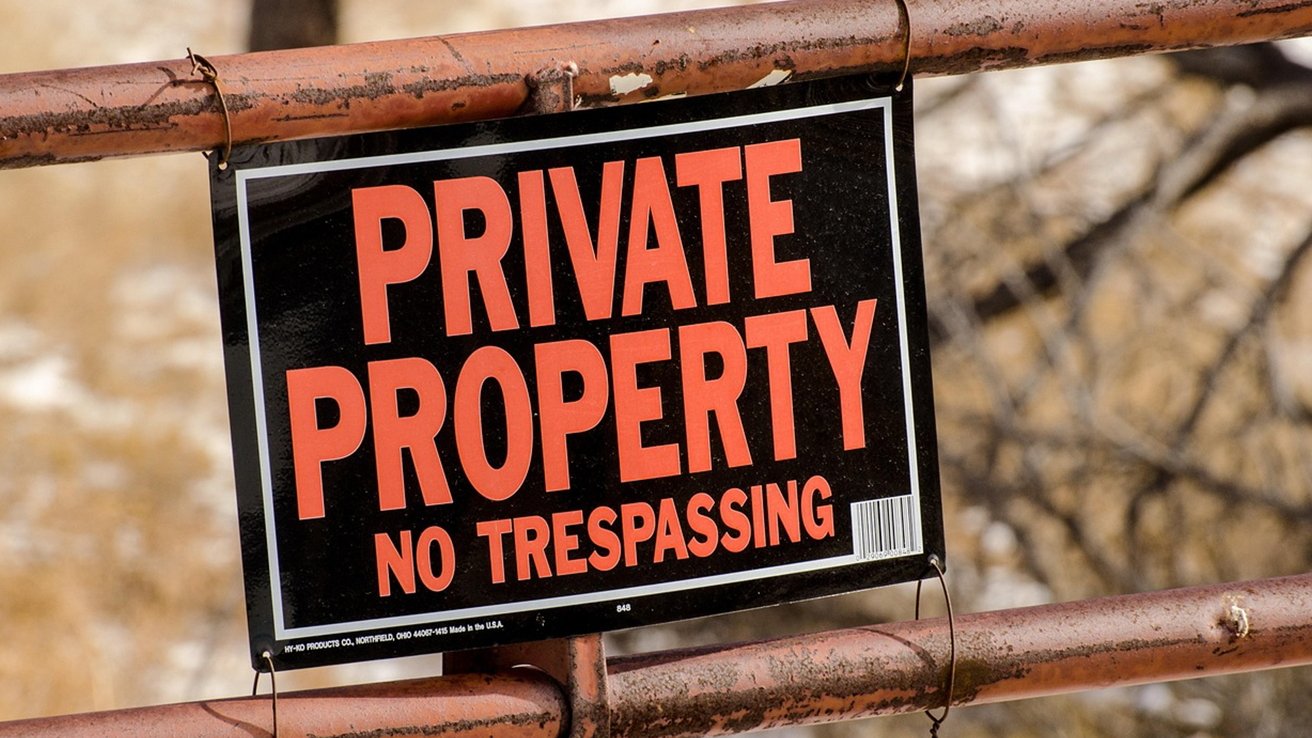
Image credit: Elljay on Pixabay
This becomes confusing, as the phrase "private" can be somewhat semantically ambiguous. While the average person might use the phrases "private" and "personal" interchangeably, legally, their definitions are not interchangeable.
Personal property, in the legal sense, is a subclass of private property. However, in this case, property — another semantically ambiguous phrase — doesn't mean space.
In this case, it means physical objects that you, personally, own. Your computer is your personal property, while your house is your private property.
You can see why people say "possession is nine-tenths of the law." It's worth noting that this is an expression, not an actual statistic.
Now that we've gotten the definitions out of the way, let's discuss the First Amendment actually grants you.
What you get...
The First Amendment, as written in the U.S. Constitution, reads as follows:
Congress shall make no law respecting an establishment of religion, or prohibiting the free exercise thereof;or abridging the freedom of speech, or of the press; or the right of the people peaceably to assemble, and to petition the Government for a redress of grievances.
But what does that all actually mean? I figure this may be especially helpful for our non-U.S. readers, who likely aren't hobbyist U.S. constitutional scholars.
The first section means that the government cannot establish a national religion. It also prevents the government from banning individuals or groups from practicing the religion of their choosing.
The second part is the part that covers freedom of speech. It also guarantees the press's right to report news and information without government interference.
The third section guarantees that people are allowed to peacefully protest. The final section ensures the right to ask the government to address issues. it also gives people the right to sue the government.
And that is a very, very, very basic primer on the First Amendment. It will work for our purposes, but I would like to point anyone interested in seeing how the sausage is made, to Congress.gov.
... and where you get it.
So that seems cut and dry, right? The freedom of speech clause gives you the right to express your feelings and beliefs without fear of governmental retaliation or censorship.
Well, sure — on public property.
If you're in a public park, the courthouse, or even the sidewalk outside of a business, then yes. Your freedom of speech is guaranteed because you're protected from the government in its domain.
Once you step foot onto private property, that right is no longer in play. That is because the First Amendment does not apply to spaces the government does not control.
While a mall might feel like a public space, it's still privately held. You don't have freedom of speech in a mall — the mall security guards can remove you at any point at their discretion.
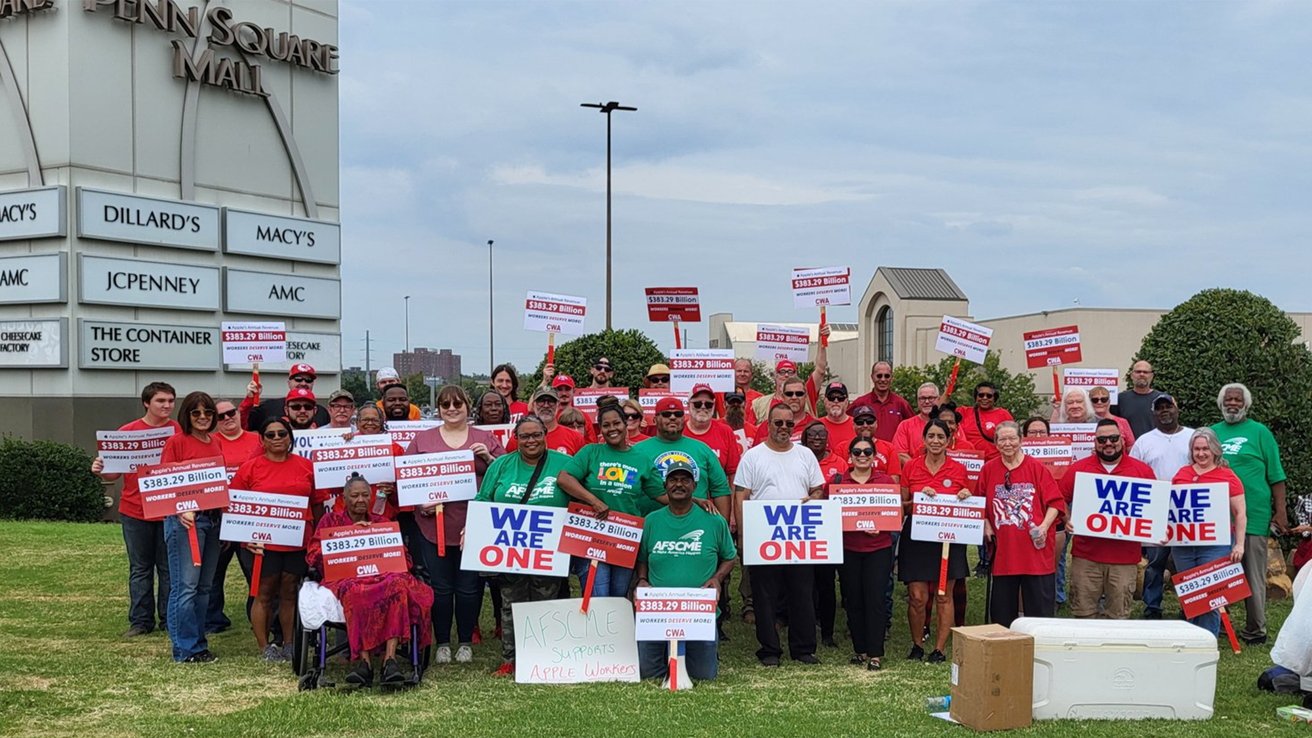
Protesting on public property is a guaranteed right | Image Credit: Central OK Labor Federation (@OKCOLF on X)
This is also why you're allowed to stand outside a Starbucks and talk about unfair labor practices to potential customers who may be walking in. The second you walk into the store, Starbucks has the right to ask you to leave, and to have you removed on the grounds of trespassing if you refuse.
How this relates to the App Store and the internet at large
I see a lot of people complaining about censorship in so-called "public" spaces online. You don't have to look very far to find someone who thinks that their post being removed is a violation of their First Amendment rights.
Except it isn't. If your post is removed because you violated terms of service, you're not being censored, you're being held responsible for violating rules you agreed to — even if you didn't know you agreed to them.
That's because the internet is not a public space. The back-end of the internet is owned and maintained by ISPs, private telecom companies, and major tech companies who provide data hosting services — this necessarily makes it a private space.
This applies doubly for the front end. Individual websites and platforms are owned and operated by individual businesses.
While Facebook or X may feel like public spaces, and politicians are trying without much success to change that, they're very much not. You don't have freedom of speech on social media because neither you nor the government owns any part of that platform.
There are public spaces on the internet, like government-run websites. This would be the same thing as a DMV in a strip mall: the DMV is a public space, the strip mall is not.
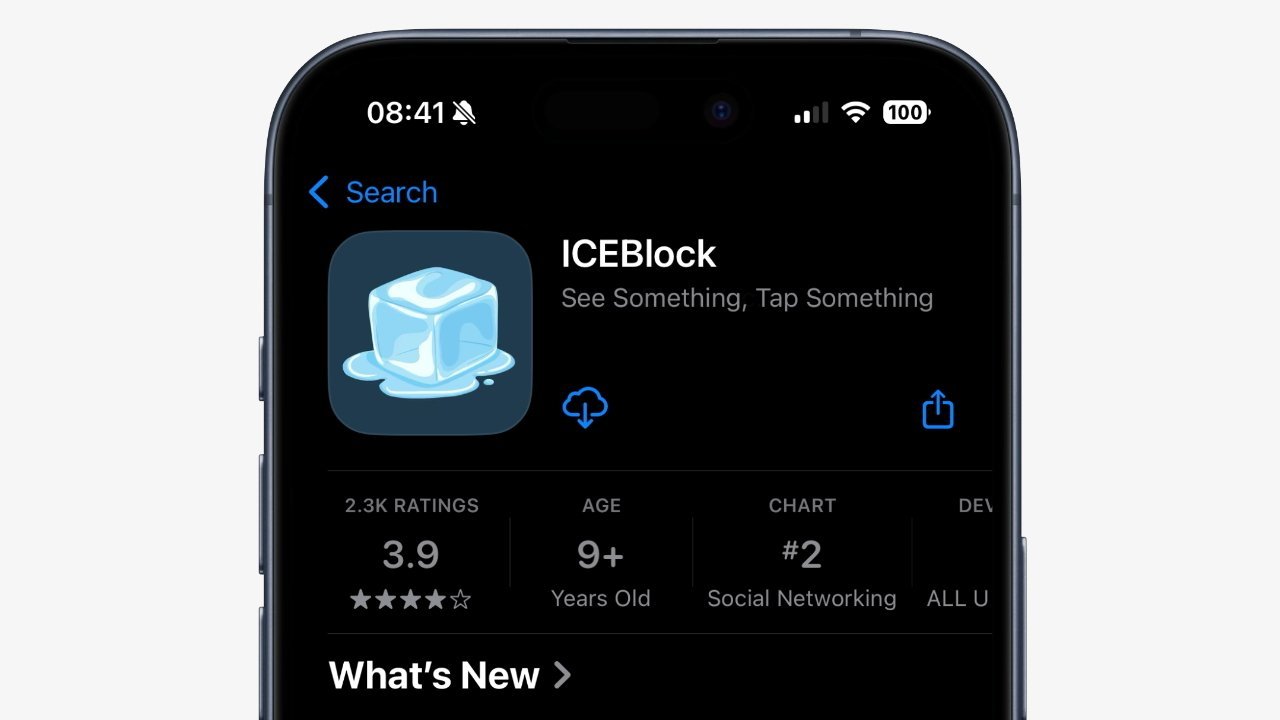
ICEBlock removed from Apple App Store
To bring it full circle, in the U.S., Apple effectively has carte blanche within the bounds of its own developer agreements and applicable law.
The government can't force Apple to remove an app unless the app itself violates criminal law or a court order is issued. For instance, there was nothing inherently illegal or unsafe about ICEBlock. It functioned no differently than a crowdsourced app for finding potholes or speed traps.
But that also means that Apple has the right to ban apps from the App Store, providing it has enough of a reason to do so. And that reason could be just about anything.
It could be "it violates our guidelines," which developers opt into by agreeing to use the App Store. This is the argument Apple made when it pulled Fortnite from the App Store after skirting the 30% commission fee.
It could also be because Apple doesn't want the app on the platform. You'll notice that Apple doesn't offer any apps that focus exclusively on adult content, for instance.
And Apple has a right to pull down an app if it deems it "too controversial." Apple may have removed Tea for repeated data leaks, but it removed its male-oriented counterpart, TeaOnHer, citing excessive complaints, among other reasons.
So while Apple doesn't have to remove an app at the behest of the government, it's also not obligated to keep an app because of the First Amendment, either. They aren't trampling developers' rights by removing their apps.
Concerning precedents
I would like to point out that I do agree with the overall point that the ACLU is making. I, personally, think Apple should have left up the app.
Not so much because of free speech or my thoughts on immigration, but more because I don't love the precedent this sets. The fact of the matter is that Apple was influenced by the U.S. government's pressure.
That was the reason that it gave for removing the app.
"Based on information we've received from law enforcement about the safety risks associated with ICEBlock, we have removed it and similar apps from the App Store," Apple said.
And, as I stated in the beginning of this diatribe, ICEBlock wasn't doing anything illegal. The marked sightings would expire in four hours, user information was anonymous, and users couldn't communicate with each other.
ICEBlock was probably safer for both users and law enforcement officials than plenty of other apps.
As Gillmor astutely points out: U.S. iPhone users don't have other options to obtain apps. You get them from the App Store, or you don't get them at all. The post conveniently forgets that Safari exists, though, which is a topic for another day.
At some point, the line blurs between what Apple is doing voluntarily and what Apple is doing because it's being pressured. I think it emboldens government officials — regardless of their political alignment — to overstep their boundaries.
Jawboning — using public pressure to compel private action — isn't something to be taken lightly. It doesn't just affect Apple or big tech; the ramifications reach far beyond.
Apple App Store
"When a lever of control is available, the would-be censors will try to use it," Gillmor writes. "... In an increasingly centralized world, it will take very little for an abusive government to cause an effective organizing tool to disappear, [or] to block an app that belongs to a critical dissenting media outlet..."
Apple has been prostrating itself in front of the current administration. Every tech company has been. It appears to be the cost of doing business in 2025.
And, regardless of whoever takes the helm in the future, it will find itself doing it again. Red or blue, right or left, Apple is beholden, at least in some part, to the whims of the government.
I hate to brush it off and say "it is what it is," but legally, it is what it is. If you haven't noticed, American laws are woefully behind when it comes to modern technology.
Most of that is because politicians don't bother to educate themselves, and did away with the government agency they could ask for help, a very long time ago. The rest is apathy, and some if it is not wanting to give up that sweet, sweet, big tech money when reelection time comes around.
In a time when the government can wield policy as thumbscrews to get what it wants, and large companies can leverage their influence for special treatment, the average person, as always, manages to get the short end of the stick.