We've seen this before with Google Glass — and somehow, big tech has learned nothing. Let's hope Apple has, by the time they ship.
I have spent days with the same group of people, more or less, for over six years. For some of the crew, it's been even longer. When you spend that long with the same people, inevitably, a bit of the work relationship dissolves. It's the same whether you work in the office or across the globe in the same Slack channel.
For the AppleInsider staff, a lot of our "non-work" conversations are predictable. Pet pictures, vacation plans, thoughts on new movies, sharing playlists — all very run-of-the-mill things.
And when you're a team of journalists who mainline the internet for the entire day, some of those conversations inevitably become about the stuff you see during your time in what Mike affectionately calls the "bit mines."
I broached the topic of smart glasses, a topic that has been on my mind for the last several weeks. Which meant we got to talking about Ray-Ban Meta glasses
If you're not in the know, Ray-Ban Meta glasses are glasses that have a built-in camera that you can use to capture — or even stream — video. They've been around for a while, but the company recently released Meta Ray-Ban Display, its first smart glasses with a built-in visual display, catching wider audience attention.
One of the biggest selling points of this version, is that it just looks like "normal" glasses.
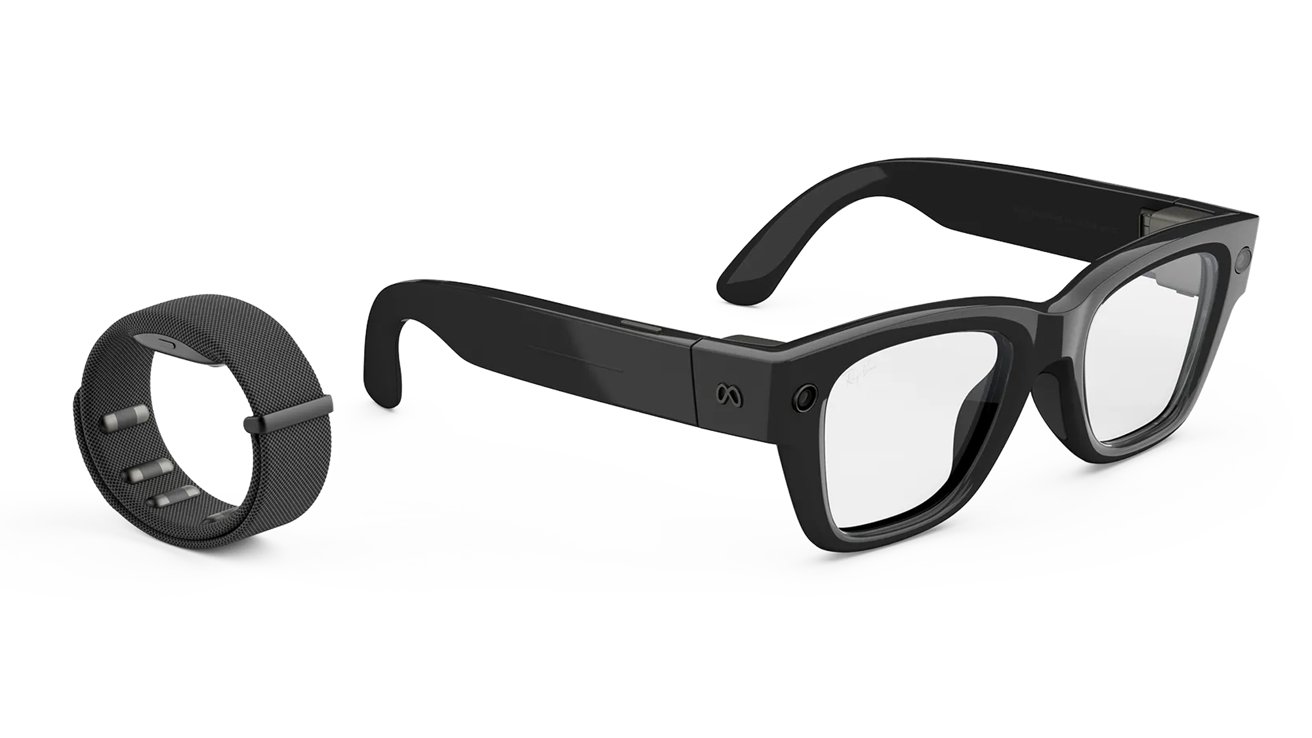
Meta Ray-Ban Display
If this sounds horrifying to you, you can join our club.
Emanuel Maiberg over at 404 Media has an outstanding piece that discusses the current problems with the technology. I highly suggest reading the piece if you haven't already.
I'll nutshell it for you, though.
Essentially, people are buying the Ray-Ban Meta glasses and using the built-in camera to harass people. This was always where the glasses were going to wind up.
A well-known example of this is when folks buy the glasses, wear them into massage parlors, and harass the staff. Of course, this all takes place while the bespectacled streamer broadcasts it live to thousands of people over Instagram.
When 404 reached out to Meta to ask for comment on the issue, the company offered an incredibly tone deaf response.
"Curious, would this have been a story had they used the new iPhone?" Meta said.
Maybe the spokesperson is unfamiliar with 404 Media's body of work, but I can safely assure you that it would have covered it "had they used the new iPhone."
Meiberg disassembles the spokesperson's statement masterfully, but one particular line really stands out.
"Unlike the iPhone and other smartphones, one of the most widely adopted electronics in human history, only a tiny portion of the population has any idea what the fuck these glasses are," wrote Maiberg.
And that, dear reader, is the crux of the problem.
The "reasonable" expectation of privacy
The laws surrounding filming individuals are hardly universal. Most states protect you from a few of the "big concern" cases.
This means that in many states, posting "revenge porn" — releasing or otherwise sharing visual depictions of a sexual partner without their express consent — is, at least, a misdemeanor. Some states, like Pennsylvania, even protect you against artificial intelligence-generated sexual visual depictions in your likeness.
For some states, it's a felony.
It's everything else that starts to get blurry.
You'll hear the phrase "reasonable expectation of privacy" thrown around a lot. Broadly, this means that if you're in a space that is considered public — streets, parks, malls — you automatically consent to being recorded.
This is because you do not have a reasonable expectation of privacy. However, in public restrooms and dressing rooms, you do have a reasonable expectation of privacy.
But it's still not even that clear cut. Let's say you're walking through a farmers' market and you're accosted by a man-on-the-street style interviewer. They begin recording you as they ask you questions.
Is this legally permissible? Maybe. It's hazy. Shake magic eight-ball later.

Recording consent laws (as of 2022) | Image credit: Recording law
Most laws that deal with recording are a bit archaic — they're generally related to analog phone wiretapping laws established decades ago and not revisited. This means you can't record someone over the phone or with an audio recorder without their permission.
Interestingly enough, that does mean that if a person is talking in a video, the rules still apply there.
Most states fall under the federal-mandate of one-party consent, which means only one person needs to give consent to being recorded. So in the above scenario, as long as the interviewer's voice was also being recorded, odds are, it's probably legal.
That also means, in many places, it's legal for them to record you on the phone without your express permission, unfortunately.
Some states, like Pennsylvania, Michigan, California, and Florida, are all-party consent states. So, if you're being interviewed by a person without your consent, you do have the right to ask them to stop.
Unfortunately, it's still a coin toss whether or not "reasonable expectation of privacy" trumps wiretapping laws. A lot of the time, it comes down to who is interpreting the law and the scenario being evaluated.
I've barely even scratched the surface of how convoluted this gets. And, unfortunately, this also assumes that the actor is behaving within the bounds of the law — or even knows what the law is where there are.
I'd argue is not the case a fair amount of time. And even a less amount of time for folks that wear and evangelize Google Glass, or the new Meta glasses.
We were here before, and I'm sure we'll be here again
You may remember Google Glass, Google's attempt at making smart glasses. And, like Meta, they stuck a camera inside of them.
This was not received well by the general public. It also earned anyone who donned the device the unflattering nickname "glasshole."
And, unfortunately, for good reason.
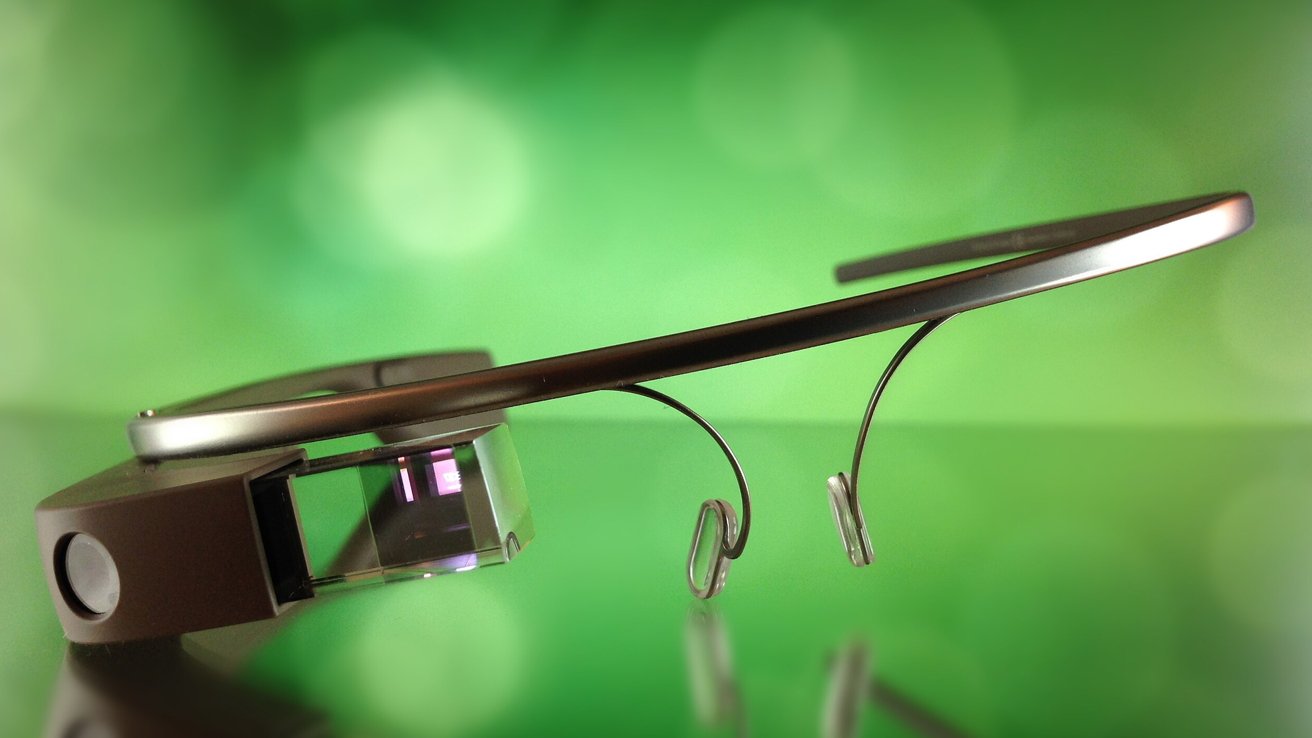
Google Glass | Image credit: Dan Leveille
I had a friend, whom we'll call Drew, who took a trip to California with his family many years ago. While out and about, Drew decided to use a somewhat busy public restroom.
As Drew was finishing washing his hands, a young man walked in, Google Glass clearly on his face. The situation escalated with several men yelling at the man for his folly.
The man explained that he wasn't recording. One of the men explained what he would do if the man didn't remove and put away his Google Glass — which wasn't terribly nice, and extremely violent.
Fortunately, the situation ended with the "glasshole" agreeing to stow the glasses in his pocket until he finished up. No one needed to have the ever-loving snot beat out of them.
The story serves to underline that by strapping a camera to your face, you are essentially giving people a reason to distrust you.
But what happens if you strap a camera to your face and it isn't immediately obvious that it's a camera?
Well, apparently, that's a problem that Meta assures it's already solved with a very simple solution.
Creepshotting to a whole new level
I am morally opposed to creepshots, or pictures that are taken without a person's consent and then promptly shared with others. Frequently, this is done with the intention of ridiculing the subject of the photo.
Creepshotting isn't new, either. It's been around long before smartphones, and I suspect it will continue indefinitely. Admittedly, smartphones have made the act much easier and more ubiquitous.
People of Walmart was a popular website where users would submit pictures of strangers to ridicule anonymously on the internet. I was never a fan.
Ultimately, that mentality became part and parcel of the whole social media experience. There are plenty of accounts across all major social media platforms that post aggregated creepshots twenty-four hours a day, seven days a week, three hundred and sixty-five days a year.
So one might argue that the Ray-Ban Meta glasses aren't bringing anything new to the party. Except they kind of are.
The act of recording someone with a smartphone requires a pretty obvious gesture. After all, you're effectively just holding any other sort of point-and-shoot camera.
And yes, many people have gotten good at recording surreptitiously. But largely, I'd argue you can tell when someone is really recording you — you're probably already a little suspicious when you see a stranger reach for their phone while looking at you.
That's because we've had phones that could record video for decades now. There are legal adults in this world who have not lived in a world where the iPhone did not exist.
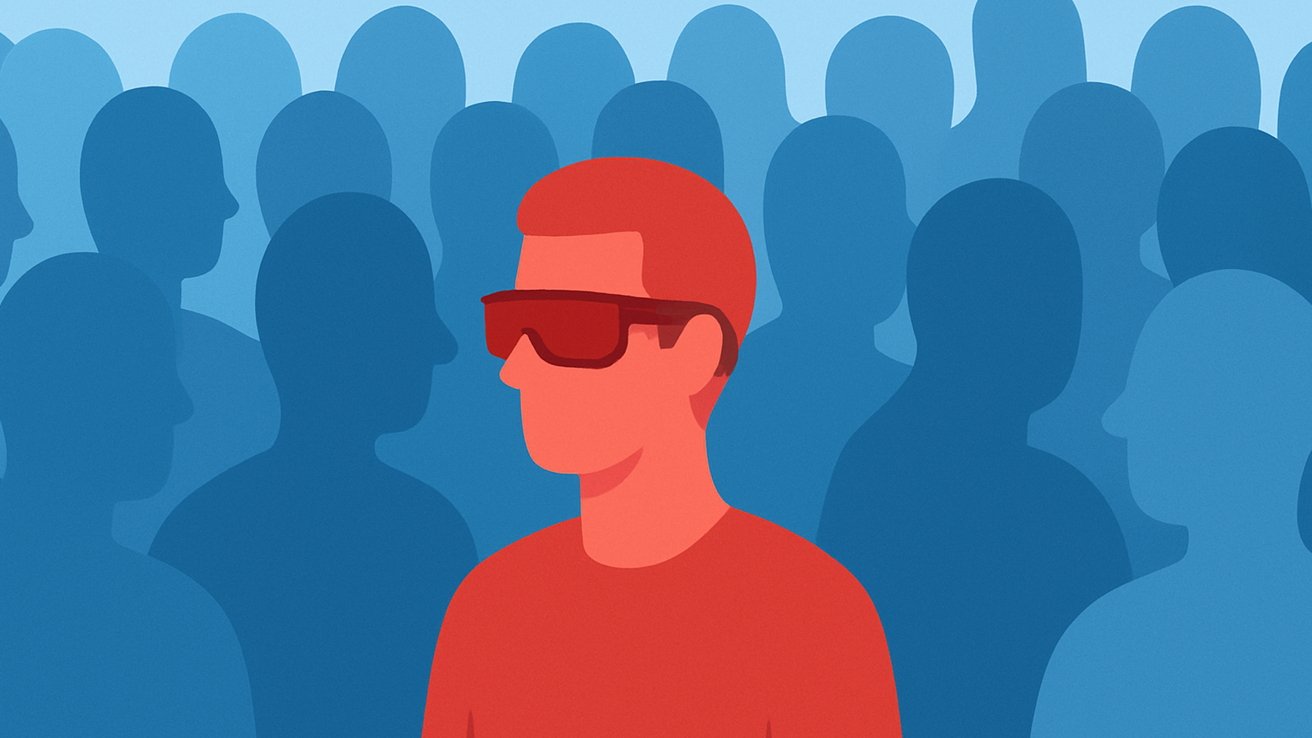
Someone wearing glasses does not immediately scan as "someone is holding a camera." There's no obvious gesture, it's just recording wherever they're looking.
And Meta argues that its solution, putting an LED indicator light in the frame, is enough. Except it really isn't.
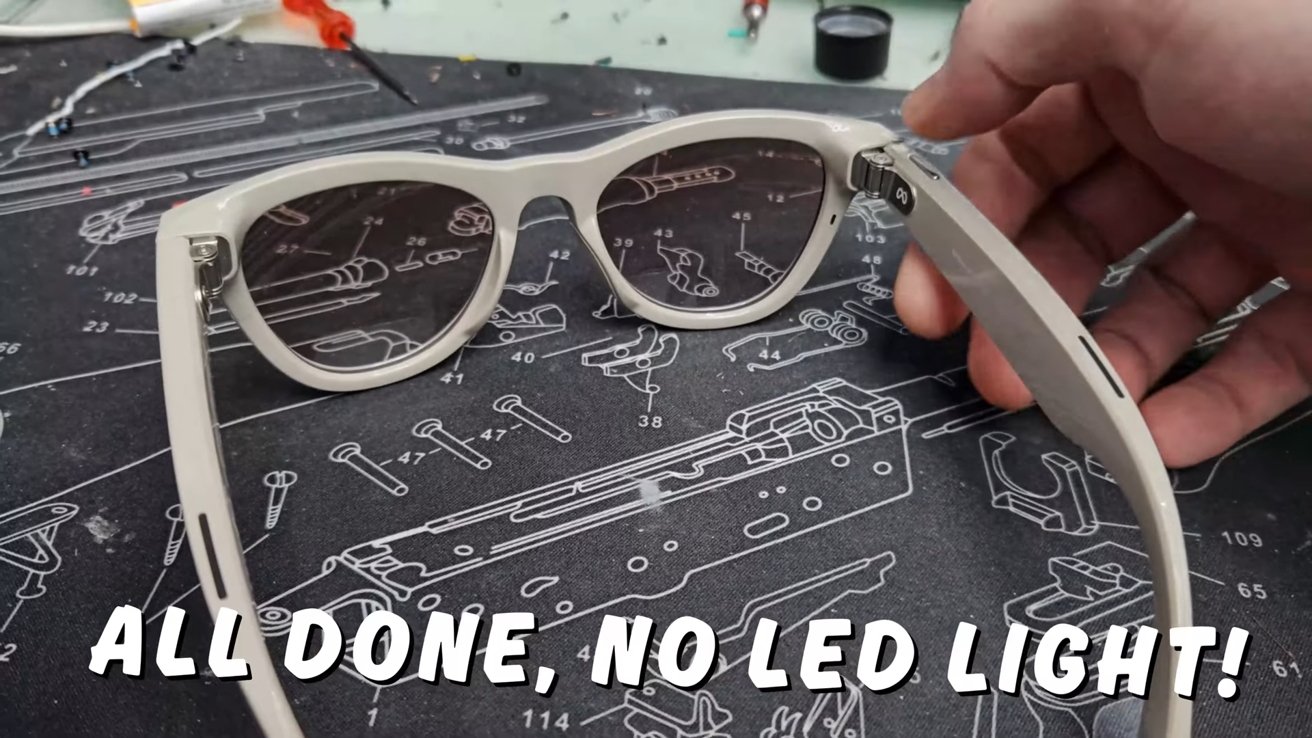
Well, it's just as simple as that.
It took me less than two minutes to find multiple solutions to get around that pesky little LED. You can do it via software which is an absurd issue with Meta security engineering. It can also be done by 3D printed caps.
And let's not forget the electrical tape solution. You can also, apparently, just drill a hole into it. A ten-minute process from start to finish, and suddenly no one knows your glasses have a camera in them.
And, let me be clear: people are searching for this information. And, people are already walking around with modified smart glasses.
I'm sure plenty of smart glasses owners don't care whether the people they're recording know about it. In many cases, that awareness is exactly the point.
Is there an ethical solution?
There are a number of things that fill me with a feeling that I like to call "future dread." I'm sure every generation has its own version of this.
Artificial intelligence makes up about 80% of my future dread. And yet, camera-containing smart glasses still manage to find their own space inside my head.
Smart glasses have always been a when, not an if. Technology trudges forward, and you've little ability to push back against it.
Yes, Google Glass may have spectacularly failed at the individual consumer level. However, I think most technology-minded folks understood that it was a proof of concept that would be both a blueprint and a cautionary tale.
Eventually, we may see some regulation on smart glasses — specifically on smart glasses with cameras in them. I suppose that all depends on which politician gets caught with their metaphorical — or literal — pants down.
But that just raises the question: what is the ethical way forward? Is there a way you can actually include a camera in glasses?
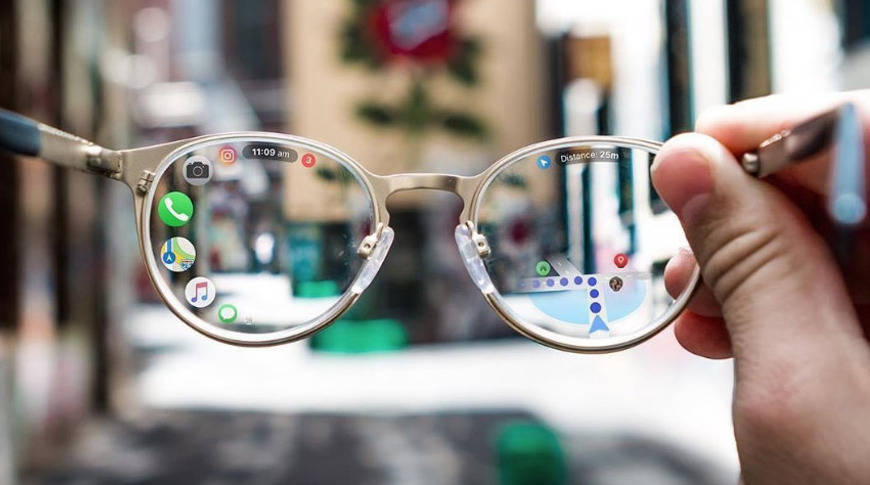
"Apple Glass" concept
I was quick to say that I didn't think there was. Mike was equally quick to point out that a lot of features people want, and just about every accessibility feature would depend on a camera.
His solution is likely better. Yes, you include cameras, but you don't allow users to use them for filming or recording purposes.
Say Apple releases Apple Glass in the next two years. It could choose to include a camera that would be used to power features like Visual Intelligence while preventing the user from filming.
Now, will Apple do this? Probably not; I suspect FaceTime POV recording would be a bullet point in the sales pitch.
And then, like Meta, they'd have to figure out how to make it obvious when the user was recording. And then, like the Ray-Ban Meta glasses, users would figure out a way around it.
I don't have the answer to this problem. I suspect that anything I gave wouldn't be in the realm of reasonable to a company looking to outdo its competitors.
Technology is a double-edged sword. Sometimes we're able to do incredible things with it.
Sometimes it just cuts us badly, and brings out the worst.