Development on iPhone game "Character Limit" continues apace, but I learned two lessons that stole valuable time: trade shows are dying, and feature creep is the main enemy fighting completion of a project.
When you're working on a difficult project on your own, it can get lonely and bewildering in equal parts. When it's game development and your first real attempt at making a product, it's also a process where you learn to regret your actions.
AppleInsider readers will be familiar with my ongoing quest to make a game on my Mac, with the coding assistance of ChatGPT in Xcode. Character Limit is a simple word game, which I intend to bring out on Mac, iPhone, iPad, and PC, using both Steam and the App Store.
In the last development log, I had reached a point where the game was usable, if not polished, with a lengthy to-do list of things to add to the game. It had also been listed on Steam, and the Apple Developer account had been registered for its release there.
The immediate intention was to get the game to a state that I would be happy to do testing with actual players on their devices. However, before I could do that, I wanted to include a feature that I had previously said needed to be added, and needed a lot of work to get going.
Development via Feature Creep is a really bad idea
I had previously received a dictionary of the Welsh language via an Excel spreadsheet from the University of Wales, all to facilitate a Welsh language version of the game. It was a late-night idea that became an actual thing.
Welsh isn't a very well-supported language in gaming, I cannot lie. But while there are some games that properly translate themselves into Welsh, like Dicey Dungeons, you wouldn't expect it for a word game.
Especially if the developer working on said word game it isn't entirely confident in speaking it.
From the outset, this seems like a crazy idea, because there aren't many Welsh speakers in the world. To me, it's actually a first step towards localizing the game to other languages.
If I can get Welsh selectable as a second language for the game, I will have to solve many of the issues associated with adopting other languages, too. It's effectively building the structure that other languages can be added to.
With some assistance from a friend, the Welsh Excel spreadsheet was turned into a wordlist file similar to the one used for English. That included normalizing the text by removing the diacritics (accent features) and eliminating hyphenated words, among other actions.
At the same time, the game's picking and tile system had to be overhauled, which has taken weeks so far, and is almost completed.
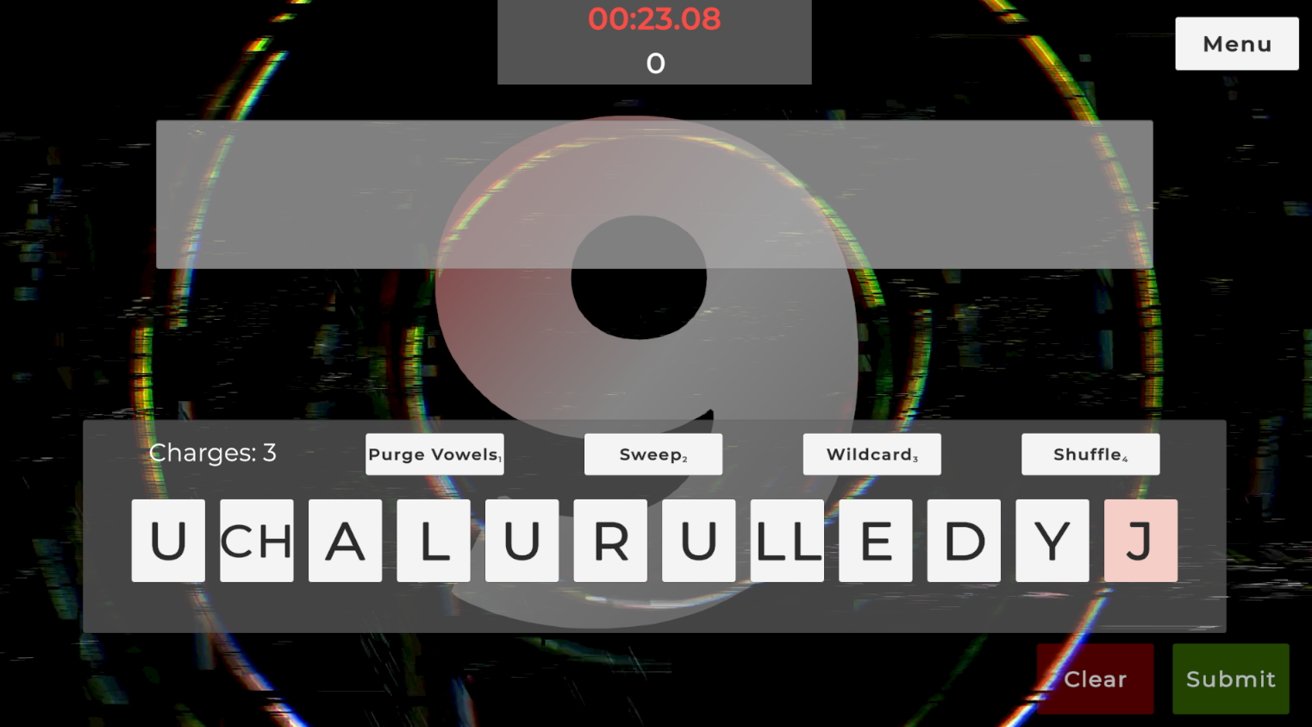
Partway into making the Welsh alphabet's double letters work in 'Character Limit'
The reason for all of the work is that the original system was based on single characters. We could define a Latin script alphabet in English perfectly fine, but that led to the problem of everything being built using "char," a data type that is used to store just one character.
With this Welsh and eventually multilingual approach, it couldn't center around using a char to represent a letter tile, as a tile could have more than one letter on it.
In Welsh, there are double-letter digraphs that represent a single sound, and are handled as letters in their own right. For example, FF, DD, CH, PH, and the voiceless lateral fricative known as LL are individual letters in Welsh, using two characters.
This is a concept that exists in other languages too, such as the "Eszett" in German, which can be written as a double-S. You'll also find LH in Portuguese, GH in Italian, SJ in Swedish, and KJ in Norwegian, as other examples.
With a char-based system, only the first letter of a digraph is stored, not the second. For a game about words and letters, using only half of a double-letter tile is far from optimal.
The Great Char Hunt of 2025 began, changing everything so it ran under a token-based system. Each tile was a token with a defined string for the character or characters, as well as other flags that apply to different game states, such as if it's a "Danger Letter" that affects the score.
There's now a system for the letter picker that uses an alphabet of tokens set up for each language in the game, as well as token counts for how many are in a fictional "letter bag" for picking. I can also now weigh the letters differently in the bag for testing picking rules, or even potentially for future game modes.
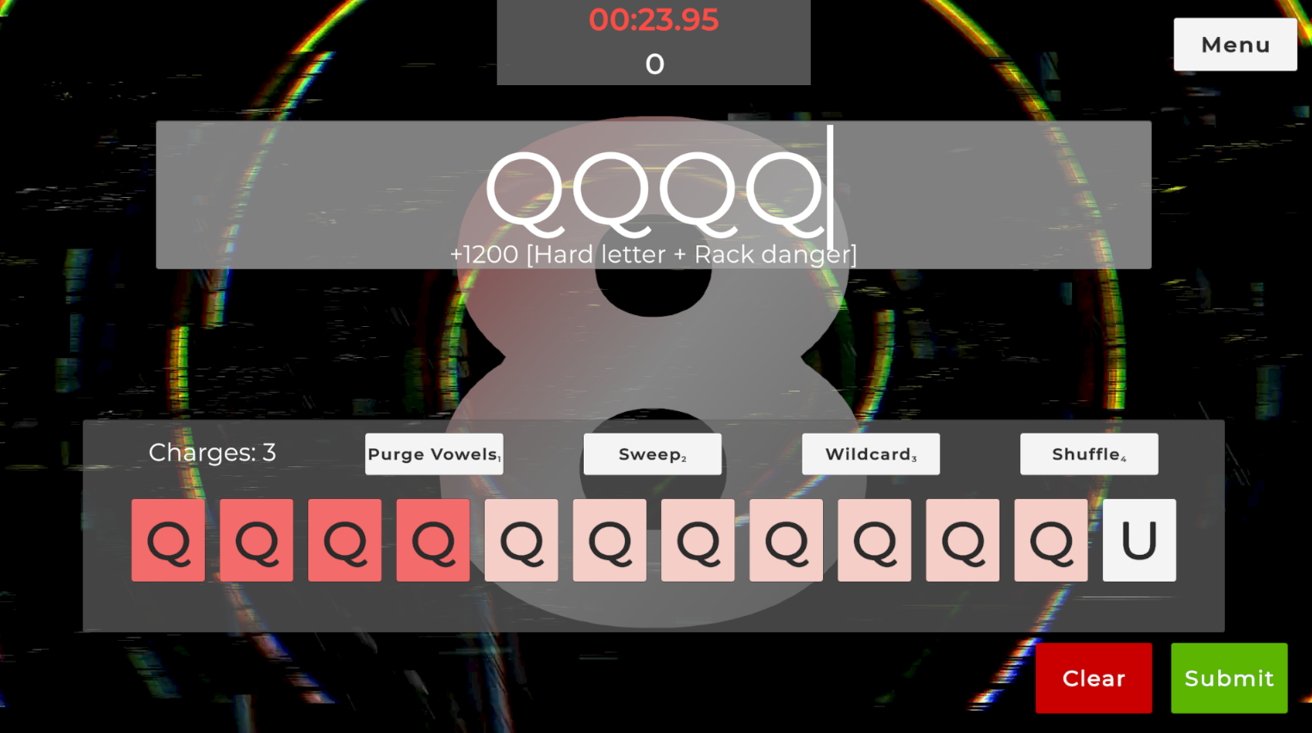
A test letter bag with 2,000 extra Q tiles than normal.
The lesson here is that close to a month of stress and annoyance could've been avoided had I actually planned things properly and stuck to the plan. As it is, it's a game that was built entirely via scope creep or "feature creep," thinking something is a good idea and blindly forging ahead with it.
Had the project been made knowing it would be potentially multi-lingual, it would have been formed in a state to handle things gracefully from the very start. "Proper Planning Prevents Poor Performance" indeed.
All that said, the game is now in an interesting situation, due to the way it's handling things. It's now possible to set the main game interface to be in one language, while the gameplay itself uses an alphabet and dictionary in another.
I could imagine a future update so that someone could play the game with a French interface, but the words they make and the tiles they use are Spanish.
It's a nice byproduct, but the route could've been a lot smoother and far less frustrating.
A Gaming Fyre Festival
Throughout development, my partner and I have gone on trips to meet up with other game dev people. While this has included playtesting in a pub for a few hours and joining some Discord servers, we have looked at other opportunities to talk to like-minded souls in physical space.
Earlier in November, an opportunity arose in the form of a gaming festival in the UK. With the slow death of EGX being absorbed by a Comic Con producer, the just-launched "To The Moon" event seemed poised to revive the gaming expo concept.
As someone who visited ECTS in London in its final years and got shockingly close to Shigeru Miyamoto at one point, I had high hopes. Cue paying the fee for an Industry pass on the second day, so we could take advantage of the talks and the potential to meet firms and maybe even a partner.
The AppleInsider editorial team can attest to my comment the night before the trip that the "Name gives off Fyre Festival vibes" but that I hadn't heard any "horror stories yet."
Call me Nostradamus.
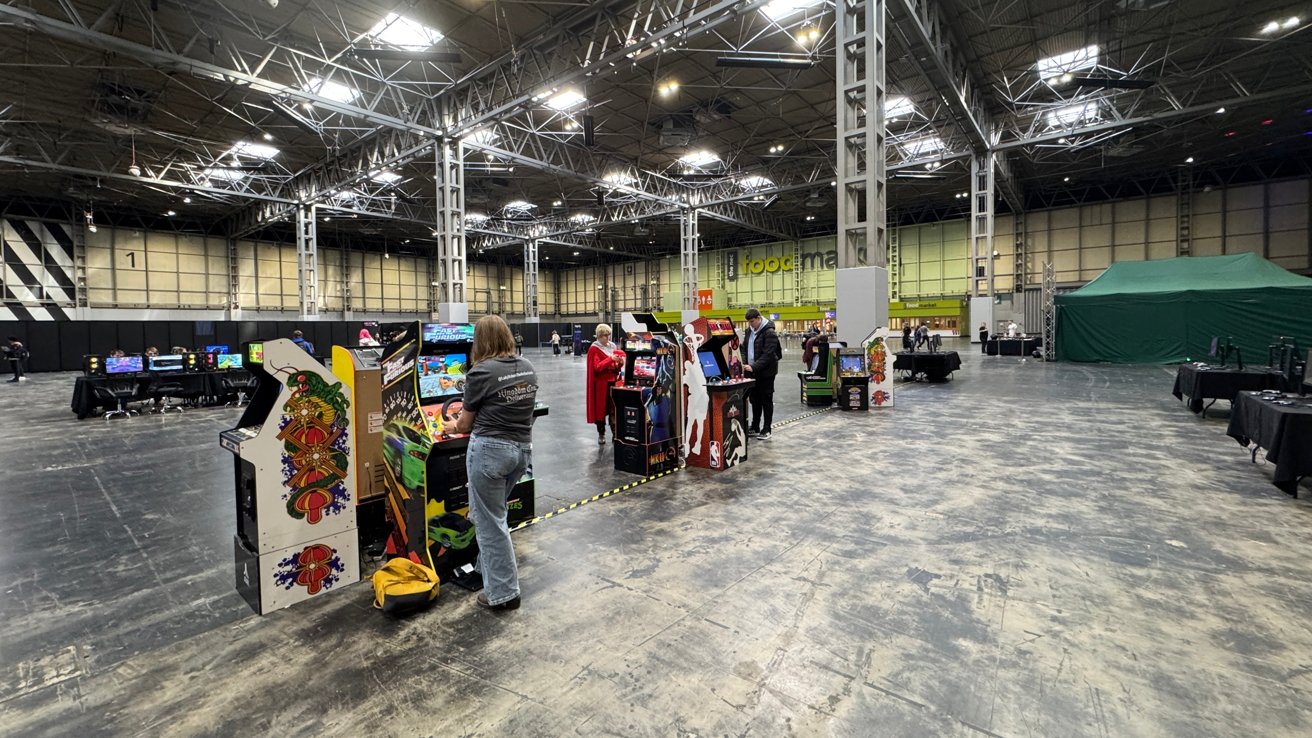
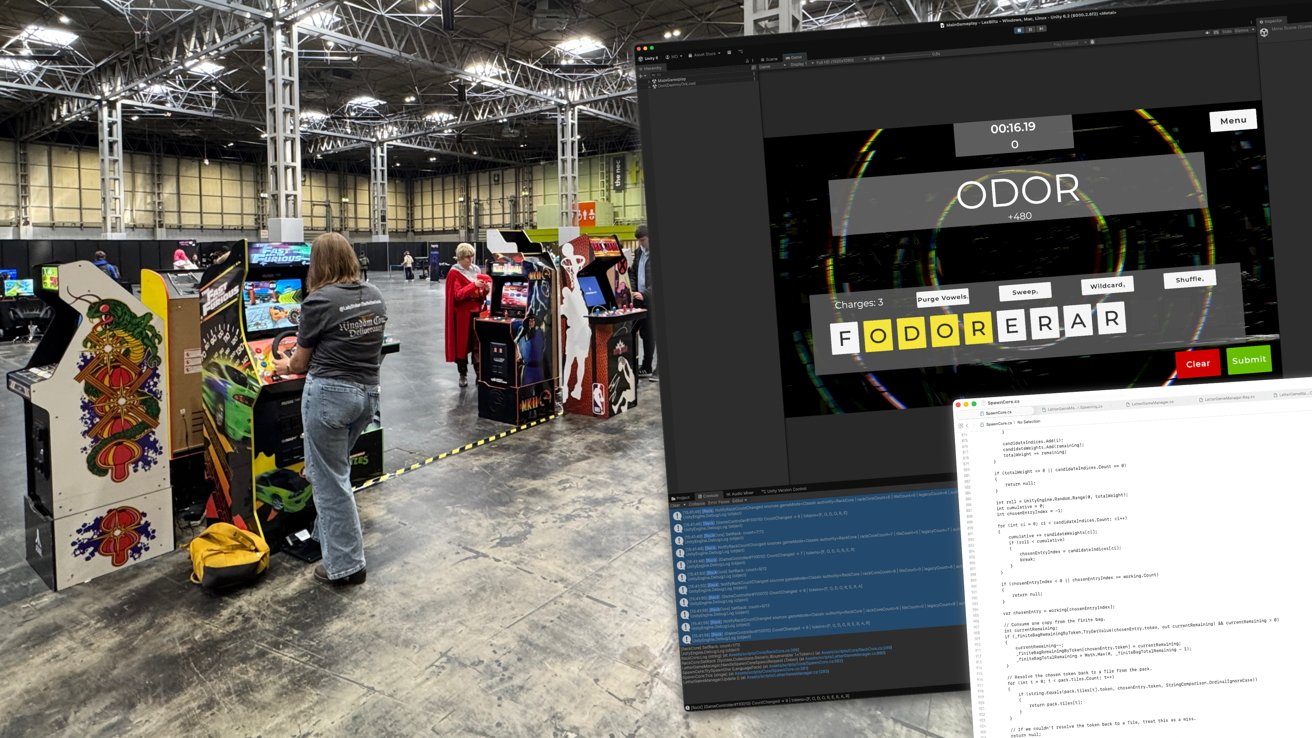
The woeful "retro gaming" section of the "To The Moon" expo.
After an early wake-up and a three-hour car ride to Birmingham, we rocked up to the NEC and found that it was not as densely populated as the planners had hoped. The site said there were aims to bring 15,000 people together over the two days, but the reality was an order of magnitude fewer.
While I have memories of ECTS being densely packed across multiple floors, this event was sparse and embarrassing. There were indies, corralled into a section and promoting their games, but we had heard some had left after an abysmally attended first day.
There were large stands there, including for Void Interactive's "Fully-immersive SWAT experience" for their game "Ready or Not", which was woefully underutilized. The "VR Arena" was a table with a cordoned-off section that could've easily been made bigger due to the severe lack of people and other stands.
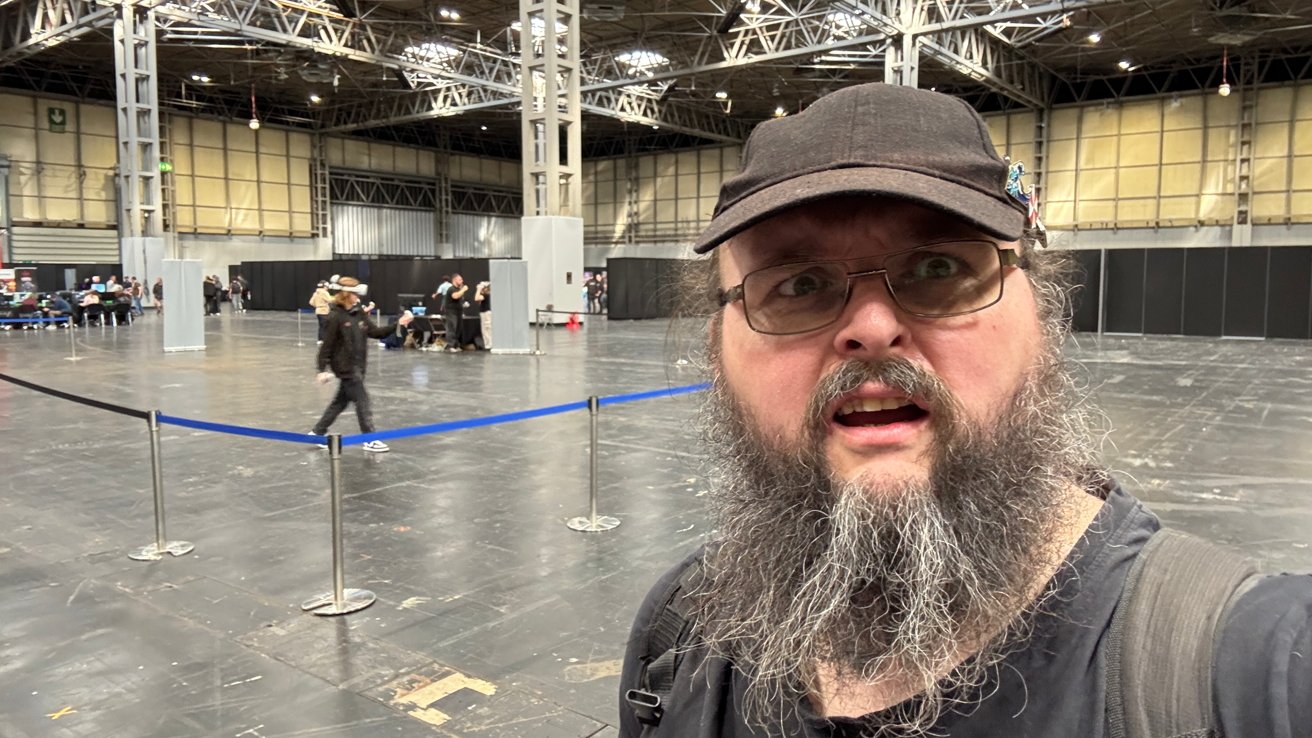
The "To The Moon" VR arena had plenty of space, because no one bothered to turn up.
It wasn't entirely a bust of a trip, though. Time was spent with the indies who were very keen to conduct some in-person testing of their titles, who in turn tried out an earlier working build of my game that I had on my iPhone.
It made what was a fairly lonely development experience into something a little more welcoming. I wish I had more opportunities to talk and grouse with others after being there.
We even managed to spend some time talking to Welsh government representatives who had inexplicably decided to go to the event, discussing game industry initiatives in my home country. Yes, they were quite interested in the Welsh element of the game, albeit not in the presented build.
It's unlikely that To The Moon will make it into 2026 with the event's failure. Both for consumers paying high ticket prices and for those with stands, especially the cash-strapped indies.
Even so, it was still a productive excursion for me, if not necessarily at the level I wanted it to be. Speaking to the indies in attendance certainly helped me refocus, and I want to see through developing "Character Limit" to the end.