A new forecast suggests Apple's first foldable iPhone could land at a sky-high price point, putting it in the same price range as a 16-inch MacBook Pro.
The estimate comes from supply chain analysis focused on the cost of core components. A foldable display remains one of the priciest parts in modern hardware, especially when it needs to bend repeatedly without creasing or discoloration.
The hinge system adds another layer of cost because it must stay tight and reliable after years of opening and closing. Lightweight materials push the number higher.
Apple has a history of trimming weight to avoid bulky designs, which often means using more advanced alloys or composites. These parts require specialized manufacturing and tight tolerances.
Combined with Apple's usual margin targets, the price lands near the top of earlier speculation between $2,000 and $2,500.
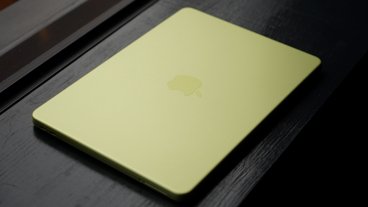
A $2,399 iPhone sits in the same budget zone as a 16-inch MacBook Pro. It would also move Apple into a premium zone that only a few phones, mainly foldables, currently occupy.
When a launch could happen
The forecast suggests a 2026 release, aligning with Apple's annual cycle. The timing allows for durability testing, as foldable designs require more engineering time.
Other companies entered the foldable market earlier, but early models had a sketchy reputation for cracked screens and fragile hinges. Apple avoids rushed debuts and waits until a technology matures.
The potential release would also land in a cooling smartphone market. Upgrade cycles have slowed, and consumers aren't replacing phones as quickly as they did in the 2010s.
A new form factor could spark interest and give Apple a marketing lift. The company has leaned on redesigns before, such as the jump to the edge-to-edge display on the iPhone X in 2017, which helped revive enthusiasm at a higher price point.
How demand might play out
The forecast doesn't assume mass-market adoption. It projects a 7% penetration rate and about 15.4 million units sold over the product's lifetime.
Roughly 5.4 million units are estimated for 2026, with early adopters and luxury buyers carrying the first wave as usual. Apple has experience selling premium devices to a smaller audience.
High-end models often generate strong profits even if units remain limited. A foldable iPhone could follow that pattern, where curiosity, status, and novelty push initial sales rather than pure necessity.

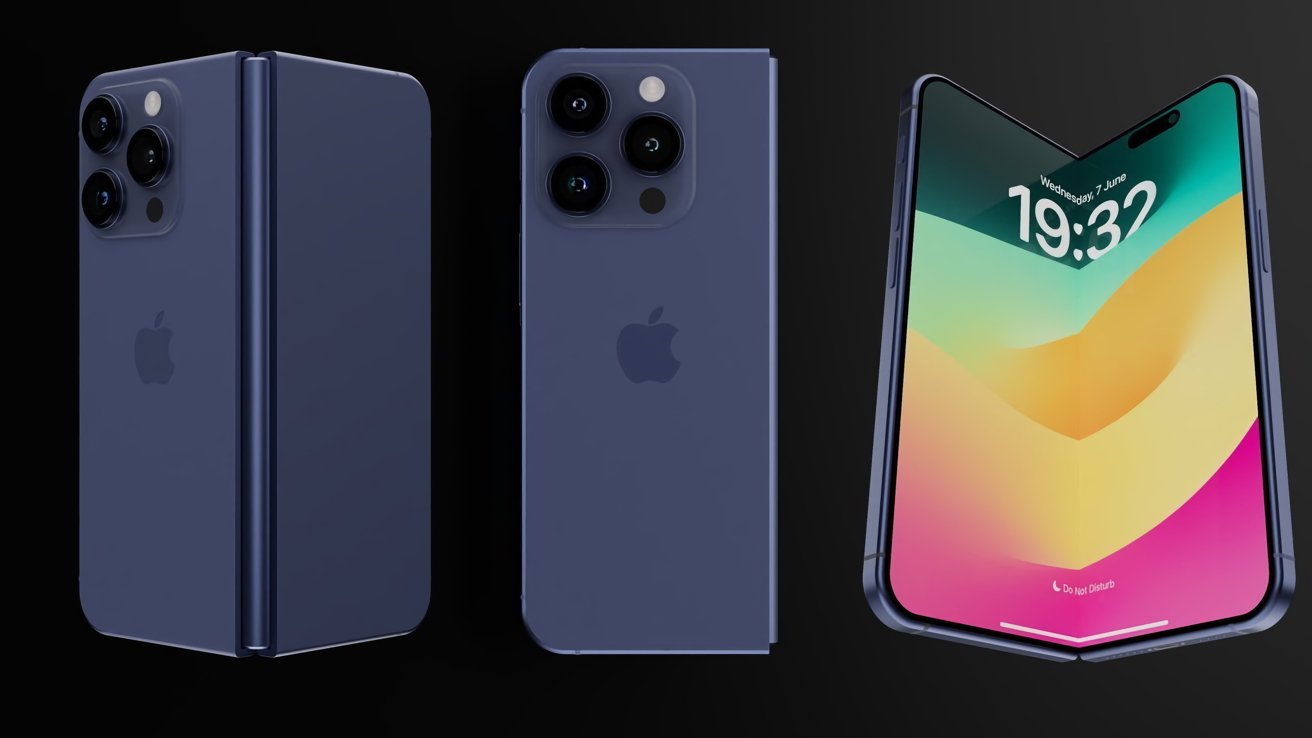
What the iPhone Fold could look like. Image Credit: AppleInsider
The forecast also points to a major camera change in 2026. It expects the iPhone 18 series to adopt a variable aperture lens, supplied by a single specialized partner.
A variable aperture lets the camera adjust naturally between bright and low light, improving depth control and night shots. Apple's years of promoting camera improvements as a reason to upgrade could be justified by tying a new lens system to a high-profile launch.
Where this leaves Apple
Foldables are viewed as one of the few growth areas in a slowing smartphone market, and Apple's entry could push the competition toward premium pricing instead of chasing volume.
The move also fits Apple's long-term strategy of selling fewer devices at higher margins. If the foldable iPhone succeeds at its price point, it could set a new benchmark for premium smartphones and reshape expectations around what top-tier models cost.
Of course, Apple isn't without competition. The rumored $2,399 price would put Apple's foldable hundreds of dollars above full-size models like Samsung's Galaxy Z Fold, which typically sits in the $1,700 range.
The iPhone Fold would also surpass Google's pricing, with the Pixel Fold around $1,800. That will make it the most expensive option in the foldable category by a significant margin.