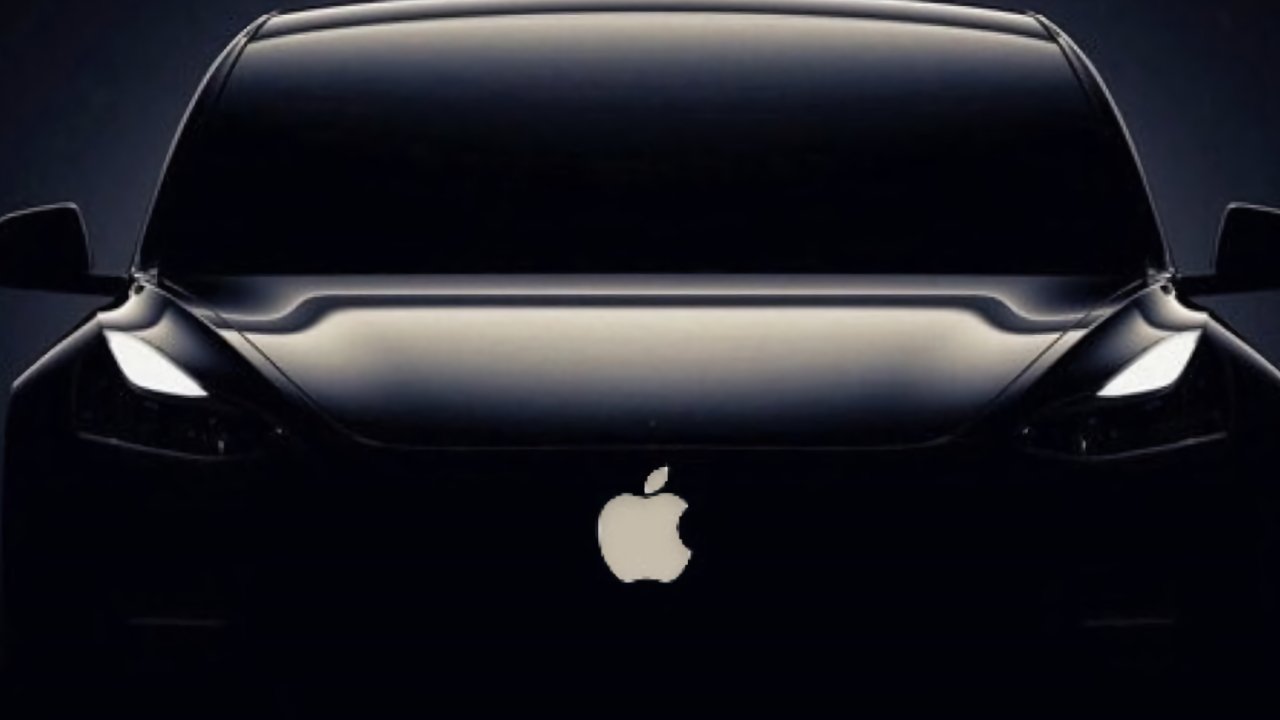
Apple spent billions of dollars and very many years before abandoning the Apple Car — and we now know so much about what it would have been like.
There has not been a single word from Apple about it working on an Apple Car, nor about it cancelling the project entirely. It would be as if nothing had ever happened, except that the company filed very many patent applications about its features.
Apple also had to conform to certain regulations, such as driving permits. But those just told us that there was at least some autonomous self-driving research.
The patents go into so much more detail that you can build up an impression of the car from its exterior lights to its interior steering wheel. Or at least, you could in those patents that didn't remove the steering wheel entirely.
Patents for anything are not a guarantee that this is what Apple finally planned. There's also overlap and conflicting detail in the patents as they were filed during the car's long development phase.
But every bit is in the public record, every patent shows in detail what Apple was at least attempting to do.
Apple Car exterior
It's the exterior that Tim Cook would have first shown off on stage. Or it's the curves of the exterior that Apple's typical lovingly-shot launch video would linger on.
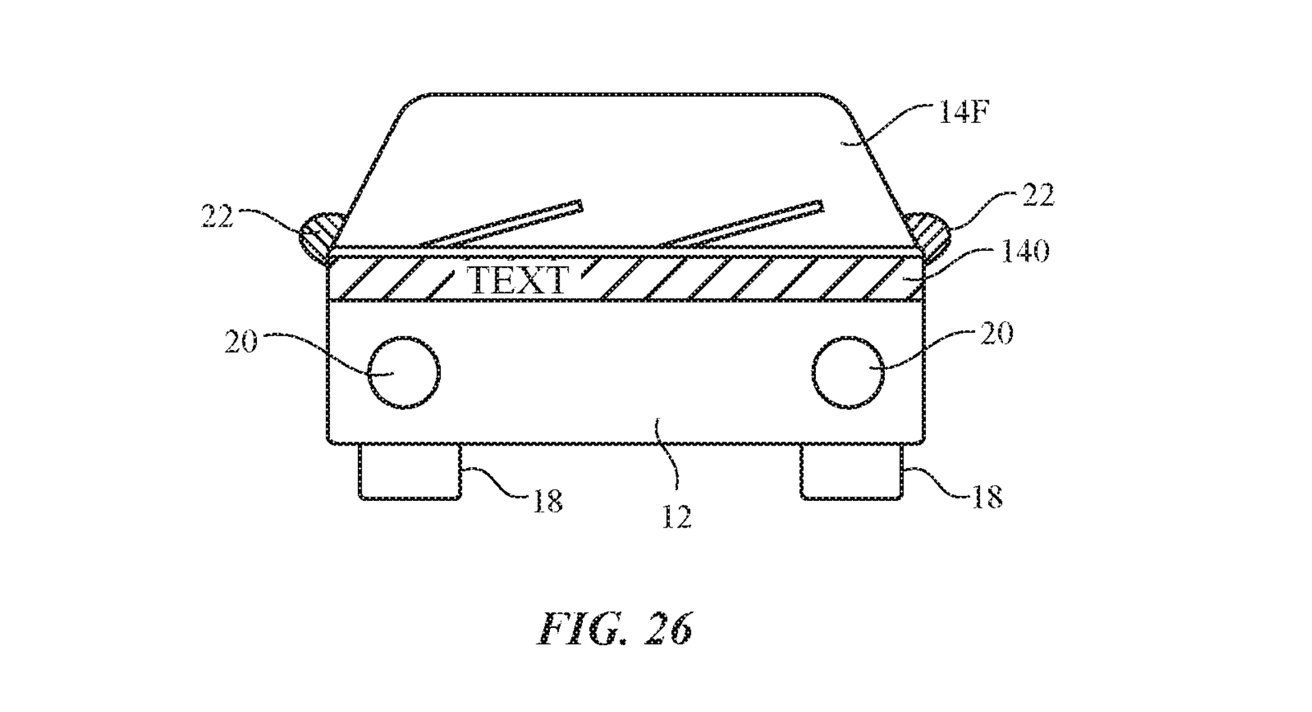
Forget turn signal lights, Apple Car could have displayed whole messages — image credit: Apple
And it's the exterior that has the first element that feels particularly Apple-like. In a patent granted in 2021 called "Exterior Lighting and Warning System," Apple proposed doing better than indicator lights.
Other than the move to electric vehicles, the greatest or at least most visible evolution in cars has been their lights. Gone are the old systems with bulky bulbs in even bulkier reflective, and in has come LED-based technology.
These save a huge amount of space, as well as being brighter, and as well as lasting longer. So existing car manufacturers have been using them to make, say, extra-wide turn signals.
Apple Car would have had such an exterior lighting system, but one that was more complex. Apple planned to make actual screens.
They would be an all-encompassing strip of lights, that go around the car. And which potentially displayed:
- Turn signals
- Car speed
- Messages such as Welcome or Goodbye
- Countdowns to events such as turns
Using lights for privacy
Give Apple credit for sheer imagination, too, because a separate patent granted in 2019, went further with lights. Specifically, it proposed using lights in such a way that the car's occupants could see out, but nobody could see in.
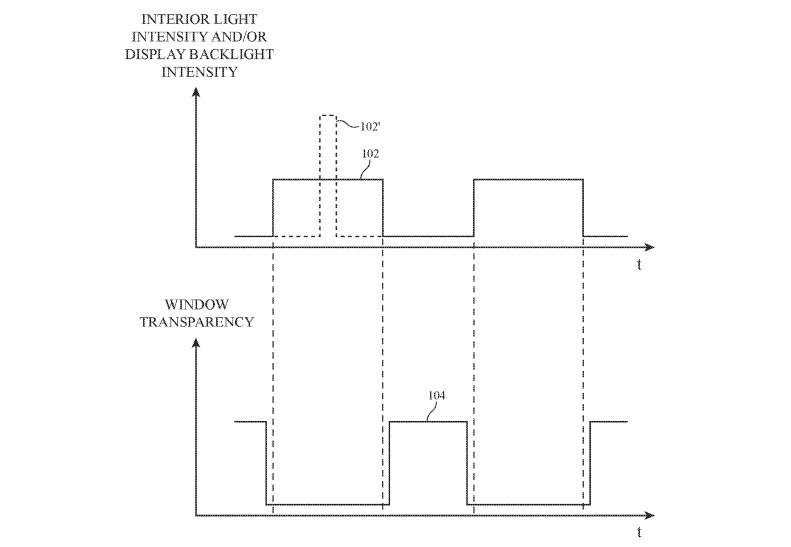
Detail from the patent about adaptive lighting windows — image credit: Apple
It's like those polarizing car windows that turn black, either in reality or at least in "Knight Rider." But in this case, the windows would have an embedded light modulator layer, perhaps with liquid crystal, and an adjustable haze layer.
The idea was that there could be a light source inside the car that turns on and off at 200Hz. It would be flashing, but at such a speed that the occupants couldn't register it.
If the window layers block that light from leaving the car, it would make the windows opaque.
Light from outside the car would not be blocked, so the occupants would be able to see out. Which would be good for road safety, but then Apple wasn't sure you needed to pay all that much attention to the road.
Starting to self-drive
In February 2021, Apple was granted a series of Apple Car-related patents, including "Traffic direction gesture recognition." In that one, it even gently mocked how "self-driving" cars "typically return control to the driver in the event of an unexpected traffic diversion."
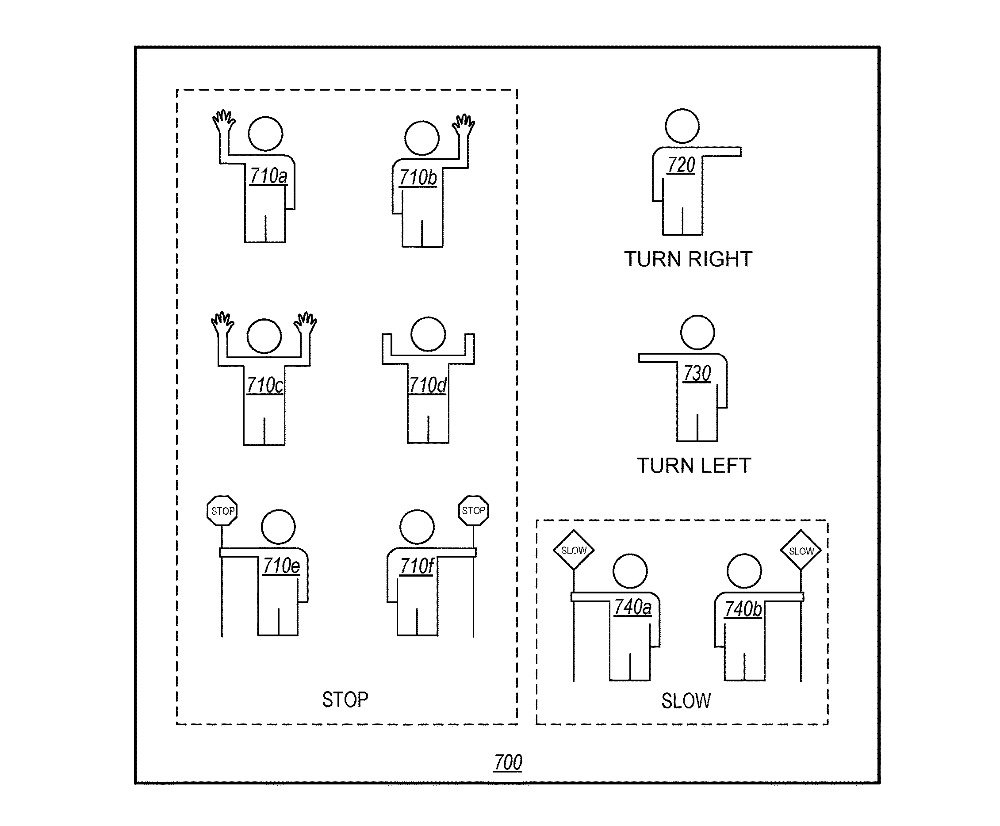
Apple Car would have recognized people telling it to turn — image credit: Apple
What Apple was really saying was that self-driving cars give up too easily. Apple was saying, hold my beer.
For the Apple Car was intended to be good at recognizing when a police officer is waving it through.
"Gestures of a traffic director may be interpreted and understood by the vehicle as commands to perform maneuvers related to the traffic diversion, including stopping, slowing, or turning onto a detour route," says the patent. "The vehicle may be equipped with a command acknowledgement device for acknowledging to a traffic director the vehicle's understanding of the traffic diversion condition or maneuver commands."
Underneath the Apple Car
So the exterior would feature sensors looking out for what was going on. The windows would be opaque when wanted, and the whole car would be able to strobe messages like "My other car is a Tesla."
One more exterior feature, again from a 2021 patent, concerns Apple Car having active car suspension. An intelligent control system would "maintain contact of the tire and wheel assemblies with the road surface."
It would monitor road conditions and automatically adjust its suspension "to provide comfort to passengers in the vehicle body."
Charging ahead
You've got an image now of a sleek, low-slung car, with windows to die for and space for Reminders to pop up on the car door. Add this to your mental image — MagSafe.
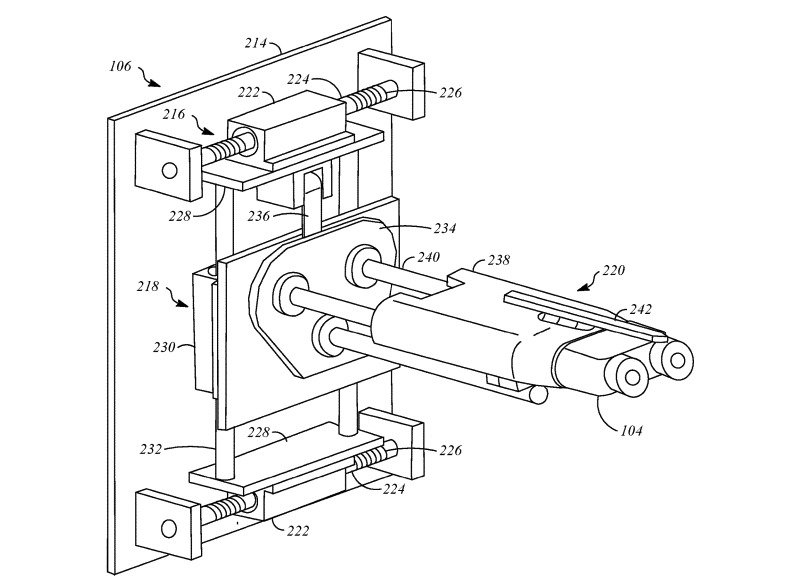
This prong would have extended out from your garage wall to charge the car — image credit: Apple
It's not likely that Apple was planning a massive, scaled-up MagSafe connector for the car, but it was looking at MagSafe. In one of the patents that it kept coming back to, Apple proposed a "Charging station with passive alignment mechanism."
The idea was that a driver could park up and have the Apple Car start charging immediately. This one sounds like it needs more work, but the concept was that a charging plug would reach out to the car and connect with it.
So you can bet that Apple Car (2nd Generation) would be a different height, or would have its charging port in a fractionally different place.
In which case, you might prefer instead to rely on a charging robot. This would a little like a robot vacuum cleaner, in that it would be very low to the ground, and it moves under its own steam.
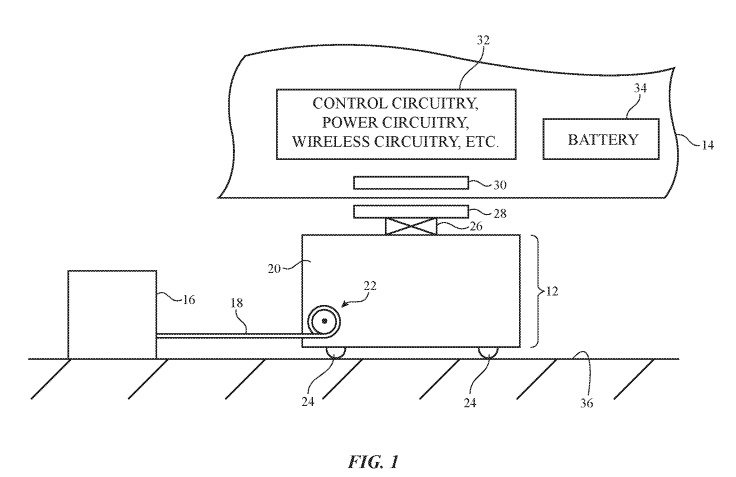
Detail from a patent for a charging robot— image credit: Apple
You'd drive into your garage and before you'd left the car, the charging robot would scurry underneath the vehicle. There'd probably be a power cord to provide a physical charging connection.
But Apple did also consider wireless charging. By robot.
Getting inside the car
No question, you'd have used your iPhone to unlock the car doors. It's got to be Apple Car research that led to the development of Car Key.
Which is just one of the features and technologies that Apple developed for Apple Car, but are already being used across its other devices. That's only going to continue, too, as a decade of research into the car's self-driving appears to have given Apple significant AI tools.
And once you're inside the car, you would of course have had a world-class entertainment system. A brilliant system, possibly enhanced by SharePlay, maybe ruined by karaoke.
What the patents show, though, is that Apple wanted you to have a smart seat belt that controlled a CarPlay device. Apple really got into seat belts, too, and how you put them on, or take them off.
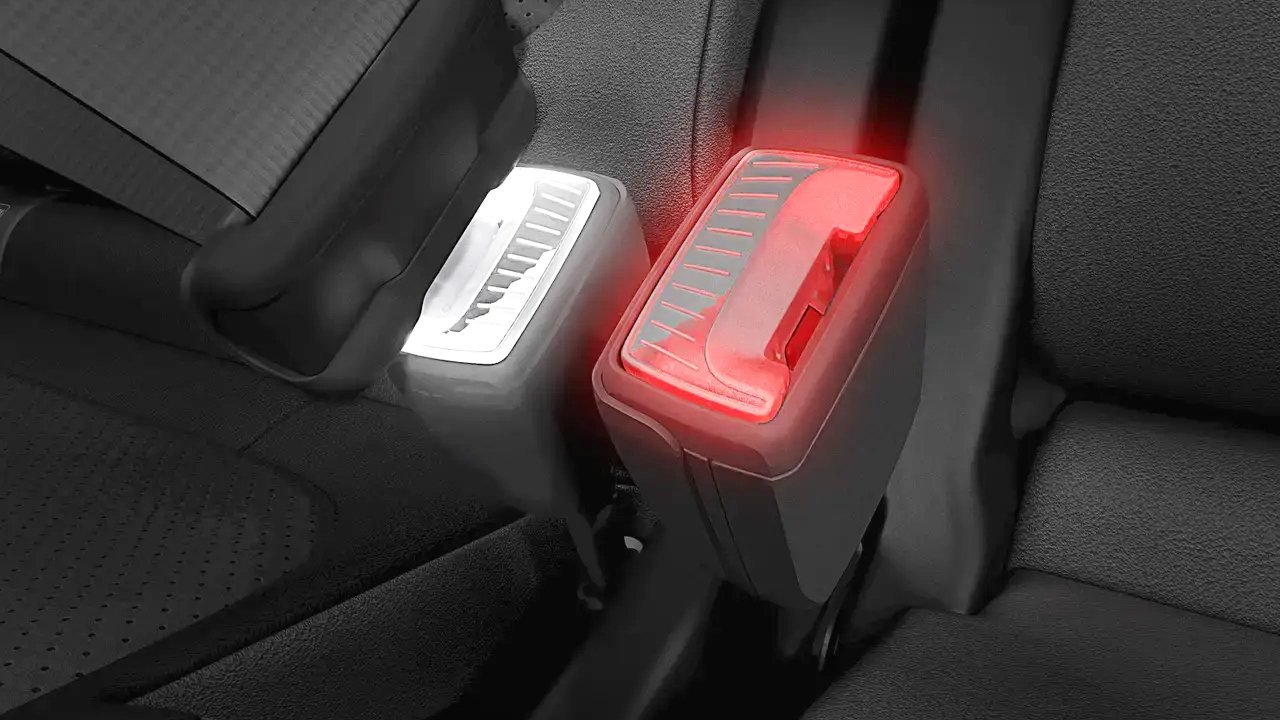
As well as lights in the seats themselves, Apple Car would have turned the buckle red to show you which was yours — image credit: Apple
We've all had the problem of not being able to immediately buckle up when we're in someone else's car. Or when we're in the back and it's not terribly clear which belt is for whom.
In the Apple Car, the seats would just tell you. "[Small] holes are formed through opaque structures allow transmission of light," says a 2023 patent.
"In particular, portions of the restraint use light that is emitted through the holes (either empty or filled with a translucent material), which are formed through an otherwise opaque portion of the safety restraint," it continues. "The size of the holes is sufficiently small such that they are not readily visible to the naked eve of a vehicle occupant on casual inspection."
So you'd have lovely leather seats — or possibly not leather, maybe FineWoven — and they would look pristine. Until you, maybe, tell the car to "Engage!" and it won't budge until you follow the lights and put on your seat belt.
Safety first
Apple Car development was very hot on safety. At one end, it tries to prevent accidents by blocking you from texting while behind the wheel.
And at another level, if everything fails and you do have a crash, Apple has you covered. Apple Car would have airbags, possibly dropping down from the ceiling.
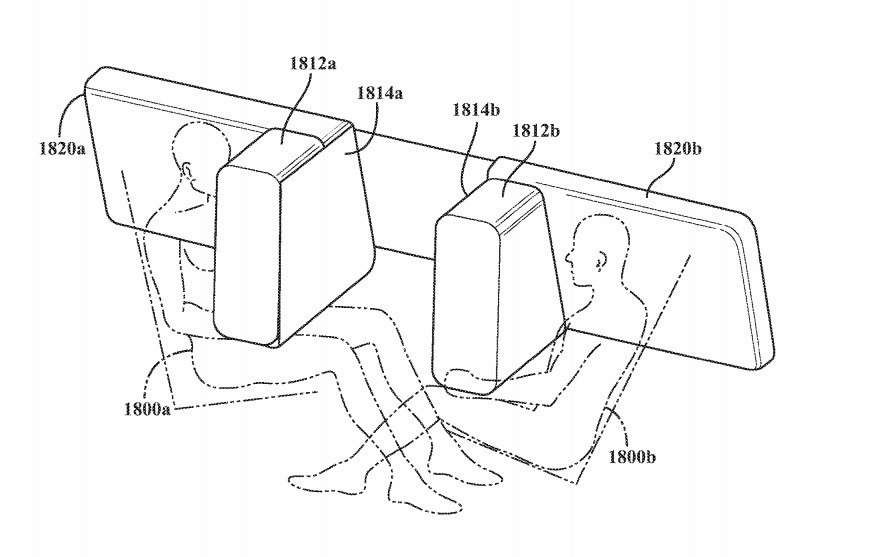
As well as ordinary airbags, Apple Car could have deployed inflatable dividers during a crash — image credit: Apple
But it could also have inflatable dividers that limit people's motion during a crash.
As part of safety and comfort, though, the Apple Car's interior might have altered shape. Seriously. During sharp turns, 2020's "Adaptive tensile surface" patent would change the shape of your seat.
It would be meant to hold you in your seat more securely, and also more comfortably.
"[This] adaptive seat suspension comprises... a flexible suspension mat providing support in a seat; and a motorized retractor coupled to the flexible suspension mat," says the patent, "[and] the motorized retractor including one or more electric motors."
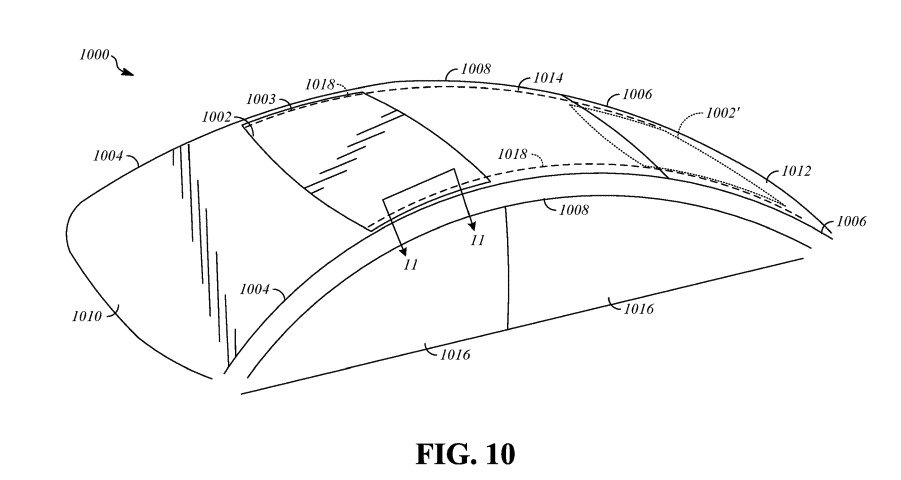
Even the sunroof was going to be reinvented, somehow — image credit: Apple
If you've just thrown a glance at the ceiling, you might appreciate knowing that Apple had plans to help you with that, too. In 2018, Apple had a go at reinventing the sunroof.
One more thing
All of this is taken directly from documentation filed with the US Patent Office over the last decade or so. But there have been other rumors which do seem to fit in with these, and the most striking concerned the Apple Car steering wheel.
Some years ago, Tesla caused controversy by taking away the round or round-ish steering wheel. It replaced it with what Elon Musk had seen in KITT, a two-handed controller-like "wheel."
Pah, says Apple. Where we're going, you don't need steering wheels.
While not confirmed — but actually alluded to in the patent about airbags — it is possible that Apple Car would retract its steering wheel. You could instead have all of the seats facing each other, so that you had to talk to your family and friends.
As doubtlessly as the fact that Apple Car would have been expensive, is the fact that Samsung would've derided it. But also doubtlessly, based on the patents, Apple was again going to do its thing of reinventing a technology and changing the industry.