
The Facebook Messenger desktop app for macOS is being axed on December 15, forcing Mac users into using the web version, for better or worse.
On October 15, Facebook revealed it was killing off support for its desktop Messenger apps, both for Mac and Windows. It gave a 60-day warning that the app would be no more, with it ceasing to work on December 15.
At the time, Facebook had already pulled the app from the Mac App Store, preventing new downloads while still allowing existing installations to work.
Those who did not hear the news were informed via the Messenger app itself. A pop-up warned that the "Messenger desktop app is going away," and that users can continue to converse through their web browser instead.
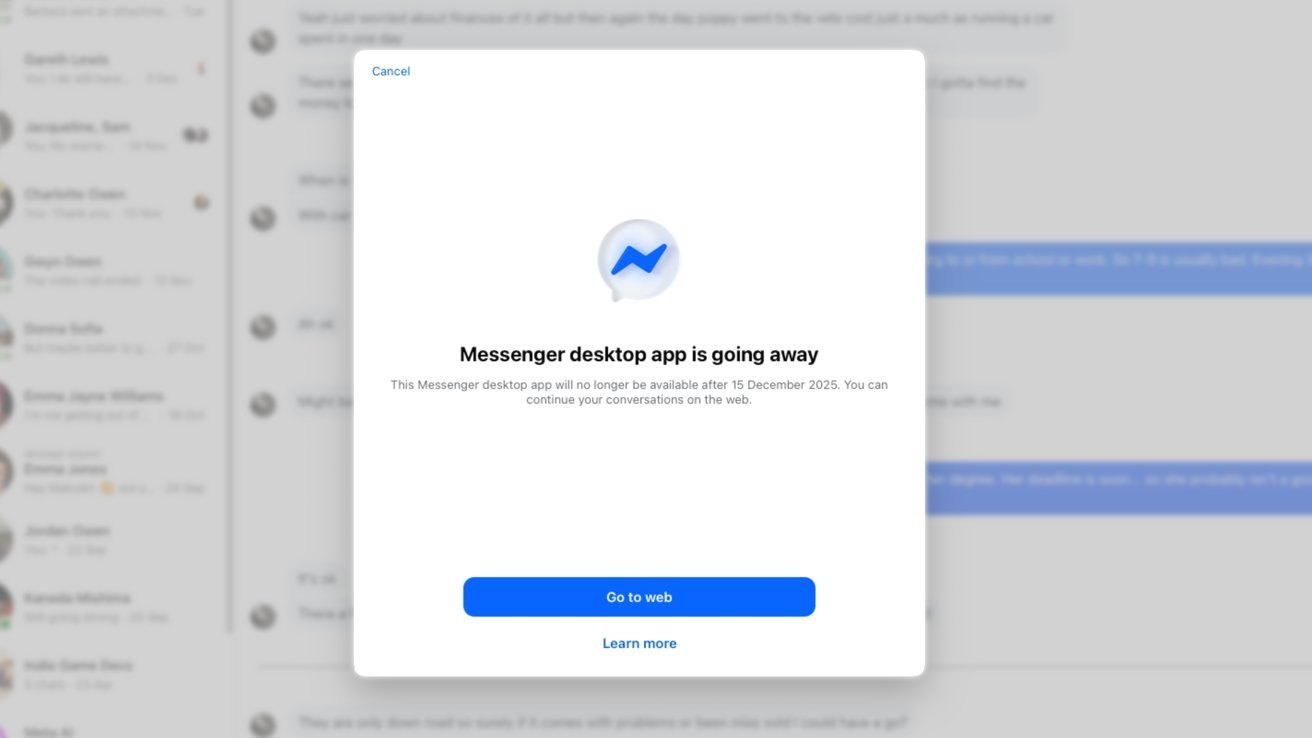
macOS Facebook Messenger users will see this notice of closure.
There's also the ability to use the mobile apps for iOS and iPadOS, which will continue to function as normal.
For the small number of users of Messenger who don't have a Facebook account, they will still be able to use the service without signing up for one. They will be directed to Messenger.com, where they can continue to log in as before.
Long lifespan, short life
While messaging services come and go over time, the loss of an app is usually due to the shutdown of the service itself. Any user of the long-running and slow-dying Skype will be familiar with that experience.
But the Facebook Messenger removal is an unusual instance of the app being withdrawn from use, and only from select platforms.
Facebook Messenger was originally known as Facebook Chat in 2008, before eventually being rebranded. It quickly became available on many different platforms, thanks to the acquisition of group messaging service Beluga in 2011, which resulted in the iOS app's introduction.
In 2014, Facebook started to separate Messenger from the main website itself, forcing users into downloading the separate Messenger app for their chosen mobile platform. It was also around this time that an iPad version of the app shipped.
Mac users were stuck having to use their iPhone or iPad to use the app, or to keep on using it through the browser, until 2020. In March of that year, oddly coinciding with COVID-19's breakout, Facebook made the macOS version of the app available to download from the Mac App Store.
With the closure of the same app in 2025, that means the macOS Facebook Messenger app only lasted for just over five years. This is quite a short time, considering Facebook Chat was 17 years ago and the iPhone and iPad apps turned up 14 years and 10 years ago, respectively.
A brief, useful lifetime
The app probably enjoyed more utility than usual with its fortuitous release, as the world shifted to rely on the online experience as a necessity. But while helping everyone manage human connections during the period marred by COVID-19, the app still had to deal with various controversies and changes that ensued.
Shortly after its launch, Facebook decided that it would be a good idea to merge its Instagram and Messenger chat systems. Users of the then-photo-based app were greeted by a notice that they would see messaging options that Messenger users had enjoyed for years, whether they wanted to or not.
There was also Messenger Rooms, a feature that let users take part in 50-person video chats. An obvious competitor to Webex and Zoom, it gave users a way to perform mass-broadcasts in groups, such as a class or a work meeting.
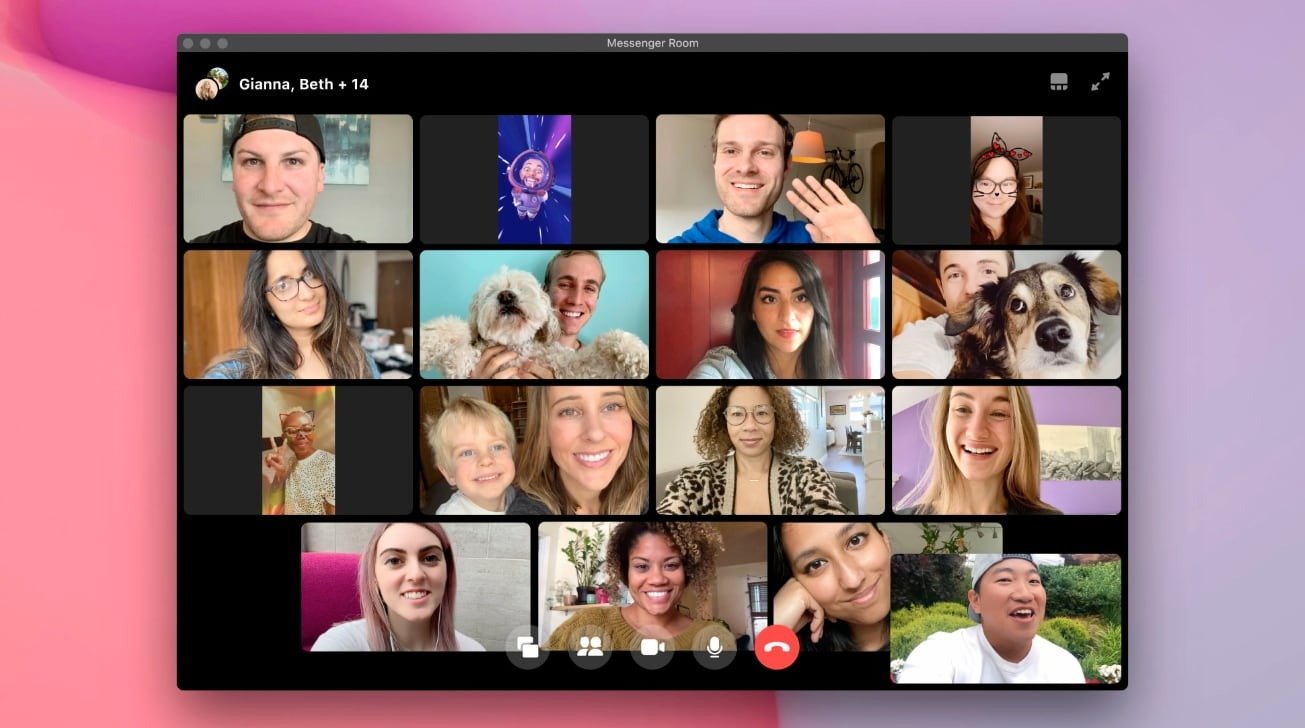
Facebook Messenger Rooms on macOS. An actually useful reason to have used the app.
The macOS gave users more of an advantage than the mobile versions, since they were better suited for dealing with masses of people at once. The tools of Twitch streamers also came in handy for those dealing with video-based education, which wasn't as easily managed on smaller touchscreens.
However, while video was a useful element of the desktop and mobile apps, it wasn't something Meta kept to the app experience. In 2021, Facebook decided to make video and voice calls available through a web browser and the main Facebook app on mobile.
This took away one of the advantages the desktop Messenger app had over the browser version, but it was an inevitable change.
A half-usable corpse
The final version of the macOS Facebook Messenger app departs as a somewhat confusing experience. With tabs for Chats and Stories, there's also a Menu that includes options that are more of a Facebook-style experience than a Messenger one.
If you're in a Facebook group, you have access to old chats from each of them. But you couldn't post to them as the conversations were killed off earlier.
There was also the ability to talk to people via Facebook Marketplace, with conversations you started in the full Facebook experience able to be continued in the app. But you only got the chat-based bit of the Facebook Marketplace to look at in the app, forcing you to look elsewhere if you wanted to actually buy something locally.
One of the more recent additions to Facebook Messenger, and one of the last "innovations" made to the macOS chat app, was AI Studio. You could converse with a selection of existing AI characters, or you could even make your own up.
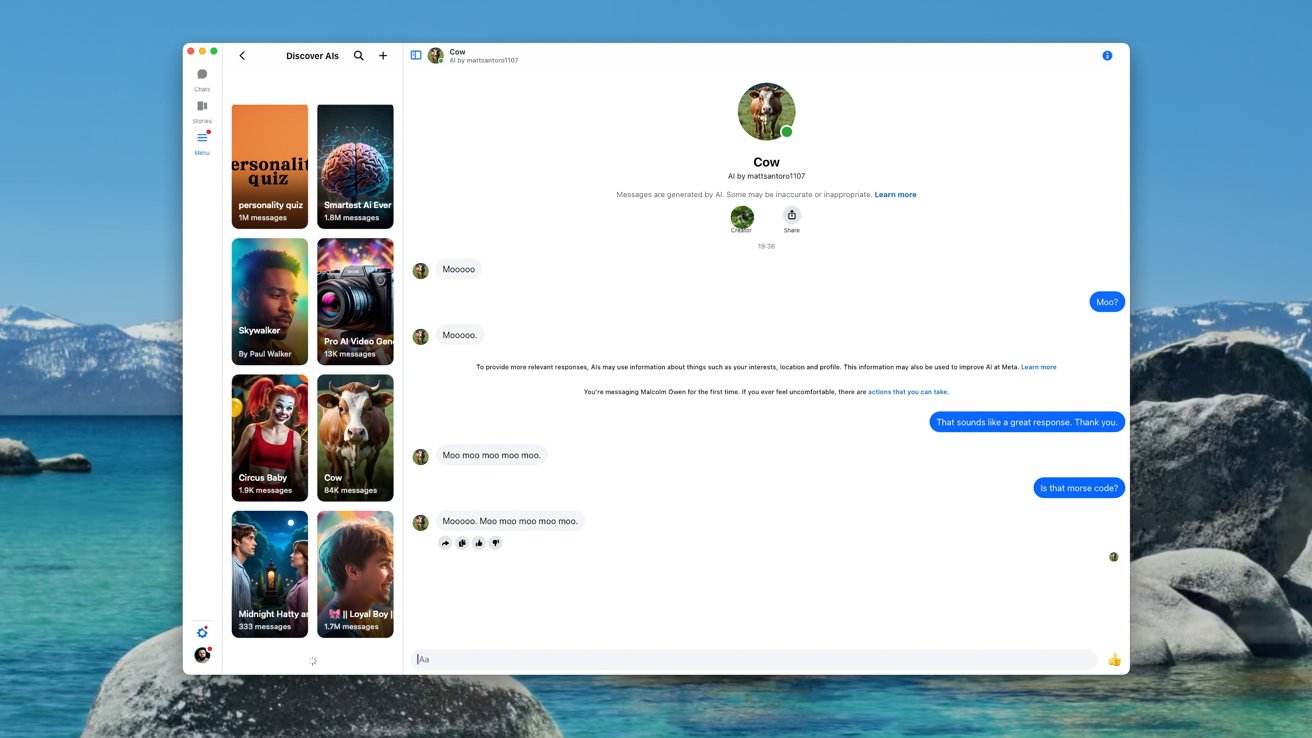
There are high-brow and more questionable uses for AI Studio in Facebook Messenger.
While this is certainly part of the modern-day AI-equipped Facebook Messenger experience that Meta wants us to have, it was hidden just out of view to be actually useful on macOS.
Besides, most people wouldn't have seen the curious feature anyway. They would spend their time using the actual messaging portion of the app, dealing with nuisance family members and the occasional spam bot.
The core chat experience was well-rounded, with the same functions as you would find in the mobile app or the browser version. But at the same time, the fact that the same experience was available elsewhere was probably one of the nails for the macOS version's coffin.
Gone and easily forgotten
Facebook hasn't exactly explained why the app is being removed for macOS specifically, but it is probably to save resources that would usually be spent keeping the app up to date. If there are not sufficient numbers using the app on a platform, any business has the incentive to simply kill the app off.
In the case of the macOS app, it's probably due to the fact that web browsers exist. Since so many people access Facebook via Safari, Chrome, or whatever browser they want, they'll always have access to Messenger at the same time.
With social media being so addictive, users habitually check Facebook, and will almost certainly get access to their inbound communications at the same time.
Since smartphones are also an everyday fact of life, that's an easy path for messages to come through to users, if they need urgency.
The macOS app was a victim of the nature of a heavily browser-based user experience that provided the same messaging service. It was arguably less useful, since it would take up precious resources of a Mac while running in the background, and there was sufficient other coverage of Messenger elsewhere to justify culling it.
Facebook Messenger for macOS is survived by apps on practically any platform that has other messaging services, even Meta's headsets. It's that ubiquitous.
Its loss will barely be felt by the users who use it, since they're probably already using the browser and mobile app anyway.