
The smartphone industry had a good year in 2025 with moderate growth. Apple blew the doors off the place, with the iPhone dominating the market.
According to preliminary estimates released by Counterpoint on January 12, global smartphone shipments grew 2% year-over-year compared to 2024. This is not quite as big as the year-over-year increase of 4% between 2023 and 2024, but it's still growth.
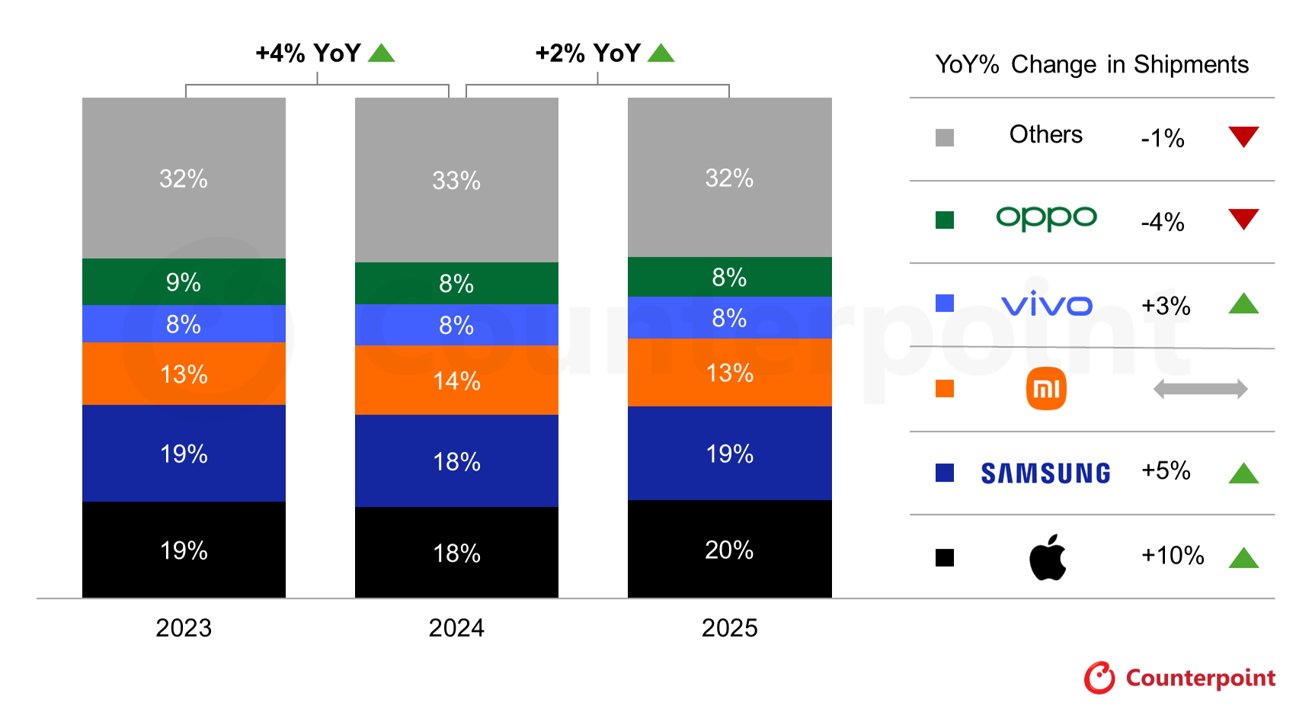
Global Smartphone Sell-in Shipment Share for Top 5 Brands, 2023 - 2025 (preliminary) - Image Credit: Counterpoint
On a per-manufacturer basis, Apple saw the biggest improvement, going from an 18% market share in 2024 to a 20% share in 2025. The change represents a 10% year-over-year increase in shipment growth, the highest among the top five brands.
Senior analyst Varun Mishra attributes the rise to increased demand in emerging and mid-size markets, as well as an expanded presence. The iPhone 17 series is said to have secured significant traction in the fourth quarter, while the iPhone 16 range maintained exceptional performance in Japan, India, and Southeast Asia.
This was also further amplified by a COVID-era upgrade cycle reaching its inflection point, with millions of users due to replace their smartphones in the year.
Second place in the list went to Samsung, which enjoyed a 5% year-on-year shipment increase, but saw its 18% share from 2024 grow to 19%. Xiaomi is in third with a 13% share, while Oppo and Vivo have 8% each.
Counterpoint's report is generally in line with IDC's claims in December that the iPhone 17 fuelled a record year for Apple, complete with strong demand during the holidays and healthier demand in emerging markets.
Even more bountiful
While the shipments are one indicator of success in the smartphone market, revenue is just as important. The report touches upon this, pointing to a general increase across the board.
There was a continued gradual shift to higher price tiers of devices in 2025, said senior analyst Shilpi Jain, caused by consumers upgrading to premium devices. This also led to an increase in demand for 5G-compatible smartphones in developing regions.
The United States tariff changes were considered a big enough problem for manufacturers that shipments were front-loaded in the first half of 2025. However, as the year continued, the impact of the tariffs was milder than anticipated and had less of an effect on second-half shipments.
For the fourth quarter specifically, Apple saw considerable inventory shifts. Apple accounted for a full quarter of global smartphone shipments in the quarter, its highest-ever share, with Samsung in second with a 17% share.
The overall shipments in the quarter resulted in a muted end to the year, with 1% year-over-year growth for Q4. The tariff-based front-loading effort was cited as a reason for this.
While Counterpoint hints that Apple will strongly benefit from the Q4 shipments, we won't know how much by until the Q1 2026 financial results are released on January 29. The Q1 results reflect the last three months of 2025, which include the busy holiday sales period as well as the launch of Apple's latest iPhones.
A reversal in 2026
For the year ahead, Counterpoint is just as cautious as IDC when it comes to the smartphone market. Research director Tarun Pathak warns of a softening in the smartphone market in the coming year.
The current expectation is for a general contraction of the smartphone market, down by an estimated 3% over 2025's figures.
The main reason for the change will be component-based, as a shortage of DRAM and NAND chips and a higher prioritization to supply AI data centers will cause problems for the market. Rising component costs are also prompting price hikes.
Even so, Counterpoint believes Apple and Samsung will show resilience to the market pressures, through a combinaton of strong supply chains and a premium market positioning.