
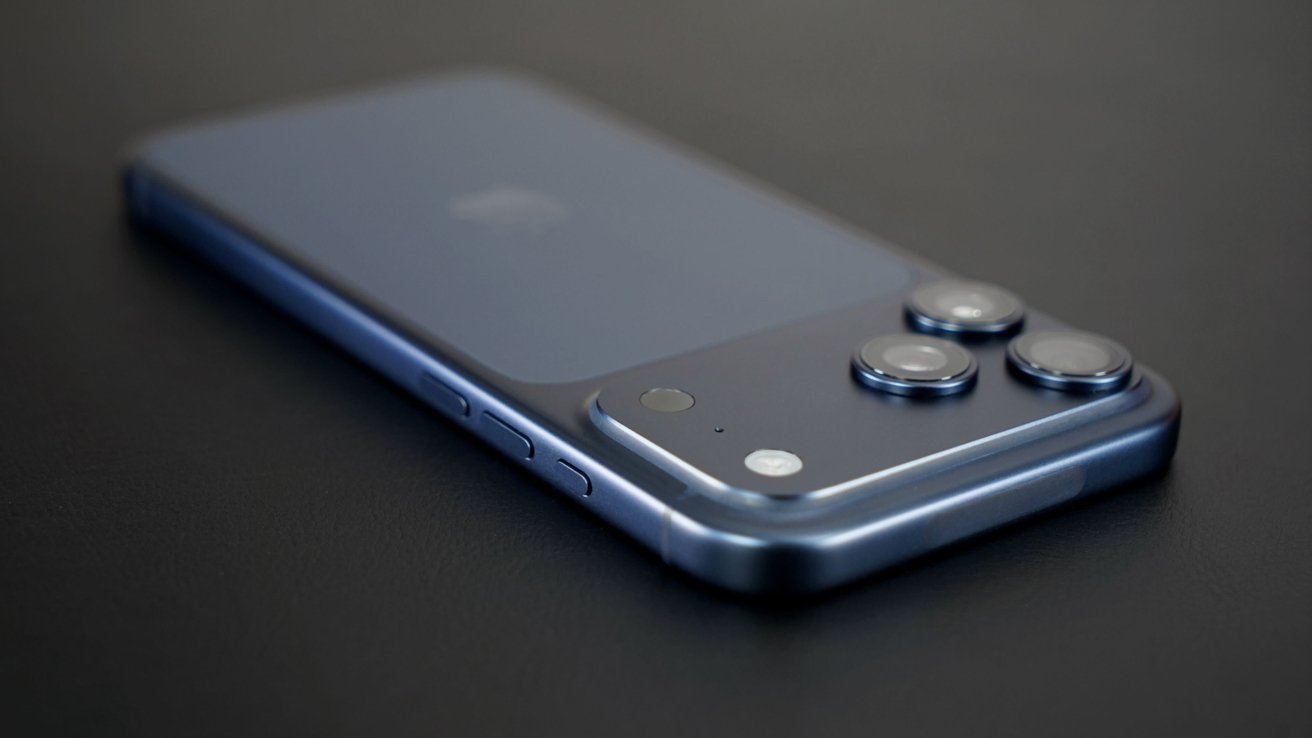
A new smartphone forecast shows Apple powering nearly all growth in 2025, though a looming memory shortage threatens to erase the momentum soon after.
Worldwide smartphone shipments are expected to reach 1.25 billion units in 2025, which means 1.5% year-over-year growth. The International Data Corporation (IDC) credits the stronger outlook to Apple's performance during the holiday quarter, a rebound in China, and healthier demand in key emerging markets.
Apple is on track for the strongest smartphone year in its history. The company is forecast to ship 247.4 million units in 2025, a 6.1% increase from the prior year.
IDC attributes growth to strong demand for the iPhone 17 lineup, which leads in many regions. China is crucial, with Apple's share surpassing 20% in October and November 2025.
Analysts had expected a 1% decline in China for 2025, but updated figures now point to 3% growth instead. A market that once looked flat now shows enough strength to nudge worldwide shipments into positive territory.
Carriers relying on flagship launches are attracting customers into multi-year contracts. Apple is also seeing benefits, as demand for high-end phones stabilizes in the US and Western Europe.
IDC expects Apple's smartphone revenue in 2025 to exceed $261 billion, with growth of 7.2% year over year.
Why 2026 looks rough for phone makers
The upbeat story stops in 2026. IDC has revised next year's forecast from slight growth to a 1% decline in global shipments, which means fewer devices will reach store shelves.
A worsening memory shortage sits at the center of the problem. Components that handle storage and system memory are expected to become harder to find and more expensive to buy.
Vendors that sell low- and mid-range Android phones will feel the squeeze first because those devices rely on tight margins. Average selling prices are projected to climb to $465 in 2026, even as total unit shipments dip.
IDC expects overall market value to climb to roughly $579 billion, which tells a strange story. Fewer phones will ship, but the market will take in more money.
Budget buyers usually lose when the market moves that way. Entry-level phones often cut corners on memory, storage, or cameras, and higher component prices rarely help that situation.
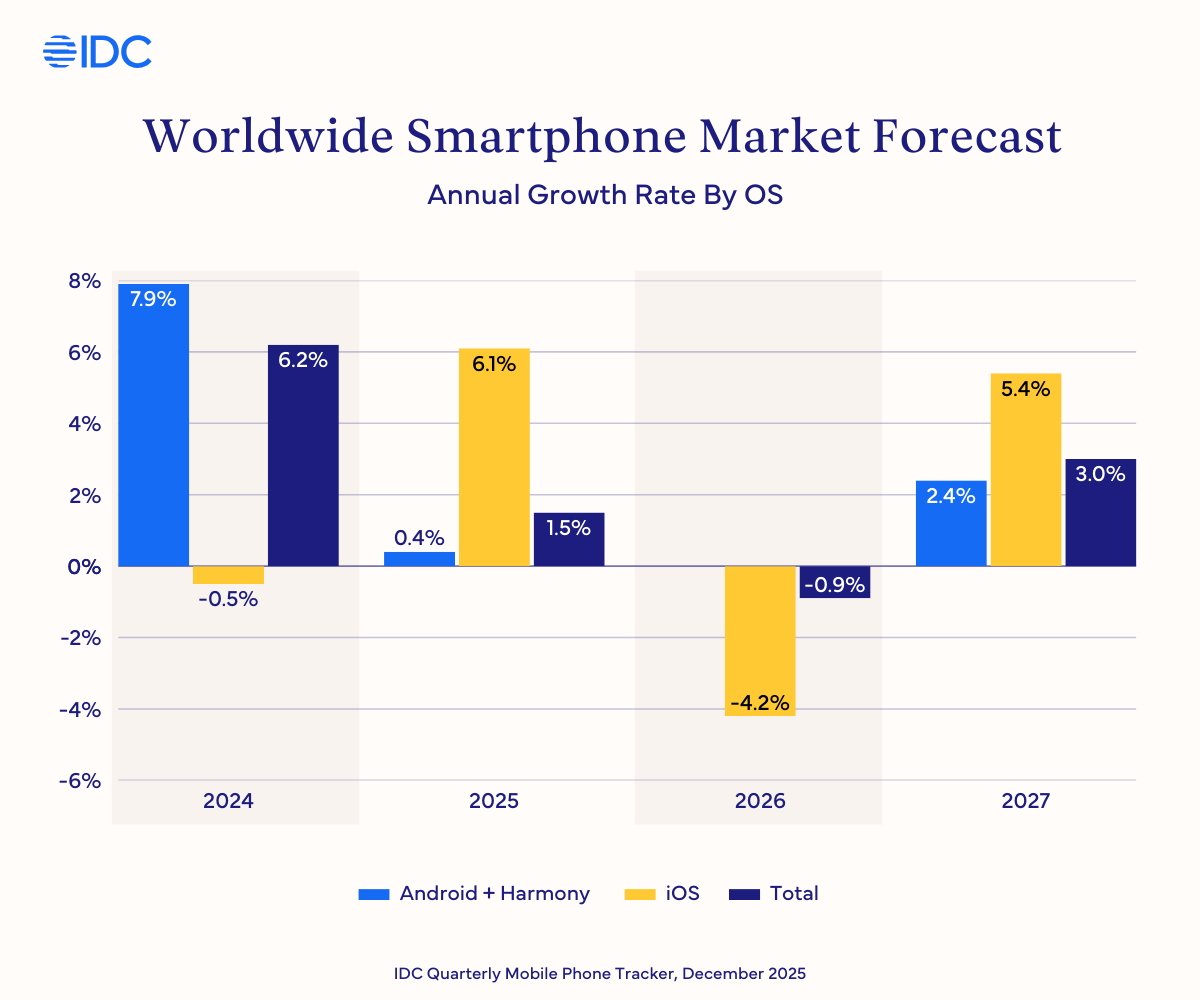
IDC expects Apple's smartphone revenue in 2025 to exceed $261 billion. Image credit: IDC
Some manufacturers will raise sticker prices, while others will push customers toward slightly more expensive models with better margins. Apple plans to shift its next base iPhone model from a fall 2026 launch window to early 2027.
IDC predicts that the upcoming scheduling change will lead to a decline in iOS shipments by over 4% in 2026, although promotions may mitigate some of the impact. The extent of this slowdown will vary among different companies.
Premium devices that already carry comfortable margins, such as top-tier iPhone models, can absorb higher memory costs more easily. Android vendors that rely on sharp prices and aggressive specs will face harder choices about where to cut and where to pass costs along.
Many customers are in no hurry to upgrade. Owners of phones like the iPhone 16e or a recent midrange Android model often wait three or four years before replacing their devices. Longer upgrade cycles give buyers more time to notice price hikes and walk away.
There is still a little room for optimism in IDC's outlook. Demand in emerging markets continues to rise, and some buyers may move purchases into late 2025 to avoid higher prices later.
Carriers gain leverage when a hot product cycle, like the iPhone 17 range, arrives before a tougher year. If IDC's numbers hold, the market will spend 2025 riding Apple's coattails — then in 2026 adjusting to fewer phones and higher prices.