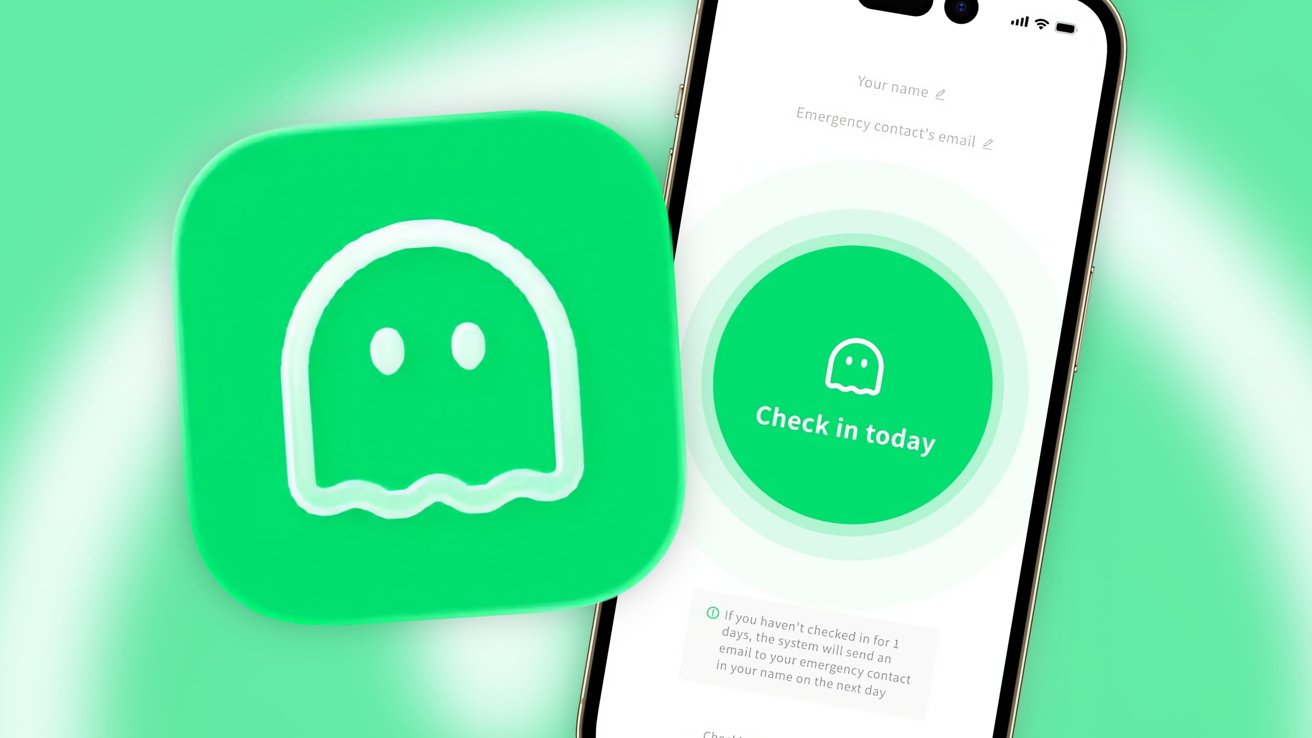
The morbidly-named "Are You Dead?" has topped the App Store in China, as a way for people living alone to get some help if they don't check in every day. Here's how it works.
The continuing advancement of technology has made it simultaneously easier to make contact with people and to become lonelier than ever. One app in China has attempted to combat the worst elements of solitude by giving families minimal reassurance about their loved ones.
Demumu, also known as "Are You Dead?," is an app that has become popular in China as a literal app-based "dead man's switch." Originally released in May 2025, BBC News reports the local name "Si-le-ma" sounds like "E-le-ma," a Chinese food delivery app called "Are you Hungry?"
The aim of the 8 yuan ($1) app is to be a way for people living alone to make sure they're safe, and to get help even if get out of contact for any reason. The app has a large check-in button that users must tap every day, to indicate they are fine.
If the button isn't pressed, the app will message a designated emergency contact, urging them to check on the user.
Apple does already include a number of features in its products to seek assistance if the user is in trouble, such as Fall Detection. However, aside from the Check In location-sharing feature intended for travel, there is no daily check-in feature like this available in iOS itself.
Simple solution for a serious problem
While the app's name and popularity may be amusing to some, it is created for a serious purpose.
Chinese media outlet Global Times is cited as saying there could be around 200 million one-person households in China by 2030. For those living a solitary life, either by choice or by circumstance, the app therefore acts as a form of safety net for people who need it.
Social media users in China are cited as saying the app is for people who are introverted or in vulnerable situations, such as depression, and should have some form of lifeline available. "If I died alone, who would collect my body?" one user is quoted as writing.
The worry of getting help when there's no-one around has already led to an entire industry of personal alarms and medical alert systems for the elderly. The app is a simple and cheap extension of that idea, but in a fashion that doesn't have the same social connotations as the medical assistive devices.
The developers are planning to expand the app to a more elderly audience. Over a fifth of the population of China is aged over 60 years, which could be a viable market for similar apps, presumably without the tongue-in-cheek name.