Apple will still benefit as TMSC confirms large-volume production has started for its newest 2nm processor, but as Nvidia ascends, Apple's days of being able to command the firm's entire output are over — for now.
Back in 2020, Apple was able to buy TSMC's entire 3-nanometer production capacity and use it in the iPhone, iPad, and Mac. Not only did that mean Apple had the then fastest processors, but no one else could buy them.
According to semiconductor journalist Tim Culpan, however, that may have been the last time Apple was able to do this. That's because TSMC's production of AI processors for Nvidia and AMD is taking more of the firm's capacity.
Supply chain sources say that it's even possible that Nvidia became TSMC's largest client in either one or two quarters of 2025. The same sources expect that Nvidia will almost certainly succeed Apple throughout 2026.
This is backed up by TSMC's published revenue reports, which say its 2025 earnings rose 36% to $122 billion. Nvidia is predicted to show a 62% growth in sales over the fiscal year, while excluding Services, Apple is believed to be growing 3.6% for the same year.
Until TSMC's annual report in the next few months, it's still supposition. But the implication is that Nvidia is buying much more from TSMC than before, which fits with news of the processor firm's increase in AI chip manufacturing.
Apple definitely wants the benefits of being able to buy an entire production run. In 2024, then-COO Jeff Williams reportedly went on a secret visit to TSMC in Taiwan, expressly to negotiate such a deal for 2nm processors.
It's not known what the result of this was, but Apple does still have an advantage over Nvidia. While iPhones sales are no longer growing significantly, they are steady, and Apple also needs TSMC for the Mac, the iPad, and more.
Nvidia's demand, however, is entirely for AI processors. Should the AI boom burst or fade away, Apple will still want TSMC processors.
TSMC confirms 2nm production
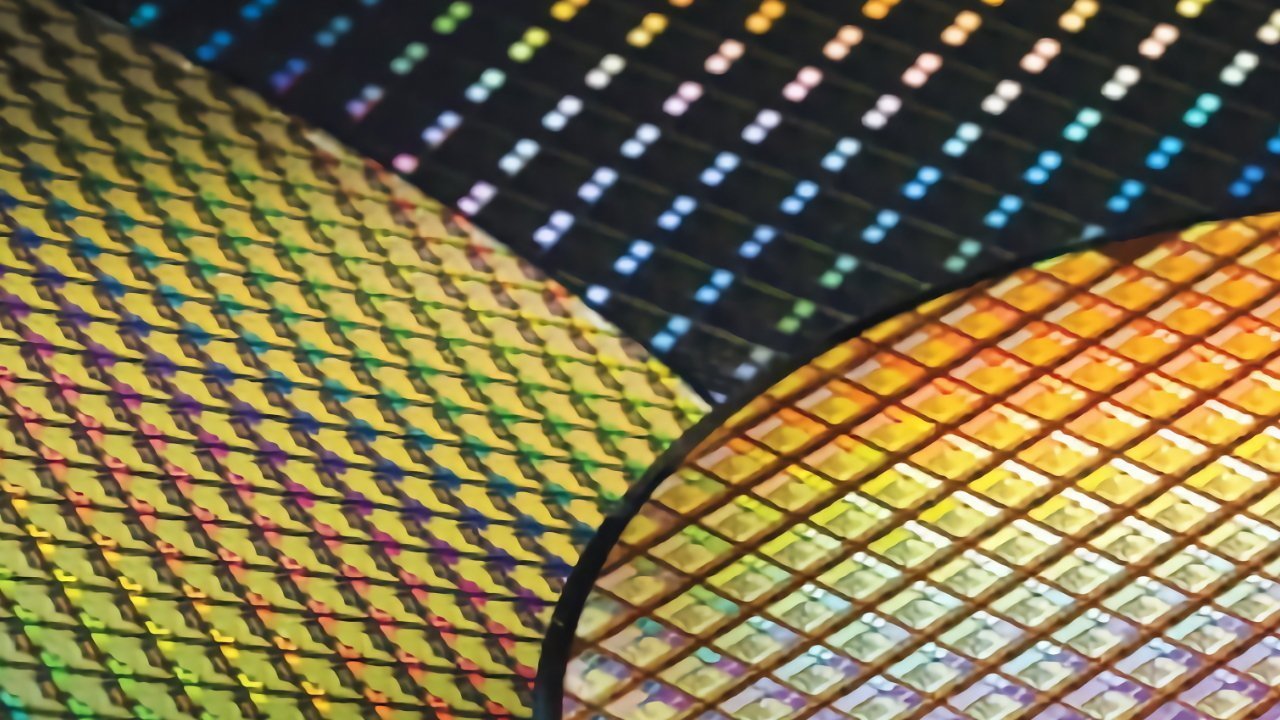
Separately, TSMC has confirmed that it is now in mass production of 2-nanometer processors using the firm's new N2 design. As spotted by Tom's Hardware, the news came not from a formal announcement, but a line on TSMC's website.
More detail on that site reveals that this N2 design should bring a 15% to 20% performance increase for the same power usage. It can also equal previous processors while operating on 25% to 30% less power.
In October 2025, CC Wei, CEO of TSMC, said that work was on track, but also "we expect a faster ramp in 2026, fueled by both smartphone and HPC AI applications."
HPC is a general term for High Performance Computing, which includes the Mac. That increase in production for smartphones is because Apple is expected to use the new N2 2-nanometer technology in the A20 processor for the forthcoming iPhone 18 range.
Beyond that, Apple is still also expected to be the first to get TSMC's next processor. That's a 1.4-nanometer design which is believed to be destined for the iPhone 19.