
Apple's smart home peripheral been a "releases next year" rumored product for about three years, but Apple's decision to pair Google's Gemini models with Siri may finally be the key to shipping.
Apple has been working on a tabletop smart home display with a rotating base for years, but Siri's limitations repeatedly slowed progress. Those delays have not only pushed back the display itself, but also stalled broader Apple Home-focused hardware plans tied to ambient voice interaction.
Reports have described the device. The missing piece has consistently been a Siri capable of handling shared, always-on environments reliably.
Smart home display requirements differ from those facing iPhone and HomePod. Devices designed for shared spaces demand fast voice response, consistent behavior, and dependable context handling across multiple users.
Relying on touch alone would reduce a smart home display to a compromised iPad, weakening its role inside the home. The display is meant to stay visible and useful as people move around a room, with voice and glanceable information at the center of the experience.
Apple has already built much of the software infrastructure needed for a display-first Home interface. Widgets adapted from iOS StandBy mode, Siri app intents, could converge into a shippable product in 2026. Similar timelines have surfaced before, though, so we're still skeptical.
Federighi's AI role ties Siri progress to hardware timeline
Siri delays help explain why the hardware has yet to appear. Apple's internal foundation models reportedly struggled to deliver fast, conversational performance on consumer devices.
Those limitations led Apple to postpone both the Siri upgrade and the dependent Home hardware, tying the display's fate directly to changes in Apple's AI strategy.
Putting Craig Federighi in charge of AI reflects a shift away from prolonged research toward product delivery. Inside Apple, Federighi is known for shipping platforms on schedule and favoring predictable outcomes over open-ended experimentation.
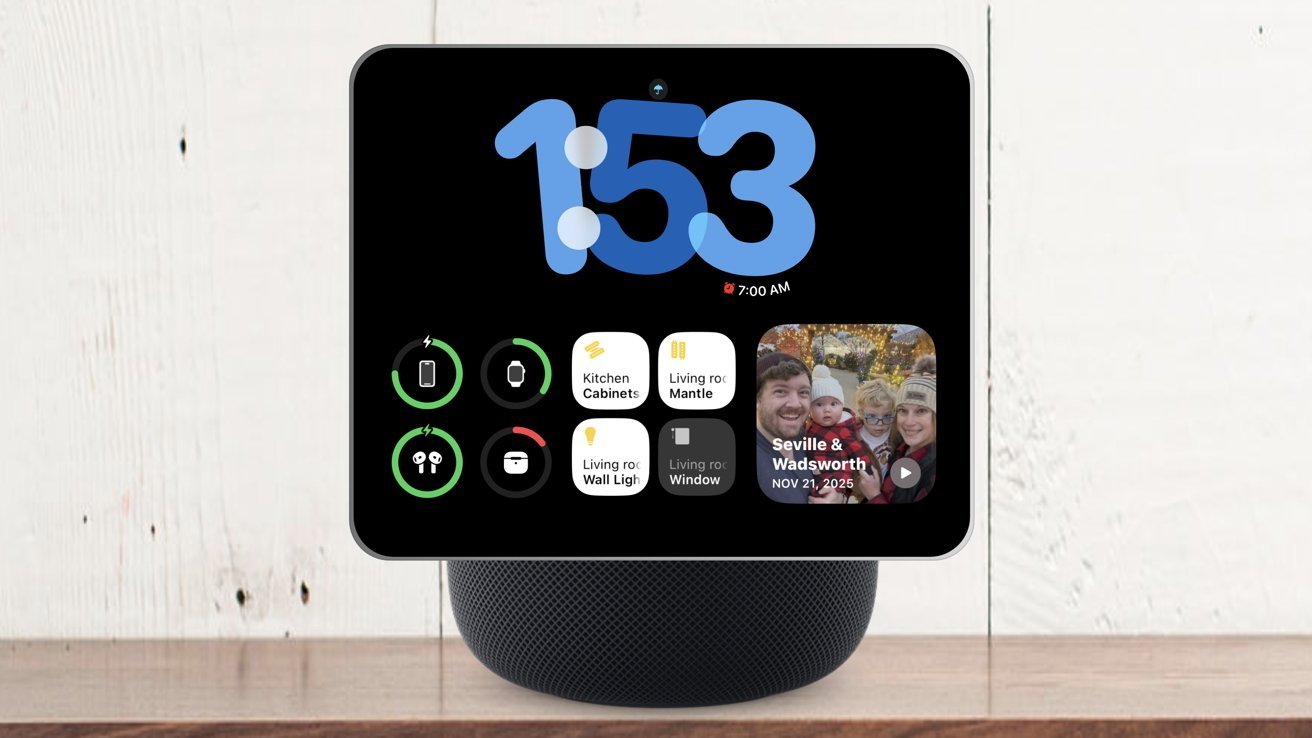
Touch-only interaction would turn a smart home display into a compromised iPad
Federighi's oversight of the product means Apple is committed to launching. Progress on the smart home display depends on Siri being capable enough to support it.
Display makes cloud AI a tolerable compromise
Reliance on Google's AI fits more naturally with a stationary home device. Smart home displays remain powered, stay connected, and serve shared environments rather than personal ones.
Cloud-based intelligence for a smart home display would still operate inside Apple Private Cloud Compute, keeping requests encrypted, isolated, and inaccessible to outside parties. Gemini-powered capabilities can function there while Apple continues shrinking models for on-device execution elsewhere.
Apple has followed similar paths before by using external solutions temporarily before internalizing core technologies. A smart home display offers a relatively low-risk way to repeat that pattern without weakening Apple's broader privacy stance.
Time will tell, when it all releases with an Apple logo, though.