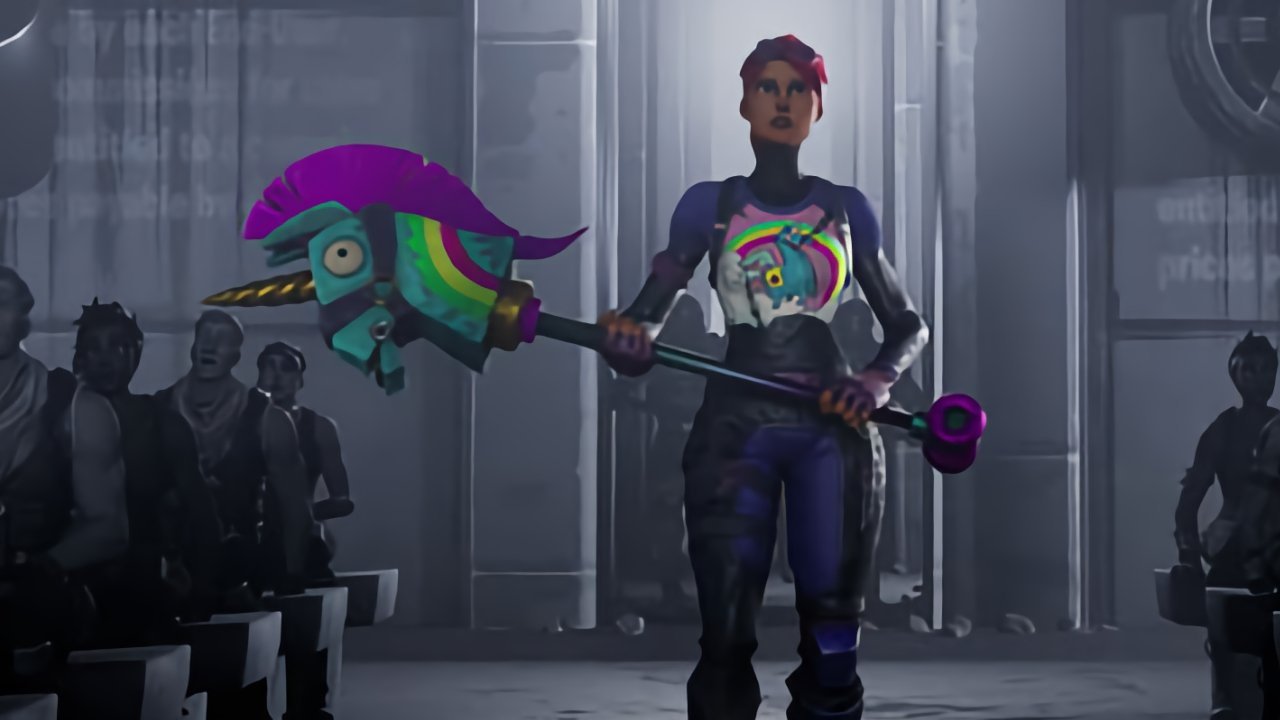
Forget about Epic's moral high-ground. Epic Games CEO Tim Sweeney and Google are looking to settle the Google Play app store antitrust lawsuit, in new partnership deal that sees the "Fortnite" maker pay Google $800 million.
Right from the start of its legal battles with Apple, Epic Games has claimed to be doing it to help developers. While it mostly lost that case against Apple, it won the same one against Google and officially is still fighting for a settlement to help all developers — or claimed to be.
On Thursday, during the case, the court has revealed that Epic Games and Google have arranged a new deal between them. According to The Verge, Epic Games will pay Google for what the court described as multi-year "joint product development, joint commitment, joint partnerships."
This deal that has really settled the case was done without any oversight, and without the court's knowledge. Judge James Donato summarized the deal, saying "an $800 million spend over six years, that's a pretty healthy partnership."
Judge Donato called it "a new business between Epic and Google," and in court pressed about the details that show this sees the firms working closely together.
"You're going to be helping Google market Android, and they're going to be helping you market 'Fortnite,'" he confirmed with representatives of the firms. "That deal doesn't exist today, right?"
This is Epic Games, which accuses Google of unfairly profiting from its control of Android, paying that same Android maker.
Google isn't the first Big Tech firm to promote "Fortnite," as Apple gave it great prominence on the App Store when it started. But now specifically in exchange for Google marketing "Fortnite," and some other handwavy partnership terms, Epic commits to actively promoting Android — abandoning every one of its previous criticisms of the platform.
It is putting the interests of Epic Games first, regardless of any claimed moral crusading. It's also directly in opposition to specific statements by the games company's CEO Tim Sweeney.
"We've always turned down special deals just for Epic," he said on winning the case in 2023. "We've always fought on the principle that all developers should be, you know, given the same opportunities."
Uh huh. Sure.
According to court documents, Sweeney sees no conflict here, or at least doesn't say that he does. He is now maintaining that the deal means that "this is Google and Epic each separately building product lines."
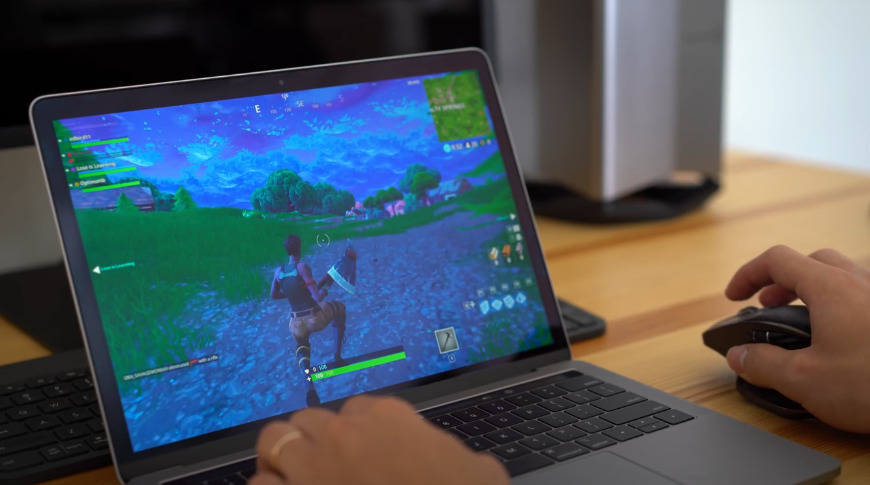
Fortnite played on a MacBook Pro
Sweeney and his new colleagues at Google have to say this, though. Because this new partnership is reportedly dependent on the court approving its overall settlement deal, which does include aspects that may help other developers. The word "may" in the previous sentence is doing a great deal of heavy lifting.
Nonetheless, Sweeney was apparently compelled to tell Judge Donato that he doesn't "see anything crooked about Epic paying Google off to encourage much more robust competition than they've allowed in the past."
While the full court transcript is not yet available, and wow, are we waiting to see that, it's never a good sign when you have to tell a judge that you're not crooked.
Whether the judge bought that or not, Sweeney also said that this deal is "an important part of Epic's growth plan for the future" — and that it does not mean any special treatment for the Epic Games Store.
That's a ridiculous claim to make.
Google App Store changes
The news of the secret deal came out as part of the court process where Epic Games and Google were supposed to be working toward an overall settlement, given that Google previously lost the case. This should have seen Epic Games winning benefits for all developers, and there are reportedly changes coming to the Google Play Store.
And here's the "ridiculous claim to make" proof — in the brief details available so far, it appears that Google has agreed to cap its App Store fees at either 9% or 20%, depending on the type of transaction.
Google is also more embracing rival App Stores — doubtlessly including the one Epic Games runs — by making what's called the "Registered App Store" program. This would mean third-party stores could be installed without the multiple confirmation steps and scare-screens previously seen.
Yup. Sure sounds not crooked.
Epic Games is never fighting for the little guy
It's a truism that a corporation that says it is taking on other corporations because little businesses can't afford to, is not. It's a play for public sympathy and support, because public opinion helps win legal cases.
He got caught violating Apple and Google's developer agreements in a carefully created move, proven to be pre-planned. He did it to get public opinion his side, about big, bad trillion-dollar companies charging billion-dollar companies to do business on their platforms.
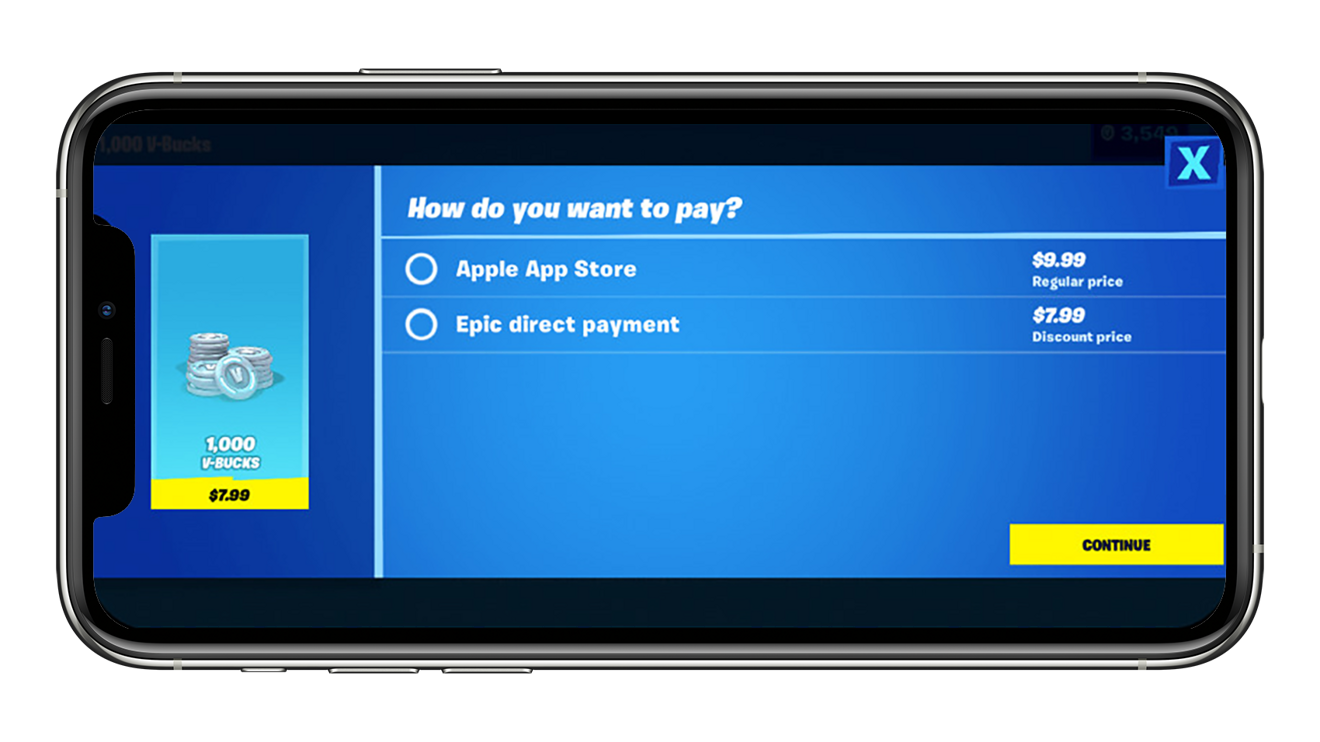
The "Fortnite" update added a second direct payment option.
As a reminder, the court did find that Sweeney broke the developer agreement. That much is certain.
It's fine, apparently, for Sweeney to charge developers for hosting on Epic, and Gabe Newell's Steam. It's apparently okay in Sweeney's mind for Microsoft who also sells bespoke hardware and a gaming appliance to charge for games hosted on their stores a similar percentage to what Apple charges.
Epic Games has proven in court that it is in this fight for the money, and only the money. The chances of anyone being shocked by that are slim.
But for the future, it's likely to have an impact on any antitrust case between two Big Tech firms.
If an antitrust case is proven, the result is supposed to be both a cessation of the unfair practices, and some kind of remedy for previous damages. Most typically, that means the offending company having to pay some figure to the firm or firms it has unfairly profited from.
But in this case, the two sides have effectively become one in this matter so Epic Games is never going to come back complaining if Google does not cease what it's doing. And then, too, Google is the losing party but instead of it paying damages that could go to allegedly harmed developers, it is being paid $800 million by its accuser.
Courts are asked to rule on antitrust issues where businesses are said to be making unfair deals and pursuing unfair practices. But if the parties are privately making potentially unfair deals to settle cases, the courts become simply a fairground.
This does also make it apparent that the Epic Games fight against Apple was no more about protecting the little guy. Instead, presumably Epic Games had also hoped to come to a similar arrangement with Apple, during that years-long legal battle.