

Apple's latest earnings blew away expectations, and the magnitude of the success took almost every analyst by surprise. Here's what they're saying now to catch up to the new reality made clear by the blockbuster announcement.
For the quarter ended December 27, 2025, Apple reported $143.8 billion in revenue, up 16% year over year, with earnings per share of $2.84. iPhone revenue climbed 23% to $85.3 billion, and Apple told investors to expect March-quarter revenue growth of 13% to 16%, alongside gross margins between 48% and 49%.
Analysts largely agreed on what was driving the results. Demand remains strong across regions and product tiers, but tight supplies of key components are now the main factor limiting how much Apple can grow in the near term.
The quarter shifted the focus from demand to how much Apple can actually produce given the tight supply situation. Analysts are now concentrating on capacity instead of revenue.
Bank of America: Apple is executing well heading into 2026
Bank of America reiterated its buy rating on Apple, pointing to stronger-than-expected iPhone upgrades around the world, including China. The firm viewed this as confirmation that consumers remain willing to spend on Apple products despite broader economic uncertainty.
Margins were another point of confidence. Bank of America noted that Apple continues to grow profits even as parts and materials get more expensive, showing the company still has room to manage costs through pricing, product mix, and operations.
Improvements to Siri were seen as an added benefit later in 2026, not something Apple needs right now to keep performing well.
Deepwater: demand is better than the guidance suggests
Deepwater Asset Management focused on the gap between Apple's strong results and the stock's relatively muted reaction. The firm argued that supply limits are holding back near-term guidance, making demand look weaker than it actually is.
According to Deepwater, Apple could likely sell more devices if it had more components available, especially in the March quarter. Strong margins and a growing installed base were cited as signs that customers remain loyal and engaged, even as investors wait for clearer signals around Apple's AI plans.
Evercore ISI: Apple left sales on the table
Evercore pointed to lean inventory levels as evidence that Apple couldn't keep enough iPhones in stock to meet demand. Rather than seeing this as a weakness, the firm viewed it as proof that consumer interest exceeded supply.
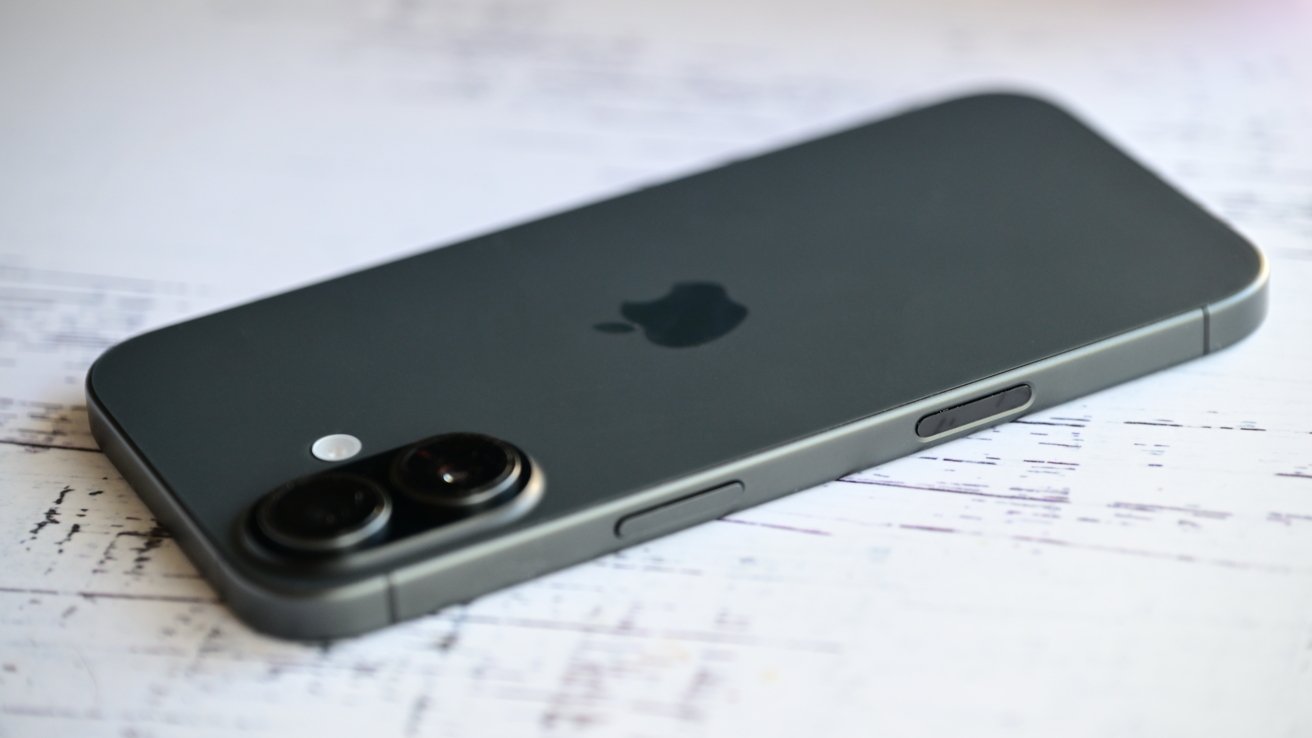
Apple continues to grow profits even as parts and materials get more expensive
Even with those limits, Apple still delivered better-than-expected iPhone growth and record margins. Evercore acknowledged rising memory costs but expects Apple to offset much of that pressure through higher-end models, growing services revenue, and internal efficiency improvements.
Analysts generally viewed the quarter as a strong execution story, with demand exceeding expectations across regions. The focus now is on how supply availability, rather than consumer interest, will shape near-term results.
J.P. Morgan: supply is the bigger issue than costs
J.P. Morgan described Apple's quarter as a case of strong execution in a constrained environment. While memory prices are rising, the firm believes Apple's current product mix and pricing power reduce the immediate impact.
Analysts pointed out that limited access to advanced manufacturing capacity is a bigger challenge right now. iPhones are in high demand across the U.S., China, Europe, and Asia.
Demand suggests that production limits, rather than consumer hesitation, are influencing Apple's growth in the near future.
TD Cowen: strong demand, limited by how much Apple can build
TD Cowen said Apple's earnings beat stood out because it came despite known supply constraints. The firm believes the iPhone 17 cycle remains healthy and could last longer, especially as Apple rolls out new Siri features.
At the same time, TD Cowen flagged tight manufacturing capacity as a risk, particularly with inventories already low. Rising memory costs could pressure margins later in fiscal 2026, but the firm does not see that as a long-term problem for Apple's business.
Wedbush: supply chain limits are now the main bottleneck
Wedbush Securities centered its analysis on Apple's supply chain comments. The firm said demand for iPhones, especially in China, is running ahead of what Apple can currently produce.
Wedbush pointed out that there are limits on advanced chip manufacturing and other components. They mentioned that while higher memory prices didn't really impact the December quarter, they're becoming more important for the future.
Essentially, Apple's growth is now more about getting the right parts than attracting new customers.
What analysts agree on
Across firms, the message was consistent. Apple's products are selling well, demand is global, and customers continue to favor higher-end models. The limiting factor is how many devices Apple can physically make and ship in a tight supply environment.

The iPhone 17 cycle remains healthy and could last longer
Apple's size is both a strength and a constraint. Its scale gives it huge leverage over suppliers, but even small increases in demand need massive amounts of advanced manufacturing capacity that can't be added quickly.
Smaller competitors can adjust faster, while Apple has to lock in chips, memory, and components years in advance. Being the biggest player in consumer electronics makes growth harder to unlock quickly, even when customers are ready to buy.
Rising component costs and limited manufacturing capacity are likely to cap short-term upside, but analysts broadly believe Apple can manage those pressures. For now, supply, not demand, is what defines Apple's near-term outlook.