

Apple's iPad shipments climbed sharply in 2025, driven more by a market correction and vendor behavior than by product innovation.
In 2025, global tablet shipments went up by 9.8% compared to the previous year, hitting around 162 million units. It was the best annual performance for the tablet market since the big jump in 2020 due to the pandemic.
However, Omdia warned that the recovery wasn't consistent and was already showing some cracks.
Momentum was concentrated late in the year, with the holiday quarter accounting for a disproportionate share of shipments, setting up renewed pressure on the category in 2026.
Holiday demand and vendor behavior drove 2025 growth
Omdia found that much of the 2025 growth was fueled by seasonal holiday demand and vendor pre-build activity ahead of anticipated memory constraints. Fourth-quarter tablet shipments reached 44 million units, rising 9.8% year over year and masking weaker demand earlier in the year.
Rather than signaling a broad-based recovery, the increase reflected demand pulled forward from future quarters. Replacement cycles remain long in mature markets, where tablets continue to be durable, multi-year devices.
Omdia expects tablet demand to come under increasing pressure in 2026 as memory market disruption threatens supply availability and pushes prices higher. Analysts also point to slower innovation cycles as a factor extending replacement timelines across the category.
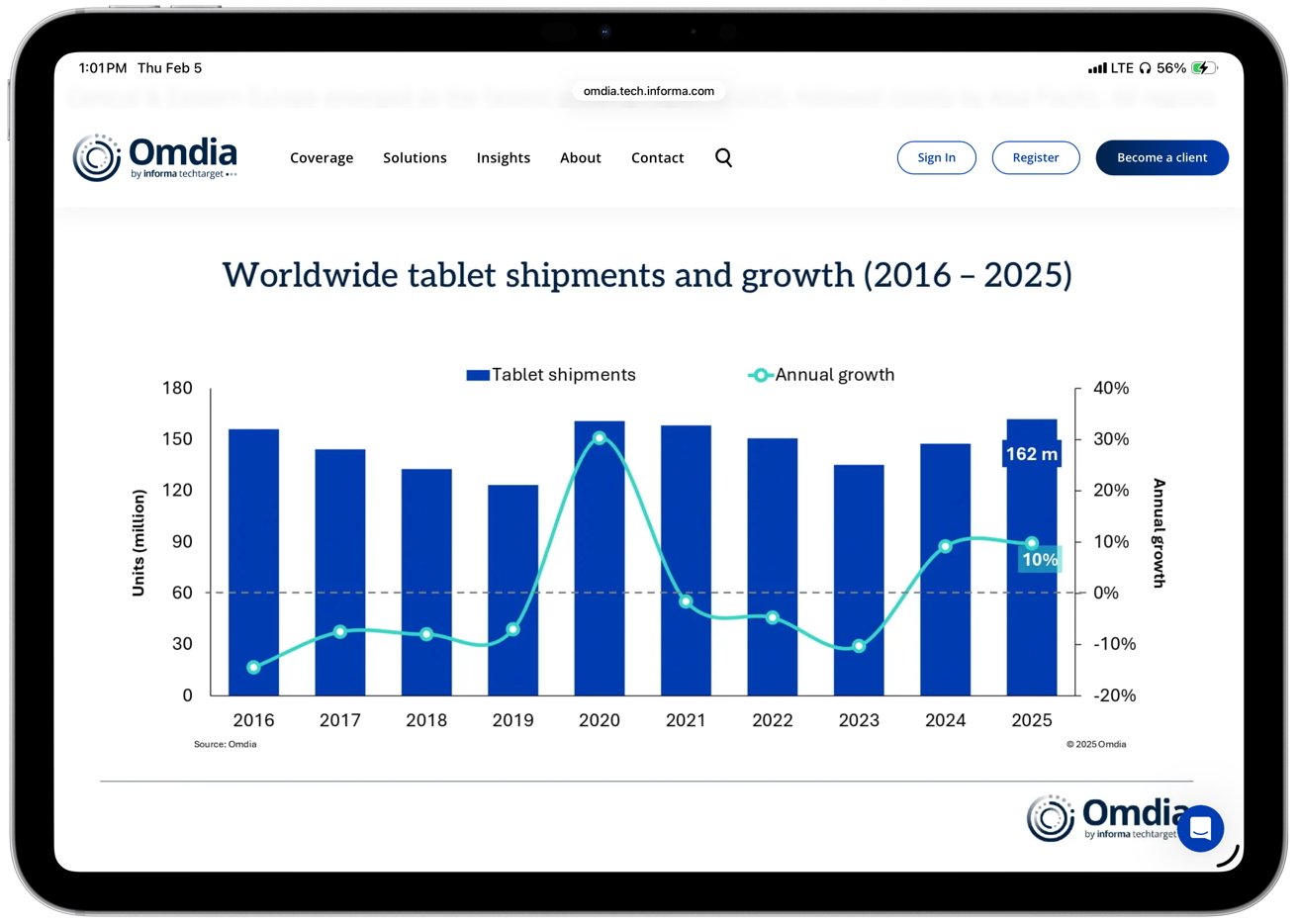
Holiday demand and vendor behavior drove 2025 growth
Future growth opportunities are expected to narrow, concentrating around premium and flagship model refreshes in developed markets and public-sector supported education demand in emerging regions.
Apple widened its lead as rivals slowed
Apple continued to dominate the tablet market, shipping about 19.6 million iPads in the fourth quarter of 2025. It was a 16.5% increase compared to 2024.
The demand for the 11th-generation iPad and the M5-powered iPad Pro lineup really boosted the company's numbers.
Samsung's tablet shipments declined 9.2% year over year in the same period, while Lenovo posted strong growth largely tied to proactive shipment pull-ins ahead of expected price increases. Vendor rankings remained unchanged for the full year, reinforcing Apple's dominant position in a slowing market.
Tablets shift toward ecosystem positioning
As volume growth slows down, Omdia thinks tablet makers will start promoting their devices as part of an ecosystem instead of just standalone gadgets. They mentioned that companies are focusing more on cross-OS features and AI-driven experiences to keep demand steady in a more predictable way.
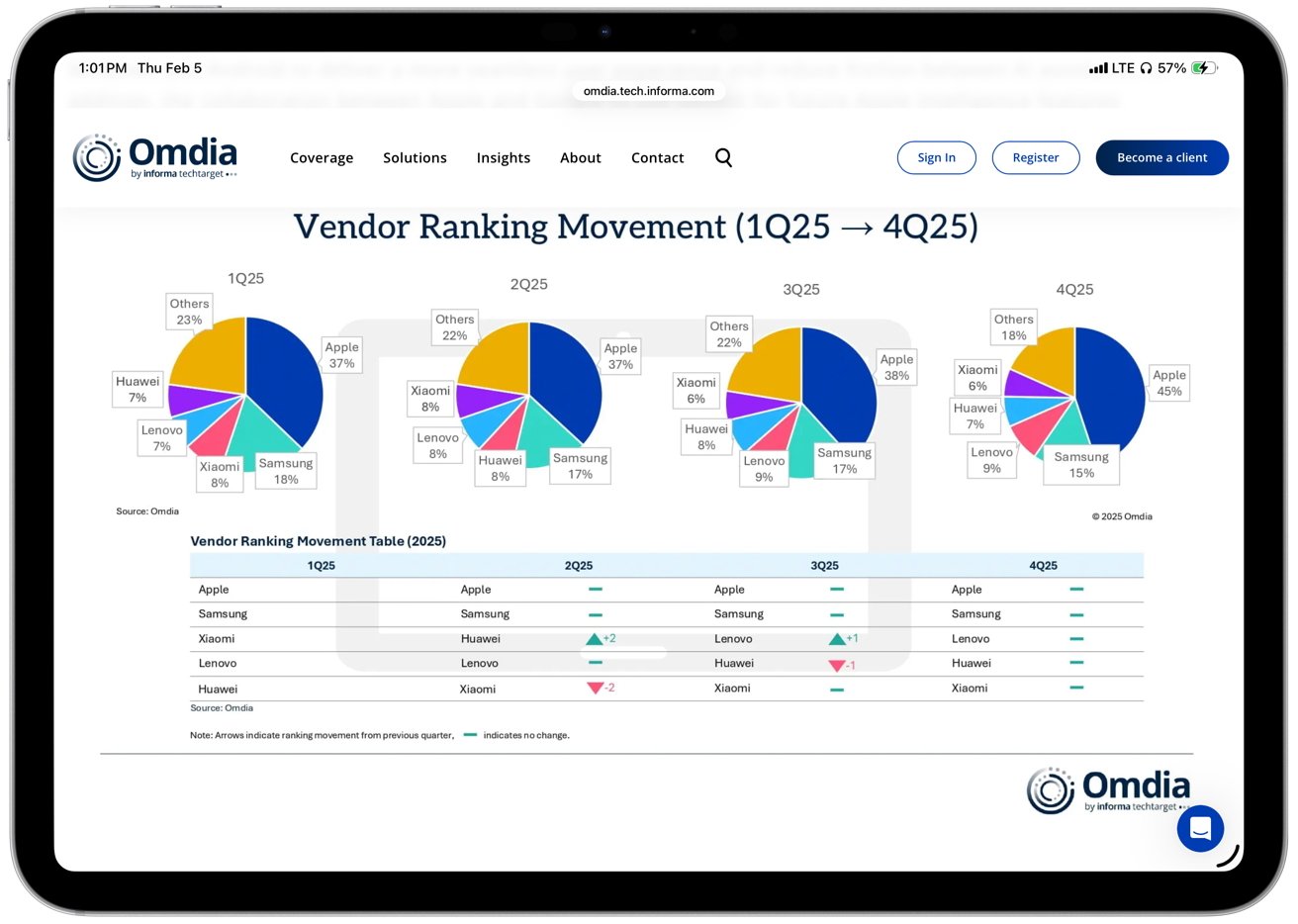
Vendor rankings remained unchanged for the full year, reinforcing Apple's dominant position in a slowing market
The change benefits companies like Apple, which have tightly integrated hardware, software, and services. It can handle slower unit growth while keeping users engaged across different platforms.
The tablet market's 2025 rebound appears less like a lasting recovery and more like a late-cycle correction driven by timing and supply dynamics. Omdia's own outlook suggests those pressures will reassert themselves as the market moves through 2026.
Apple didn't benefit because the tablet market suddenly became healthy again. Apple benefited because growth is slowing, and fewer companies are positioned to thrive as the category consolidates.