Apple's February 2026 App Store data shows iOS 26 adoption closely tracking the pace set by iOS 18 in January 2025, and iPadOS 26 is ahead of iPadOS 18, undercutting claims that the upgrade cycle is faltering.
Apple publishes operating system adoption rates based on devices that transacted on the App Store. The February 12, 2026 data can be measured against Apple's January 24, 2025 published figures for a like-for-like comparison.
The breakdown separates recently introduced hardware from the full active installed base. Because Apple publishes these numbers annually, it allows for a category-matched comparison between the 2025 and 2026 cycles at the same stage.
iOS 26 adoption in 2026
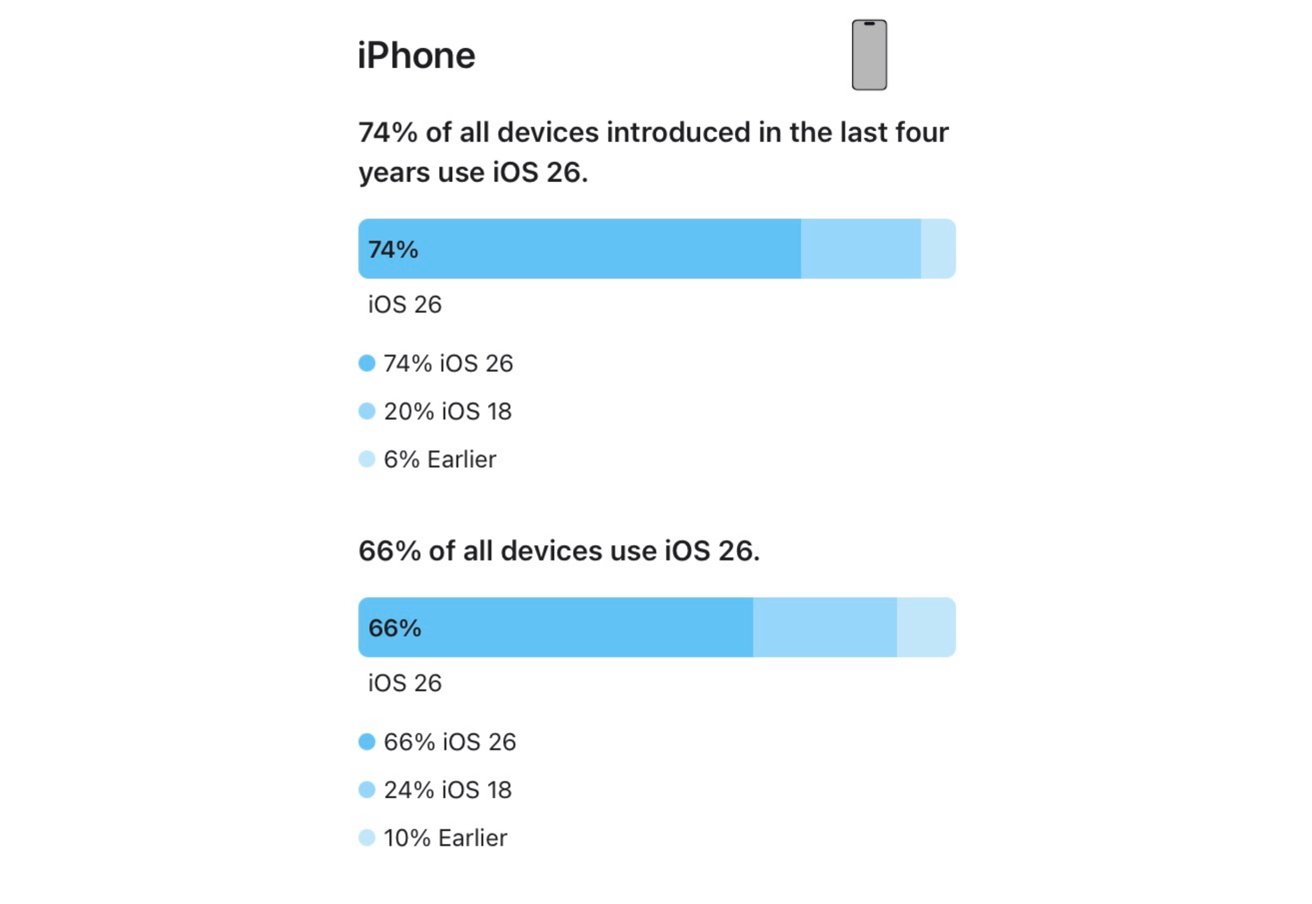
As of February 12, 2026, 74% of iPhones introduced in the last four years are running iOS 26. Across all active iPhones, 66% are on iOS 26.
- 74% of iPhones released in the last four years are on iOS 26
- 66% of all active iPhones use iOS 26
- 24% of all iPhones remain on iOS 18
- 10% run earlier versions
Apple's measurement reflects devices that completed App Store transactions. The method prioritizes actively used hardware and gives developers a realistic view of the addressable market.
iOS 26 adoption in 2026
Adoption is strongest among newer devices. The broader installed base lags because older hardware often stays in service longer or does not support the newest release.
Release timing also plays a role. The January 24 snapshot captured iOS 18 at roughly the same point in its rollout cycle as the February 12 iOS 26 data.
iPadOS 26 adoption in 2026
On iPad, 66% of devices introduced in the last four years are running iPadOS 26. Across all active iPads, 57% are on iPadOS 26.
- 66% of four-year iPads use iPadOS 26
- 57% of all active iPads use iPadOS 26
- 26% remain on iPadOS 18
- 17% run earlier versions
Tablet adoption typically trails iPhone adoption due to longer replacement cycles. Enterprise and education deployments also slow large-scale OS transitions.
Longer device lifespans reduce urgency, and iPads often stay in service for years, especially in classrooms and businesses. That naturally tempers the rush to upgrade to the latest release.
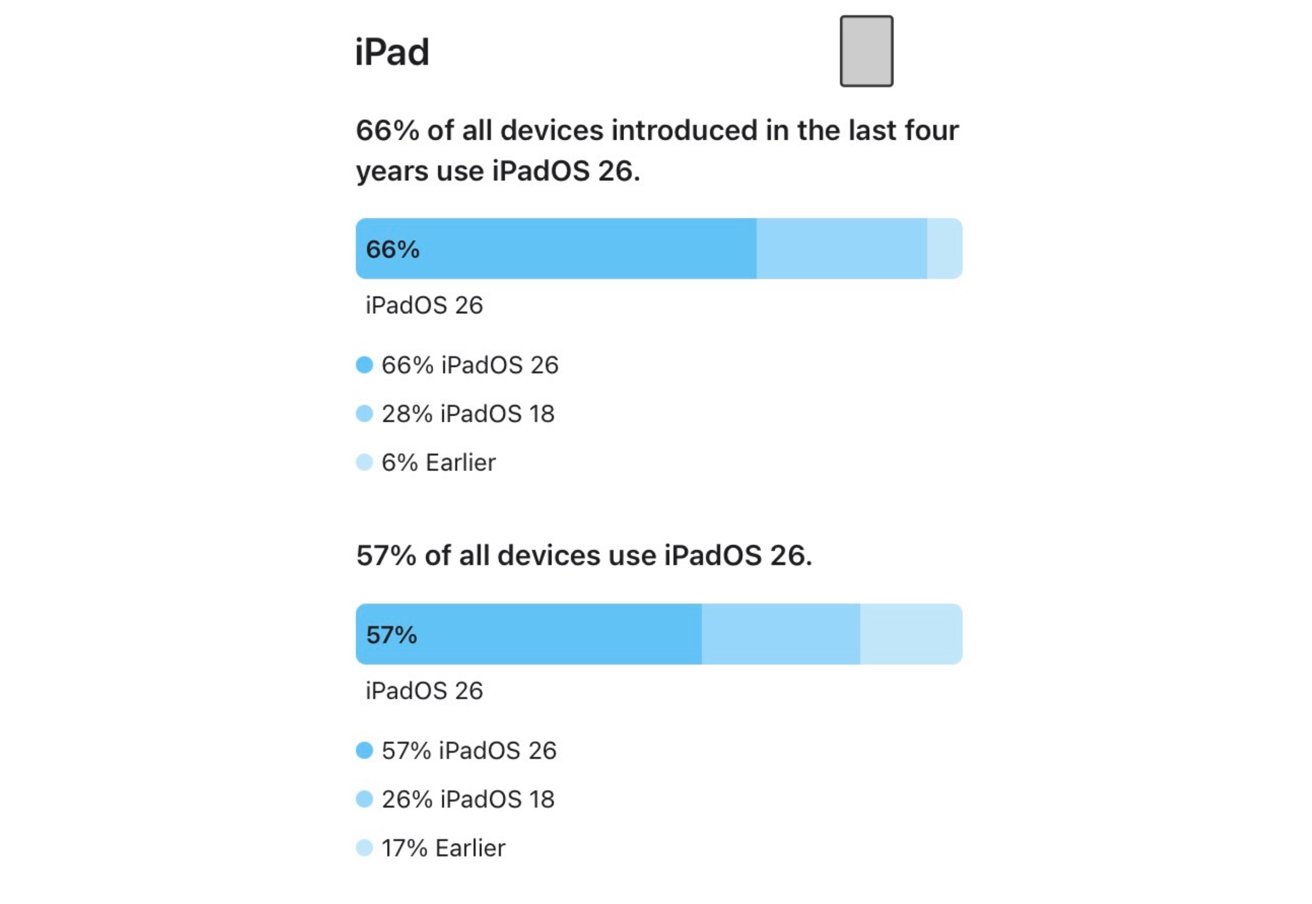
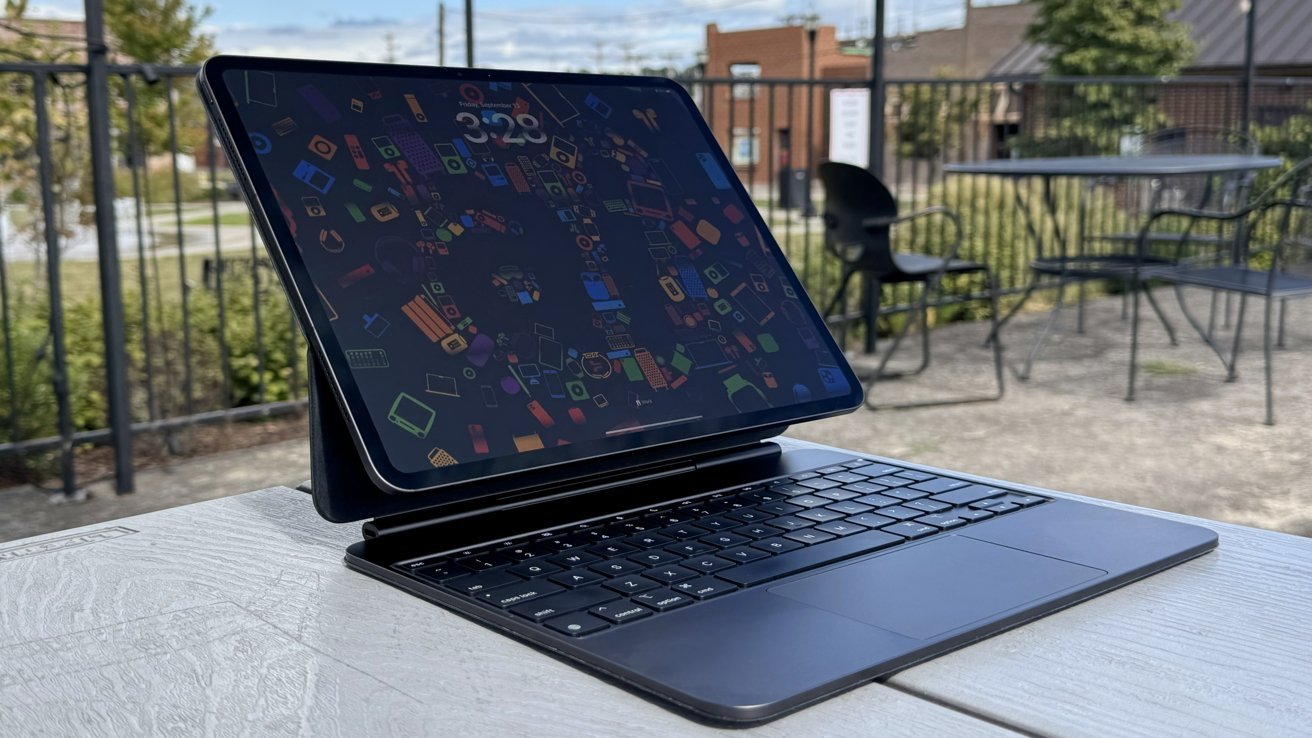
iPadOS 26 adoption in 2026
More than half of the active iPad base switching to the current release within months remains significant. It's especially notable in an industry that often battles platform fragmentation.
How 2026 compares to Apple's 2025 snapshot
Apple's App Store data from January 24 showed comparable adoption rates for iOS 18 at the same stage in its cycle.
On that date, Apple reported:
- 76% of four-year iPhones were on iOS 18
- 68% of all active iPhones were on iOS 18
- 63% of four-year iPads were on iPadOS 18
- 53% of all active iPads were on iPadOS 18
Compared directly:
- iPhone, four-year period: 76% in 2025 to 74% in 2026
- iPhone, all active: 68% in 2025 to 66% in 2026
- iPad, four-year period: 63% in 2025 to 66% in 2026
- iPad, all active: 53% in 2025 to 57% in 2026
The 2026 cycle is tracking closely with the January 2025 benchmark when measured year-over-year.
What the adoption shift suggests
The modest differences don't indicate weak demand, despite what analysts and incomplete data might suggest. And, they certainly aren't half of these numbers, as one report suggested.
Annual iOS adoption reates rely on features, hardware refresh timing, perceived stability improvements, and what isn't supported any longer.
iOS 18's 2025 rollout coincided with high-profile AI features and customization changes. iOS 26 appears to be following a steadier path, with adoption rates that remain broadly consistent year over year.
Even with 66% of all active iPhones on the current release, Apple maintains one of the fastest platform migration rates in the industry. Android remains hugely fragmented, and same-year adoption rates of a new operating system aren't even close to what Apple delivers.