Apple's next-generation Siri still hasn't surfaced in shipping software, but the delay aligns more with staged rollout planning and strict reliability standards than with a stalled AI strategy.
Apple's long-promised Apple Intelligence overhaul of Siri still hasn't appeared in public builds, but the delay reflects deliberate pacing rather than a product in trouble.
The company reset expectations in 2025, announcing that a more personalized Siri with deeper app integration would come in 2026. Since then, reports have suggested that the original spring target faced some testing challenges.
At WWDC 2024, Apple introduced a new version of Siri that goes beyond just voice queries. Executives talked about on-screen awareness, personal context retrieval across apps, and hundreds of new actions powered by App Intents.
In March 2025, Apple acknowledged the advanced Siri features would take longer and would roll out in 2026. The company later reaffirmed to press that the upgrade remains on track for the year without naming a specific iOS release.
Apple's architecture is straightforward in principle, even if the execution is complex. Simple requests stay on device, while more demanding tasks route through Private Cloud Compute.
Optional third-party model integrations, such as ChatGPT from OpenAI, remain under the user's control.
March could preview, but probably won't deliver everything
Apple has invited press to a March 4 in-person "special Apple experience" in New York, with similar gatherings reported in London and Shanghai. An in-person format suggests guided demos rather than a wide open livestream.
Reports suggest that Apple originally targeted iOS 26.4 for the first meaningful wave of upgraded Siri features. The same reporting says internal testing snags could push parts of the rollout to iOS 26.5 in May or even iOS 27 in September.
Apple executives have publicly defended the delay as a quality decision, arguing that cross-app automation isn't the same as generating text. Siri has to execute the correct action under ambiguous intent, changing app states, and real permissions, and that raises the bar considerably.
WWDC season offers the cleanest path
May and June offer a more natural timeline for updates. If iOS 26.5 brings the first big wave, WWDC 2026 will be the first demonstration of Apple's upgraded models — and not a faked segment.
Apple's usual pattern supports the idea, as spring releases often bring significant platform updates, whereas WWDC provides developers with the necessary context. Features like App Intents, Foundation Models, and systemwide automation are only valuable if third-party apps are ready to integrate them.
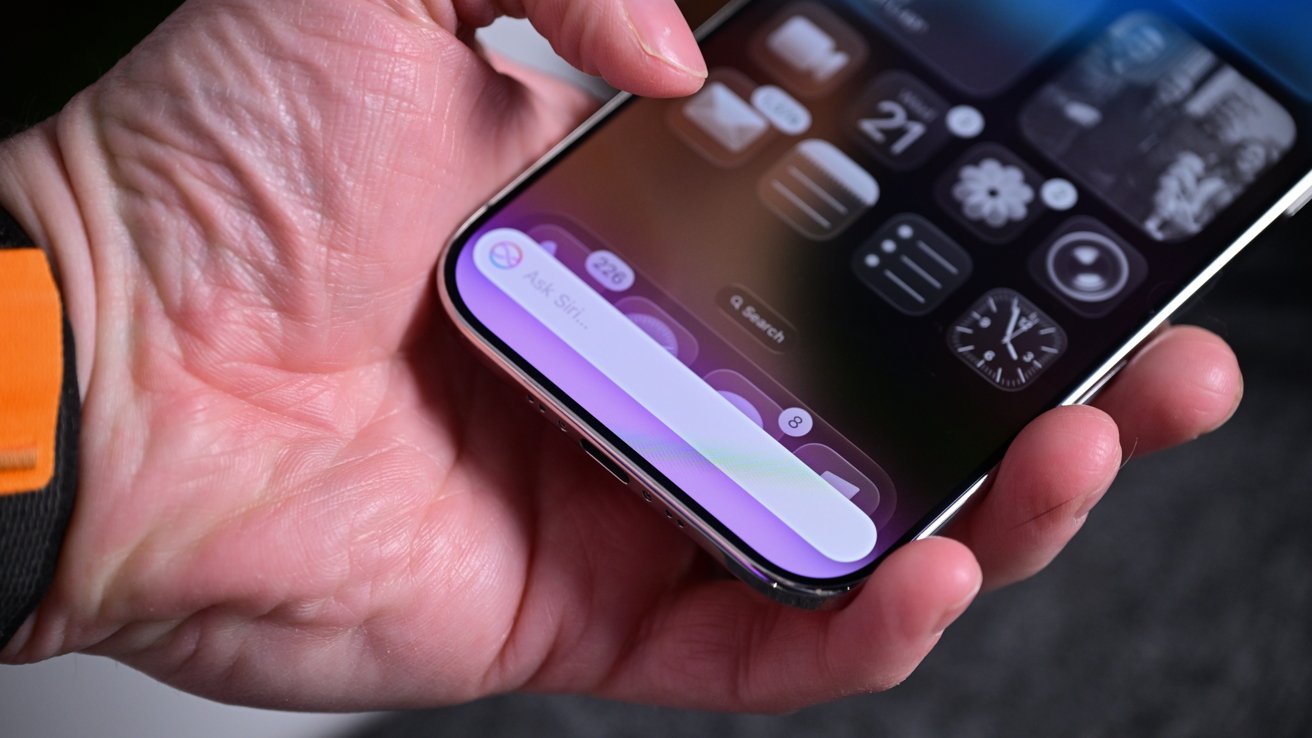
Siri on iPhone Air
Releasing in May would let Apple show off working features before the fall hardware cycle. Offering a preview will also give the company time to expand capabilities in September without rushing to explain any delays.
September aligns with hardware and messaging
If spring momentum falters, September starts to look like a strategic reset because iOS 27 will arrive alongside new iPhone hardware. Apple could frame advanced Siri capabilities as part of a broader performance and silicon story.
Apple Intelligence already requires modern chips and enough local storage to function properly. Expanding Siri's role as a default assistant means the experience has to scale down gracefully on unsupported devices and in unsupported regions.
Apple's on-device foundation model is great for summarization, extraction, and short dialog, but it's not meant for broad, open-domain reasoning. For more advanced tasks, users will need to rely on Private Cloud Compute or partner models, which can add some integration and privacy challenges.
Language generation isn't the hardest part, because the real challenge begins with orchestration across apps and the complexity that comes with it. Although Apple is experimenting with chatbots, the ultimate goal is for Siri to be an autonomous agent.
Siri's promised leap relies on structured intents, deterministic execution, and clear disambiguation across changing app states and permissions. Errors don't just look awkward in that environment, they can send messages, move money, or alter files in ways users immediately notice.
Apple's privacy architecture raises the bar even further, especially with Private Cloud Compute emphasizing stateless processing, attestation, and verifiable transparency. These guardrails set the company apart from competitors, but they also slow iteration compared to cloud models.
What makes the most sense right now
A staged rollout remains the most plausible outcome, with March previewing or shipping a narrow slice and May delivering the first substantial wave. September could then expand the feature set alongside new hardware.
Public statements still point to 2026 as the target year. Reporting suggests spring was the initial goal, but expanded real-world testing by Apple employees makes it clear that the system isn't a hundred percent ready.
And that's okay — slow Apple is good Apple.