Ten months after Trump imposed sweeping tariffs that hurt US businesses and consumers, and hit Apple to the tune of $3.2 billion, the Supreme Court has ruled that it was done illegally. Refunds will be messy.
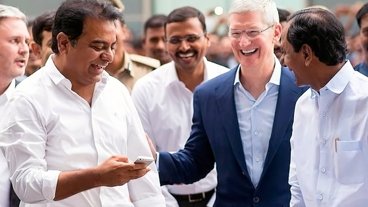
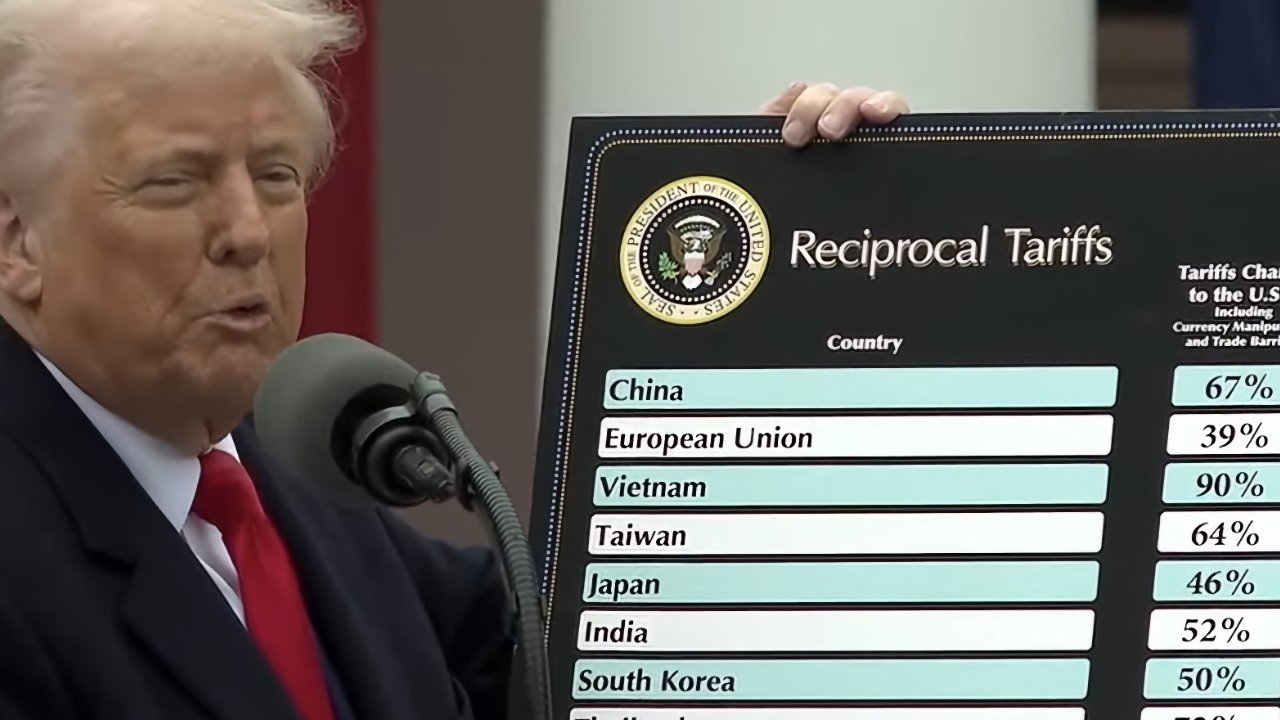
Trump was always expected to introduce tariffs, but the extent of his April 2025 "Liberation Day" ones caught the world by surprise. The claimed mathematics behind the original rates was ridiculed, and then Trump further raised them to ostensibly punish countries, or even individuals like Tim Cook.
The Supreme Court has ruled 6 to 3 that imposing the tariffs without Congress's involvement was illegal. Chief Justice John Roberts wrote the ruling, which denied Trump's claim that the International Emergency Economic Powers Act (IEEPA) gave him the authority to act unilaterally.
"When Congress grants the power to impose tariffs, it does so clearly and with careful constraints," wrote Roberts. "It did neither here."
"We claim no special competence in matters of economics or foreign affairs," Roberts wrote. "We claim only, as we must, the limited role assigned to us by Article III of the Constitution. Fulfilling that role, we hold that IEEPA does not authorize the president to impose tariffs."
Justices Clarence Thomas, Samuel Alito and Brett Kavanaugh dissented.
Kavanaugh separately noted that the majority ruling said "nothing today about whether, and if so how, the government should go about returning the billions of dollars that it has collected from importers."
"That [refund] process is likely to be a 'mess'," he concluded. And, those refunds will be paid to the importers, and not the consumers that had to shoulder price hikes.
What happens next
Kavanaugh is correct that the ruling speaks only to the legality of the tariffs and does not address how refunds or redemption should work. He is also correct that the funds were collected from importers, rather than from foreign countries as Trump initially pretended.
But as well as tariff fees that US firms paid the government, companies have also been investing heavily in adapting to the situation. Some firms have reportedly taken on extra staff to manage the tariff calculations, while Apple spent hundreds of millions on reorganizing its manufacturing and distribution network.
Also not addressed by the ruling is how smaller US firms have been put out of business because of the tariff charges. There are likely to be lawsuits because of this.
What's surely more likely is that Trump will try something different to enact these tariffs, or use another excuse. Certainly, the next few days will be heated, followed by a new plan in the next few months.
What's happened so far
From the beginning, and spanning administrations for a century, import tariffs are entirely paid for by US business. They import goods from overseas, this tariff is applied before they receive the goods.
Tariff costs are generally passed on to the consumer.
In February 2025, even before the details of the "reciprocal" tariffs were announced, there was an expectation that Apple would be hit hard. Bank of America estimated that Apple might even have to raise iPhone prices by 10%, which has not happened as of yet.
What has happened is that other manufacturers have hiked price on goods. Most of the PC manufacturers have been hit, and consumers are getting battered on things like food, televisions, and computer components. The latter has been hit particularly hard not just because of tariffs, but also because of data center and AI demands.
It's not clear precisely when Apple began taking steps to minimize its exposure to tariffs. However, it is known that when the "reciprocal" tariffs were announced, they were vastly higher than expected.
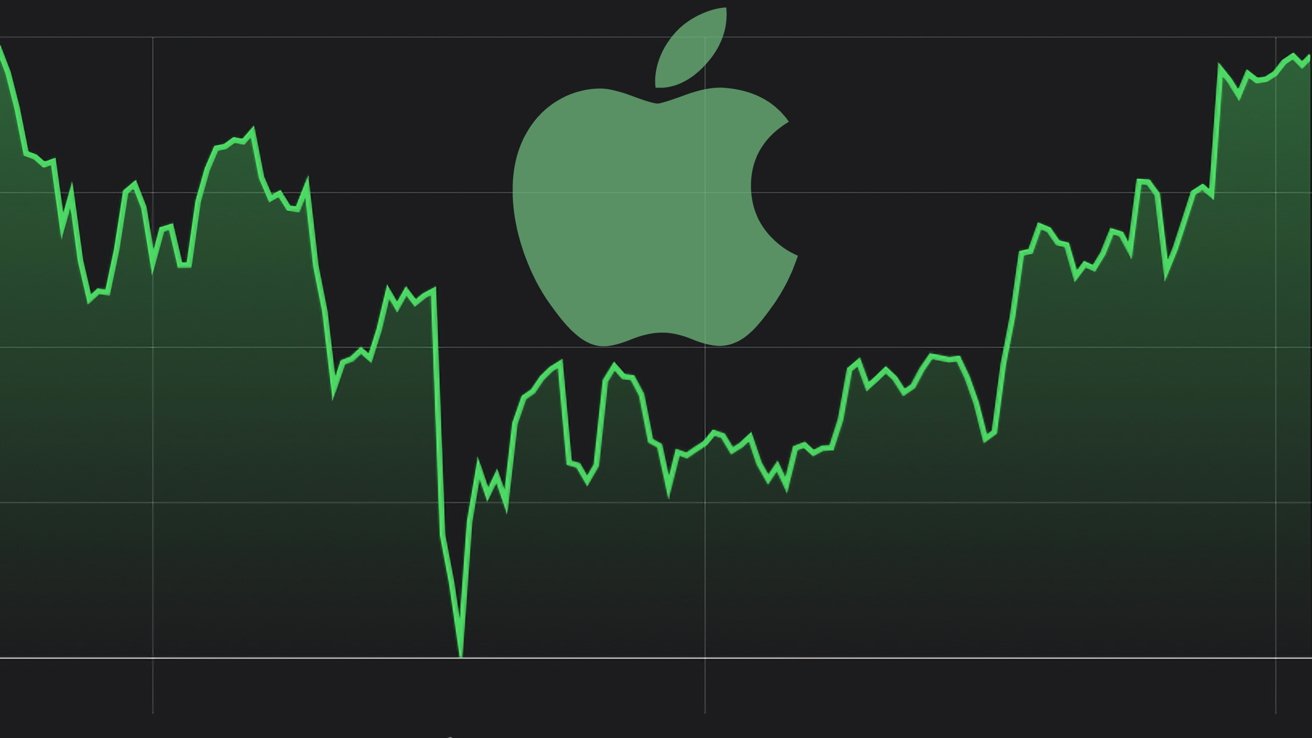
Apple's stock has had a wild year
China, for instance, had a 50% tariff levied against it. While that has fluctuated, it's been much higher than the 4% or so applied by previous administrations in accordance with the laws that the Supreme Court said Trump violated.
Escalating the trade war, China and many countries simply imposed their own tariffs in order to cut imports from the States.
Unsurprisingly, Apple's share price — and the stock price of at least most American businesses — crash-dived on the original tariff announcement. The tit-for-tat between the China government and Trump's unilateral tariff application is what caused the main damage along the way, not just to big tech, but to US Main Street businesses as well, reliant on imports.
So the stock market struggled to predict what would happen, and it took most of 2025 before Apple's stock price rebounded.
To date, Apple has paid about $3.2 billion in tariffs. It is uncertain what the ruling means for that money, as it may need to be paid back.
Update Feb 20, 5:05 PM ET Updated with tariffs paid through Apple's first fiscal quarter of 2026.