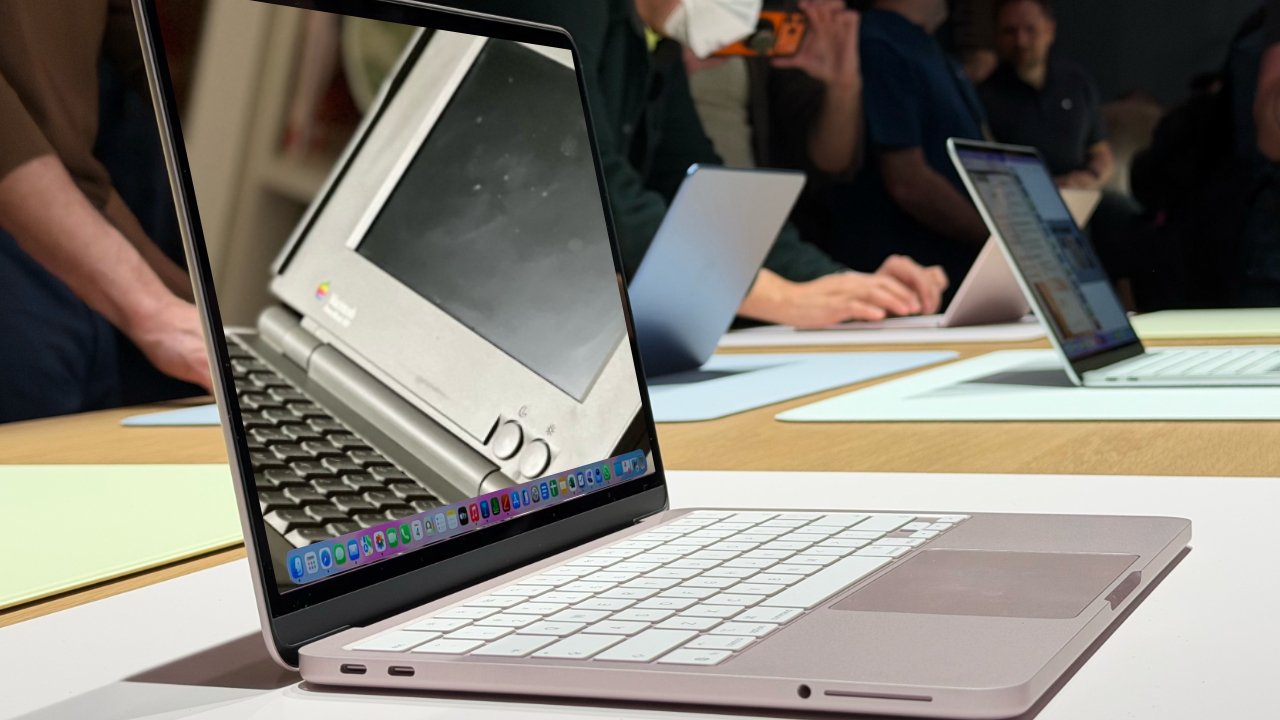
Since the dawn of Apple laptops 35 years ago with the PowerBook 100, it has tried to make some of them affordable, with mixed results. The MacBook Neo finally delivers on that promise and is an excellent balance between features and cost.
It's true that Apple does not have a reputation for making low budget devices, so the MacBook Neo is a departure. But sometimes it seems as if it's not for want of trying that Apple hasn't previously brought out such a good combination of design and cost in a laptop.
Apple's efforts to make such a device don't date all the way back to its first ever portable, well, luggable, but they come close. In 1989, Apple released the Macintosh Portable, which at 16lbs was as heavy as two current Mac Studios. And that weight doesn't even include the wall wart.
It was far from as compact as a Mac Studio, either, so you needed elbow room as well as strong knees. And you also had to be able to spend $7,300 for a hard drive model. This is the equivalent of $19,148 in 2026.
But while that was over 30 times more than the MacBook Neo costs, Apple's second portable attempt was actually a laptop, with one model for the budget-conscious.
Comparatively.
PowerBook 100
In October 1991, Apple launched the PowerBook 100 for $2,500. At $5,970 in 2026's money, that's down to just ten times more than the MacBook Neo.
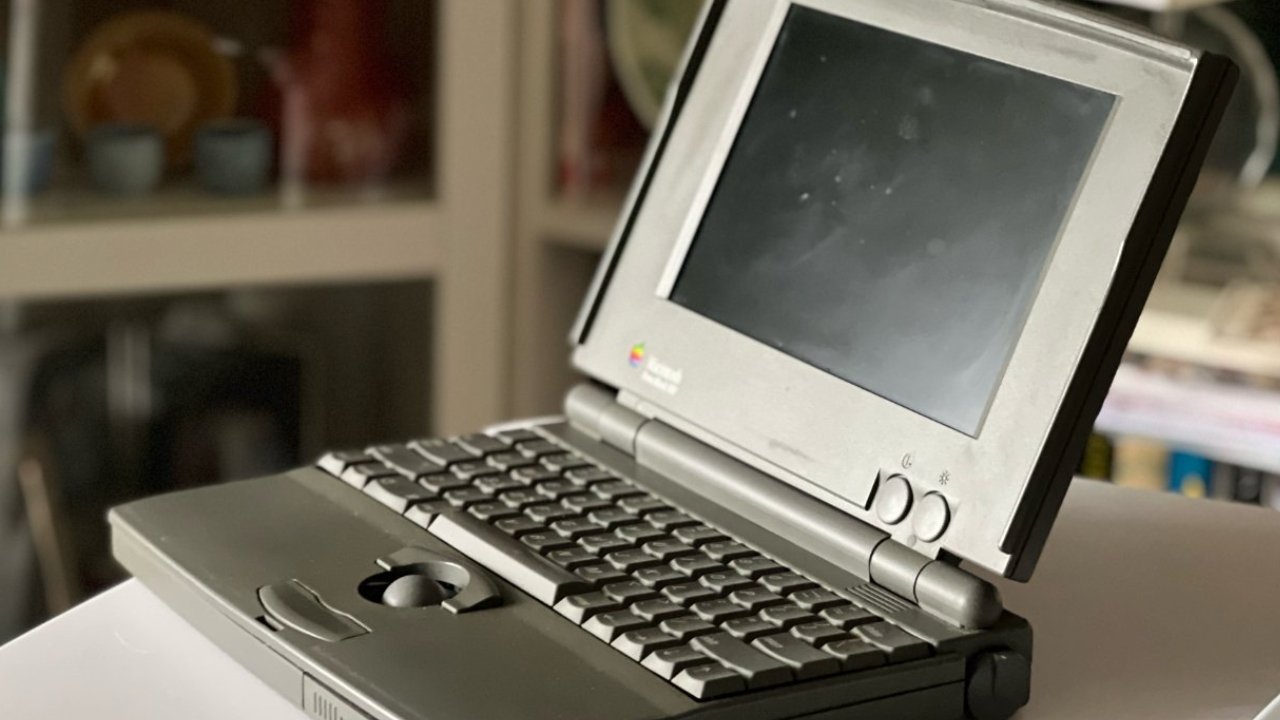
PowerBook 100 from 1991
If you were using Macs at the time, the general consensus was that this PowerBook 100 was going to be the breakout hit of the three PowerBooks Apple released together. It had compromises, such as no built-in floppy drive, but it was seen as cheap, powerful, and portable enough.
As it happens, the much more powerful top of that range PowerBook 170 became the stand-out model. With a built-in floppy and an active matrix screen, it was worth its $4,599 ($10,980 today) — if you could afford it.
PowerBook 150 and PowerBook 520
Apple took a lesson from the success of its most powerful PowerBook 170, and for three years seemingly didn't attempt to hit a low price point again. There was some price movement in the mid-range PowerBook 140, which became the PowerBook 145.
In 1994, though, Apple released two devices that if not exactly budget-priced, were getting ever nearer. In May 1994, there was the PowerBook 520, which launched at $2,270 ($4,982).
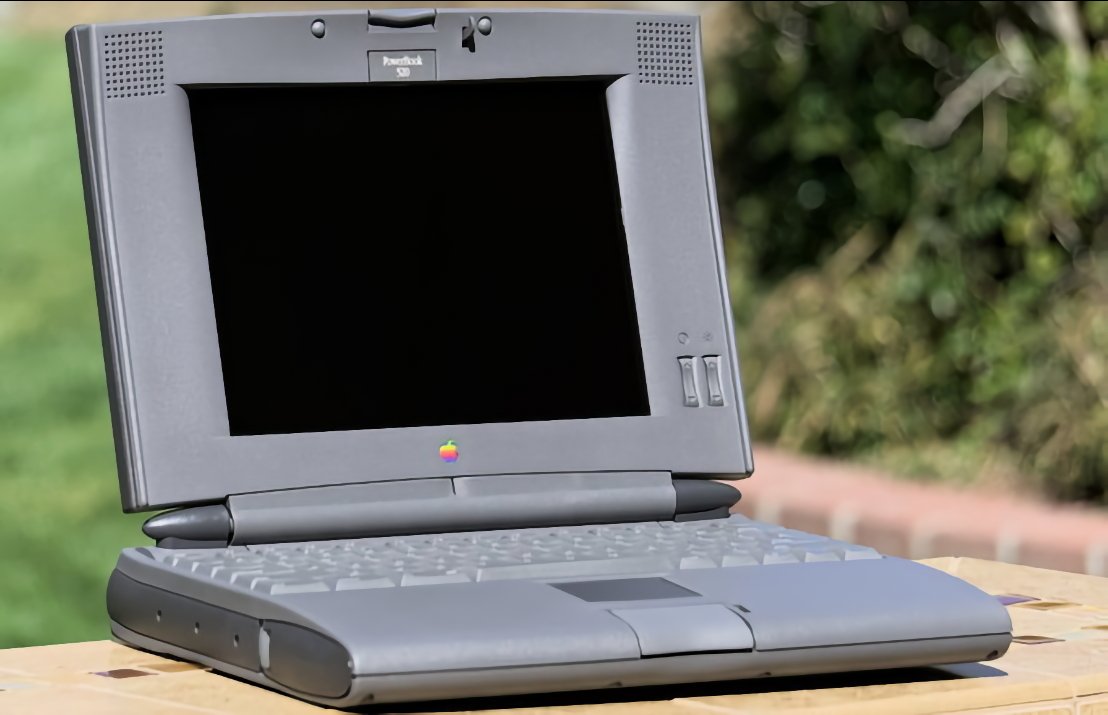
Apple's PowerBook 520 — image credit: Vivaldi Social
This was a significant launch because it was the first PowerBook to have a Motorola 68040 processor. Then all PowerBooks up to this point had a rollerball for cursor control, but the PowerBook 520 had a trackpad.
It was still obviously far from a budget device, but then in July 1994, Apple tried again with the PowerBook 150. This retained the rollerball — it was the last to do so — and was of a much lower specification than the PowerBook 520.
But it was also much lower priced. It started at $1,450, or $3,182 today — just about five times the cost of the MacBook Neo.
PowerBook 1400cs/117
If nothing else, "MacBook Neo" trips off the tongue more readily than "PowerBook 1400cs/117." The slash 117 referred to clock speed of its PowerPC 603e processor, which was also available in 133MHz and 166MHz versions.
Released in October 1996, this was the first PowerBook to optionally include a built-in CD-ROM drive. If you bought it without that drive, it cost $2,495 ($5,172 today).
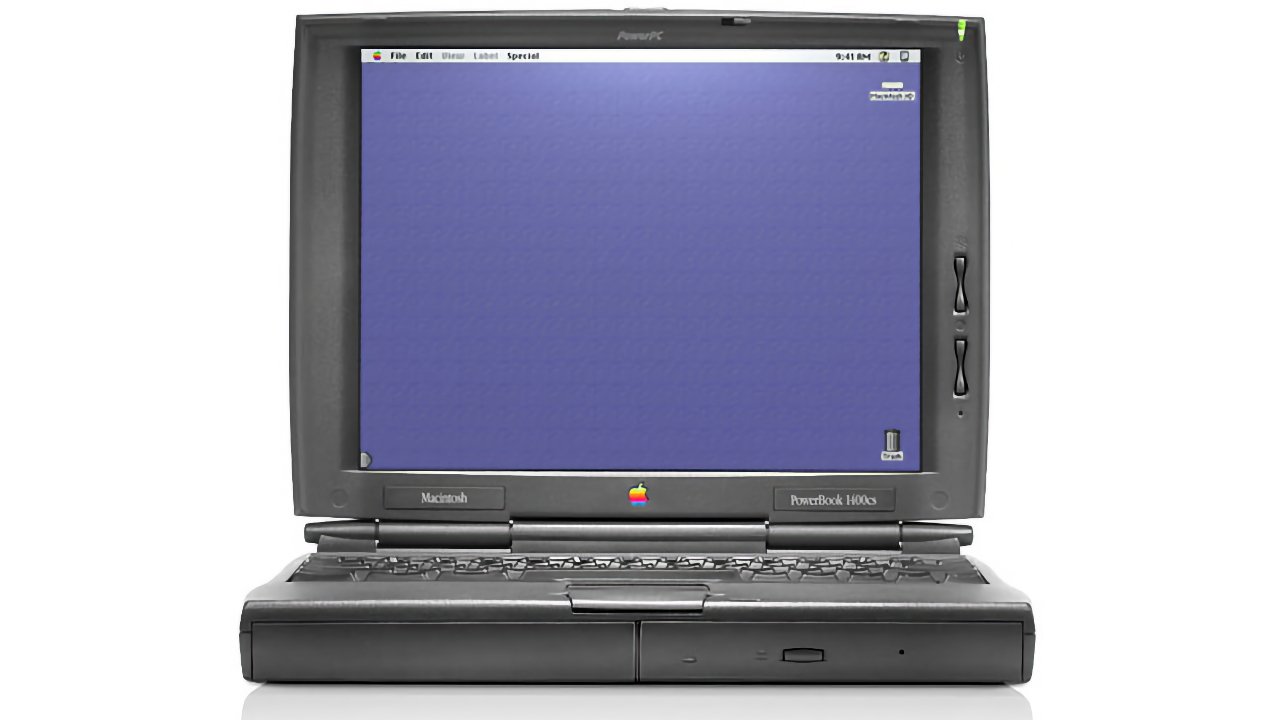
Apple's PowerBook 1400cs — image credit: Low End Mac
That was obviously rather more than the PowerBook 150, by $1,045 ($2,166 today), but it had a color screen. It was a passive matrix display, at the model's lowest price point, so it was slow and muddy compared to other color devices, but at least it was color.
iBook
Another three years trundled on by, but then Apple went for it. The iBook was launched in July 1999 and it was a full-on consumer laptop, designed for budget users and very nearly priced for them, too.
"There's been a lot of speculation about this," said Steve Jobs at the launch, "a lot of rumors, and I get to end them today — we're going to introduce our consumer portable machine."

Jobs went on to say that Apple had asked consumer and education customers just exactly what they wanted in a portable. "We listened very carefully, and when you added it all up," he continued, "what they wanted was an iMac to go."
That's what they got — the iBook was an iMac with fewer ports, but a handle, and the same bright colors. It started at $1,599. This is $3,122 in 2026 money.
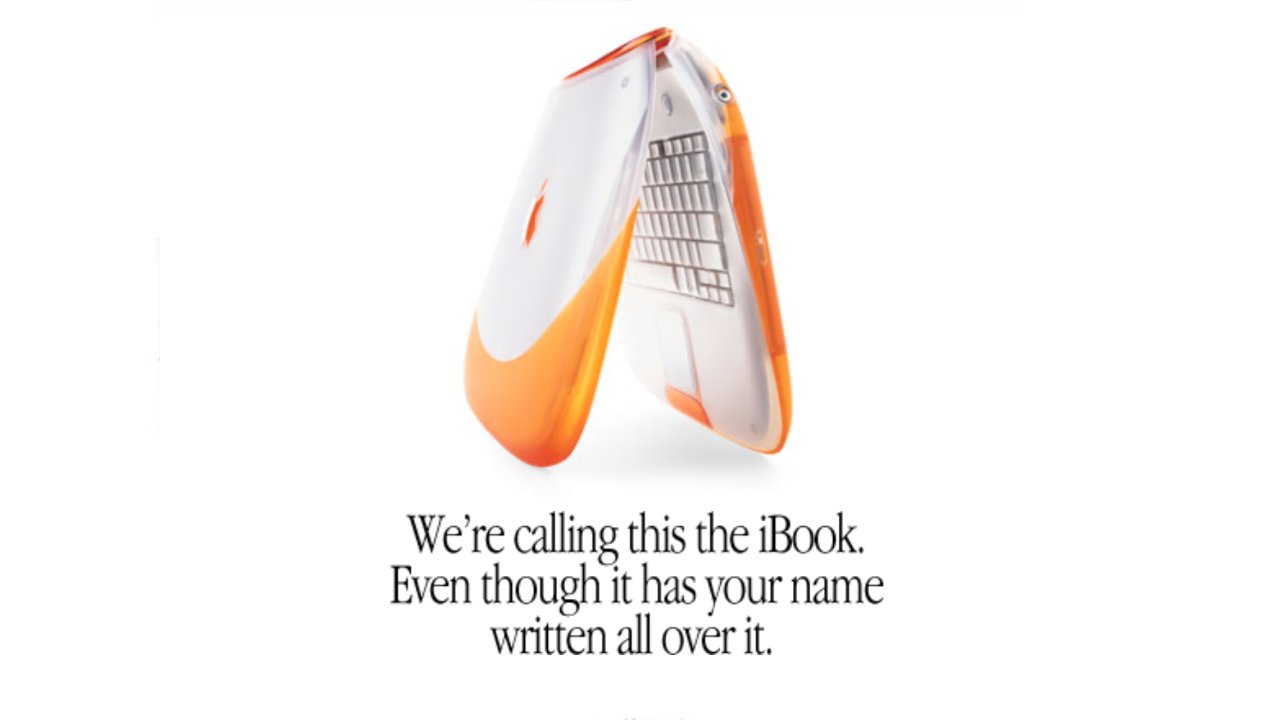
How Apple advertised the first iBook in 1999 — image credit: Apple
The iBook was a smash hit for Apple, and it also popularized something no one could imagine being without today. It popularized Wi-Fi.
MacBook (2006)
That iBook went through many revisions and updates, and really was Apple's attempt at a budget device for a good seven years. By 2006, there was a model that started at $999 ($1,612), around three times the cost of the MacBook Neo in today's money.
But then in 2006, Apple took one step back again from budget priced with the MacBook, which started at $1,099 ($1,774). For that, though, you got a device that Apple said was "up to five times faster" than the then-current iBook.
That was because where the iBook was still running on a PowerPC processor, the MacBook used Intel. At the time, it seemed like the future, and it was, until Apple Silicon trounced it in 2020.
On to the MacBook Neo
Six years on, that original MacBook is long gone, but then so is Intel. The new MacBook Neo runs on Apple Silicon, if the iPhone-style A18 Pro instead of the previous M-series Mac processors.
At time of writing, the MacBook Neo is still not out in users' hands and that will be the real test of its worth. But because it's based on a known processor, it is fair to say that it looks exceptional for its price.
Apple is surely never going to go lower than the MacBook Neo's starting price of $599. It has been trying for 35 years, though.
There is no way to accurately or even adequately compare the performance of that 1991 PowerBook 100 to today's MacBook Neo. But the new model is around half the weight of that PowerBook 100, has a screen that's 4 inches bigger — and in color — and costs about a tenth as much.