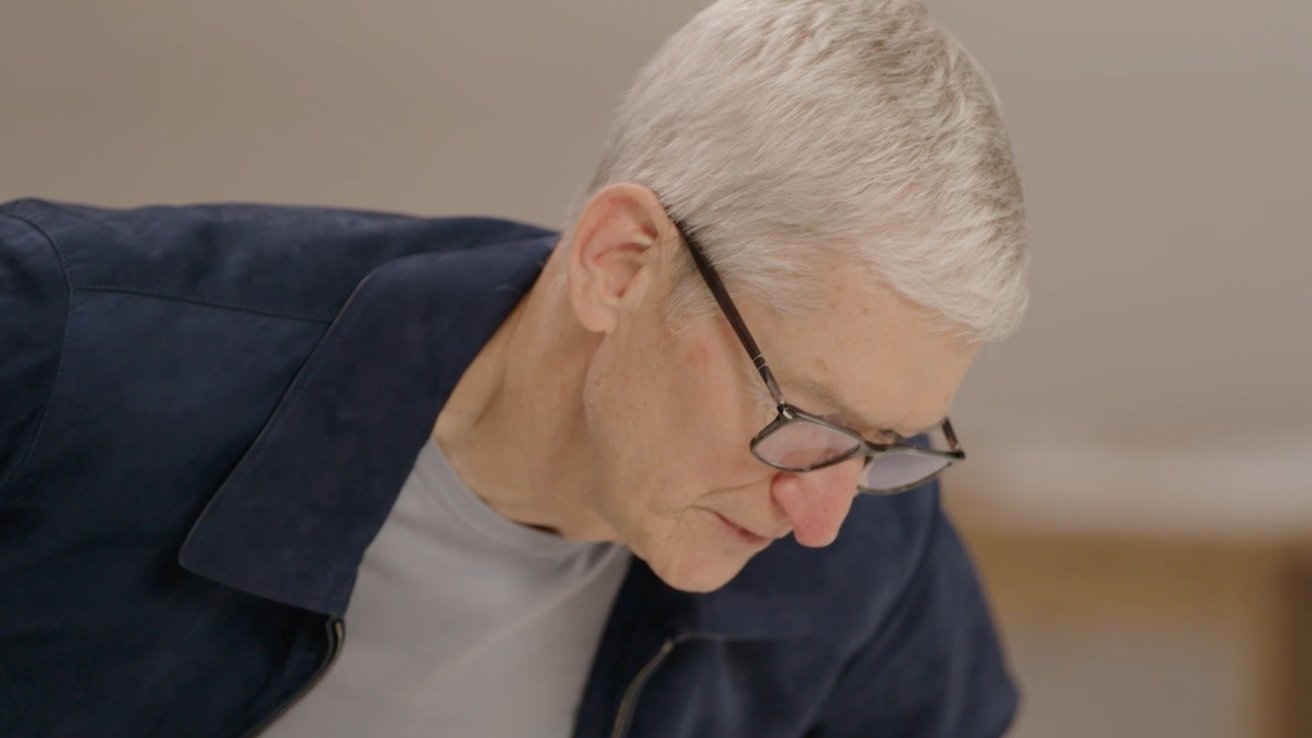
Apple has its own archives of product prototypes and important documents. As part of its 50th celebrations, CEO Tim Cook gave a sneak peek inside Apple's historical vault, including some items he had never seen before.
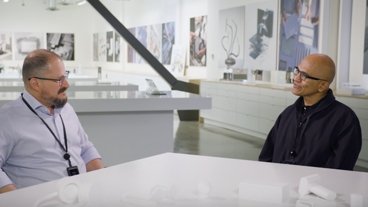
April 1 marks the 50th anniversary of Apple as a company, and the celebration has led to a lot of events and reports on the company. Continuing to mark the occasion, Apple CEO Tim Cook took time out of his schedule to explore the company's archives in an interview.
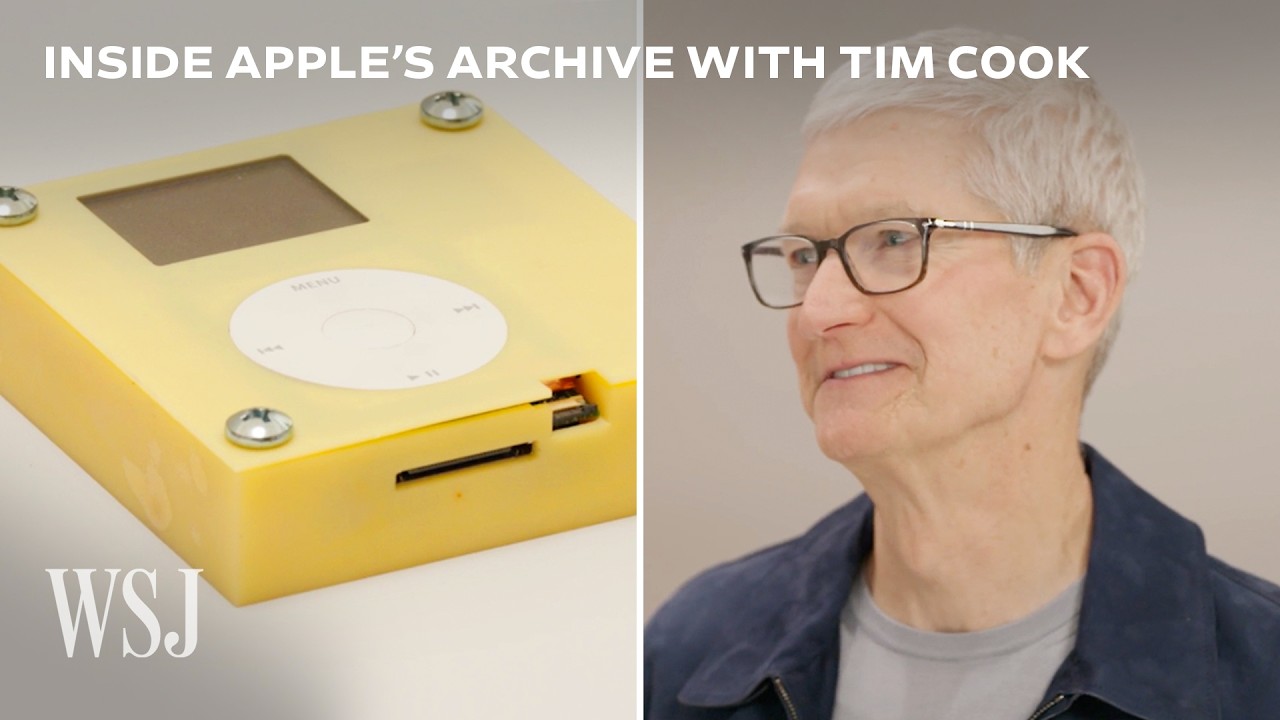
The video, posted by the Wall Street Journal on Wednesday, showed a collection of prototypes, documents, and other materials from the company's history. Some of which Cook admitted he didn't know existed, admitting, "I'm guilty of that."
In explaining why, Cook said that Apple doesn't have a place to display all of the items. For a lot of the items shown in the video, they're items that Cook says he's only seen for the first time, in preparing for the anniversary.
Early history and the iPod
The initial document displayed was the patent for the Apple-II, which Cook believes is the first patent Apple ever filed. Since then, Cook says Apple has filed between 140,000 and 150,000 in the following 50 years.
The original iPod, which came out in 2001, three years after Cook joined the company.
When asked what the iPod was going to mean to Apple, Cook said that he loved it at the time, due to having so many songs in your pocket. This was big to him because he thought it was cool to have a CD changer with five CDs, but to have a thousand songs, it was revolutionary.
As for the first song Cook listened to on an iPod, he thinks it was a Beatles song, probably "Hey Jude."
Accompanying a prototype for the iPod, Cook was asked about whether designing or constructing the supply chain was harder. Both were "very difficult" to cook, as the supply chain at the time wasn't something Apple was known for employing.
While initially sales were gradual, they soon hit 15 million units in three months. To supply for that, Cook says, "you've got to run with precision and quality, and you can't afford a misstep."
Remembering iPhone
Cook then recounted the launch of the iPhone as his favorite moment, as it was a device that the team was all using every day. "We were using that generation's smartphone, and it was such an awful experience," he declares.
All of a sudden, the world had a touch interface, "and it worked like your mind worked," he continued.
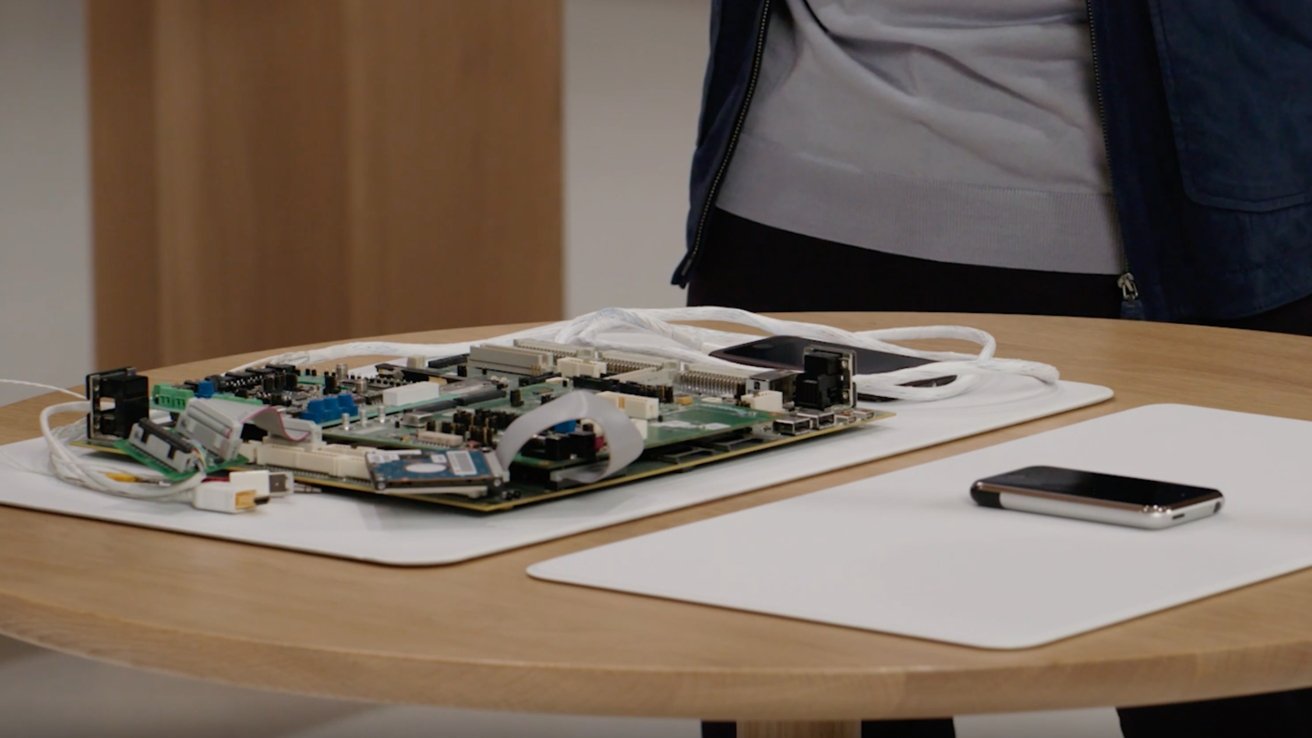
A prototype board for the original iPhone - Image Credit: Wall Street Journal
Presented with the original prototype board for the iPhone, which dwarfs the final design in size, he explains that it was made because you first had to show it would work.
On whether he initially thought that Apple would sell billions of iPhones on first seeing the product, Cook admits he doubted it. "I think iPhone surprised probably everyone. Including me."
He reminisces on the original device being easily scratched in a pocket, which Steve Jobs then declared would be fixed by applying glass to the device. Cook describes it as a man-on-the-moon project to get done within six months.
Cook also deftly avoids a follow-up question asking about what Apple's most important failure was. Instead of specifying, he goes into there having been many, with each a chance to learn something that didn't work.
Instead, engineers put their heads down and moved on to the next thing.
Apple Watch and the future
Shown a prototype of the Apple Watch powered by the iPhone, including one worn by Cook on-stage, he is asked about what changed between the slow start and the now-success of the wearable.
Cook instead says that devices are only overnight successes in reverse, and that neither the iPod, iPhone, nor Apple Watch counted as such. Instead, it was a matter of "continuing innovation" by adding more features to the Apple Watch.
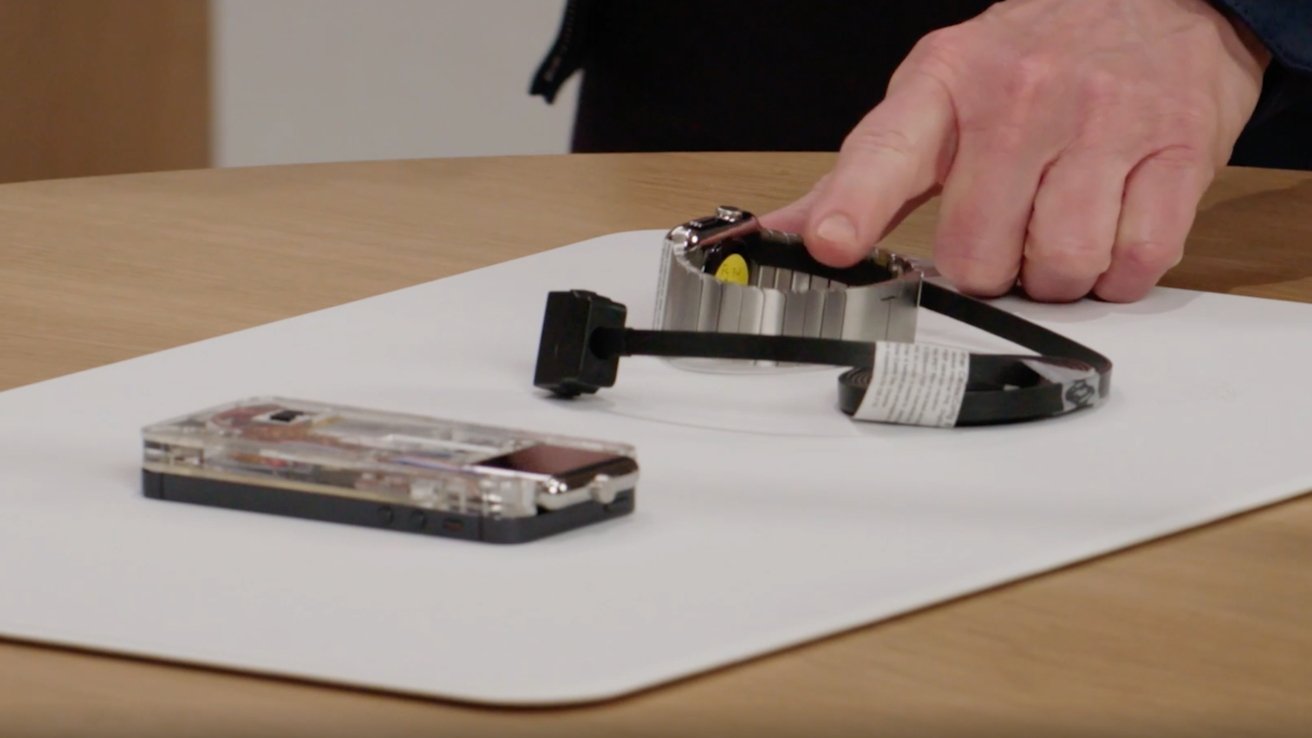
An Apple Watch prototype worn on stage by Tim Cook - Image Credit: Wall Street Journal
When pressed for what would be the next big Apple product in 10 years, Cook says it will be at the intersection of hardware, software, and services. "We like to own the full user experience," he continued.
As interviewer Ben Cohen tries to get a hint about Apple Glass, Cook laughs and says, "You can't have a ship that leaks from the top."
The Wall Street Journal pulled its own "one more thing" at the end of the meeting, bringing out the very first mention of Apple Computer Inc. in the publication.
The 16th paragraph of a story on page 40 in a 1978 edition, about investors looking into a product known as a "personal computer."
On the meteoric growth from that early start, Cook says it sends a chill up his spine thinking about it.
"The gratitude I feel for the 50th, after a lot of reflection on it, isn't about one thing in particular," Cook concludes. "I am very grateful for everyone who's been on the journey."