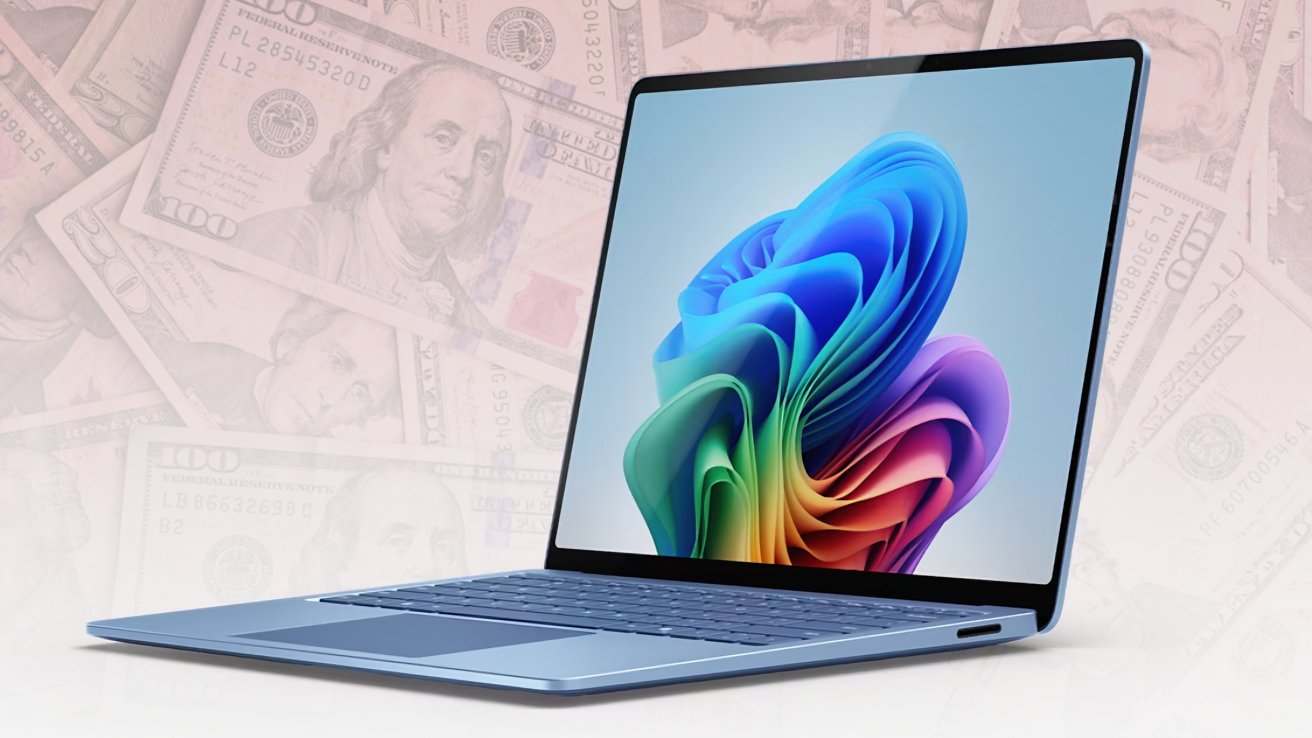
Microsoft is feeling the sting of incredible RAM price hikes, and is now compensating by increasing the cost of Surface products by hundreds of dollars. If these market conditions and AI-driven shortages persist, expect Apple to do the same.
The global RAM and flash storage caused by the demands of AI infrastructure build-outs and a slow scaling up of chip production has led to memory prices rising considerably in 2026. While the bulk of our reporting has been how Apple has been handling the situation, other companies are starting to show how bad things are actually getting.
The Microsoft Surface line is the natural Windows-based competitor to the MacBook lineup, However, months after launch, Microsoft has raised the prices of its notebooks by a considerable level.
Depending on the model, the change in price is as high as $500 compared to a comparative version launched in 2024.
A Microsoft spokesperson told Windows Central that Microsoft is updating pricing on its website for the Surface line due to "recent increases in memory and component costs." They added that Microsoft was still committed to upholding standards and "delivering value to consumers."
Massive inflation
The price rises are shocking when looking at prices across the last two years. For example, the flagship 13-inch Surface Pro with Snapdragon X Plus, 16GB of memory and 256GB of storage started from $999 in 2024.
While it rose to $1,199 in 2025, the starting price for the base configuration is now $1,499.
That's a 50% increase in two years for the same model.
It's not just the flagships. The Surface Pro 12-inch was the budget option in 2025, priced starting at $799. Just one year later, the price has shot up $250 to $1,049.
The effect is being felt across the board, with all models costing more. This also includes opting for high-specification configurations, with those prices also being considerably more expensive than they did before.
A warning for Apple
While Microsoft has become the latest company to give in to the stratospheric cost of memory and storage, Apple has so far held off from doing the same. At least, partially.
Apple's March update to the M5 Pro and Max MacBook Pro did include a slight change in configuration for another model. It removed the 512GB option from the base 14-inch MacBook Pro with M5. This meant the range started with 1TB of storage, with options for 2TB and 4TB available.
This stealth update raised the cost of the cheapest M5 MacBook Pro from $1,599 to $1,699. However, it was still a compromise on Apple's side, as it was $100 cheaper than paying the previously-available $200 upgrade fee to move from 512GB of capacity to 1TB.
Apple didn't give an official explanation for the change at the time. They never do.
The reason is because of RAM and flash chip market forces. Price is high, because supply is low. That's all because of AI-driven demand, and it will take years for the industry to catch up production, if it can at all.
So far, agreements with the supply chain have insulated Apple from being too badly affected by memory cost increases, and it has yet to be passed down to consumers.
Even so, it is under intense pressure to pay more to maintain supplies of its products to consumers. It's an untenable situation, and at some point it will not be possible for Apple to justify maintaining its current prices.
Microsoft's Surface price rises are a good example of what to expect when a company eventually gives in and raises prices to match. We just don't know when that will happen to Apple.
Until then, the rises affecting the rest of the industry is making Apple seem better value. Especially the $599 MacBook Neo.
Though if Microsoft's move is a sign of what's to come, that could soon become $799 or worse.