Apple's Mac shipments outpaced the PC market in the first quarter of 2026, but the growth reflects a mix of product timing and industry-wide pressure rather than a clean demand rebound.
In the first quarter of 2026, global PC shipments hit 63.3 million units, marking a 3.2% increase compared to 2025. The rise was driven by consumers and businesses rushing to buy PCs before anticipated memory price hikes.
Additionally, the large number of existing Windows 10 systems prompted many to upgrade, affecting both the consumer and commercial sectors.
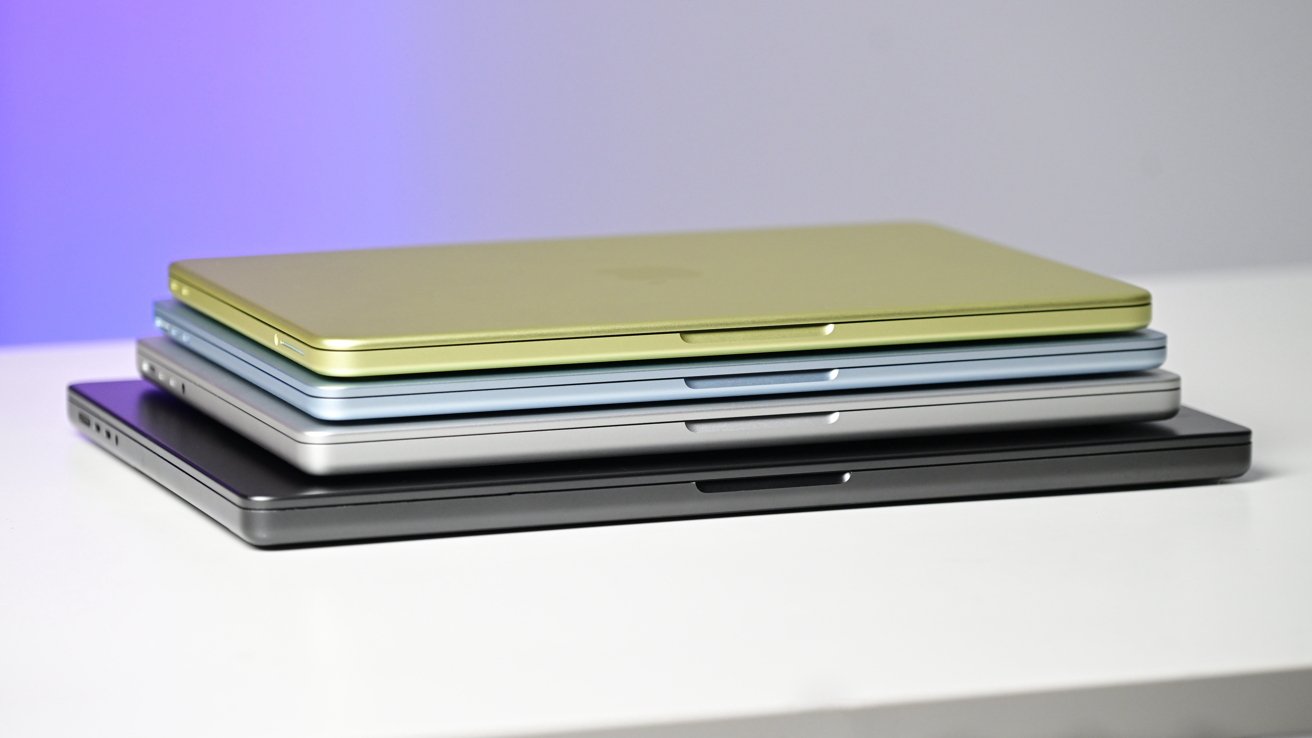
Apple grew faster than that baseline, with Mac shipments increasing 11% to 6.7 million units. New MacBook models began shipping in March, concentrating sales into the quarter and lifting Apple's year-over-year comparison.
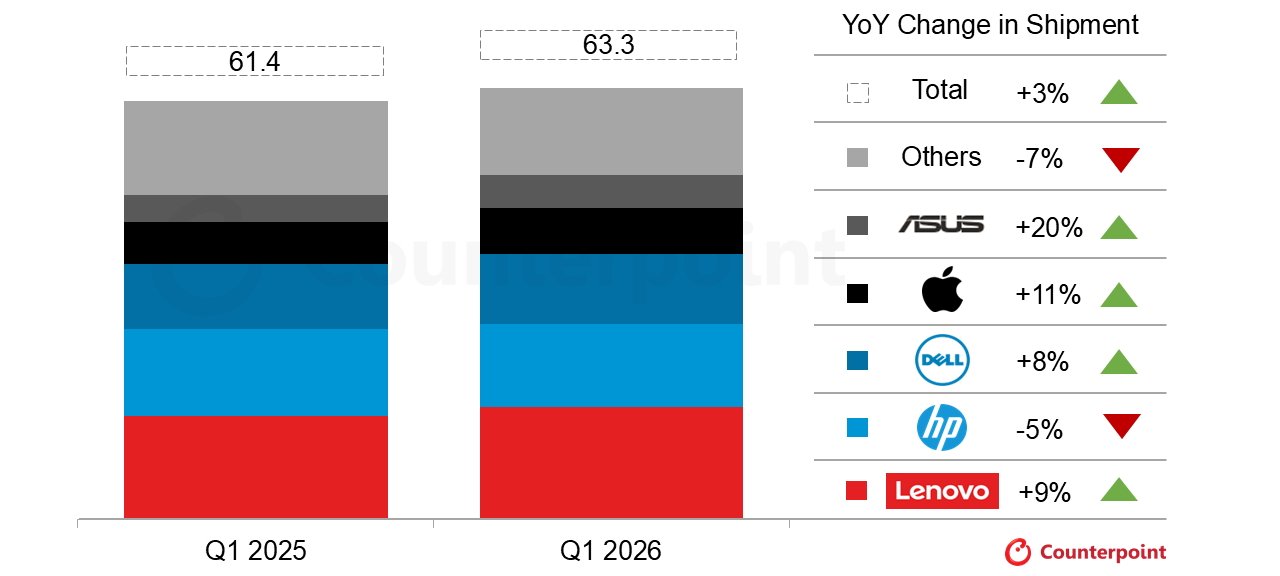
In the first quarter of 2026, global PC shipments hit 63.3 million units, marking a 3.2% increase compared to 2025. Image credit: Counterpoint Research
Early 2026 demand reflects structural distortions across the entire PC market. Memory prices surged entering the year and are expected to keep rising, which pushed consumers and businesses to make purchases earlier than planned.
Buyers moved to avoid higher retail costs so as to pull demand forward rather than expanding it. Windows 10's end of support fueled the flames by forcing upgrades that might otherwise have stretched across several quarters.
The overlap with early buying pulled demand into Q1 instead of expanding the market, leaving less momentum for the rest of the year. Apple benefited from both forces, but product timing added a more controlled boost.
MacBook shipments landed late in the quarter and created a clear spike in volume that lifts the headline number. Sales that would normally spread across multiple quarters instead concentrated into Q1, tightening the window of demand.
The result looks like momentum, but the underlying signal is weaker. Growth reflects when people bought, not a meaningful increase in how many people intend to buy.
Rising costs are reshaping the PC market
Counterpoint's data points to a deeper shift happening under the surface. Memory prices nearly doubled quarter over quarter entering 2026, and component costs are rising alongside continued investment in AI infrastructure.
Higher costs are changing how PC vendors operate, with low-margin systems becoming harder to sustain as component prices rise. Profitability now depends more on moving customers toward midrange and premium devices where pricing power is stronger.
The report makes that point directly, noting that OEMs will need to pivot away from low-end volume and toward more sustainable higher-margin portfolios.
Apple doesn't need to make that transition. The Mac lineup already sits at the premium end of the market, with higher average selling prices and less reliance on entry-level volume than traditional Windows OEMs.
Vendors relying on low-end scale are feeling the heat as costs increase and volumes shrink. Meanwhile, companies focused on high-end systems are more protected from these challenges.
Apple's advantage shows up as the cycle tightens
Mac demand tends to follow clearer product cycles than the PC market. New hardware creates defined upgrade moments that pull buyers in around launches.
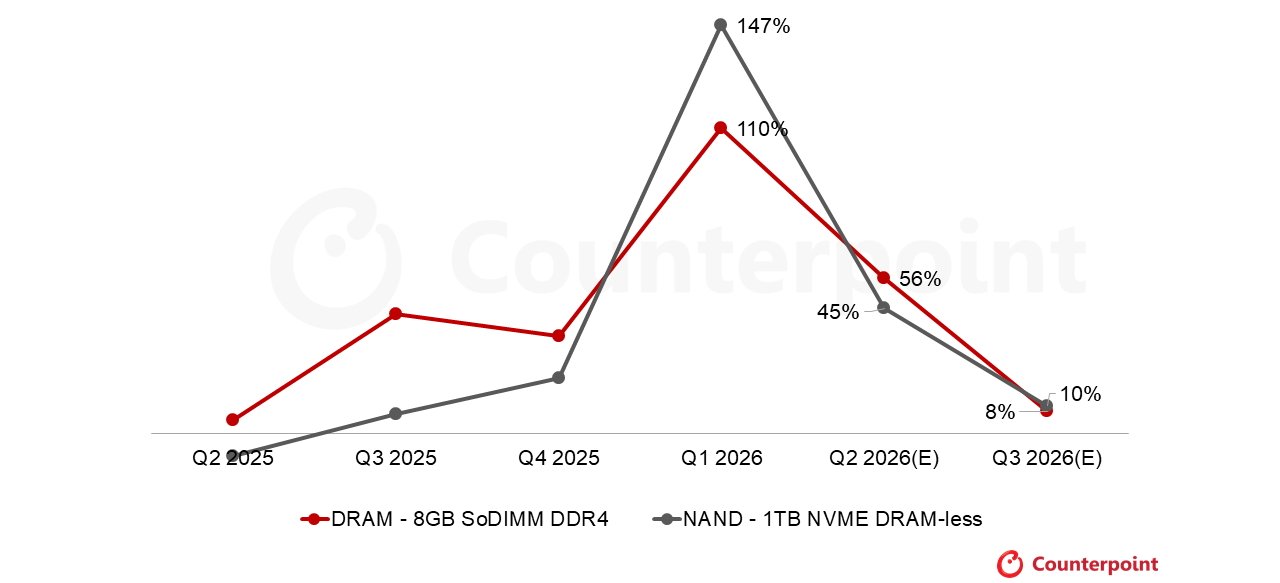
Quarter-over-quarter PC memory price trends, Q2 2025 through Q3 2026. Image credit: Counterpoint Research
The Windows ecosystem leans more on external triggers like operating system deadlines or pricing shifts. As the market slows down, the difference between the current and expected prices becomes more significant.
Counterpoint anticipates that higher prices will impact shipments later in 2026, as the current surge in purchases subsides and demand stabilizes after the Windows 10 transition.
Apple is unlikely to avoid that slowdown entirely, since higher prices and a pulled-forward cycle affect all buyers. A shrinking or flat market still limits how much any vendor can grow in absolute terms.
The company's model holds up better under those conditions. A focus on premium hardware and tighter integration with Apple Silicon gives the company more control over demand.
A more predictable upgrade cadence also sets Apple apart from competitors that rely on broad volume at lower price points. Mac growth in Q1 looks strong on the surface, but the more important signal runs deeper.
The PC market is becoming smaller, more expensive, and more selective as costs rise and demand tightens. Those conditions align more closely with Apple's strengths than with the legacy volume model that has defined the industry for decades.