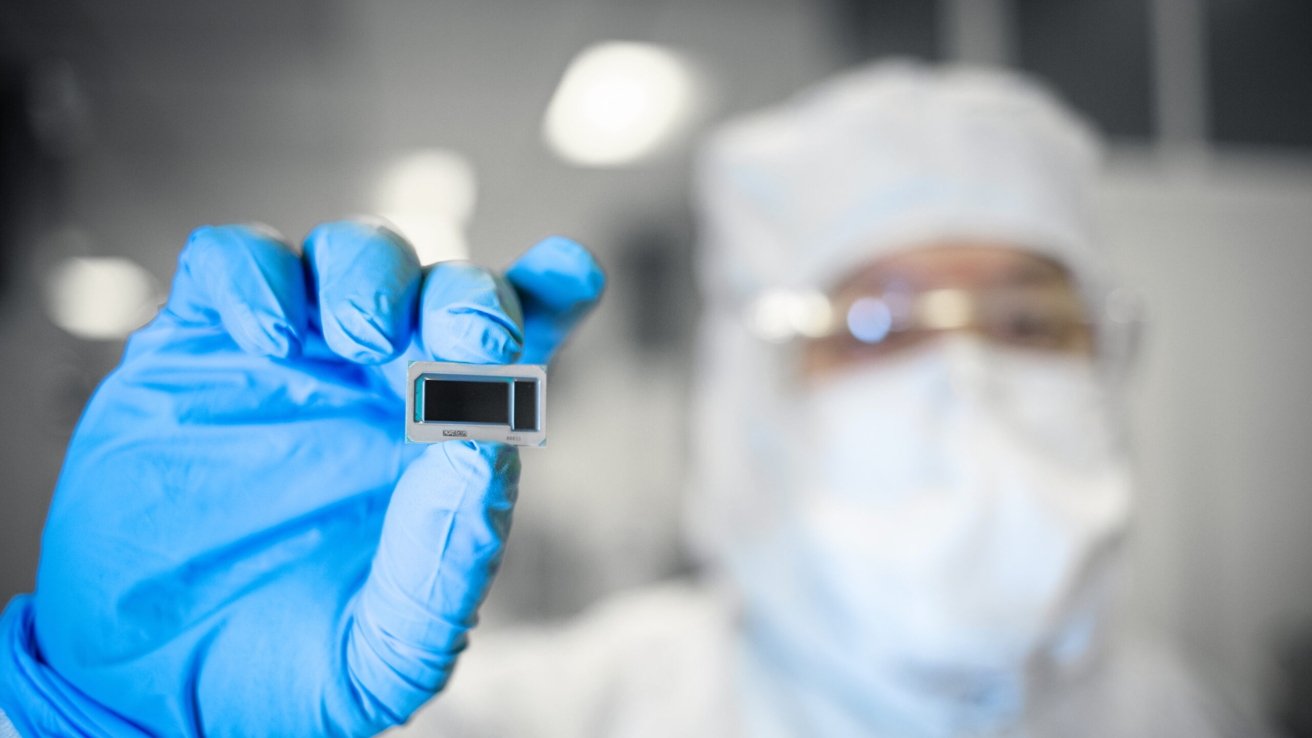
Apple has reportedly reached a preliminary agreement that will see Intel become a chipmaking partner, helping reduce the company's reliance on TSMC for Mac chips and more.
Reports had earlier suggested that the two companies were discussing a deal that would help Apple diversify its supply chain. Now, the pair are closer than ever to manufacturing some of Apple's chips in the United States.
According to a report Wall Street Journal on Friday, the two companies have been in discussions about the project for more than a year. Significant progress has been made in recent months, however.
It's currently unclear which Apple devices Intel will produce chips for, however. A report from late 2025 suggested that Apple intended for Intel to produce M-series chips destined for the Mac and iPad lineups.
Trump steps in
The WSJ report notes that Apple's decision to use Intel comes after President Trump personally advocated for the move. Trump has pushed for more U.S.-based manufacturing of Apple components, and the company has pledged to spend $400 million to make that happen.
The U.S. government previously signed a deal to effectively buy a $9 billion, 10% stake in Intel. Since then, it's been keen for companies to use Intel wherever possible.
Apple joins Nvidia in giving Intel new business. Nvidia invested $5 billion in Intel in September 2025, with the latter building custom data center CPUs.
Apple currently relies heavily on TSMC to produce the chips for its iPhones, iPads, Macs, Apple Watches, and more. However, manufacturing capacity and Apple's reliance on a single chipmaker has caused issues of late.
Apple was caught flat-footed by the popularity of the MacBook Neo. A recent boom in Mac mini and Mac Studio popularity has also seen both products become increasingly difficult to buy.
As demand for high-performance chips continues to grow, deals like the one Apple appears to be signing with Intel become increasingly important. As the AI boom requires more silicon than ever, having two companies producing your chips is surely better than one.
Even before Trump's push to bring manufacturing to the U.S., Apple was aware of its need to divest its supply chain. As far back as the COVID pandemic, Apple found it relied too heavily on Chinese plants.
Since then, Apple has moved more and more manufacturing to other countries, reducing its reliance on China. Both India and Vietnam have been beneficiaries to date, with the U.S. following suit.