
Apple has announced plans to work with four new companies as part of a 14-year $400 million plan to manufacture more iPhone and other components and materials in the United States.
Dubbed the American Manufacturing Program (AMP), Apple has already been working to move more manufacturing to the United States in recent years. Now, Apple is working with Bosch, Cirrus Logic, TDK, and Qnity Electronics on new programs that will run through 2030.
"At Apple, we believe in the power of American innovation and manufacturing, and we're proud to partner with even more companies to produce critical components and cutting-edge materials for our products right here in the U.S.," Tim Cook, Apple's CEO said via press release.
Apple has already committed to a $600 billion, four-year plan that included some of its most vital manufacturing partners. Amkor, Applied Materials, Broadcom, Coherent, Corning, GlobalFoundries, GlobalWafers America, MP Materials, Samsung, and Texas Instruments were all already on board.
Like the last two announcements, this announcement covers manufacturing partners that Apple has either already supported, or have been Apple partners for some time.
Breaking it down
Apple's press release detailed exactly what its partners will produce as part of the program. TDK, a company Apple has worked with for three decades, will manufacture sensors in the country for the first time, for example.
Bosch and TSMC will work to produce integrated circuits at the latter's Camas, Washington, facility. Bosch's components are vital aspects of life-saving features like the iPhone's Crash Detection.
Cirrus Logic and GlobalFoundries are working on new semiconductor process technologies at a facility in Malta, New York. The resulting components will power Apple's popular Face ID systems, a key feature for iPhones and iPads.
Qnity Electronics and HD MicroSystems will be responsible for the materials and technologies that are used to manufacture semiconductors. Apple believes this continuing partnership will be an important one for its AI efforts moving forward.
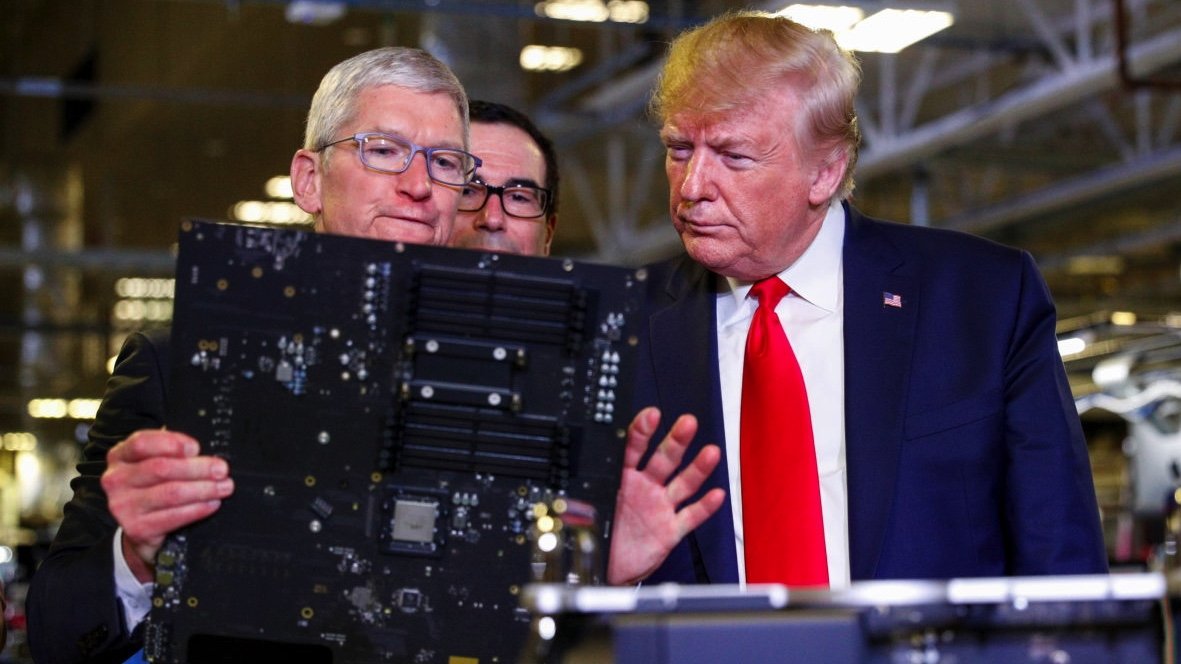
Apple has long worked to reduce its reliance on international manufacturing. The company is already working to produce the Mac mini on home soil, and has been producing the Mac Pro in Texas for about 18 years.
Apple has so far benefited from exemptions to the tariffs that have sought to incentivize businesses to manufacture their wares on U.S. soil.