Google I/O is always like a little amateur dramatics show, but this year the company could have boasted about making Apple rely on its Gemini. It just totally failed to do so.
Today the word "claptrap" is used to mean that someone is talking rubbish, but originally it was a theatrical term. It meant the bit in a show where the dancer or actor pauses in just such a way that the audience knows to applaud.
This year's Google I/O seemed to have quite a bit of the modern meaning of claptrap. But, painfully, it also lacked the original one as, over and over again, presenters paused for applause that just did not come.
Sometimes it was like there was a satellite delay between the stage and the audience sitting right in front of it. If you've ever presented on stage, you felt the agony of this one so often and so acutely.
And that's despite the fact that, presumably, the Google I/O audience in there were like the ones Apple lets in to WWDC. At the very least, they know this stuff, they use it, and they're more likely to be fans.
If you can't get your fans to applaud, you are never going to get everyone else to.
Google fans sound off
If you're in Google's PR department and have to produce a report about how great everyone thought this year's conference was, you actually have plenty of material. Across social media, there are countless examples of fans who thought what was announced is very promising.
But there seemed to be more of a backlash this time, too.
Did you know that if you don't mention AI every 3.7 seconds at Google I/O, security rushes in and escorts you off the stage? https://t.co/v37s9E2G3y#googleio #google pic.twitter.com/tA1Hry1gWP
— Artem Russakovskii (@ArtemR) May 20, 2026
"Anyone else depressed after watching?" wrote a user on Reddit. "I can't put it into words as to why, but it makes me repulsed at technology even though a lot of what they presented is really impressive. I've always been an early adopter, but I feel so confused and lost."
Again, there were many who liked what Google says is coming later, but there was this negativity even amongst people who describe themselves as fans.
But then one striking element of this year's Google I/O is that it felt as if Google did not try to impress anyone outside its own sphere. Just as Apple's WWDC is, Google I/O is a developer conference, but Apple knows that developers are users too.
Plus Apple knows that its opening WWDC keynote is an opportunity to speak to regular users too. Google somehow expects the opposite, that people will just watch it anyway because AI is so good.
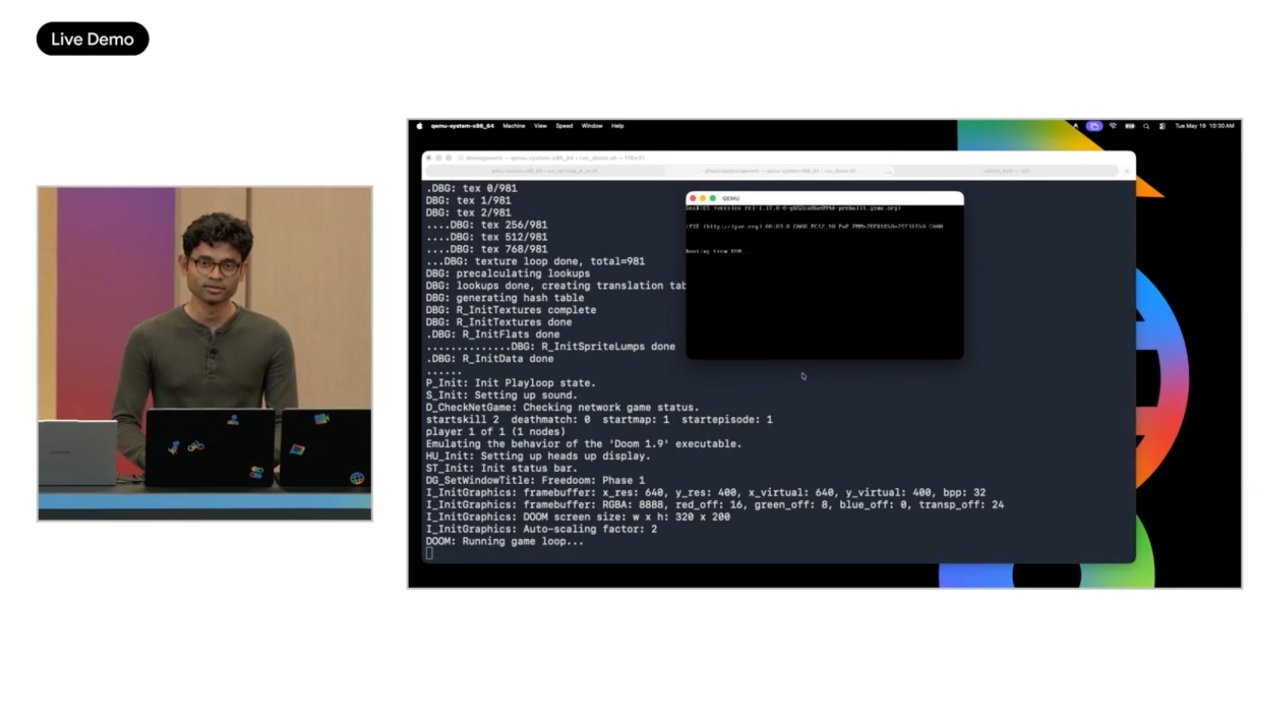
Imagine Apple's Craig Federighi or Phil Schiller present this as a great new feature - image credit: Google
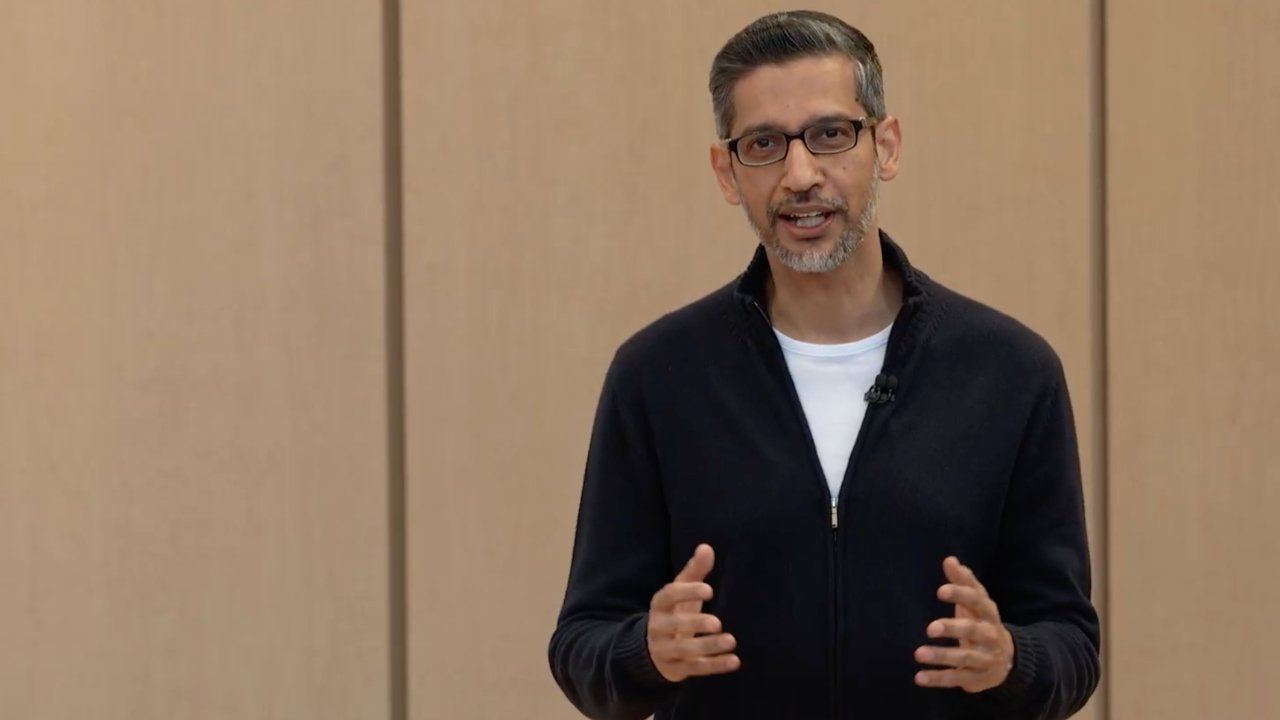
So demonstrations showed command-line instructions, and constantly there were statistics to do with the number of AI tokens used. The numbers were in the quadrillions and CEO Sundar Pichai was very proud of them.
Yet these numbers are meaningless if you're a user, and possibly not a great deal more meaningful if you're a developer.
In the UK, the Royal Mail currently has an ad campaign where it boasts of how it has delivered something like one billion parcels. It is irresistible: you want to ask "out of how many?"
Similarly, when Pichai boasted that monthly AI token use has risen to around 480 trillion, you wanted to ask how many of those tokens were used by people saying "no, that response is wrong, do it again."
Putting on a show
Every year, Google puts out its I/O conference just ahead of Apple's WWDC, and that's unlikely to be a chance. This is where Google can show that it is better than Apple, or where if it's the same, Apple's later announcements will fall flat.
Both companies put on big shows. If now Apple prefers to pre-record its ones and Google likes a live presentation, Google went big with an open-air stage like the Glastonbury music festival, although if you blinked at the start and the end, you would entirely miss that.
Aside from one panning zoom at the start and another at the end, Google I/O played out as if it were in just another conference center. Apple never took its stage presentations outdoors, but now it obeys the obvious mandate of every production: if you have a great location, you show it.
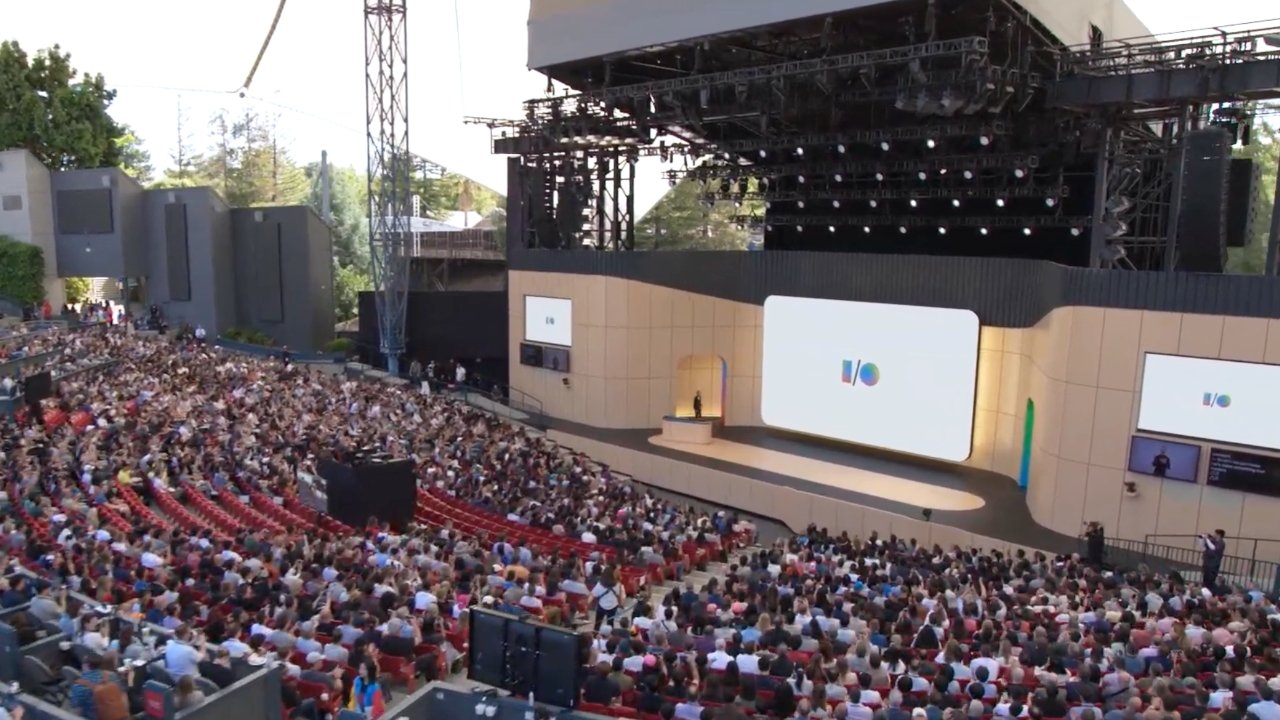
It was genuinely head-jolting at the end as the camera pulled out of a dull conference stage to reveal this open-air venue - image credit: Google
Technically, structurally, and even dramatically, Apple's video presentations are as exceptionally well done as any business's conferences could be.
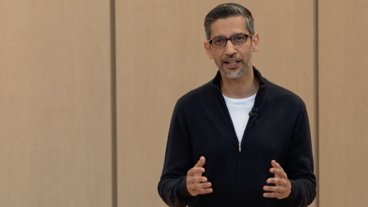
Google's in-person shows are shockingly amateur. Sundar Pichai has to look down to check that he's standing on his mark, for instance, rather than knowing it from rehearsals. And if you're the master of ceremonies, you really should stick around to the end.
Yet compared to Apple's old live presentations, Google's is frustratingly static. It's a live show in front of a live audience, but it pays vastly more attention to a screen between the presenters.
Just as a production, Apple's WWDC is better made. But then you can use a slick presentation to hide that you don't have much to say.
Google I/O didn't seem to have a great deal to announce, and most of it is coming at some unspecified later time, but it also just didn't convince. Right now you can muster all of the arguments against, say, the iPhone Fold, but you know for certain that Apple will make a really convincing case for why everybody needs one.
Google couldn't seem to do that, although it was also hampered by its previous announcements. It tried to simultaneously claim great success last year, and greater things to come.
So, for instance, there was a boast that Google introduced its AI Mode in 2025 and that this was in some way fantastic.
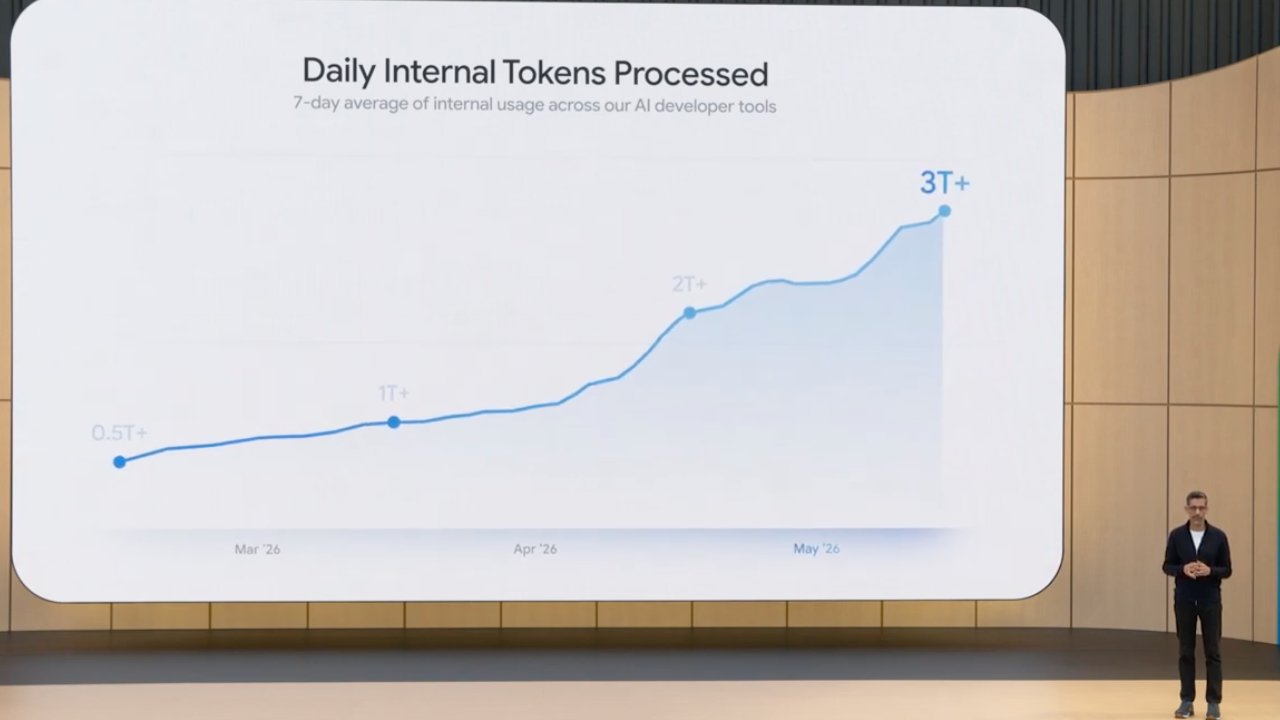
Take that, Apple. Whatever it is. Image credit: Google
It's not as if you expect Google to admit on stage that its AI summaries are wrong a shocking amount of the time. But knowing this colored the announcement of it being upgraded to use Gemini 3.5.
That announcement was another agonizing wait for expected applause, but at least the applause came. If you didn't applaud, though, it would be because telling us it's using Gemini 3.5 is pointless.
Apple would not say it was upgrading Siri to Siri 2.0. It does say it's announcing, for instance, iOS 27, but it doesn't stop for applause there, it doesn't expect the number to be a claptrap.
Instead, Apple always focuses on what users can do with whatever is new. The technology takes a back seat to the use case, the purpose, the point.
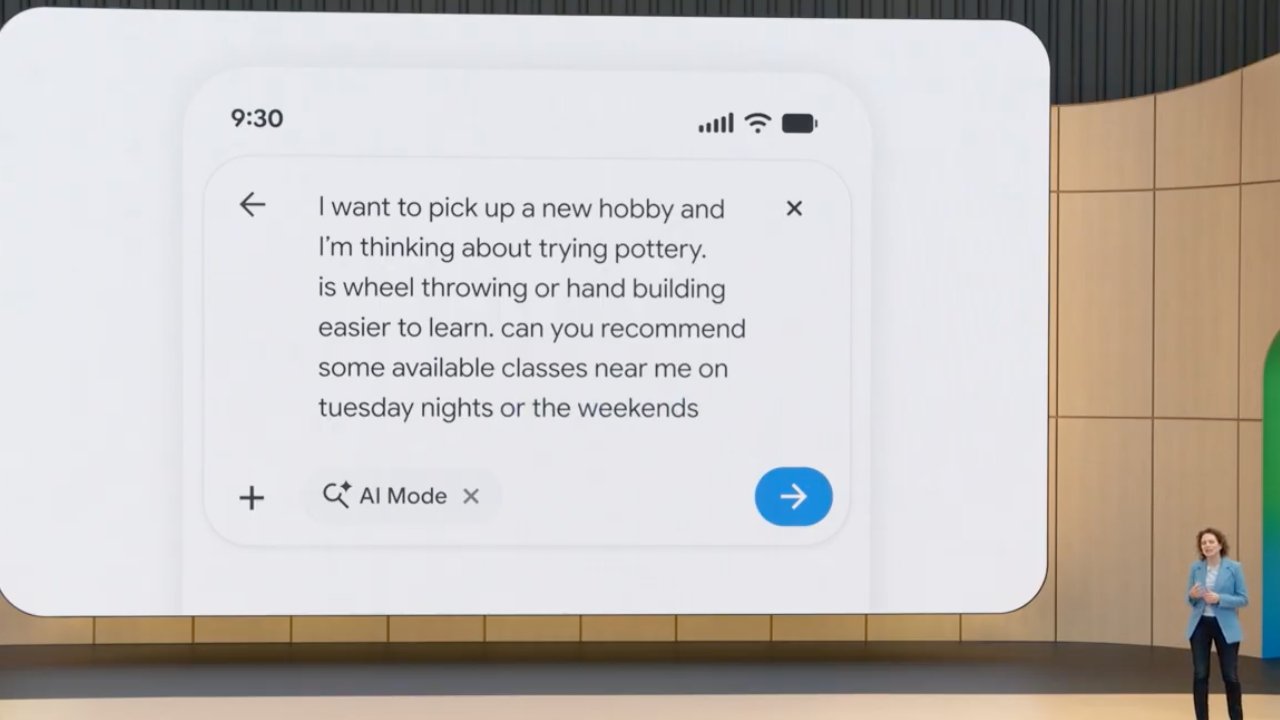
Google calls this a radical AI-based redesign of search. You might call it a bigger box. Image credit: Google
But then, some of Google's vaunted technology announcements didn't seem to amount to much. For instance, instead of a search box on Google's website, you have a search box on Google's website that grows and autocompletes what you're typing.
That was the "brand-new intelligence Search box" which was "totally reimagined with AI."
AI, AI, oh
Speaking of AI, Google did nothing but speak of AI. The difference this time was that it tended to be about agentic AI, as in AI that performs more like AI was always said to.
AI agents can perform tasks that take multiple steps, which Google winningly calls "long horizon tasks." And if it's another case of fine, show us in real life, at least The Verge was convinced.
There's a supercut of the event on YouTube which solely shows every mention of the term "AI." It's about a minute long and by the end you want to cover your ears to shut out this sound and fury.
"I get the sense that Google is either intentionally ignoring, or somehow oblivious to the pushback AI as a whole has been receiving lately," wrote a user on Reddit, "because they sure seemed to think everyone would be a lot more excited for all this stuff they just announced."
Today "AI" is Google's go-to term for absolutely anything, because "AI" is surely the hot phrase that everyone is in awe of. We're past that now, though, and it feels as if Google is desperately trying to convince us that AI works.
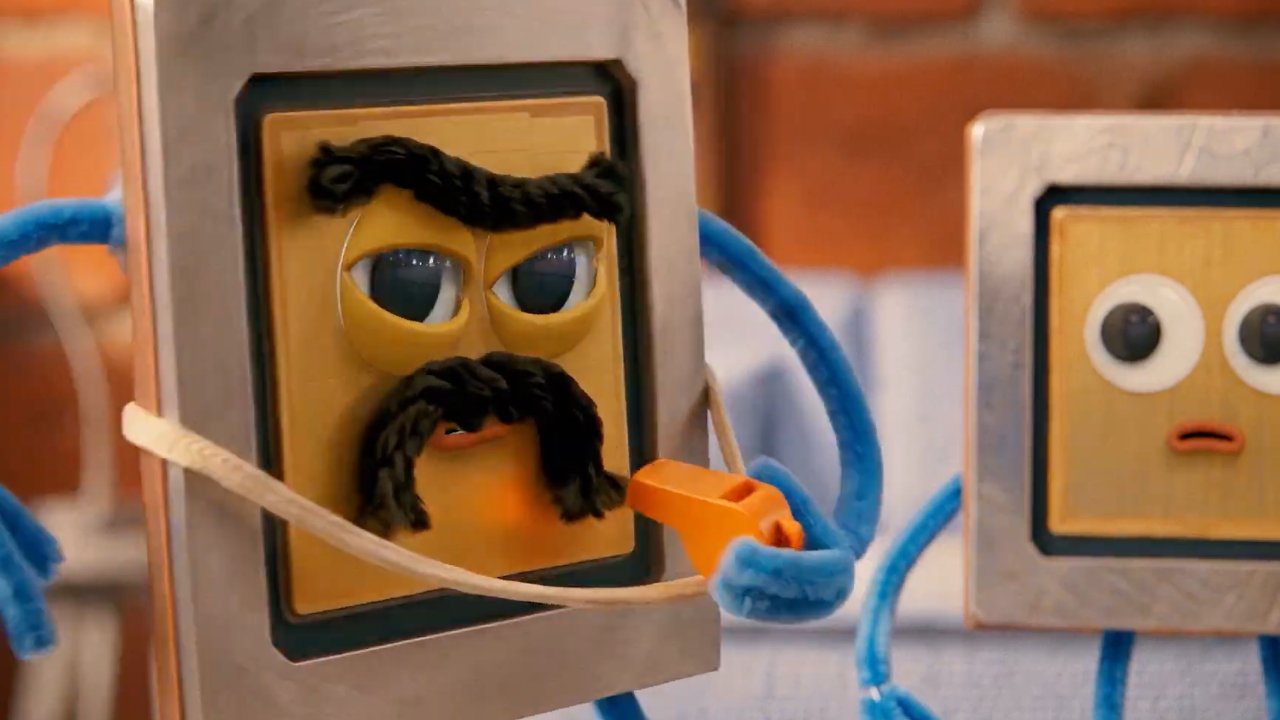
Google avoided saying that its hopefully cute video was or was not made with AI - image credit: Google
It actually does, in so many specific cases, but Google presents it as perfect and it makes everything seem false since we're no longer buying this particular brand of snake oil. Not without actual evidence of it being useful for things we will actually do.
Apple screwed up by showing off that Apple Intelligence feature where a woman asks Siri where she met someone before. But the screw-up was in how it failed to deliver this, Apple wasn't at all wrong in how it was trying to sell AI to us.
Instead, Apple was spot-on right that this is precisely what can make us interested in AI. You saw that feature and you said yes, you would use that.
With Google, we get more automated writing that makes you sound like everyone else. We get more video that we don't make but may pass off as our own anyway.
We do also get more images, and this was the only time that Google I/O even hinted at anything being even faintly wrong in the glory that is AI. Sundar Pichai spoke about how images can be faked with AI, and that this was definitely a problem, but fortunately there is a solution.
The solution was more AI.
This should have been Google's year
There are often times when Android gets ahead of Apple's iOS, although it's also often with features that then never seem to make it across all phones. This year, though, Apple is going to announce Siri and Apple Intelligence features that were rebuilt with Gemini at the foundation.
Google Gemini has been helping Apple improve its Apple Foundation Models ahead of WWDC
You can bet that there's a clause in the contract that limits how much Google can say. So maybe that's why Apple was not mentioned once.
Yet what Google could unquestionably do is show off features that we won't be getting until iOS 27.
The thing is, maybe it did. But because it concentrated on how developers could use a command-line interface to get a drawing of a train, it was hard to keep your concentration on it.
Don't feel bad if you stopped watching early, though, because so did Sundar Pichai.
His last appearance in the presentation was a handover to the next item presenter at about 43 minutes in. The show then ran for over an hour more, and there was no sign of Pichai.
Which means the whole show was left to be concluded by Demis Hassabis. He's CEO of the DeepMind Technologies part of Google, but you were expected to remember that from his introduction 90 minutes before.
Just after an assertion that Google's AI teams had the goal of solving all disease, he closed things up abruptly. "When we look back at this time," said Hassabis at the end of the nearly two-hour presentation, "I think we will realize that we were standing in the foothills of the singularity. "
He didn't give the usual pause for applause, which is a shame because you could've spent the time asking Google AI what in the world that was supposed to mean.