A lot of Apple faithful are angry about Google AI slop invading their devices, claiming that Siri will be run by Gemini, and Google will get a boatload of user data — and none of that is true. Here's what's really going on.
Apple's original launch of a more personal Siri and Apple Intelligence powered by app intents was delayed due to an admitted problem with their initial approach. Doom and gloom headlines persisted since, suggesting Apple is a failure in the AI race and that it should simply close up shop and outsource AI to a third party.
What has happened instead is something that should have been expected, and has somewhat been rumored, all along — Apple is licensing a Google Gemini model to help make Apple Foundation Models better. The deal isn't a one-for-one swap of Apple Foundation Models for Gemini ones, but instead a system that will let Apple keep using its proprietary models while providing zero data to Google.
The limited and deliberately obscure statements from Apple and Google are clear about one thing: Gemini will be involved in building the updated Apple Foundation Model. This is occurring due to a previously reported $1 billion per year payment made by Apple to Google.
As that initial rumor pointed out, Gemini is not being weaved into Apple's operating systems. Instead, everything will remain Apple Foundation Models, but Gemini will be the "foundation" of that.
Apple Foundation Models, trained by Gemini
When you buy an iPhone, it is built with chips manufactured by TSMC, a display from Samsung, and various other parts sourced from all over the world. However, no one makes the claim that Samsung is powering the iPhone.
The on-device Apple Intelligence will still be powered by Apple Foundation Models
Large Language Models (LLMs) and generative models, what we colloquially refer to as "artificial intelligence" (AI), are powerful tools when used correctly, and Gemini's 1.2 trillion model that is being leased to Apple is the perfect example of that. It is a tool that will help train Apple Foundation Models to be more useful in the tasks Apple sets for them.
While Gemini will be used in training, what the press release refers to as a "foundation" that will "power" Siri and Apple Intelligence features for the foreseeable future, Apple is clear that Gemini is not what will be running on iPhone. Instead, the use of Apple Foundation Models and Apple's approach to privacy will be maintained in this agreement.
Google allegedly will get $1 billion a year as long as this practice continues, and it may continue for some time yet. Apple is working to create its own 1 trillion parameter model, due out in 2027 or so, but even when that is available, Apple will likely want to keep Gemini around for reinforcement, comparison, and further training.
The result will be a set of on-device AI tools that give users access to the new, more personalized Siri and Apple Intelligence systems that rely on app intents. On the surface, everything will operate normally, and in the backend, Apple Foundation Models will be pulling the strings.
Users won't need to worry about what is Google versus what is Apple, because the final shipping product is all Apple. There isn't any data being passed to Google or its servers, and Gemini won't be loaded onto iPhones.
It's a win for Apple, a win for privacy-conscious consumers, and a win for Google. The only real losers here are the ones that wish this AI stuff would all go away because of how they came to be via scraping the web of its information.
Questions left unanswered
There's a fairly good chance that this joint statement was made to give a heads up to investors. Forthcoming announcements by Apple around Apple Intelligence and the new personalized Siri likely won't mention Google Gemini anywhere.
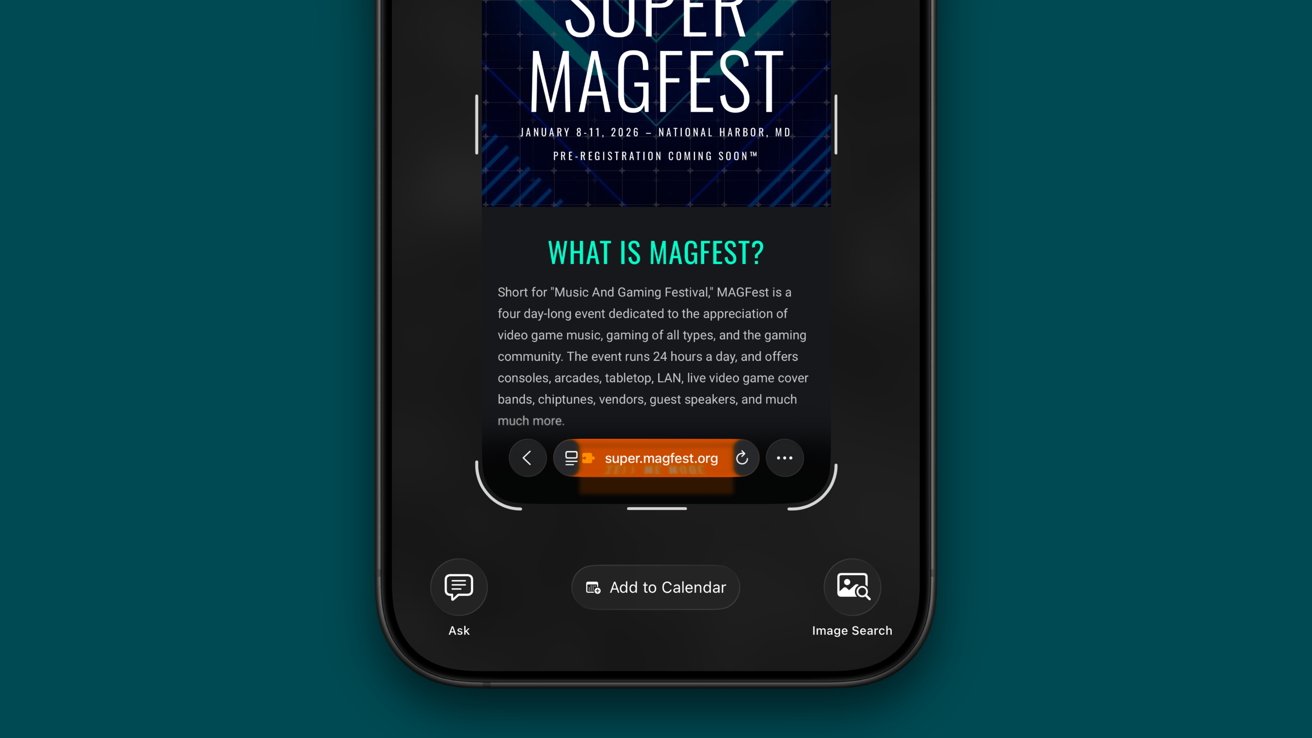
Visual Intelligence already has an option to send an image to Google reverse image search
Of course, there's always the chance that Gemini will get a similar function to ChatGPT by being addressable via Siri. Google's image search tools are already a part of Visual Intelligence, but implementing Gemini for more broad queries is possible, but no word has been shared on this front.
This deal is fundamentally different from the Google Search one, as it is completely obfuscated from the end user. Talking to Siri won't produce some kind of Gemini logo, nor should it.
To reiterate: everything the end user interacts with will be Apple technology, hosted on Apple-controlled server hardware, or on-device and not seen by Apple or anybody else at all. Period.
Google likely knows that Apple wants to shift more training to its own 1 trillion-parameter model. The length of the deal and its conditions aren't known, and Google likely hopes to keep Apple hooked into using Gemini as a training model by improving it faster than Apple can produce its own models.
Nothing was said about Apple and ChatGPT's relationship in this limited press release, but users can assume that will continue unaffected. Sam Altman remained quiet on Monday morning, but his arch-nemesis and former business partner, Elon Musk, had something to say about it.
The owner of a declining social media platform, premium AI-generating CSAM tool, and rusty vehicle purveyor showed zero understanding of Apple and ChatGPT's partnership in June 2024, and even started a lawsuit against them, crying antitrust. His fundamental misunderstanding of the technology and its implementation continued with the Gemini announcement, calling it an "unreasonable concentration of power for Google," even though Google gains nothing from the deal besides money.
If there is more to know about Apple and Google's partnership for AI, it will be revealed at a later date. For now, all we know is Apple is giving Google money, and Google is giving Apple access to an AI model, and that's where the exchange ends.
Your data is still yours on iPhone.
Apple hasn't given up
One of the phrases I've seen going around is that Apple is "throwing in the towel" or "giving up" on making its own AI. This simply isn't the case no matter how you frame this news.
Don't count Apple out of the AI race just because it's using Gemini to train
Apple has been a dominant force in artificial intelligence development, regardless of what the headlines and doom mongers might say. While Apple didn't rush out a chatbot or claim its technology could cause an apocalypse, its work in the space has been clearly industry leading.
The biggest problem so far is that the only consumer-facing AI features from Apple have been lackluster and got a tepid consumer response. Everything else, the research, the underlying technology, the hardware itself, is industry leading.
Using Gemini as a training mechanism for Apple Foundation Models will give Apple a leap forward in implementation and enable it to show off what it is capable of. App intents exist to draw a map to all of your device's functions, and having Apple Foundation Models and Siri as the interface will help save face.
However, there's always the danger that Apple's future successes in AI will be undercut by people claiming "this is actually Google Gemini underneath," which isn't the case. So, even as these new technologies finally launch, Apple's biggest obstacle in the near term will be related to PR, as the hardware and software stack is more than capable of pulling this off.
Apple's AI strategy will ultimately succeed because of its willingness to accept outside help from industry leaders. All that matters is that Apple Foundation Models are good and competitive, and it doesn't matter to the end user how Apple arrives at that.
If there is an issue in this entire situation, it is one of Apple's own making. The company presents itself as this giant, infallible entity that can do no wrong, and that it can do everything itself — except when it can't.
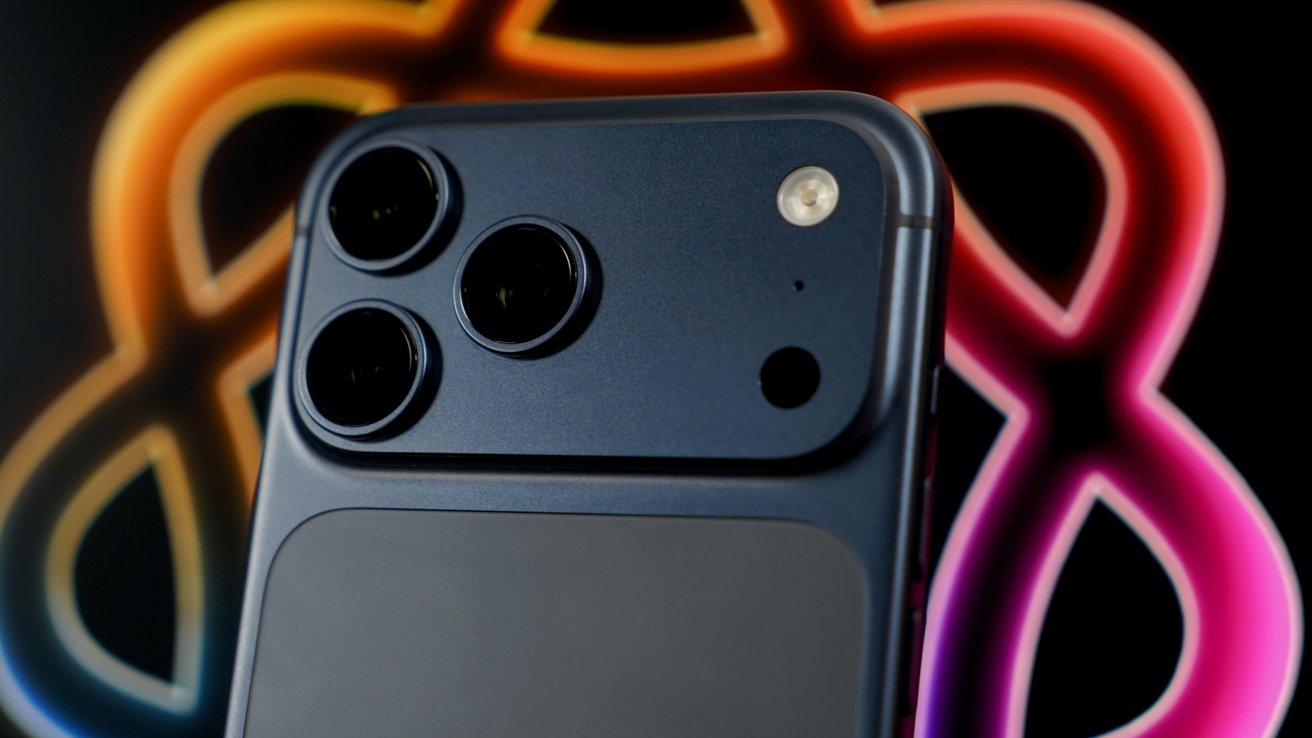
Apple's iPhone 17 Pro Max is a powerful AI machine waiting for the updated AI features
Apple didn't have its own maps at one time, so it used Google Maps until Apple Maps was launched. It isn't a search company, so it offers Google Search, albeit via a lucrative deal, and users benefit from that.
This situation isn't different. Apple needed to boost its development of its in-house models, so it partnered with an industry leader to do so. The users get the benefit of a more powerful, local, and private Apple Foundation Model, and Apple gets to provide that.
And since Google isn't involved in any of the technology stack on iPhone, it is safe to say that you don't need to worry about Apple handing over data to Google. That isn't how any of this works.
In the end, as we here at AppleInsider have stated many times before, on this page, in the forums, on the podcast, and everywhere we cast a shadow, Apple's long game in artificial intelligence will result in a more private, secure, environmentally friendly, and ethical system. Even as the AI bubble pops, Apple's competitors can't hope to match that ecosystem, not even Google.
The winner of the AI race will be the company that can provide users with an easy-to-access AI system that's actually useful. Apple's sounds closest to that success thanks to its app intent system, so now all that's left is the launch to see if it can execute on that plan.
We'll all have to wait and see what happens with iOS 26.4 when it releases in the spring.