The slow restructure of the Apple Intelligence team across 2025 reflects changes in internal strategy around AI rather than an individual failure. Here's how it all comes together for the 2026 relaunch.
John Giannandrea's retirement didn't come as a surprise to many, as they view him as the central problem with Apple's AI strategy. However, even as he's leaving, Apple's strategy doesn't seem to be shifting, and the AI teams continue producing research.
There have been about a dozen reports of various AI-adjacent team members and managers departing Apple in the past year. These reports do little to explain why these individuals leave, with the exception of a few being offered millions to do so, and they all lack context as to how Apple handles these departures.
Of course, everything is painted as the end of Apple as we know it. Though, Apple's AI effort isn't John Giannandrea, his team, or even the employees that have left in the past year.
In spite of all these goings-on, Apple's internal AI strategy doesn't seem to have changed one bit. If they had, signs would appear in the many leaks about the spring Apple Intelligence launch.
Instead, all we've seen is more and more evidence that Apple is planning to release what it promised previously, emphasizing on-device AI systems. Apple Foundation Models will be core to the updated Apple Intelligence systems, but integrations via third-party models found in Private Cloud Compute will also play a role.
A new AI leadership structure and focus
Apple first hired John Giannandrea from Google in 2018 to take over the AI and ML senior vice president position. He's the one behind the push to have everything happen on the device, where the technology is closer to the data.
Apple Foundation Models are the primary focus of the restructured AI team
His responsibilities swelled over time, starting with just Siri, AI, and ML, then growing to be in charge of Apple Car development, and ultimately, the robotics team that formed after that.
In 2025, Apple began restructuring its AI teams so that robotics that robotics was under the hardware chief and Siri under the Vision Pro team. That left Giannandrea's team to focus on developing Apple Foundation Models.
This new structure didn't change with Giannandrea's departure, which suggests Apple had been planning on the restructure regardless of Giannandrea's presence. It was likely a result of internal frustrations with delays around Apple Intelligence, so the reorganization ensures the AI team was able to focus on getting the new AI systems completed.
Amar Subramanya comes from Google as well, and has similar beliefs to Giannandrea when it comes to on-device AI. He will report to Craig Federighi as vice president of AI, a new title reflecting the focus of his team.
His group is focused on Apple Foundation Model development. Portions of the previous team have been spread out to other divisions, and Eddy Cue is expected to take over the search and knowledge efforts.
Zhifeng Chen leads Apple's foundation models team. He's joined by former Google AI researchers Li Xiao, Christopher Fifty, and Jun Xu.
A report from The Information states that more than half of Chen's team is from Google and many joined in the past two to four years. Some expect several of these former Google employees to depart now that Giannandrea has stepped down.
For now, it is clear that Apple's past year of reorganizing its leadership roles didn't occur at random. The changes to Giannandrea's team aligned with the Apple Intelligence delay, which could be a punishment for failure to execute, a necessary restructuring to ensure new deadlines are met, or a bit of both.
Whatever the case, Apple clearly likes this new organization with AI as a subset of software development. It also reflects Apple's stance that Apple Intelligence is meant to be an add-on, not an independent system.
A continuous flow of research papers
Apple is a notoriously secretive company, even to the point of asking employees to obfuscate which teams they belong to and the work they do daily. This was in direct opposition to how the AI world operates, with published papers that name contributors coming out regularly.
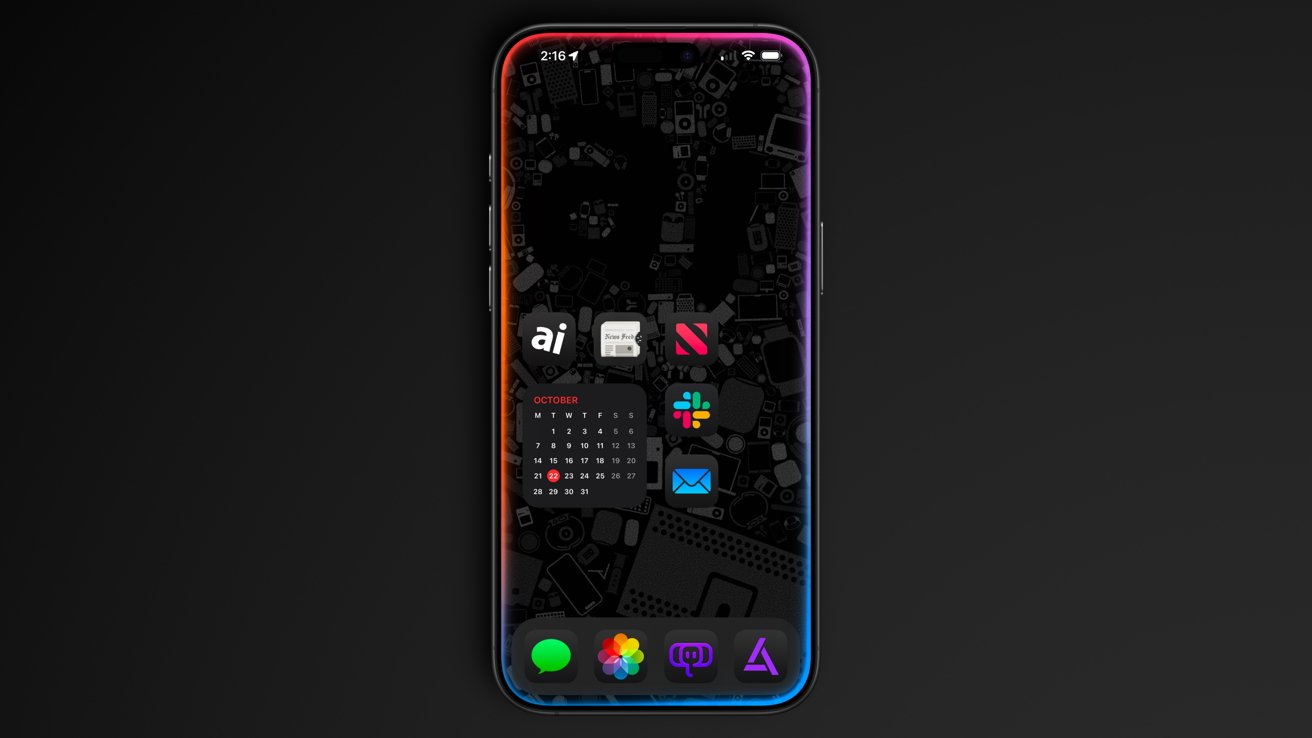
Apple is allowing AI researchers to publish findings publicly but that effort is largely ignored
While it is still tough to ascertain exactly how big Apple's AI team is beyond "a few dozen" members, several can be identified thanks to those public papers. It is clear that even with a year of about a dozen noteworthy departures, that team is going strong, and there's still no way to know how quickly Apple hires and replaces individuals.
At first, I talked with my managing editor Mike Wuerthele about making some kind of list or noting notable individuals on the team using the research papers. I assumed given the "dozens" descriptor it would be a simple, if tedious task.
After going through only about 4 of 96 pages of research documents and listing each contributor that works at Apple, I had a list of nearly 200 names. It became an impossibly large task that would result in very little actionable data.
So, suffice it to say, Apple's AI team and its various divisions are quite large and constantly publishing papers to the public. It seems likely that these studies and data aren't making the news in wider AI circles because they're not being implemented directly by Apple, at least not yet.
The point we wanted to prove, and I believe we still arrived at, is that Apple's AI teams are quite large. The doom and gloom reporting around a dozen or so managers and some number of lower-level employees leaving the AI team has become ridiculous.
Long story short, examining each departure as if it holds some wider significance is no different, and no more useful, than making iPhone sale predictions using supply chain data. We have no idea how Apple operates internally, nor do we know if any of this is beyond the norm at Apple or the industry.
Hiring and departure patterns are the last place anyone should look for Apple's place in the AI race
Many of the senior members departing had been at Apple for six years or more, which is the normal churn at that level. AI is a relatively recent phenomenon, but it seems those lower-level employees in the AI space churn quite regularly — even as often as nine months.
Giannandrea may be leaving, but his work to create a powerful set of on-device models will be revealed soon. Some strategy changes will likely occur in the next few years, but don't expect any drastic deviation in the near term.
Apple Intelligence is expected to get a serious revamp in early 2026 with iOS 26.4. The central feature will be the new LLM-backed Siri that can address on-device Apple Foundation Models to perform tasks via app intents.
In addition to that, Apple is expected to reveal various partnerships that will bring third-party models to Private Cloud Compute. For example, a custom Gemini model might take data passed to it by an on-device Apple model and perform a web search with it.
Time will tell how Apple handles its next phase in AI features, but I wouldn't bet against them. Even as the world tires of AI-generated slop and AI CEOs are still pedaling exaggerations, Apple is set to arrive with a thoughtful, private, and efficient AI ecosystem powered by iPhone.