We've seen it already — many stories covering John Giannandrea's early 2026 retirement from Apple suggest his departure is the result of many failures. The reality of his tenure at Apple is much more complex.
When John Giannandrea joined Apple in April 2018, it was seen as a triumphant win for the company's work in machine learning, Siri, and autonomous vehicles. He was placed over multiple large divisions, and succeeded in creating a roadmap of technology in the space that helped lead Apple to become what it is today.
You're probably not going to find many headlines or articles discussing what Giannandrea actually accomplished at Apple, and the market is reacting accordingly — meaning not at all. It's likely you'll see things like "Failures in Siri and AI lead to Giannandrea getting the boot," which doesn't appear to be true.
The reality is much more complex.
Apple's place in the AI "race" has little to do with one man's actions or decisions within the company, regardless of their placement.
Staff complaining about free lunch and poor decision-making ran to the press to say how terrible Giannandrea and his team were doing. Every story covering Apple and its relationship to AI has been the deepest shades of doom available to the tech news cycle.
However, if you've read anything I've written on the subject, things have never been quite so dire.
Let's examine what Giannandrea gave Apple. And, why his departure is less controversial and forced than it is being made out to be.
Giannandrea's on-device gambit
In 2020, the questions about Apple's place in artificial intelligence were only just starting. Giannandrea was telling us Apple's strategy in the space years before the first Apple Intelligence feature was revealed.
Apple Intelligence launched with few features
He believed that Google and others' reliance on cloud processing was a mistake, calling it "technically wrong." He suggested that models should be run locally, closer to where the data originated.
This stance is clear in everything Apple has done in the space since.
Apple Intelligence operates on the device when it can. Only once certain capabilities are needed, data is sent to an Apple-controlled server that's as private and secure as Apple's iPhone.
This is the foundation of Apple Intelligence. It is the north star of the company's approach. It is also the thing that will ultimately let Apple be one of the biggest winners in artificial intelligence.
While we haven't seen the full results of this gambit just yet, all the signs are pointing to Apple and Giannandrea having made the right call.
However, developing in secret, delaying a feature to ensure proper implementation, and being surrounded by an industry that unapologetically relies on piracy and grift makes Apple look stagnant. Even as the AI industry bubble grows and threatens to pop, Apple's slow and steady approach has been called a poor move.
The industry's artificial intelligence grift
There has been a narrative around Apple and AI suggesting the company missed the boat. I won't deny the utility of AI when used appropriately in situations where human-led projects can be more efficient, but the ongoing AI grift wants you to see it as much more than that.
Apple's slow and steady approach to AI will help them win the race
There's been a lot said about Google, OpenAI, Anthropic, and others. According to the missives, AI has the potential to uproot society, end the need for human labor, and perhaps even lead to an apocalypse.
When put that way, it seems every company investing in AI is behind, because none of them are even close to providing such a technology.
Instead, what we have is a disparate range of autocomplete engines capable of digesting large amounts of data and outputting a sentence, image, or video by guessing the next most logical word, pixel, or frame in a sequence.
There is no reasoning, no thought, no understanding, no intelligence in AI. Look at the slow destruction of Google as a search engine — results backed by experts being replaced with garbage summaries with little to no citation. This is the piracy and plagiarism part.
However, this slow destruction of human-made information and content is not what is being peddled to us.
Anyone could look at Apple today through that distorted perception and see them as behind and lost. The problem is, consumers don't seem to agree with pundits and executives on this.
Not only has the AI grift reached its limits, everyone that isn't an executive at an AI-based company is tired of hearing about it. The stock markets are souring on it.
Even as the headlines suggest Giannandrea's departure is another sign of Apple's failures, the company is set to have its biggest quarter of all time.
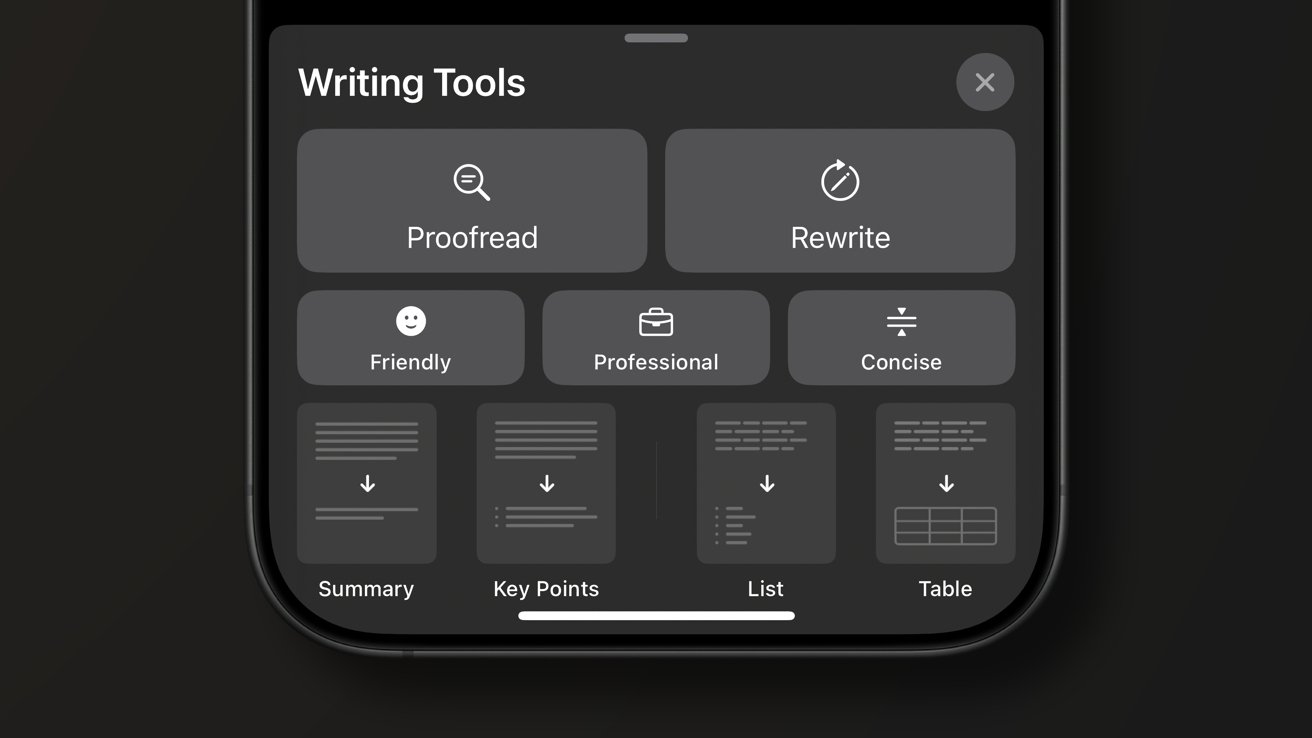
Apple Intelligence Writing Tools are a non-intrusive AI feature
These narratives don't mix. Apple somehow a failure of industry due to its slow and steady application of local, private, and secure AI while simultaneously overtaking Samsung in sales for 2025.
Samsung's (and Google's) entire marketing strategy across the past year has been simple — we have AI, Apple doesn't. Yet, Apple has sold more smartphones than either company.
Even with all of this contradicting data, there's still this conclusion that Apple is behind in AI. Sure, Apple doesn't have a video slop generator, nor does it have a smart assistant that will argue with you about turning off the lights, but its hardware is miles ahead of the competition.
The narrative gets even more convoluted when reports contradict themselves on multiple points, like Apple somehow giving up on Foundation Models and replacing its back-end with Gemini. But simultaneously, the reports say Gemini is a Private Cloud Compute model and iPhones will run Foundation Models on-device for Apple Intelligence.
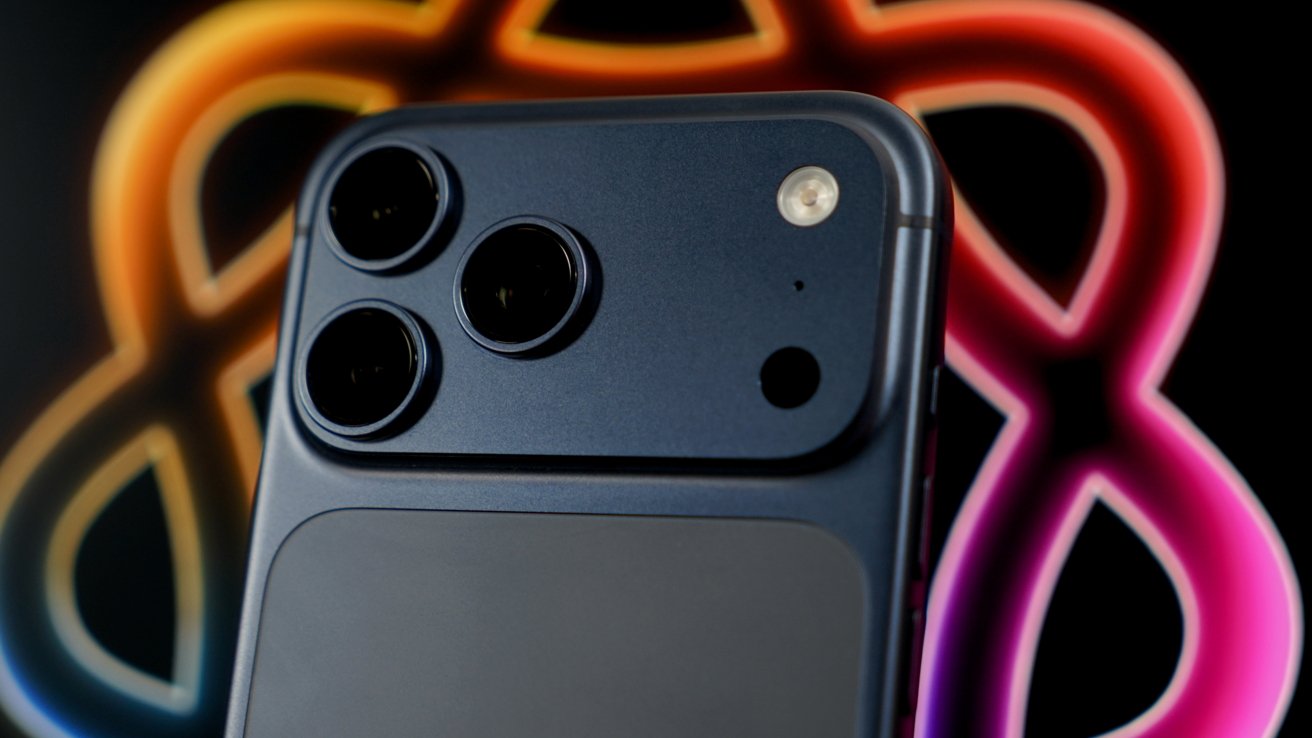
The iPhone 17 Pro is further evidence that Apple's AI strategy, the one set by Giannandrea early on, is going to pay off. A powerful Neural Engine, neural accelerators in the GPU, and vapor chamber cooling just in time for the new AI systems launching in early 2026.
Apple's bestselling iPhone shows customers don't care about AI in spite of punditry
It's a refrain we've heard in nearly every market Apple bothers to enter. It's too late, it's behind, there's no catching up, Apple can't produce something that customers will care about.
Yet, even as the AI industry collapses on itself, Apple is prepping something that only it could build. The on-device Apple Intelligence powered by Apple Foundation Models with a full map of the device functions drawn by app intents, and an external ecosystem of AI models found in Private Cloud Compute.
When the dust settles after that AI implosion, Apple will be one of the few entities left with a viable AI platform. And just as history has proven for the company so many times before, all of the pundit claims of failure will fade, and everyone will have collective amnesia and act as if Apple knew what it was doing all along.
Signs point to an amicable departure
Only Giannandrea knows what his retirement plans are. Unless he or someone in the know speaks on the record, we may never know the full story of his departure.
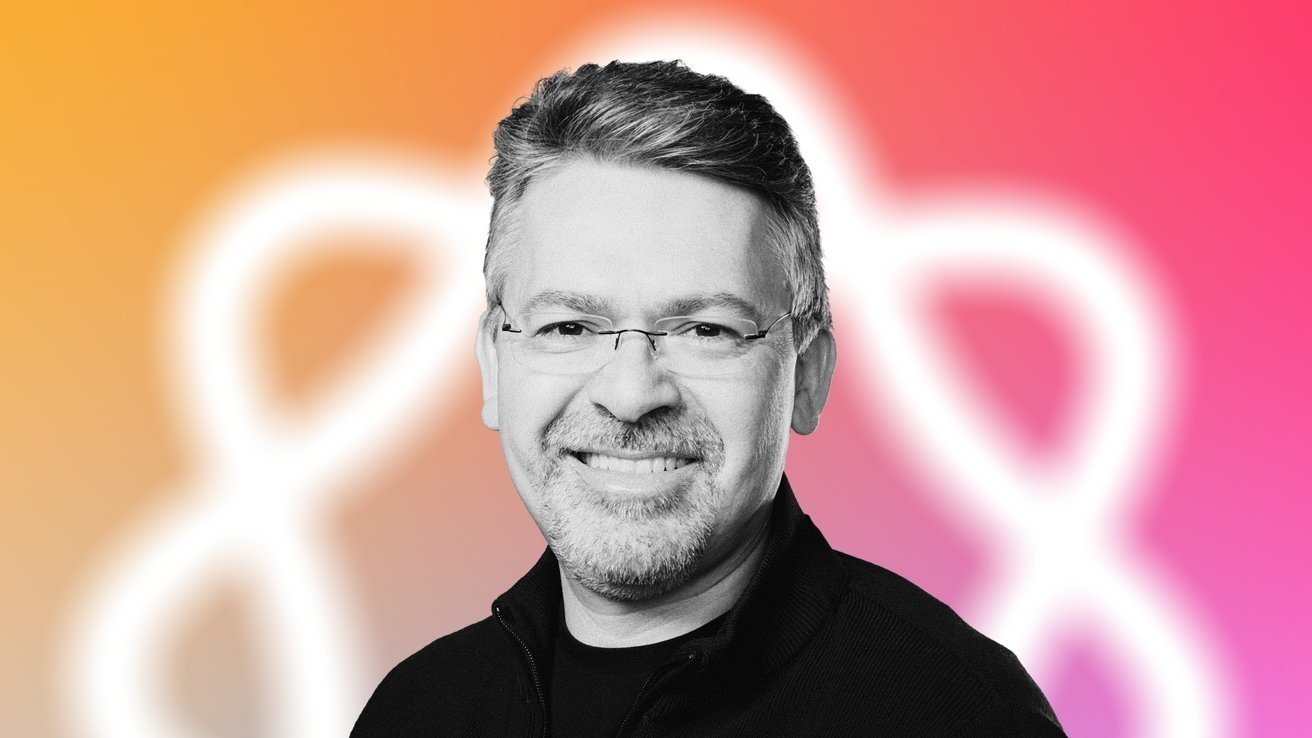
Giannandrea's on-device AI strategy will live on at Apple
His retirement lines up with other executives over 60. His time at Apple meets the usual average of 6+ years at the company, and everything he implemented in ML and AI is still in place.
What we do know is that in early 2025, Apple realized that their strategy of combining new AI systems and the old ML-backed Siri would lead to slowdowns and hallucinations. The delay of the on-device app intent system was necessary to rebuild Siri with an LLM backend.
Shortly after that delay, Apple restructured Giannandrea's division. Robotics, Siri, and others moved to other spots in the company, and the reason for the move given internally was to let Giannandrea focus on Apple Foundation Model and ML development.
One anonymous source said that Giannandrea never spent time on features like Siri, but instead worked to improve backend systems like AI and ML. The restructuring reflects that mentality.
As Giannandrea's role grew smaller and more focused, other deals in the space were being made. Apple seems ready to use a version of Gemini in Private Cloud Compute while still relying on Giannandrea's developed Apple Foundation Model on-device.
A separate report suggested that Cook felt that Giannandrea wasn't capable of meeting the moment in AI. At that point, his eventual departure seemed inevitable. We have no idea how accurate this assertion is.
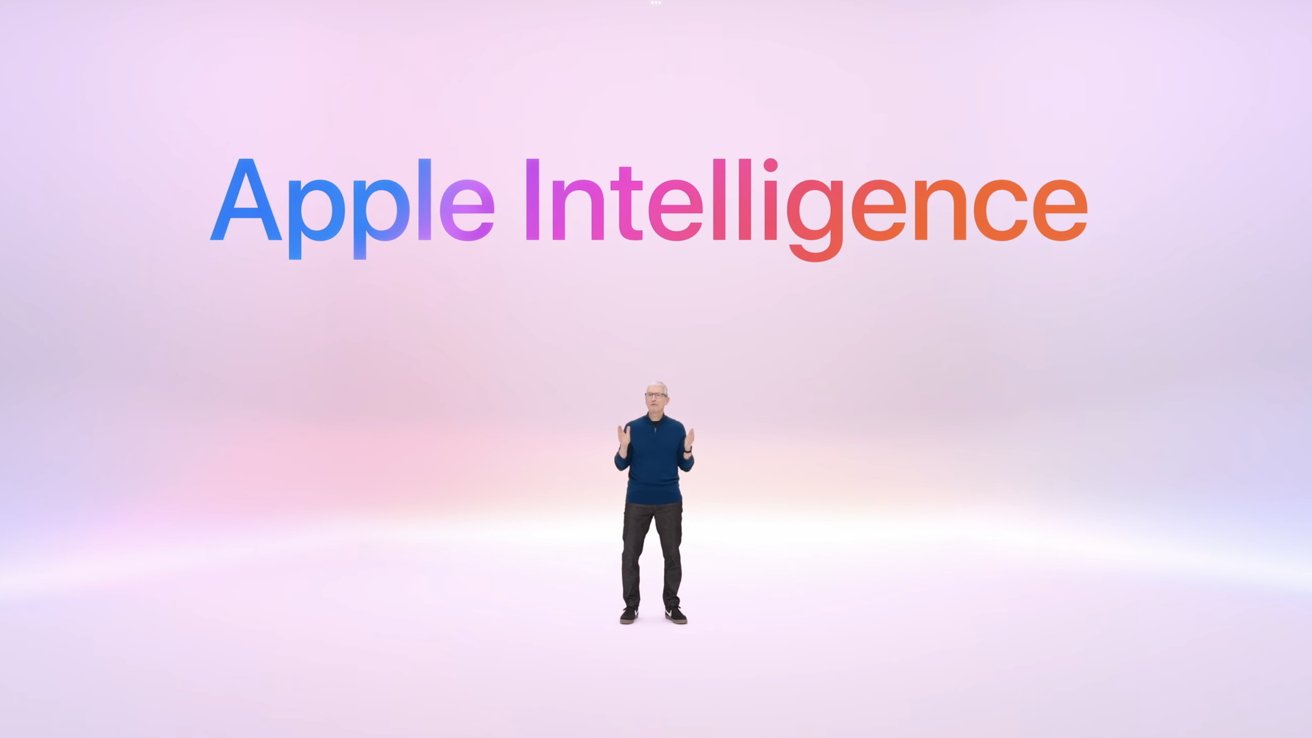
Tim Cook believes Apple Intelligence will be best, even though it wasn't first
Cook's final remarks on Giannandrea for the press release, obviously written for PR and lacking any personality, suggest that Apple's external stance is that Giannandrea played a role in building and advancing Apple's AI strategy. But if the internal restructuring was meant to be a punishment for Giannandrea's failures, there isn't any evidence of that.
The new hire, Amar Subramanya, is keeping the small team Giannandrea had with the new title, VP of AI. Siri remains under Mike Rockwell
Robotics isn't coming back to the AI team, so the restructuring is likely permanent and a sign of a strategy shift of some sort.
The move to hire Subramanya as a replacement for Giannandrea is an interesting one too. His history at Google and work on Gemini are no doubt going to be useful to Apple, but let us not forget that Giannandrea also worked at Google on Google Assistant prior to Apple.
I started writing this last night, but Mike Wuerthele wanted a little time to research Subramanya. Just on the surface, Subramanya was a staff research scientist then principal engineer at Google working under Giannandrea. We weren't sure about his stances on on-device versus cloud-based, and a few other relevant topics.
We are now, though. Subramanya is cut from the same cloth as Gianandrea. He is an advocate of on-device AI processing, that never touches a server.
Philosophically, he will most probably reinforce existing avenues, with on-device, then Private Cloud Compute, rather than disassemble it.
Apple's AI plans will be carried out by Subramanya, not dismantled by him
These concepts, along with all the other evidence at hand, makes it difficult to believe that Giannandrea's retirement is the result of some kind of perceived failure. Instead, it shows that Apple is committed to its hybrid AI strategy and expects Subramanya to help usher in its plans with fresh perspective.
Those of us that report on Apple try to piece together the story as an outside entity. No one has insight into those internal conversations, except rarely some anonymous tipster with an agenda might leak some isolated detail.
The problem is, a lot of how tech news has shaped the internal opinion of Giannandrea is based on a few out-of-context statements and an external opinion that Apple is behind in AI. There's also that Giannandrea remained in charge of his team, and will be in an advisory role.
Siri is going to get an LLM backend
That lines up with the launch of the newly revamped Siri and on-device Apple Intelligence strategy. Giannandrea may be retiring, but that strategy is still moving forward.
We've seen a lot of "Apple reboots" headlines in the last 12 hours or so. We agree partially that this is a reboot — but it is not a lobotomy or a brain transplant. Giannandrea's core decisions and philosophy will remain central to Apple's AI plans in the short term, for better or worse.
Subramanya was effectively Giannandrea's acolyte at Google, with many of the same opinions and philosophies. We don't think that his incredibly brief tenure at Microsoft changed that.
And like we said, the market didn't care overnight. Regardless of how you feel about Giannandrea's retirement, his accomplishments can be celebrated.
The future of AI at Apple remains on-device, private, secure, and respectful of user needs — and that's thanks to Giannandrea's priorities at the company.