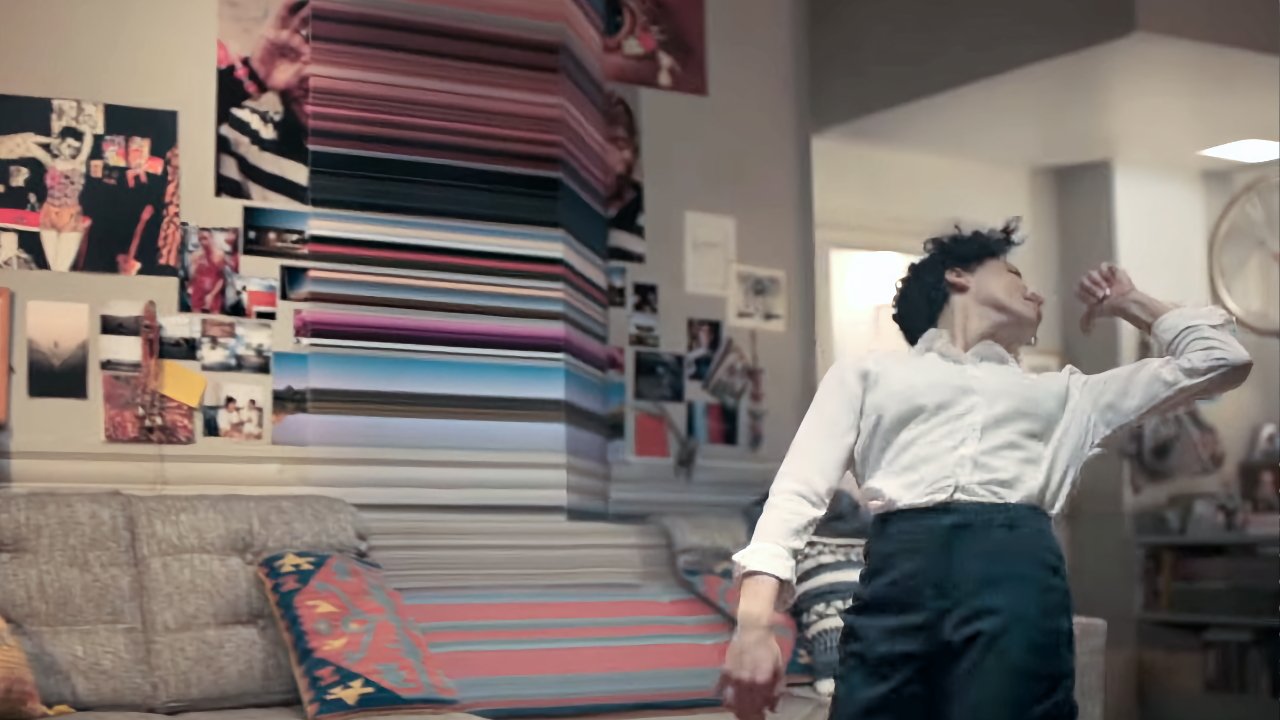
Executives from Apple's ad agency have been revealing how specific instructions from Steve Jobs shaped the company, and how they continue to strive for what he wanted.
The award-winning "Shot on iPhone" campaign is actually a combination of Apple's in-house marketing team and its dedicated external agency, now known in full as TBWA\Media Arts Lab, but referred to as MAL.
MAL is a kind of descendant of Chiat/Day, the agency that was behind the famous "1984" ad that introduced the Macintosh. Previously, Chiat/Day's Ken Segall has spoken of how Steve Jobs required simplicity in Apple's ads, and now the current MAL leadership says that is still considered a requirement.
"[Jobs was] unrelenting in his vision for Apple and his expectation for [any] advertising and marketing," MAL global chief creative officer Brent Anderson has told AdWeek. "[He relied on Chiat/Day's Lee] Clow's pure creative expression and ability to simplify and reduce."
MAL was formed specifically as Apple was preparing to launch the iPhone. "There was a need for a coordinated launch across multiple markets for the iPhone, the likes of which had never been seen before," continued Anderson. "It had to be flawless."
Steve Jobs agreed, but stipulated that the new agency used certain people from Chiat/Day, including Clow. MAL started under Clow's leadership, then in 2016, Anderson and now global chief executive Katrien De Bauw joined.
Before they took over, they say that Clow told them stories of collaborating with Steve Jobs, and that the tales had an impact. De Bauw says she felt trepidation at taking on the agency, thinking "We better not f-ck this up."
"I could really feel the weight," she now says. "You walk in standing on the shoulders of giants. It comes with a huge responsibility."
De Bauw and Anderson's descriptions of MAL concentrate on both on how it has to work hand in glove with Apple's in-house marketing team, and how they believe it has to — and has the chance to — take risks that a regular independent agency could not.
"The MAL organization has changed to be able to deliver what Apple needs today, but also what we think it may need tomorrow," said De Bauw. "If you only deliver what the client's asking, then you're always a little behind. You've got to take some chances and risks."
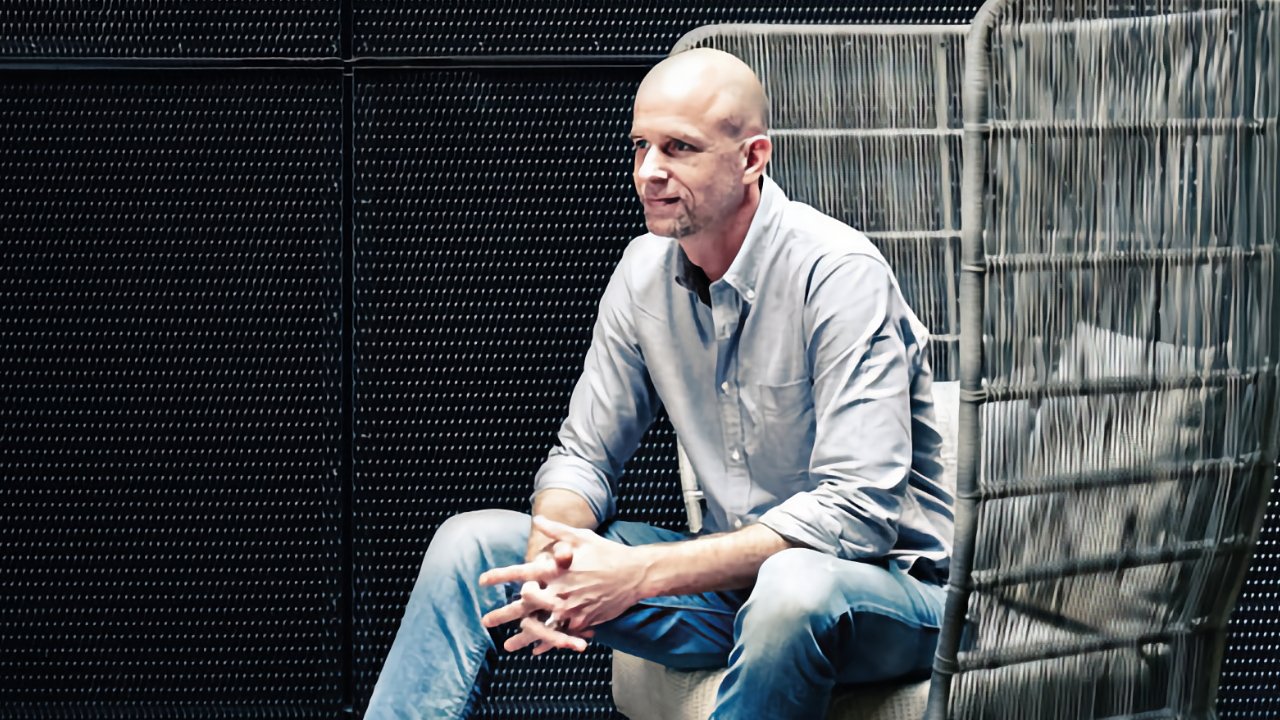
Apple's marketing executive Tor Myhren, pictured in 2016 — image credit: Apple
MAL operates as an external agency, physically separated from Apple — "we're the outsiders on the inside," says De Bauw — and internally there is the Apple Marcom team. Apple vice president of marketing communications Tor Myhren, will separately brief both that internal team and MAL, but ultimately everyone works together.
"[Myhren] wants us to push back, question, and bring consumers' point of view into Apple to make the right decisions about whatever we're working on," continued De Bauw. "He'll sit us down and say, This needs to be fixed! And we do the same with them."
De Bauw and Anderson are of course praising of their relationship with Apple's internal team, but it hasn't always been that way. Around 2013, there were reports of MAL personnel being frustrated at how they were directed by Apple's Phil Schiller.
At that time, Schiller appears to have been overseeing the work of Hiroki Asai, whose LinkedIn profile says he was vice president of Global Marketing from 2010 to 2016. But in 2014, Asai reportedly revamped the internal ad team, including bringing in a former Nike social media director, and bringing more work inside the company.
Asai retired, and Myhren took over in 2016. Since then, there have been reports around 2019 of MAL downsizing as Apple has been changing its marketing strategy.
"Apple's confidence and trust in MAL as our singular ad agency is as strong as it's ever been," Tor Myrehn, Apple's VP of Marketing Communications, said at the time."As we continue to evolve our marketing approach, we've asked MAL to do the same."