Apple is continuing to look at ways of using its smart mattress technology together with temperature sensors to identify the start of menstrual cycles, and also as a measure of general health.
Ever since Apple acquired the Beddit sleep-tracking firm in 2017, it has been researching ways to improve that tracking. Most recently, that has resulted in the Sleep Score feature of Apple Watch, but Apple hasn't given up on using bed-based technology.
It hasn't produced an in-bed tracking system, but it has already had two patents granted for the technology. It's just that one of the two has now been granted again.
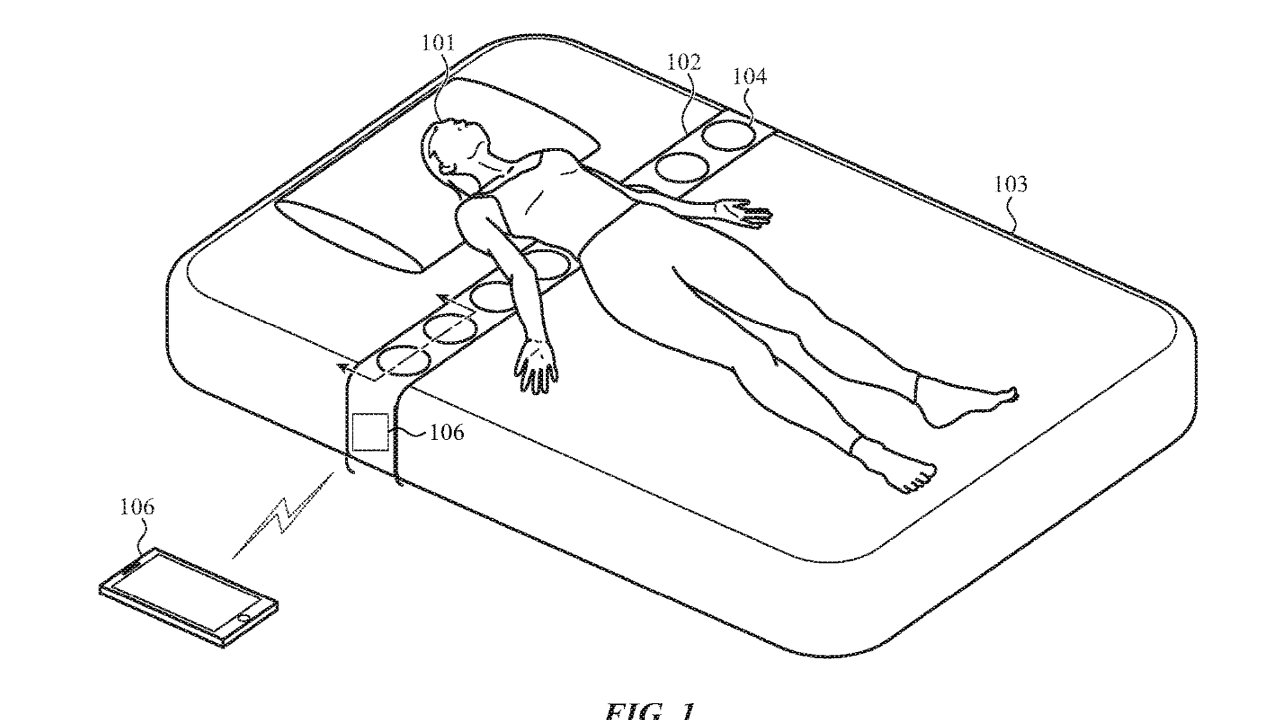
This newly re-granted patent concerns a proposal is for a series of sensors to be placed atop a mattress, and presumably below any undersheet.
Once such sensors are in place, and once they are able to track a person's temperature over time, the proposal opens up a much more interesting idea. Apple details this in the re-granted patent, called "In-bed temperature array for menstrual cycle tracking."
The proposal is still the same as it was in the previous version of the patent, but it's specific about how it tracks temperature. A continuous temperature tracking gives a baseline that the menstrual cycle detection can work from.
"After determining the temperature of the user for each use period in the set of two or more use periods, at least one change in the temperature of the user between different use periods can be identified," says Apple. "An ovulation day of the user based on the at least one change in the temperature of the user can be estimated."
It's precision work, though, because it requires determining when "the temperature of the user is at least 0.1 degrees Celsius higher" than in at least two other times since she began tracking. It also requires tracking temperature over time during the night, as part of determining ovulation is also "determining at least one use period... where the temperature of the user is at least 0.2 degrees Celsius higher than a maximum" previously recorded.
Apple re-applying for a patent, and being granted it once more, is not necessarily significant. The resubmission can be done for procedural reasons such as terms expiring, just as much as it can be for notable changes to the proposals.
In this case, there don't appear to be notable changes, but what is apparent is that Apple is at least continuing to consider the proposals.
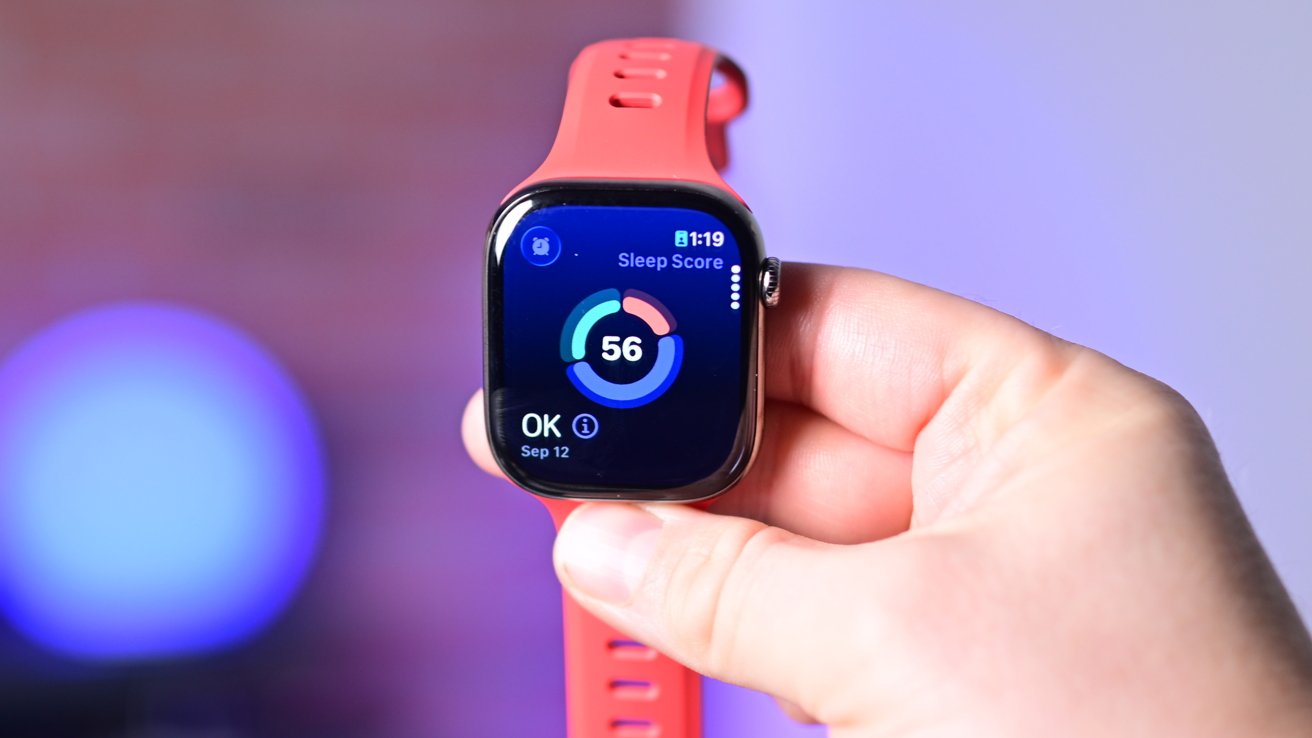
Apple's sleep research has also produced the new Sleep Score feature for Apple Watch
Note that at present, the US Patent Office has not published any further update to the previous related patent. But it was clearly a companion piece, and it was called "Flexible temperature sensing devices for body temperature sensing."
In this case, the patent concerned tracking a person's temperature while they slept, but it was more concerned with how this could be better than other options for health tracking.
"Physiological sensors, such as temperature measurement devices, heart monitoring devices, or blood oxygen level sensors," says Apple in this related patent, "are increasingly being incorporated into different types of wearable devices such as smart watches, clothing, glasses, and/or other objects, such as beds, furniture, and so on."
"The incorporation of physiological sensors into these types of objects can facilitate health monitoring of a user during their routine normal everyday actions," it continues. "[However, for] example, a person typically only measures their temperature when they suspect they are sick or for some other purpose such as natural family planning."
"In these cases, a person measuring her or his temperature is not part of their daily routine, and these temperature measurements are typically infrequent," says Apple. "In order to track a person's temperature more consistently, temperature measurement devices may be incorporated into various objects such as smart watches, clothing, bedding, and so on."
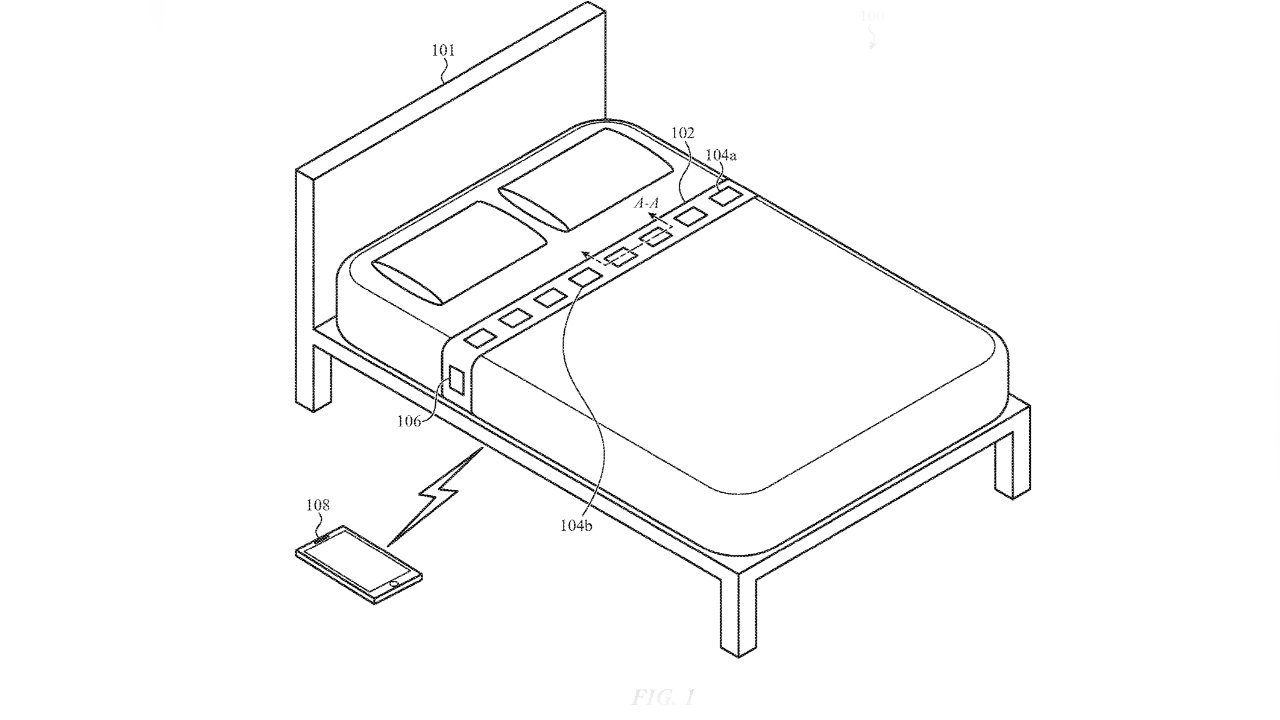
The patent says nothing about the dangers of treading on your iPad in the morning.
Menstrual cycles are a vital health indicator, and it's an area that has been shockingly under-researched. Apple has previously highlighted its own research into the field, while others have studied the impact of polycystic ovary syndrome (PCOS) on womens' overall health.
The menstrual cycle tracking patent is credited to five inventors, including Zijing Zeng and Joseph M. Schmitt, both of whom previously worked on temperature measuring sensors for the iPhone.
One, James C. Clements, is also among the five inventors credited for the first patent regarding general temperature sensing.