On the latest episode of the HomeKit Insider Podcast, Rob Alexander from the Connectivity Standards Alliance joins to talk about Matter's new certification program.
Guest co-host this week is Rob Alexander. Rob is Principal Product Manager at Silicon Labs. He also serves as chair of the Test and Certification Oversight Committee for the Matter standard setting Connectivity Standards Alliance (CSA).
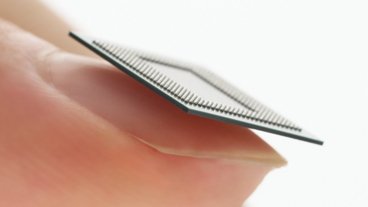
Rob joins us to talk about the new certification program from the CSA that will help expedite new hardware releases. Now, chips can be Matter-certified so companies only need to worry about the product-specific features.
The new certification process should reduce worries about the wireless connectivity and other common functionality amongst Matter devices. Several companies have announced new chips for this program, including Silicon Labs.

In other news, we talk about an upcoming Thread-enabled controller from Sleekpoint Ventures. The new Qliq button works with Apple Home, not Matter, and has three distinct controls you can press.
Each button supports single press, double press, and a long hold for 9 total customizable commands. It also has haptic feedback and recharges over USB-C.
Finally for the news, Google confirms that it is still invested in making new smart home displays. This news comes as Amazon already announced new models and Apple's rumored entrant is slated for spring of 2026.
Interview with Rob Alexander
Andrew O'Hara: Let's go ahead and talk about the big news — the reason you came to hang out today, other than just talking about fun smart home things. Matter has a new certification program that they've just launched. Tell us a little bit about it and what this is gonna mean.
Rob Alexander: Yeah, so this was something we've been working on for quite a while. It's been a kind of passion of mine. The Matter Compliant Platform is really meant to speed up developers and product makers, so they can just buy and integrate an off-the-shelf Matter component — either from their chipset vendor, or they can go to third parties who build them a component — and they can integrate it into their device.
It kind of parallels some of the ideas that Apple had with the HomeKit-enabled chips way back when. Now they have the software component, but really it's like, yeah, we want you to be able to make this easier — so just go and buy this.
The challenge is that you have to have enough providers of that technology, and then they'll make it cheaper because they'll compete. It'll just generally be a good enabler for product vendors. So that's what we're really trying to accomplish with this.
You know, we're an open standard, open source, so you can have a company like Silicon Labs build you a Matter Compliant Platform, and then you can take that and more easily adapt it.
And the way it works is — we'll handle things like Bluetooth and how to enable that while also talking Thread or Wi-Fi, and we'll deal with a lot of the low-level hardware stuff like encryption keys, security, and commissioning. As a product maker, you just get to focus on what you really care about: what happens when I get a signal to turn the fan on? Or to start the cycle for the appliance?
All the other stuff is expected to "just work." So that's what we're doing with this compliant platform.
With that, you can test — we'll handle the lion's share of the Matter testing and make sure it works. We can test against ecosystems and ensure it functions as you'd expect, and then companies can connect it to the actual hardware people want to activate or monitor.
So it's a really great program — just launched this past October. We've already certified one of our chips, and a bunch of other companies have certified their stuff. So you've already got several different platform vendors out of the gate.
Andrew: That is pretty awesome. And at the same time, this is going to be really beneficial — especially as new categories get announced. It'll make it so much easier to hit the ground running.
Tell us a little bit about you, and then we'll talk more about the program. How long have you been with Silicon Labs and involved with the CSA?
Rob: Oh boy. I've been with Silicon Labs since 2006. I was part of a startup they acquired — Ember — back when Ember was just doing Zigbee.
I joined what was the Zigbee Alliance in 2006, so I've been with Zigbee and what became the Connectivity Standards Alliance for a long time. I was part of the group that helped work on Thread.
IoT has always been so much fun to work on. When I was working in engineering before, I was dealing with systems that had gigabytes of RAM and flash. Then I joined this company, and suddenly we're working with less than a megabyte.
It was a fun challenge — and we get to see so many different products and ideas. We're ultimately enabling the technology, and companies come to us saying, "I'd really like it to do this or that." It's been great helping them figure out how to enable their products — whether it's low power, range, or compatibility.
I've worked on Zigbee, Z-Wave, Bluetooth — so many over the years. I love IoT, too. It's fun to bring it into my home and say, "Oh, I actually helped work on this."
So yeah, it's been a passion of mine — and fun to see this industry evolve over the last 20 years.
Andrew: Yeah, it's changed quite a bit. So this new program — do you think it's going to be more helpful for new companies coming in that don't have as much experience with the connected home side of things? Or more for existing companies to help push them faster?
Because I'm thinking of things like water heaters — how much do they know about connected home or IoT? There are a few out there, but it's not really a "connected" category. So will this program help newer companies getting into smart home, or is it more about moving established companies faster?
Rob: I think it's a bit of both — but it's more targeted toward companies that are stepping into smart home and are maybe a bit intimidated by it.
They might know some connectivity tech like Bluetooth or Wi-Fi, but Matter tends to involve multiple layers — Thread, Wi-Fi, various certifications — and that can be intimidating.
So we're really trying to help those product vendors add it into their existing product lines.
One of the first internet-connected things was a coffee maker. And I still don't have an internet-connected coffee maker today that I can just buy off the shelf! I want that. Setting a simple program or triggering it from bed — that's what I want to see.
Especially smaller or budget device makers — we want them to come in and say, "Yeah, you can just have it now. Here's your internet-enabled thing."
I've worked with companies that used to build their own radios. We want to move away from that — just buy off-the-shelf stuff and build your product.
Andrew: Nice. It's funny you mention the coffee maker — that's like Apple Home lore because of that one Tim Cook interview where he said his HomeKit coffee maker turns on in the morning. Everyone's like, "Wait, what? That's not a thing!"
I actually tried doing a video on that and struggled to even find a dumb enough coffee maker to automate. They're all too smart now, with little screens and scheduling built in.
I literally just wanted one that turned on and off with power — a big physical button on top. I want to say, "Make my coffee," and have it just grind, brew, and go — all tied to automations. How is that still not a thing yet, with Matter or Apple Home?
Rob: Yeah, that's my big use case! Anything with a schedule. Thermostats have had it for years, but why not coffee makers, pool pumps, Jacuzzis, or lights?
Things that just come on when I want them to — that's the kind of quality-of-life automation we want to enable more and more of.
Andrew: So when a company is using one of these Matter-certified chips in their device, what does testing look like after that? I assume there's still some level of testing before it goes to market. How has that changed with this program?
Rob: Yeah, so we've got two elements — initial certification and recertification.
The initial certification handles a lot of heavy lifting to verify the basic connectivity. The product maker still needs to test the higher-layer functions — like, "Does my appliance enable the right mode?"
But most of the core Matter testing, the Connectivity Standards Alliance can handle at the platform level — so companies inherit that.
Recertification is also important. Matter moves fast — bugs, security issues, open-source contributions — and we want companies to update quickly without certification slowing them down.
If it's a small fix, they can roll it out without additional testing. That's huge for keeping IoT devices secure and up to date.
Andrew: Love it. I was cleaning out my basement and found a box of old Apple Home devices that still work after 10 years. It's crazy.
How does that work with the additional certification CSA does — the Platform Cross-Compatibility Lab? Isn't that what gives them the Apple Home certification on top of Matter?
Rob: Yes, exactly. Users still recognize "Works with Apple Home," "Works with Alexa," and all those brands — and we don't want to confuse them.
So after implementing Matter — which is 90% of the work — companies can go through the CSA Interop Lab. That's where testing happens against real devices like HomePods and Echoes to make sure everything works smoothly.
It's a one-time effort, CSA doesn't charge for it, and afterward, they can add all those logos.
Eventually, we hope Matter itself becomes the thing people look for. Otherwise, we'll just keep "NASCAR-ing" boxes with logos forever.
Andrew: (laughs) NASCAR-ing the boxes — perfect.
Okay, you're on the inside. No one else is listening. What do you know about Matter 1.5? Supposed to be coming this year — what have you heard?
Rob: (laughs) Oh, they're always listening. Smart assistants everywhere!
So yeah, Matter used to release a major version every year — 1.1, 1.2, 1.3, 1.4 — and even minor updates like 1.4.1 and 1.4.2.
I'm still hopeful we'll get something bigger this year. There's talk about new categories and use cases.
Matter 1.0 launched with about 40 device types, and now we're up to 62 in 1.4.2. 1.5 should bring more. Can't say much yet — but happy to come back later when I can.
Andrew: Of course — always cagey with it! I know they hinted at end-of-year, but we're running out of months. And when a new spec comes out, it can take up to a year before we see products actually using it.
Hopefully the new program helps expedite that. I'm excited for cameras — but realistically, it might still be a year before we see any shipping.
Maybe we'll get lucky and see some CES announcements for 2026 products.
Rob: We'll see! Matter's less than three years old — still young, but moving fast. I'm eager for cameras too, since they're one of the most complex and locked-in device types.
There are so many cool use cases once that's standardized — like seeing your kid playing outside on your smart display or TV without needing to switch apps.
That's where we're headed.
Andrew: I love that. Even at the chip level, I'm excited. I still get messages from people who can't connect devices because of 2.4GHz vs 5GHz Wi-Fi.
That alone would be solved by a single Matter-certified chip. It just works — faster certification, easier setup.
It might sound boring, but this is big news.
Rob: Exactly. You've got to build the foundation first, and this is a big one. Expect to see more devices using it soon.
Andrew: Awesome. Thank you so much, Rob. We made it through the episode without Wi-Fi or power issues — just one toddler interruption on my end!
Thanks again for joining. Anything you want to leave us with?
Rob: No, thank you, Andrew. This has been a blast — a lot of fun!
Links from the HomeKit Insider podcast
Those interested in sponsoring the show can reach out to us at [email protected]
Keep up with everything Apple in the weekly AppleInsider Podcast. Just say, "Hey, Siri," to your HomePod mini and ask it, and our latest HomeKit Insider episode too. If you want an ad-free main AppleInsider Podcast experience, you can support the AppleInsider podcast by subscribing for $5 per month through Apple's Podcasts app, or via Patreon if you prefer any other podcast player.