Apple's entire iPhone 17 lineup has clearly outpaced the iPhone 16 in early sales, driven by strong demand for the base model in China and the iPhone 17 Pro Max in the US.
The company's strategy of adding more value to its base models while keeping high-end buyers interested appears to be paying off. The iPhone 17 launch has outperformed the iPhone 16 sold in 2024, showing stronger demand across key markets.
In China, the base iPhone 17 nearly doubled unit sales compared to the iPhone 16, according to Counterpoint Research.
The base iPhone 17 comes with a better chip, a sharper display, more storage, and an upgraded selfie camera, all for the same price. Local discounts and special promotions have made it even more appealing.
As a result, value-conscious buyers are choosing it as their top upgrade option.
Apple faces pressure from Huawei and Xiaomi, both regaining domestic market share. However, Apple may have found a balance between performance and price in a region that criticizes it for overpricing.
Pro Max dominates the US upgrade wave
In the US, the iPhone 17 Pro Max is leading early demand. Sales have ramped up quickly through the first two weekends, helped by bigger subsidies from major carriers.
The top three networks — Verizon, AT&T, T-Mobile — increased their maximum offers by about $100. That's roughly a 10% boost compared to 2024.
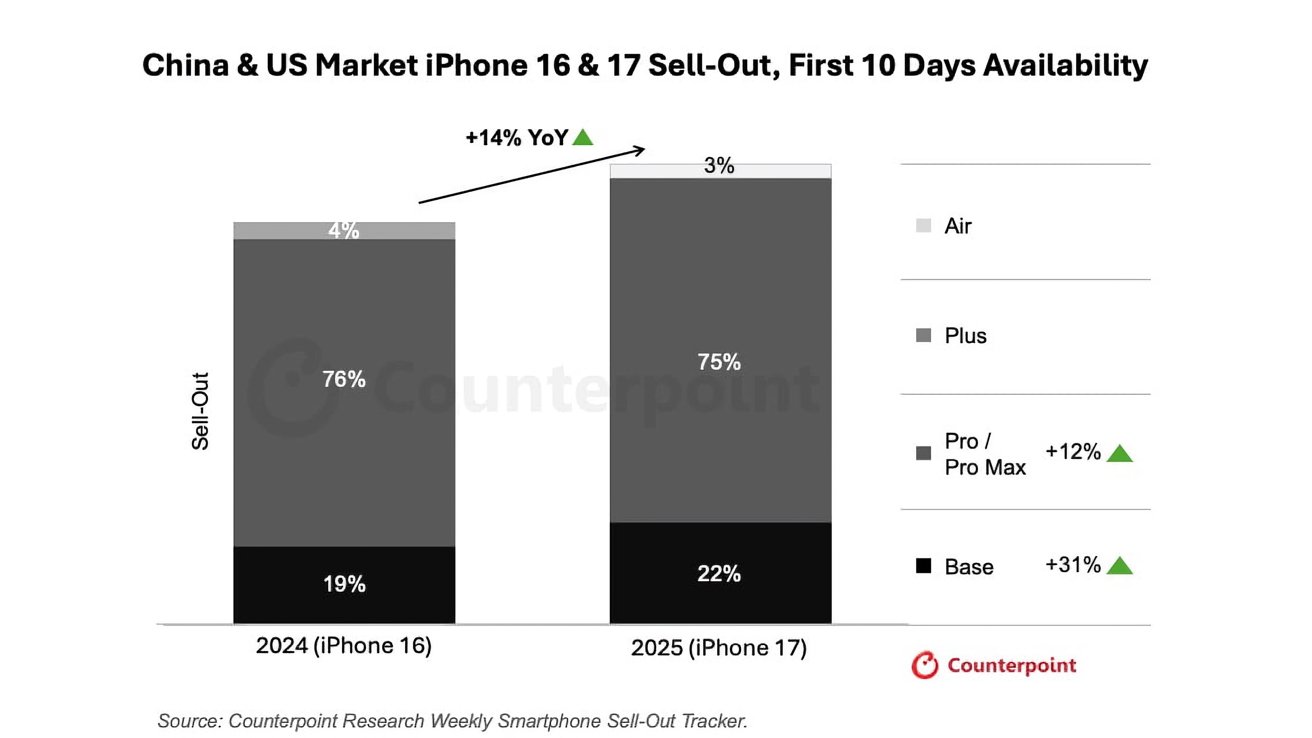
iPhone 17 Pro and iPhone 17 Pro Max are seeing strong demand. Image credit: Counterpoint Research
Carriers are locking customers into 24-month or 36-month payment plans, ensuring steady service revenue while keeping users tied to premium devices. Apple benefits from the cycle too.
Every subsidized upgrade means another customer staying firmly inside its ecosystem of hardware, software, and subscriptions. It's a strategy that plays to Apple's strengths.
The iPhone Pro Max sits at the top of the lineup, but the gap between its cost and that of the base model feels smaller when carriers help with financing. For many buyers, that makes the top-tier option an easier splurge.
iPhone Air makes a cautious entrance
The new iPhone Air, Apple's first eSIM-only model, is showing modest promise. It's selling slightly better than the iPhone 16 Plus and will reach China by late October.
The phone's digital-only design marks an important step toward phasing out physical SIM cards, but it's not expected to drive big numbers yet. The iPhone Air's short pre-order period and higher price make it a niche choice for now.
Still, its presence hints at Apple's long-term direction. The company seems determined to simplify hardware while deepening its integration with carriers and cloud services.
Why timing matters
The iPhone 17 series launched in early October 2025, at a time when the global smartphone market is finally stabilizing after years of decline. Many consumers who bought phones during the pandemic are now ready for upgrades.
Apple's new lineup hits several psychological triggers at once. The base iPhone 17 feels generous without being cheap, and the iPhone 17 Pro Max looks more attainable thanks to financing deals.
Even the iPhone Air adds a futuristic note for buyers who want something different. The mix positions Apple to capture both sides of the market without cannibalizing itself.
China and the United States remain Apple's most important regions, accounting for the majority of global iPhone sales. A double-digit gain in those markets gives the company a strong foundation for the holiday quarter.
While global data isn't in yet, early momentum in its two largest markets usually signals a solid quarter ahead.
Competition still looms
Apple's lead isn't guaranteed, however. In China, Huawei's resurgence continues, fueled by its domestically made Kirin chips and a wave of nationalist sentiment.
Xiaomi and Oppo are also pressing hard with cheaper alternatives packed with features Apple users often pay extra for.
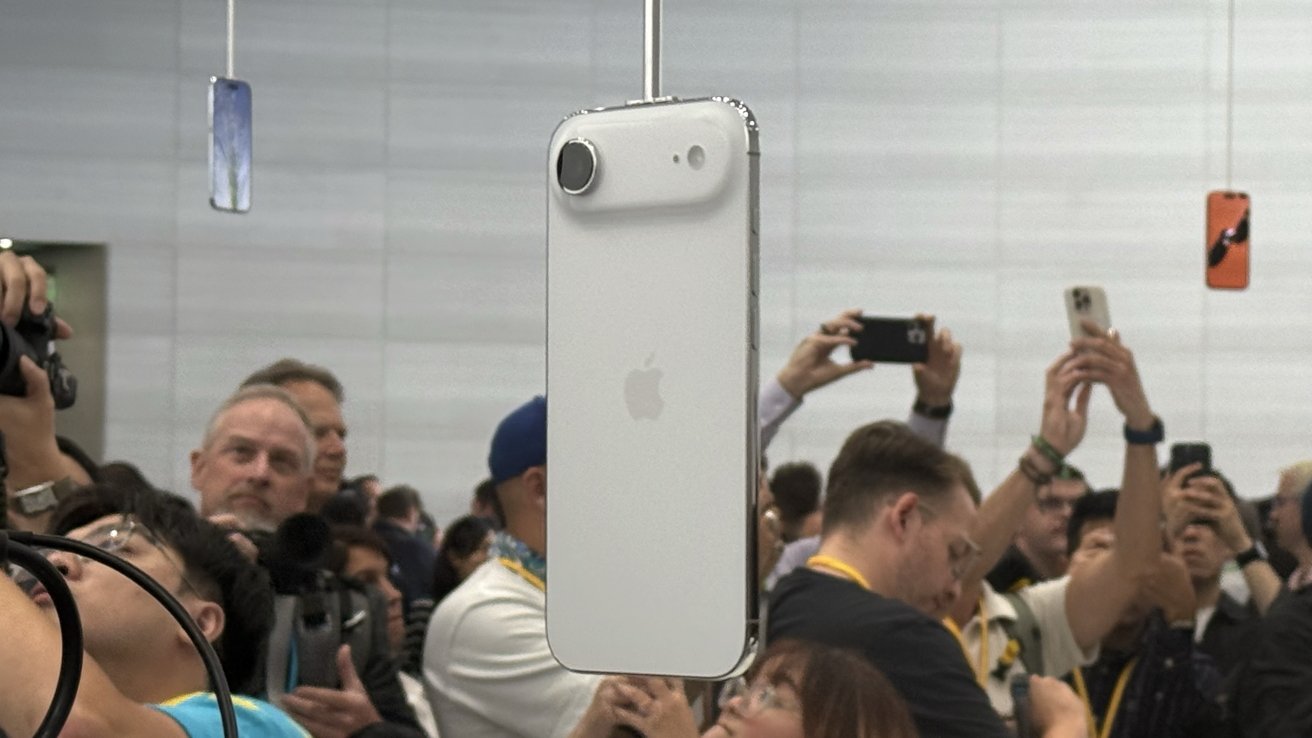
The iPhone Air has been more popular than the iPhone 16 Plus. Image credit: Counterpoint Research
In the US, Samsung is still Apple's main competitor in the premium market. Its Galaxy S24 lineup has done well in 2025, especially among Android fans who prefer not to switch ecosystems.
However, US carriers are pushing the iPhone 17 Pro Max hard. That boost could help Apple regain some market share in the last months of the year.
The broader question is whether Apple can sustain this pace once early adopters and upgrade-happy users have bought in. The smartphone market has matured, and most consumers already own capable devices.
The challenge now is convincing them that yearly upgrades are worth it.
Apple's winning formula
The early success of the iPhone 17 lineup shows that Apple still knows how to balance aspiration and practicality. Buyers want more for their money, and Apple has learned to give them just enough without hurting its margins.
Apple no longer needs to reinvent the smartphone to stay ahead. The company's edge now comes from fine-tuning its devices, timing its launches carefully, and keeping users loyal in markets that never stop competing.
Few rivals manage that balance as consistently. The iPhone 17's strong start proves the company can still outmaneuver rivals.