
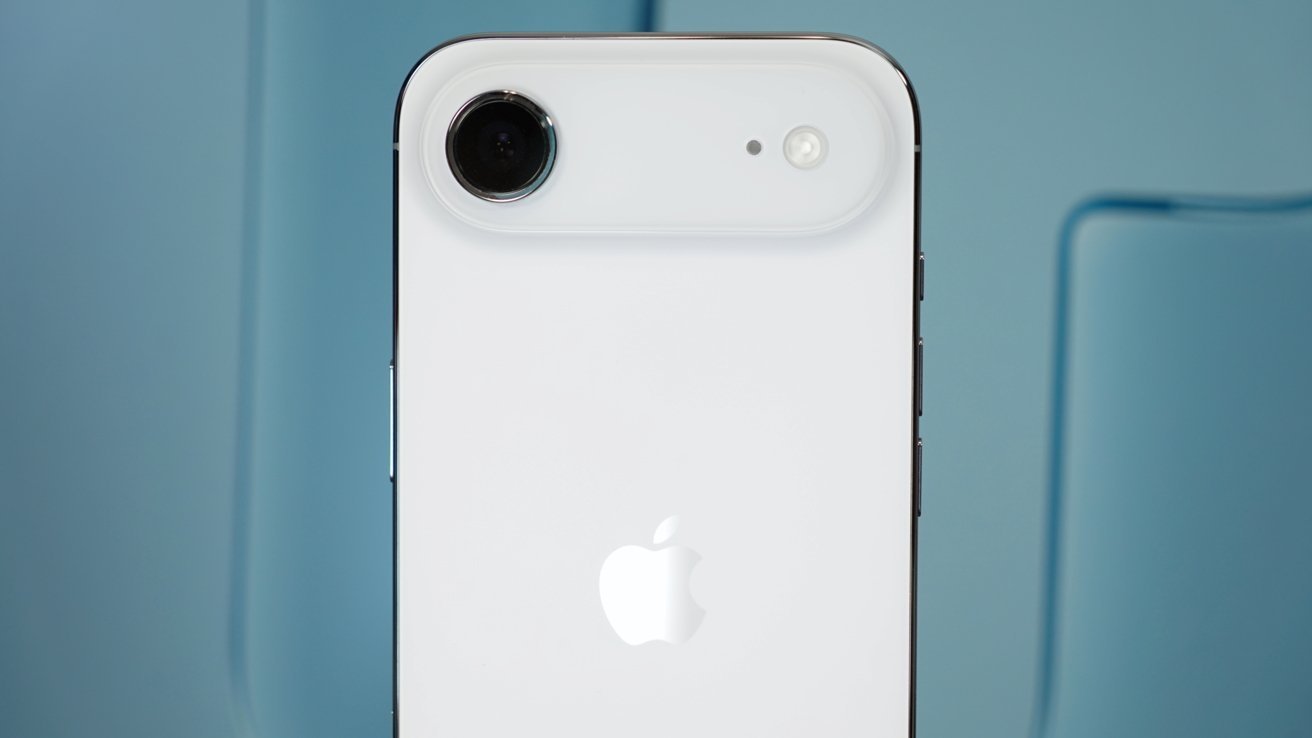
Apple may not be changing its production figures for the iPhone Air after all, as one supply chain report claims Apple hasn't reduced production levels for 2025.
Following the release of the iPhone 17 generation and the iPhone Air, reports started to surface claiming the new thinnest model isn't doing well enough. That Apple was going to tweak production to make fewer units of the model.
On October 26, TD Cowen stepped in to denounce the claims. Apple isn't changing how many iPhone Air units it will produce in 2025 at all, the note to investors seen by AppleInsider claims.
TD Cowen's report says that there are no changes to iPhone forecasts for October, taking a moment to emphasize that this included the iPhone Air forecasts. Supply chain research indicated to the analysts that builds were unchanged in the month.
What TD Cowen calls "field work" led to the firm maintaining unchanged forecasts for the iPhone Air at 3 million for the third calendar quarter of 2025, and 7 million for the fourth calendar quarter.
Overall for all iPhone 17-generation models, the September quarter builds remain at 54 million, with a similarly static forecast of 79 million for the December quarter.
Against the grain
TD Cowen's forecast regarding the iPhone Air runs counter to claims from other industry observers about the models' production fortunes.
On October 17, the first report appeared, with Mizuho Securities of Japan insisting that Apple would order 1 million fewer units of the iPhone Air. At the same time, Apple would increase orders for other models by a total of 7 million units.
A few days later on October 22, analyst Ming-Chi Kuo joined the bandwagon by saying the supply chain was starting to scale back production capacity for the iPhone Air.
The same day, multiple sources of Nikkei led to similar allegations over production changes. This included one supplier manager being quoted as saying the iPhone Air had "almost entered end-of-production mode" due to a lack of demand.
In that report, production of the iPhone Air in November would be cut to about 10% of September's build numbers. To be clear — not cut by 10%, cut to 10%.
Business as usual
While there is now some disagreement in iPhone Air production forecasts, it is worth remembering that supply chain changes do not necessarily reflect how well the model will sell in the future.
Apple's use of just-in-time production techniques and its structure of the supply chain as a whole means it can make adjustments with a few weeks of lead time in some cases.
There is also the tendency for consumers to change their buying habits as the year progresses. Initial sales tend to be for the Pro models, while non-Pro versions usually see more sales a few months after launch.
As a middle-ground oddity in the range, the iPhone Air won't necessarily fit into either the Pro or non-Pro demand and manufacturing patterns that usually exist. Even so, Apple will be tweaking its production to meet whatever consumers demand.