
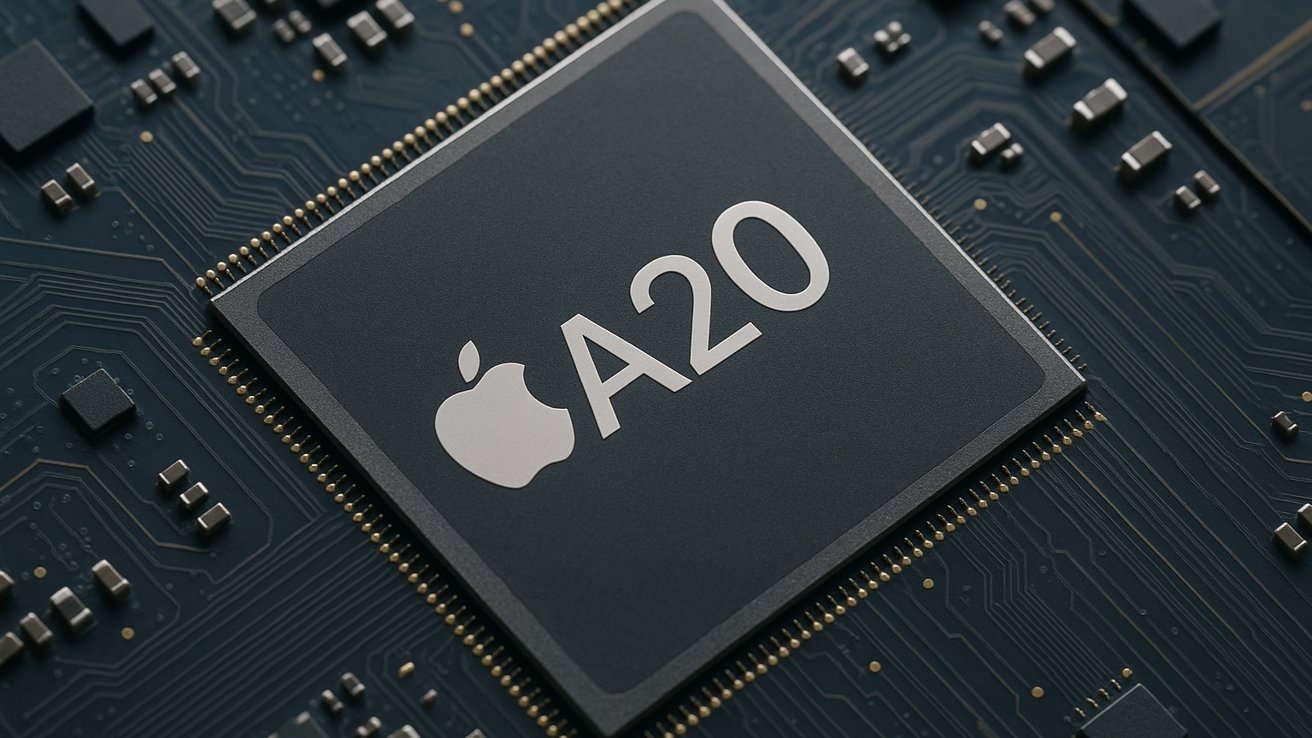
Rising manufacturing costs for next-generation 2-nanometer chips intended for the iPhone 18 could test Apple's long-running formula of advancing performance without hiking iPhone prices year-over-year.
TSMC, the largest contract chipmaker globally, has told major clients about a price increase for sub-5-nanometer fabrication starting in 2026. Trade reports indicate a general price hike of 3-10%.
The highest costs will be associated with the new 2-nanometer production, according to a post on social media site Naver by yeux1122.
The yeux1122 account is an anonymous aggregator on Korean social media whose track record is mixed — some credible claims, but also frequent reliance on reposted or unverified rumors.
That's the same process expected to power Apple's upcoming A20 chip, likely headed for the iPhone 18 Pro lineup in 2026. The move to 2 nm represents a major step in Apple's silicon roadmap, promising higher performance and better efficiency, but also far higher production costs.
Manufacturing at 2 nm introduces a new transistor structure called gate-all-around, which enhances power management. However, it requires more complex equipment and precision, leading to increased capital costs.
A shift to 2 nm technology is slowing early yields, which means fewer usable chips per wafer. Industry analysts predict that wafers at this new node could cost over 50% more than the current 3 nm process.
The increase is due to the expensive new tooling and the construction of next-generation fabrication facilities in Taiwan and the United States. As a result, foundry expenses are rising sharply just as Apple prepares for its next round of high-end devices.
How Apple might handle the pressure
Apple has weathered rising chip costs before. When 3 nm debuted in 2023, the company limited the new process to its most expensive iPhones, while standard models continued using an older A-series design.
That strategy helped preserve profit margins without raising base prices. Analysts expect the 2 nm A20 chip to launch in the iPhone 18 Pro models, while the standard iPhone 18 and iPhone Air will likely continue using the 3 nm A19.
That approach would let Apple market clear performance gains at the top end while spreading the cost of new manufacturing over a longer period. It also reflects a broader industry trend.
Premium models get cutting-edge chips, while mainstream devices stick with proven, cheaper silicon for another cycle. Still, Apple's costs are climbing.
The company's profit margins remain strong, but each new process generation adds pressure. At some point, even Apple's supply-chain efficiency and scale can't fully absorb the jump in wafer pricing.
TSMC's leverage & the limits of miniaturization
TSMC produces roughly 70% of the world's advanced chips, giving it control over pricing and capacity. Its lead in yield and reliability keeps major tech firms — Apple included — tied to its roadmap.
Alternative foundries such as Samsung and Intel continue to invest heavily but haven't yet matched TSMC's combination of volume and consistency. That dominance lets TSMC raise rates as it invests tens of billions of dollars in new fabs.
The company's U.S. sites in Arizona are expected to begin limited production in 2025, followed by full 2 nm output in 2026. In Taiwan, TSMC is already building its next-generation "N2P" facilities for future refinements of the same node.

Render of iPhone 18 Pro models
The broader challenge is that chip miniaturization is reaching physical and economic limits. Smaller transistors improve power efficiency, but each step now costs exponentially more.
Apple's silicon still leads in efficiency and thermal management, but the cost curve is bending upward. Even if users don't see a dramatic performance leap with the A20, Apple must spend significantly more to reach that plateau.
What comes next
TSMC's new pricing structure will take effect alongside its 2 nm production ramp in late 2025 and early 2026. The iPhone 18 generation is expected to be among the first mass-market products built on that process.
Future Mac and iPad models using M-series chips based on the same architecture will follow. But the exact financial impact remains unclear.
Foundry pricing accounts for only part of a chip's total cost, and Apple's long-term contracts may shield it from the full brunt of the increase. Still, any sustained rise will test Apple's ability to maintain its product margins while keeping retail prices stable.