Apple's next iPhone processors may bring a major leap in power and efficiency, setting up the company's 2-nanometer era ahead of its rivals.
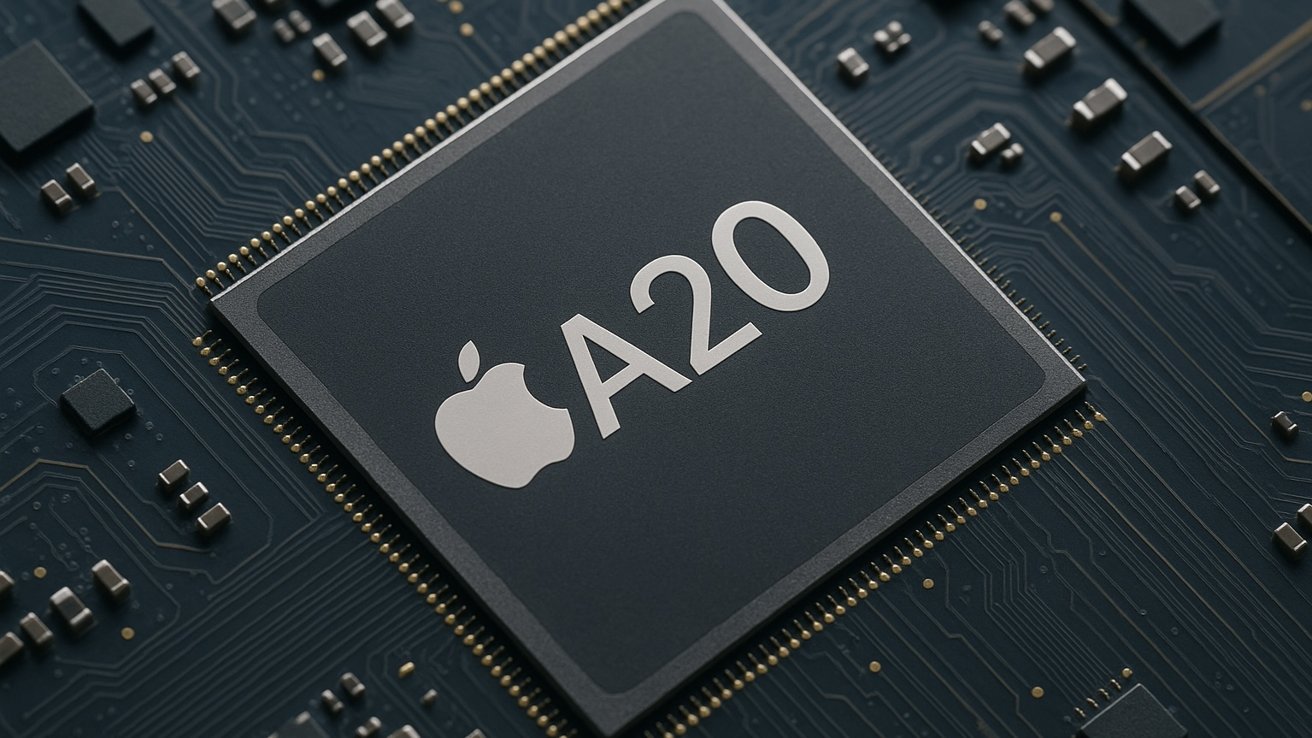
Apple is preparing two next-generation chips, the A20 and A20 Pro, for the iPhone 18 lineup and a long-awaited foldable iPhone. Both chips will use TSMC's new 2-nanometer process, a significant improvement over the current 3-nanometer chips.
The iPhone 18 Pro, iPhone 18 Pro Max, and the foldable iPhone are expected to arrive in September 2026. The regular iPhone 18 and iPhone 18e may follow around March 2027.
The A20 Pro is expected to launch first, with the standard A20 following a few months later. The claim comes from a Weibo post by leaker "Mobile Phone Chip Expert," who has a mixed but sometimes accurate record on Apple chip rumors.
Apple may be splitting its release schedule to manage chip supply and production costs as TSMC ramps up its 2-nanometer process. The approach would also give Apple two major iPhone moments each year instead of one.
The 2nm leap
The A20 line will reportedly mark Apple's shift from the 3-nm process used since the A17 Pro to TSMC's 2-nm design. Smaller transistors mean more efficiency, less heat, and more performance within the same space.
For users, that likely translates to longer battery life and faster response times, especially in AI and graphics-heavy tasks. Apple's silicon team is also said to be experimenting with a new "RAM-on-wafer" layout.
Instead of connecting memory to the processor through a separate layer, it would sit directly on the same wafer as the CPU and GPU. That design could shrink the chip, cut latency, and improve power efficiency — similar to what Apple already does with unified memory in its Mac chips.
Thinner, cooler, faster
Apple's move to a 2 nm process and a tighter layout could help it slim down its devices again. With the same battery capacity, thinner phones could run longer and stay cooler.
Cooling is especially helpful for Apple Intelligence features that run continuously in the background, like on-device language models and vision recognition. It could also enable more advanced camera and display features without overheating.
Overheating has been a recurring challenge as iPhones become more powerful. Apple might even use those gains to justify smaller batteries for future lightweight models like the iPhone Air.
The shift could lead to a more efficient and user-friendly experience. Overall, the move to 2 nm technology holds promising benefits for Apple's future devices.
Apple's timing & strategy
The shift lines up with TSMC's own timeline. The chipmaker plans to begin large-scale 2-nm production in late 2025, putting Apple first in line for commercial use by mid-2026.
The new node is expected to provide around 10-15% performance gains and up to 30% better efficiency than the 3 nm technology. For Apple, the change enhances its hardware control and keeps its performance ahead of Qualcomm and MediaTek.
Android chips from those companies often fall a generation behind in efficiency per watt.
Reality check
As with all early hardware rumors, skepticism is warranted. Integrating RAM directly on the wafer would be a bold move for mass-market devices and may only appear in limited models at first.
Thermal management and manufacturing yield could also be obstacles. Still, Apple has consistently pushed integration boundaries.
From the first A-series chips to the transition to Apple Silicon Macs, it has favored tight hardware-software coupling over modular designs. A20 fits that playbook perfectly.
The foldable factor
The rumored foldable iPhone adds another reason to expect a custom chip. Foldables demand extreme power efficiency and flexible display coordination, both of which benefit from custom silicon.

A render of what the iPhone Fold could look like. Image credit: AppleInsider
Apple's foldable phone might highlight the A20 Pro, similar to how the iPhone X introduced Face ID and OLED. If everything goes as planned, the foldable could launch in 2026.
The foldable iPhone release might also align with Apple's new display materials. These technologies will likely require the power efficiency of a 2-nm chip.
Competition heating up
Rivals like Qualcomm and Samsung plan to reach 2 nm by late 2026, but Apple's head start with TSMC could secure most of the first batch. That edge mirrors its 3-nm rollout with the A17 Pro, when competitors lagged behind.
If the plan holds, the A20 lineup will mark Apple's next major silicon jump — smaller, faster, and more efficient. The result could be iPhones that run cooler, last longer, and stay ahead of the pack.