After what seems like years of rumors, delays, and generations of competition, we may only be months away from Apple's smart display as the final pieces finally fall into place for Apple Home.
Apple has a tendency to be slow to enter a new product category. Historically, it prefers to wait until it can do something different or better before doing it at all.
Hopefully, that is Apple's approach to the smart display market. Amazon and Google have long dominated this space, and as the smart home category grows, Apple's absence has been felt.
The good news for hopeful optimists like me is that it finally seems many of the pieces are coming together.

Widgets will be key
Personally, I believe that widgets will be key to the smart display and something that the competition won't be able to easily mimic. Apple has been laying the groundwork for years, deep within iOS.
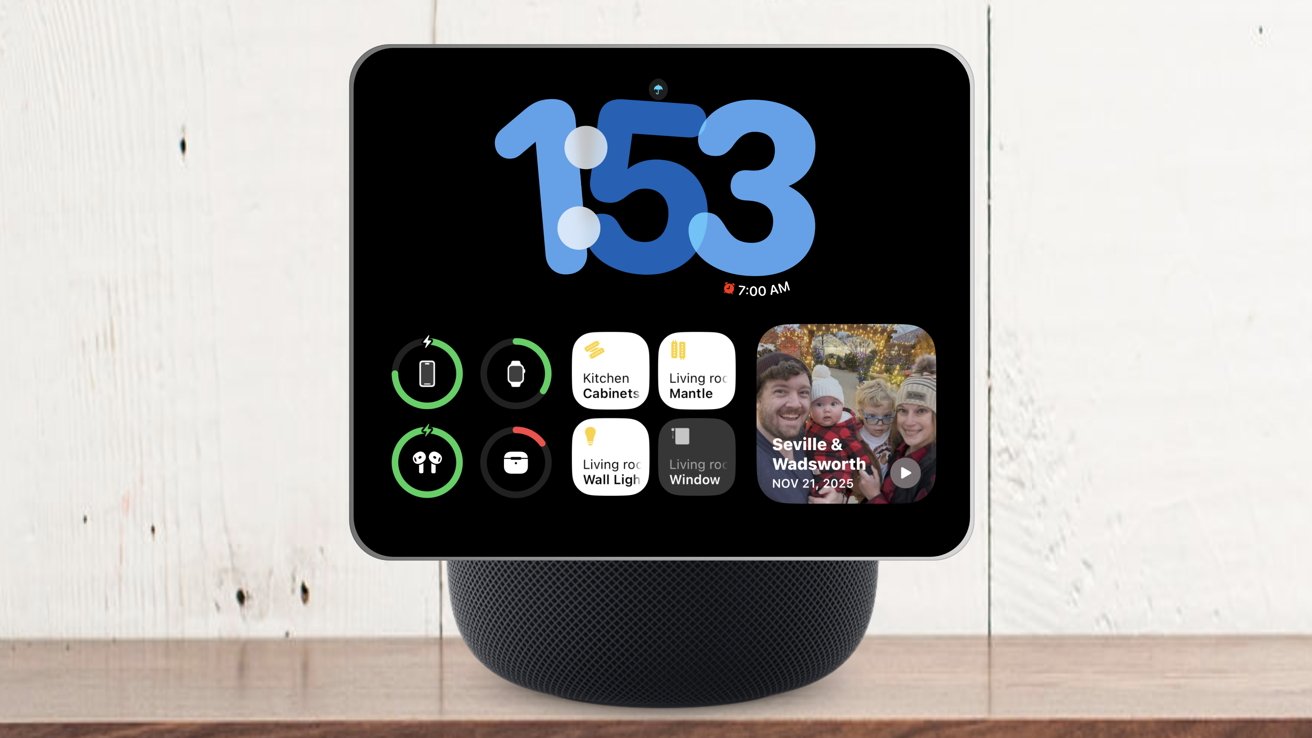
For example, there are easily visible elements that could be transplanted fairly easily to a real smart display. Like the StandBy mode widget interface.
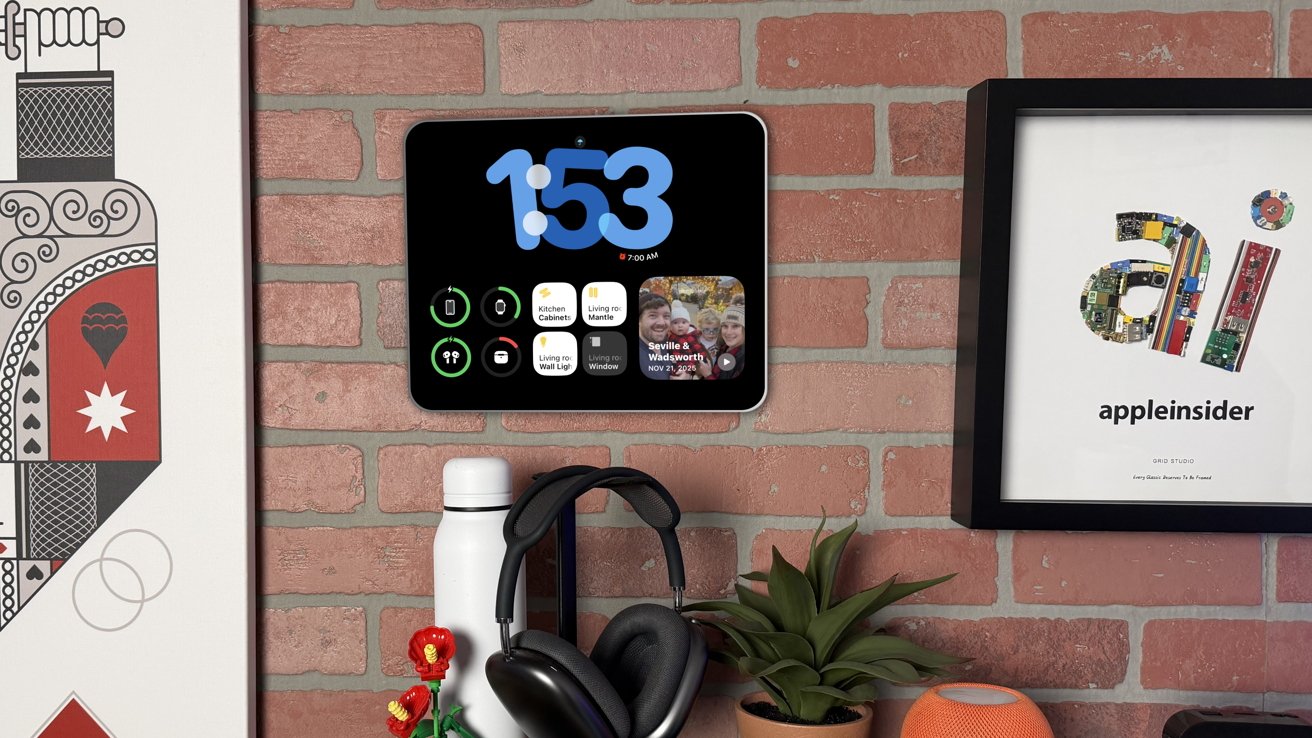
The new display may work on the countertop on a speaker base, or mounted to a wall
A smart display could use a scaled-up version of this interface, possibly with more widget locations or showing a large clock simultaneously. This would be an easy way to view info on the rumored 6-7-inch display.
The rub is that rumors have said there will be no App Store for this device — at least at launch. That doesn't necessarily mean you'll only have access to first-party widgets, though.
I think Apple could leverage the widget technology Apple developed for macOS Tahoe. On macOS, you can put any widget from your iPhone on your desktop.
Using a similar setup, the smart display could show any iPhone widget or notification without needing an App Store. Day one, there would be endless widgets showing all types of info from weather to parcel tracking.
Siri is finally getting that major upgrade
The next piece of the puzzle is going to be Siri. While Siri has managed to get by for years with few meaningful upgrades, that is about to change.
With iOS 18, Apple announced that Siri with Apple Intelligence was coming. It ties into ChatGPT, understands you better, and has deep ties to your on-device data.
That project was met with multiple costly delays and resulted in the complete rebuild of the tech stack. Even though the display will have a touchscreen, voice is going to be a primary way to interact.
The delay of Siri may be the sole reason that this smart display was also delayed. There was no way Apple could launch such a display without a more capable voice assistant.
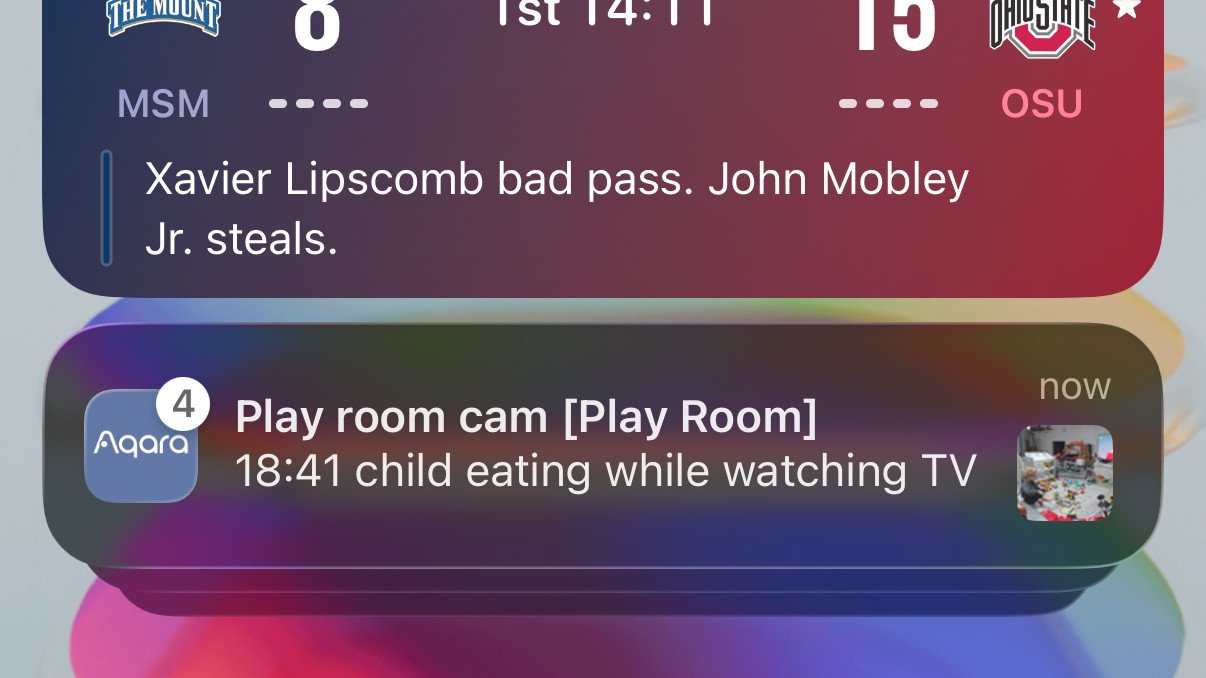
Aqara uses AI to give you descriptions of detected motion, and Apple Intelligence could do the same
Apple Intelligence could let the display give you summaries of your notifications instead of you having to see them. It could describe the motion that it detects on your front porch or summarize what your partner messaged you.
Alongside Siri, Apple also announced new, deeply integrated app intents for developers. This would help bring data to Siri, which would also have a much better understanding of you.
This would let Siri perform actions in apps without needing actual apps on the smart display. They could show interactive snippets, have follow-up prompts, and retrieve data.
I could ask Siri on the smart display to check on my most recent order from Amazon, search for the weather at a certain location in Carrot Weather, or send a message to a coworker in Slack. None of which would require the full app to be designed and installed specifically on the smart display.
For developers who started implementing these app intents now, they could be ready for the smart display on day one with little effort.
More features could be borrowed
More rumors have suggested that the new display will run a new operating system called homeOS. It is said to be based off of tvOS, similar to how the HomePod software is.
I bet we'll see some of the other recent UI changes from Apple TV appear on this smart display. The new screensaver changing interface seems perfect for a tabletop or wall-mounted display.
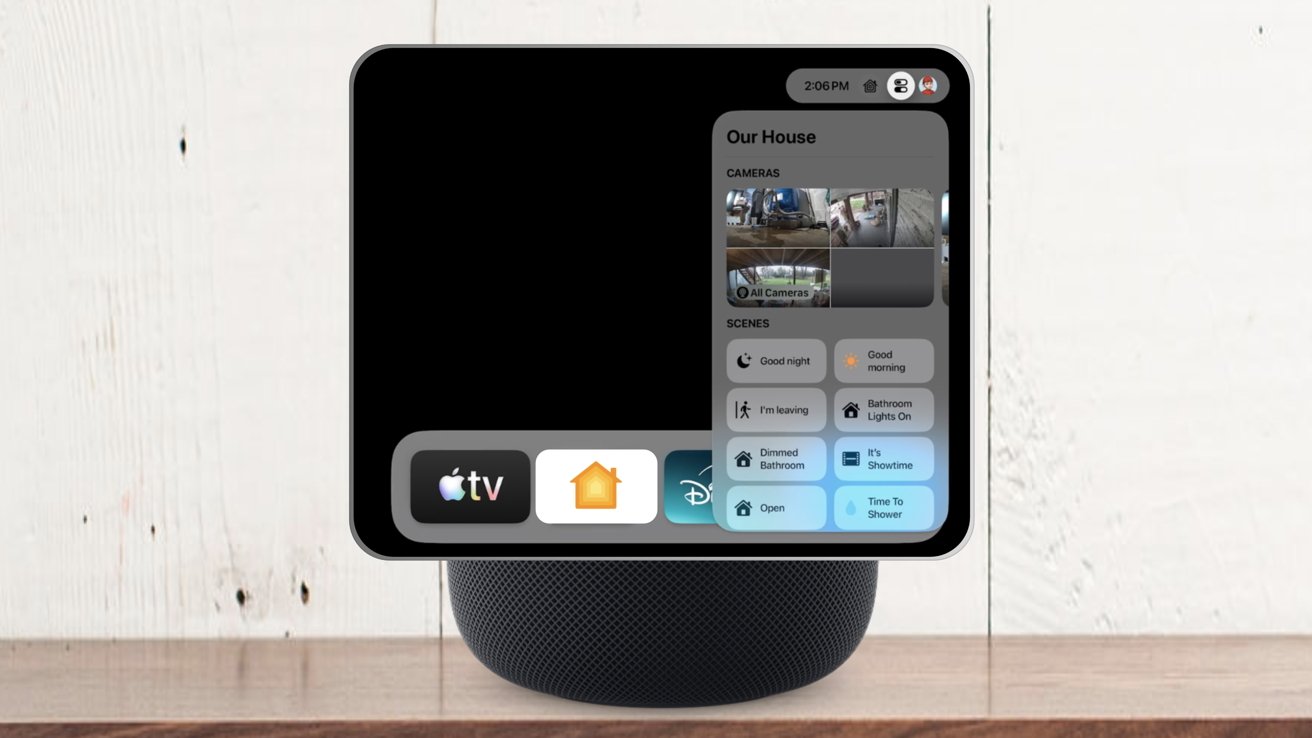
We may not get full apps, but Control Center seems a given on the smart display
Same with the Apple TV Control Center that can move between connectivity, smart home controls, and user profiles. I think that would be right at home and has a better large-screen design than the version on iOS or iPadOS.
Over on iOS, the new food section of Apple News is also ideal. It has an easily parsable view that you could control hands-free while cooking a recipe.
Smart home prowess
Finally, on the software front, we have the maturation of the smart home. What was an extremely minor hobby for Apple has now grown substantially.
Apple helped lay the groundwork for Matter, the new cross-platform smart home platform that works with Apple Home. Recently, we saw the launch of Matter 1.5.
Matter 1.5 brought cameras to the standard. Assuming Apple quickly adopts the update, this means we could see any Matter-enabled camera show up on this smart display.
Apple's own engineers are also listed on the public GitHub as contributing to the camera tech, which makes sense when Apple is rumored to be working on its own smart home cameras.
The iPhone maker even created its own wireless chip, the N1, which builds in Thread networking. This wireless protocol creates a low-power mesh network throughout your home and is perfect for smart home devices.
Between the Matter standard, wireless tech, and increasing consumer adoption, the components are finally there for an Apple-branded smart display that can be actually useful.
Hardware and software coming together
From a high-level, Apple could have put out the smart display years ago. It had HomeKit, tvOS, iPads, and plenty of other pieces that would have made a suitable smart display.
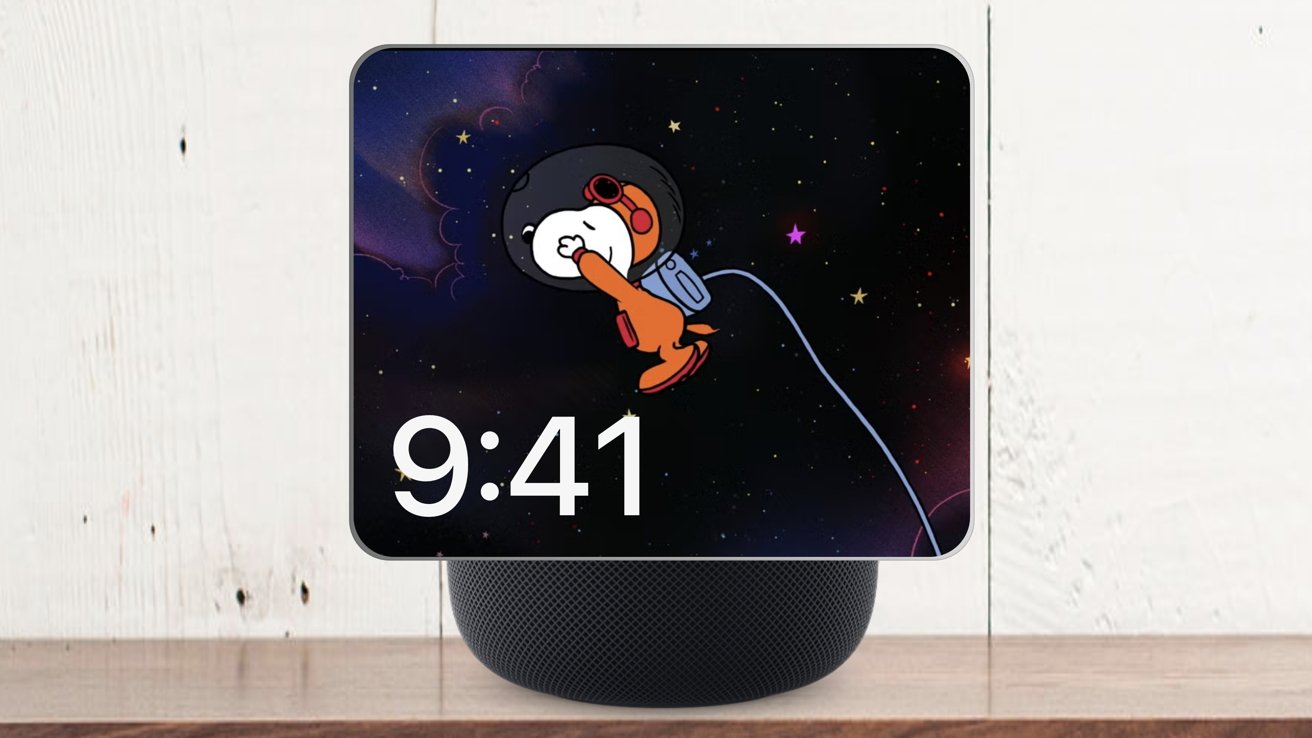
Apple's smart display could show different info, depending on how far away from it you are
Something like what we've seen from the competition. But that is not what Apple is interested in.
It needed more robust smart home tech, a more powerful voice assistant, and Apple Intelligence to bring it all together. Even though parts of it got delayed — like Matter and Siri — the pieces are almost ready.
I think what Apple has already developed across the ecosystem can all be combined to create a smart display that is far more capable and useful than the ad-filled ones we've seen to date.
The most recent rumors point to a release in the spring of 2026. After repeated delays, it's always possible it gets delayed again or scrapped altogether.