

Germany's antitrust regulator is reviewing Apple's revised tracking rules after asking the company to address concerns about unequal treatment of third-party apps.
The review is led by the Bundeskartellamt, Germany's federal antitrust authority. Officials said Apple's earlier App Tracking Transparency (ATT) prompts gave the company's own apps a more favorable presentation than those shown to developers' apps.
Apple agreed to revise those screens after the regulator raised concerns. The company plans to standardize the wording, content, and visual layout for every app category.
The adjustments aim to create a more neutral experience for users and satisfy regulatory expectations. German regulators opened the case under a national law for companies deemed of "paramount significance," a designation Apple received earlier in 2025.
The classification allows quicker intervention when a dominant platform influences markets in ways smaller competitors can't match. Apple said the updated prompts preserve its privacy goals while offering developers a clearer and more consistent system.
The company framed the changes as a way to maintain user trust without adding unnecessary friction for app makers.
Germany pushes Apple for neutral tracking prompts
The Bundeskartellamt, according to Reuters, asked Apple to ensure consistent standards across all software, including its own apps. Investigators argued that stricter or more cautionary text in third-party prompts could discourage users from giving consent, even when those apps followed the same rules.
Apple agreed to use neutral text and layout and simplified the process developers must use when requesting permission to handle advertising data.
Regulators welcomed the shift but kept their attention on a second issue the revisions didn't resolve. Apple plans to continue measuring advertising performance without requiring users to opt in, which could disadvantage third-party providers.
Bundeskartellamt president Andreas Mundt stated the agency will review Apple's approach for structural imbalances. It's collaborating with Germany's data-protection officials during the market test process.
The federal commissioner for data protection and Bavaria's regulator provide guidance on consent. That ensures Apple's updated system complies with European privacy rules fairly.
This review connects to a broader European pattern. French regulators fined Apple $174 million in March 2025 for aspects of its tracking framework, arguing that ATT gave Apple favorable conditions not extended to competitors.
The French case focused on consent prompts and how the framework treated in-house services differently from third-party apps. Germany's investigation follows similar lines but uses its own competition tools.
The Bundeskartellamt is working with the European Commission to examine Apple's mobile advertising practices. They want to determine if the company's rules could negatively affect competition in the market.
The Commission is reviewing potential violations of European competition law, including Article 102 of the Treaty on the Functioning of the European Union.
Apple defends its privacy approach, claiming ATT gives users meaningful control over their data. The framework, launched in April 2021, reshaped mobile advertising by requiring explicit opt-in consent for tracking across apps.
Most users appreciate the clear choice, according to Apple. They argue that transparent privacy controls encourage trust in the app ecosystem.
Developers have raised concerns about ATT's financial impact, which varies significantly across industries. No reliable dataset exists to show the overall effect across the European market.
Regulators are gathering developer documentation to evaluate how Apple's tracking changes affect revenue patterns. They want to see if Apple's approach could threaten the long-term survival of smaller publishers.
Apple prioritizes user privacy over business interests, stating that users shouldn't compromise on privacy for functionality. German officials agree on the importance of privacy but want to ensure the system doesn't give Apple an advertising advantage.
Regulators examine Apple's approach to ad attribution
The European debate centers on the distinction between privacy protection and market fairness. Regulators acknowledge Apple's right to design privacy tools for the iPhone but question how those tools should operate when competing in the ad market.
Apple sells search ads on the App Store and relies on measurement systems to track campaign performance. Critics question this setup because Apple controls the rules that competing advertisers must follow.
Owners of iPhones will notice clearer consent screens once Apple deploys the revised prompts. The layout will follow a unified template, and the text will use consistent phrasing across both Apple and non-Apple apps.
Developers hope the changes create a more level experience, though it will take time for the impact to show.
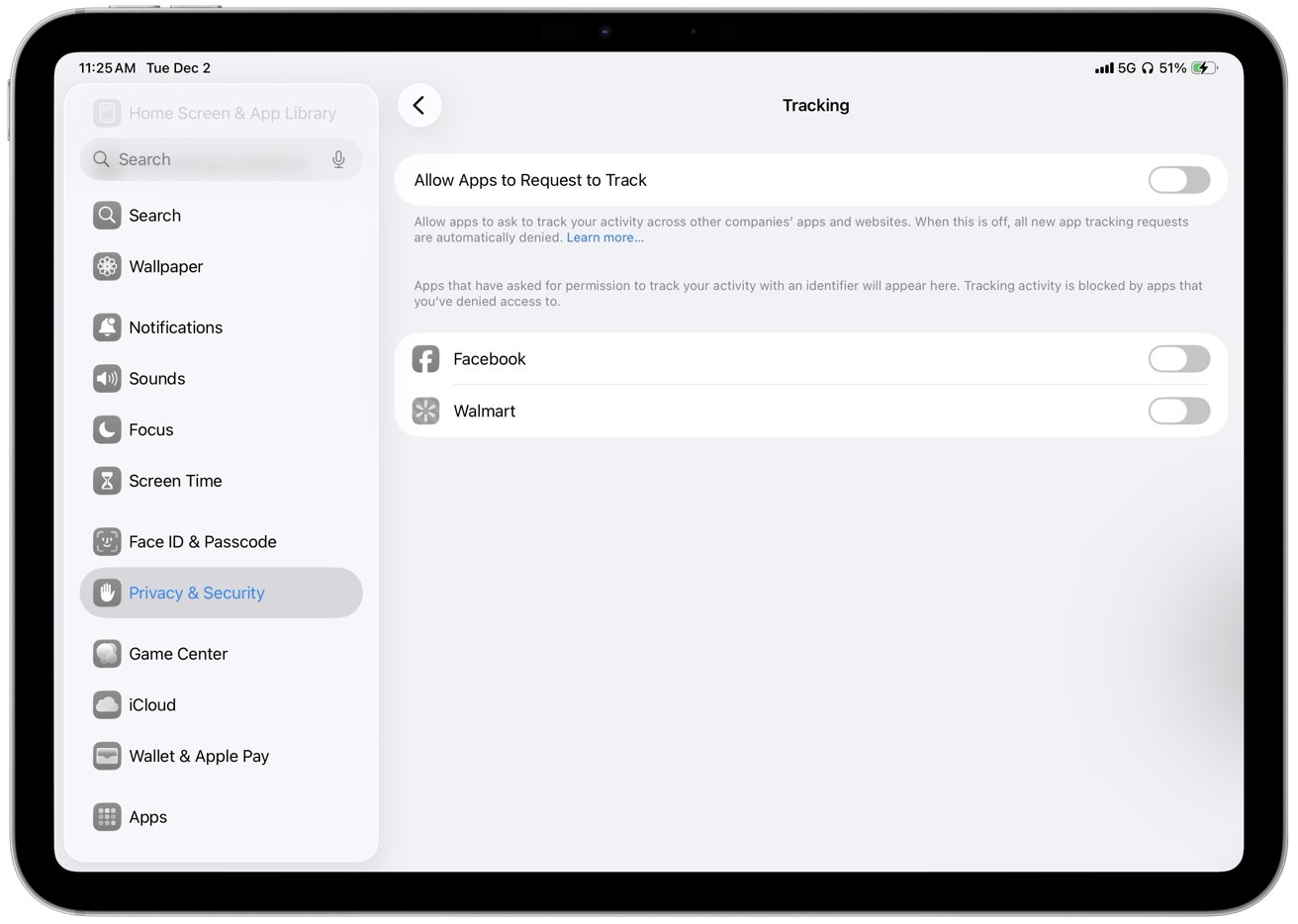
App Tracking Transparency in iPad settings
User controls for Apple's attribution system will remain unchanged. Apple says its method doesn't rely on cross-app tracking and therefore doesn't require consent, nor a dialog box popping up to tell the user anything.
Regulators will check if Apple's distinction works for advertising data. They'll also see if it gives Apple's products an unfair advantage over third-party providers.
The Bundeskartellamt is gathering input from publishers, media groups, and data-protection authorities before finalizing its decision. The final ruling depends on how the revised prompts perform in the market and whether attribution continues to raise competition concerns.
Apple's changes make the consent process more consistent, addressing a key issue raised by European authorities. However, regulators are still studying how Apple measures advertising performance without user opt-in.