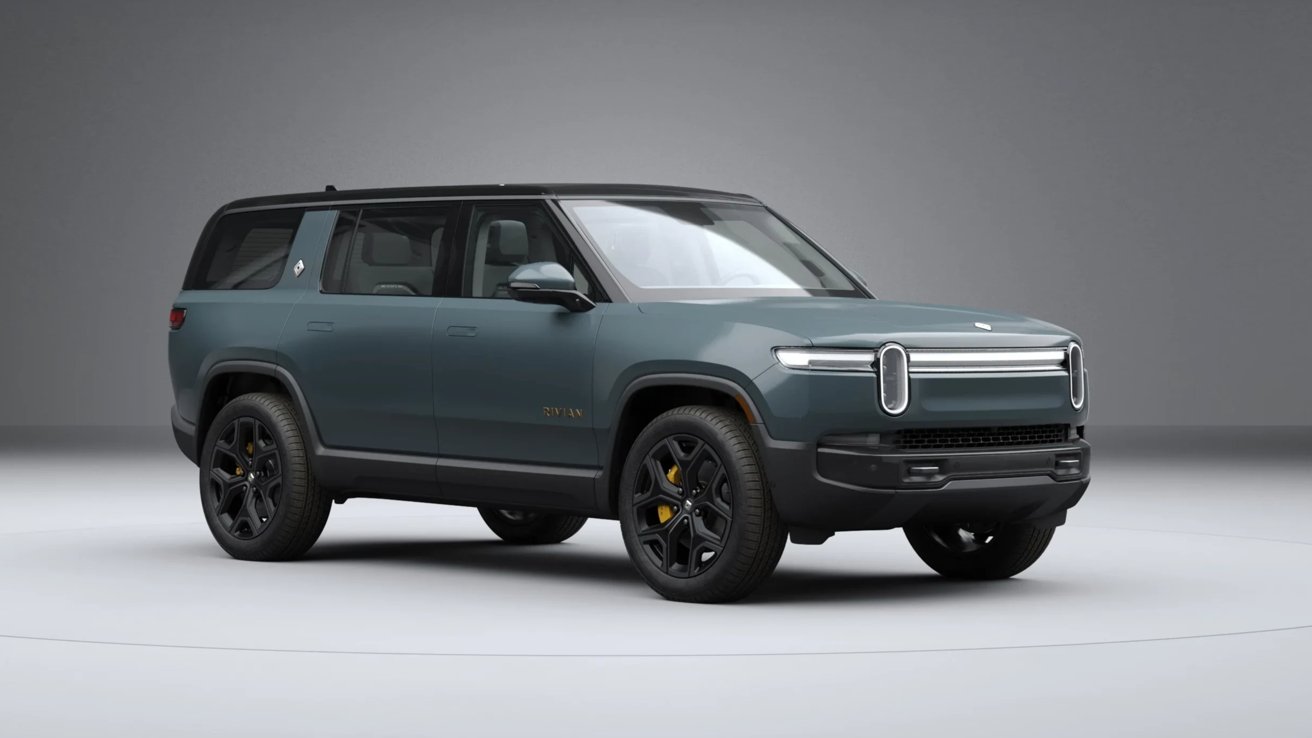
Rivian is moving its digital key to support Apple Car Key, no app required, which means owners can unlock a vehicle through Apple Wallet on an iPhone or Apple Watch.
Rivian will add Apple Car Key support to its second generation R1 vehicles later in December through the 2025.46 update. The shift moves basic access away from the Rivian app and places the digital key directly inside Apple Wallet, where it behaves like any other digital pass.
The update creates an Apple Car Key that unlocks, locks, and starts a second generation R1S or R1T with an iPhone or Apple Watch. Ultra Wideband hardware in these vehicles lets Rivian read proximity with far greater accuracy than the previous Bluetooth-based system.
NFC stays available as a fallback when a phone battery is low. Express Mode keeps the Apple Car Key functional for several hours through Power Reserve, which helps prevent lockouts when people forget to charge their iPhone.
Digital Key support is coming to @Rivian Gen 2 with the .46 OTA update later this month!
— Wassym Bensaid (@WassymBensaid) December 4, 2025
Your car key now lives natively in your Apple, Google, and Samsung Phone Wallets.
UWB support for high precision Native Watch support Unlocks via NFC even if your phone battery pic.twitter.com/e5ijW1xIW2
Owners can share up to eight digital keys through Messages, AirDrop, or other supported apps. The workflow mirrors how people already share transit passes or tickets in Apple Wallet, which makes the feature feel familiar.
Rivian also supports Google Wallet and Samsung Wallet for compatible Android devices, as first spotted by MacRumors. Cross-platform support signals an interest in using digital keys as a general access method rather than an Apple-specific convenience.
First generation R1 vehicles don't get the upgrade because they lack the Ultra Wideband hardware required for Apple Car Key features. Rivian says the limitation comes from the physical design of the earlier platform.
Why the update matters for Rivian and its drivers
Digital keys are becoming standard in newer vehicles, so Rivian is catching up to an expectation set by other modern electric models. Apple Car Key gives drivers faster access and reduces their reliance on the Rivian app, which many owners found inconsistent for daily unlocking.
Ultra Wideband improves reliability because it gives the vehicle a clearer sense of distance to the device. Drivers should see fewer moments where the vehicle hesitates or misses a nearby phone.
The update helps families and shared drivers manage access more easily. People can send keys quickly, revoke access when needed, and avoid passing around a physical fob.
A lost phone still creates friction because access stops until the owner removes the old Apple Car Key. The process is simple, but it highlights the tradeoff that comes with a phone-first system.
Rivian's stance on in-car software remains unchanged. The company still avoids CarPlay and continues to promote its own interface, which keeps control of the cabin experience firmly within Rivian's design.
The update modernizes everyday access, but Rivian remains selective about how it integrates with Apple's ecosystem. The decision reflects a strategy that embraces convenience through Apple Wallet while holding the line on deeper dashboard integration.