A consumer advocate in the UK has filed a lawsuit arguing that Apple Pay's take of standard interchange fees that the bank charges harmed 50 million people to the tune of $2 billion. The problem is, there doesn't seem to be any consumer harm.
Apple has been sued before over allegedly profiting unfairly over high fees charged to card issuers. Then card issuers Visa and Mastercard have been sued alongside Apple Pay for high fees charged to merchants.
Now according to The Guardian, a UK finance campaigner is going after Apple Pay for how its 'hidden' charges affect consumers. James Daley has filed a complaint with the country's Competition Appeal Tribunal (CAT), asking it to allow a class-action suit.
"People will have no idea they've been paying more for everyday banking because of the way Apple has operated Apple Pay," said Daley. "By shutting out competition and charging hidden fees, Apple has pushed up costs for millions of consumers."
Daley is exaggerating, or possibly giving an opening for Apple's lawyers, when he describes fees that the consumer never pays as hidden. For the most part — although not always — Apple publishes the fees it charges.
The campaigner's argument appears to be that consumers don't read what Apple charges banks with Apple Pay — but somehow this costs the consumer money. That's because he maintains that banks pass on those fees to consumers and, more, that the banks raise prices for everyone regardless of whether they use Apple Pay.
This is similar to the Department of Justice's lawsuit which claimed, in part, that Apple Pay fees are a "significant expense" for banks, which therefore can't offer new features or services. Apple refuted that, arguing that it provides APIs so that rivals can offer contactless payment systems.
Apple has now similarly called Daley's suit "misguided" and said that it should be dismissed.
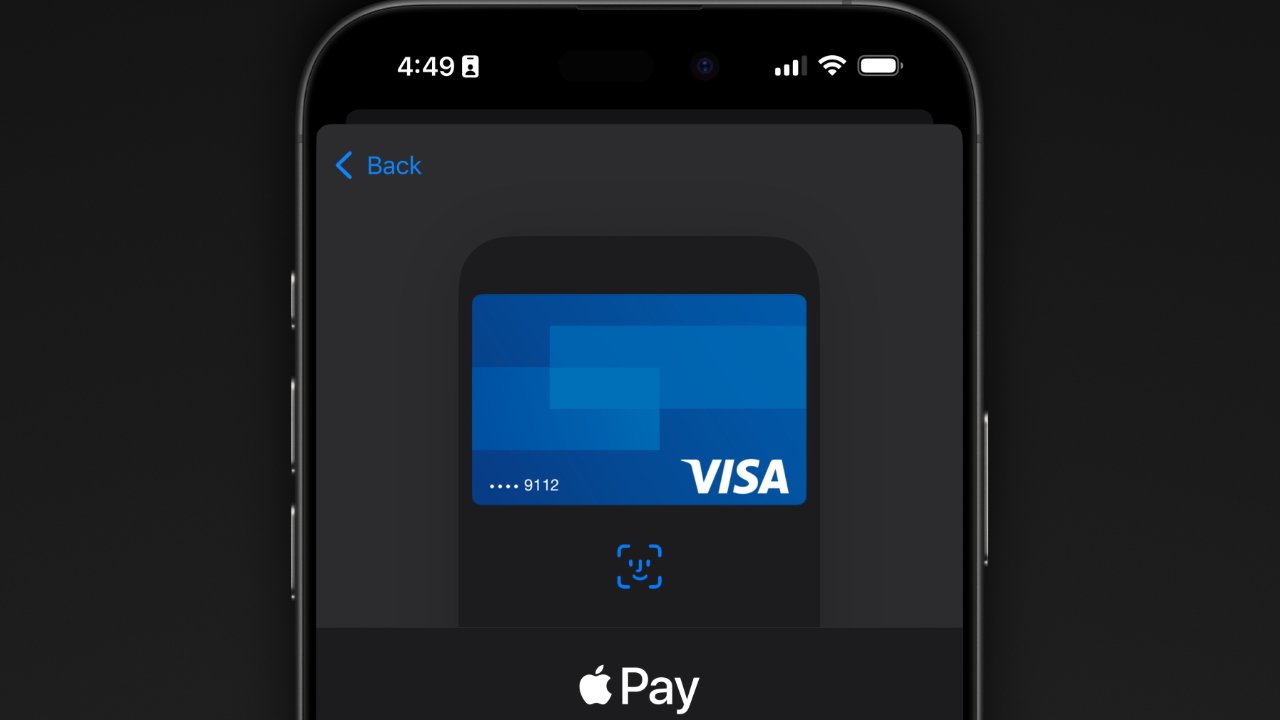
"Apple Pay is a seamless and secure way for users to make contactless payments, and one of many payment options available to consumers," said the company in a statement. "Apple does not charge fees to consumers or merchants for using Apple Pay, and banks see meaningful benefits from offering Apple Pay to their customers — most notably fraud reduction."
Daley further contends that Apple's refusal to allow rivals access to its NFC contactless technology means it has no competition. His lawyers reportedly say that consequently, the fees Apple charges "are not in line with industry practice."
The suit also notes that equivalent systems on Android reportedly do not charge similar fees. They do not work the same way that Apple Pay does, and the industry has noted that they are riskier than Apple Pay, from a technical standpoint.
The industry practice claim in the suit is odd, considering interchange fees are standard to the industry and have been charged by banks since the inception of credit cards. In about the worst case for the bank as it pertains to Apple's charges, for interchange fees, both US and UK banks claim 0.80% of a charge, and in the about $0.25 on top of that.
It's a much more complex system than that, with interchange fees going up to about 3% of a charge and $1.00 for riskier combinations of card, card presentation, and merchant. In the interest of making a point, we'll consider the worst-case for the bank.
Apple charges the banks about 0.15% of the transaction regardless of complications, leaving the bank 0.65% and the $0.25 on the worst-case scenario for the bank. None of this is charged to the consumer as an extra fee because Apple Pay is involved.
And the claim about interest rates seems spurious, at best. In the UK, the Bank of England sets a base interest rate and most card issuers set their fee at that same figure. According to the NimbleFins UK personal finance research site, UK credit card interest rates are currently at 24.66%, their highest for 30 years.
There is no correlation between credit card interest rates, consumer riskiness, and what Apple charges banks. There was not an increase after Apple Pay launched in the UK, attributable to Apple Pay.
What happens next
Daley's complaint is not yet on the Competition Appeal Tribunal's listings, so there is no further detail concerning a schedule. Based on previous CAT cases, should the tribunal allow the suit to proceed, Apple will initially be able to appeal first to CAT itself.
According to Daley's suit, though, if the case is ultimately successful, Apple would be required to pay $2 billion. That would reportedly equate to around $35 per person.